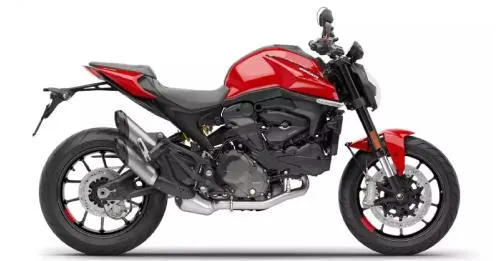
2026 Ducati Monster India Patent Filed, India Launch Soon?
A fresh design, updated electronics, and Ducati's latest 890cc V2 engine could soon make their way to Indian roads following the patent filing.



Ducati has taken another step towards bringing the updated Monster to India by filing its design patent in the country. The motorcycle made its global debut in October last year, but Ducati had already indicated that an India launch was likely during 2026. The latest patent filing now strengthens that possibility.
Also Read: Ducati Diavel V4 Gets New Black Roadster Edition in India; Priced at Rs 29.98 Lakh
When launched, the revised Monster will join Ducati's growing India portfolio, which has recently expanded with the new Multistrada V2, Streetfighter V2 S and Panigale V2 S.
2026 Ducati Monster: Design
The biggest talking point on the 2026 Monster is its styling. Ducati has responded to feedback from long-time Monster enthusiasts by bringing back a larger and more muscular fuel tank, a feature that defined earlier generations of the naked motorcycle. The redesigned tank also incorporates side vents that draw inspiration from the second-generation Monster, giving the bike a more recognisable silhouette.

Other cosmetic changes include a revised LED headlamp featuring a circular daytime running lamp, while dynamic turn indicators are now fitted at both the front and rear. The updates are subtle rather than dramatic, but they restore much of the visual identity that many riders felt the previous model had moved away from.
2026 Ducati Monster: Engine
The updated Monster is powered by Ducati's latest 890cc V2 engine, which is already used in the Panigale V2, Streetfighter V2 and Multistrada V2. In the Monster, the twin-cylinder engine develops 109.4bhp at 9,000rpm and 91.1Nm of torque at 7,250rpm, with power sent to the rear wheel through a six-speed gearbox equipped with a bidirectional quickshifter. One of the major engineering changes is the adoption of a variable intake valve timing system, designed to deliver stronger performance across a wider rev range. Ducati has also moved away from its traditional Desmodromic valve actuation on this engine. For owners, that means fewer workshop visits, as valve clearance inspections are now scheduled every 45,000km.
Also Read: Ducati Wins the WorldSBK Championship Manufacturers Title for a Record 22nd Time
The motorcycle continues to use Ducati's aluminium monocoque chassis, with the lightweight frame mounted directly to the cylinder heads and paired with a technopolymer trellis-style subframe. Suspension duties are handled by Showa upside-down front forks and a preload-adjustable rear monoshock. Braking comes courtesy of twin Brembo front callipers working with 320mm discs, while the cockpit receives a new five-inch TFT display, replacing the previous 4.2-inch unit. The larger screen is expected to offer improved readability and a more modern interface.