
Hyundai Bayon vs Maruti Suzuki Fronx: Design, Features, Engine Compared
The upcoming Hyundai Bayon brings AI-powered technology and a 1.5-litre petrol engine, while the Maruti Suzuki Fronx offers turbo-petrol and CNG options. Here’s how the two crossovers compare.



The Hyundai Bayon is set to enter the Indian market on October 26, 2026, adding a new option to the compact and midsize SUV space. It will sit between the Venue and Creta in Hyundai’s lineup, while the Maruti Suzuki Fronx has already established itself as a crossover with multiple powertrain choices. From styling and cabin technology to engine options and pricing, the two take different approaches to attracting buyers. Here’s how they stack up on paper.
Also Read: Renault Triber Turbo vs Nissan Gravite; Specifications Compared
Hyundai Bayon vs Maruti Suzuki Fronx: Design
The Bayon adopts Hyundai’s latest Art of Steel design language, with a split-headlamp arrangement, slim LED daytime running lights, pronounced wheel arches and black body cladding.

Its rear profile features slim tail lamps, a prominent roof spoiler and a two-tone bumper. The overall design leans towards a sporty crossover rather than a traditional upright SUV.

The Fronx, meanwhile, has a coupe-inspired silhouette derived from the Baleno platform. Its sloping roofline, sculpted bodywork, and distinctive front and rear styling give it a sportier appearance. Buyers looking for a crossover with a more coupe-like profile may prefer the Fronx, while the Bayon brings a different design direction to Hyundai’s SUV range.
Hyundai Bayon vs Maruti Suzuki Fronx: Interior
Technology is one of the Bayon’s main talking points. It gets two connected 12.3-inch displays for the instrument cluster and infotainment system, along with a vertically arranged climate-control section and physical buttons for frequently used functions. The SUV will also be Hyundai’s first model in India to feature a generative AI voice assistant. Other highlights include NVIDIA-powered connected-car navigation technology, split-screen functionality, over-the-air software updates, and more than 70 Bluelink connected features. Hyundai also claims support for 10 regional and two international languages.

The Fronx offers a 9-inch touchscreen infotainment system with Apple CarPlay and Android Auto, an Arkamys sound system, a head-up display, wireless charging, a 360-degree camera, and connected-car technology in its top-spec Alpha trim. It also gets cruise control, rear AC vents, automatic climate control, and steering-mounted controls. Automatic variants additionally feature paddle shifters.

On the features front, the Bayon appears to have the edge in display size and voice-assistant technology, while the Fronx already offers a substantial equipment list. A definitive comparison of their standard and variant-specific equipment will be possible once Hyundai announces the Bayon’s variant lineup.
Hyundai Bayon vs Maruti Suzuki Fronx: Engine
Hyundai will launch the Bayon with a 1.5-litre, four-cylinder, naturally aspirated petrol engine producing 113bhp and 144Nm of torque. Transmission choices will include a 6-speed manual and a CVT-type automatic. Hyundai could introduce a CNG variant of the Bayon at a later stage, but there is no official confirmation yet. The Bayon’s larger naturally aspirated engine produces more power than the Fronx’s 1.2-litre petrol unit. However, the Fronx turbo-petrol delivers more torque and offers a wider choice of powertrains from the outset. The Maruti also has a clear advantage for buyers who want CNG, as that option is already available.
The Fronx offers more variety for now. Its 1.2-litre naturally aspirated petrol engine develops 88bhp and 113Nm, paired with a 5-speed manual or 5-speed AMT. This engine is also available with CNG, producing 76bhp and 99Nm, paired with a 5-speed manual gearbox. The Fronx has a 1.0-litre turbo-petrol engine rated at 98bhp and 148Nm. It is offered with a 5-speed manual or a 6-speed torque-converter automatic.
Hyundai Bayon vs Maruti Suzuki Fronx: Mileage
Hyundai has yet to publish an official fuel-efficiency figure for the Bayon. Its real-world economy and certified mileage will therefore need to be assessed once the SUV goes on sale.

The Fronx is the only one of the two with published figures across its available powertrains. Maruti Suzuki claims fuel-efficiency figures of 21.79kmpl for the Fronx 1.2-litre petrol manual and 22.89kmpl for the AMT version.
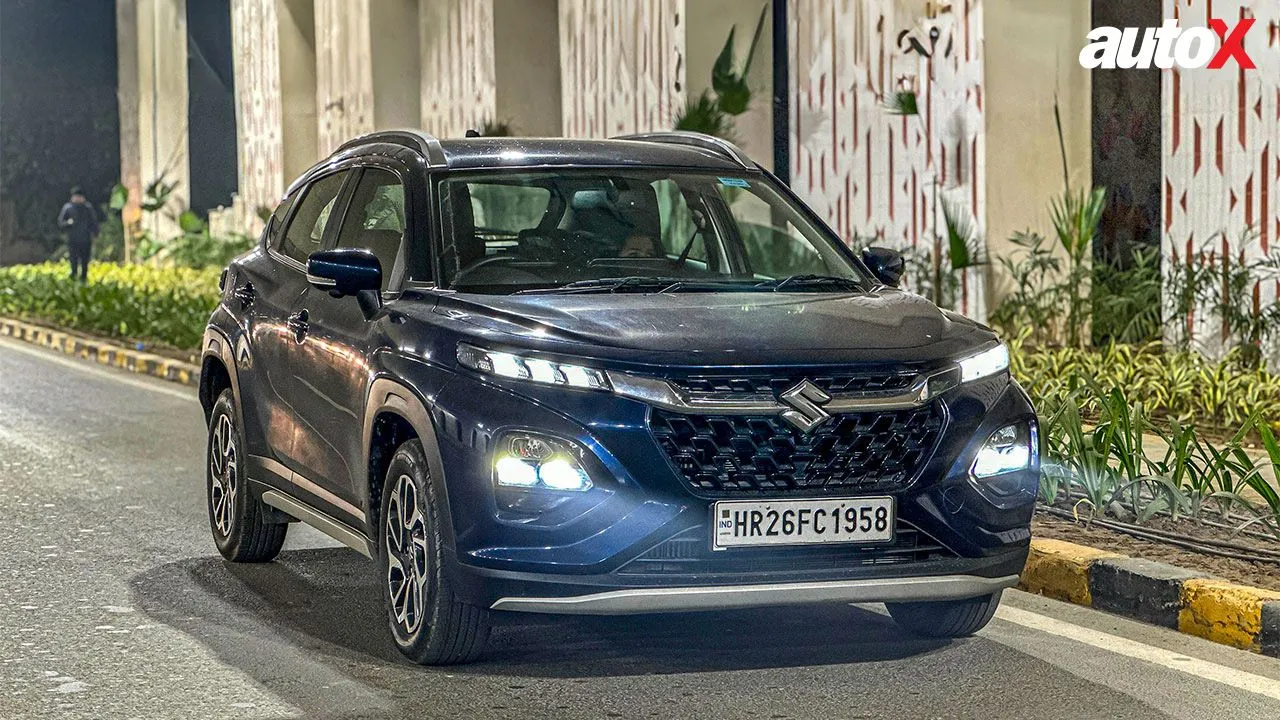
The 1.0-litre turbo-petrol returns a claimed 21.5kmpl with the manual gearbox and 20.01kmpl with the automatic. The CNG variants are rated at 28.51km/kg.
Hyundai Bayon vs Maruti Suzuki Fronx: Safety
The Fronx comes with six airbags, ABS with EBD, ISOFIX child-seat anchors, hill-hold assist and rear parking sensors as standard, according to the published specification details. It has also received a four-star rating from Japan NCAP, with an overall score of 84%. However, it has not been tested by Bharat NCAP.
Hyundai has revealed several technology and equipment details for the Bayon, but a complete India-specific safety specification and an independently verified crash-test rating are not yet available. Its safety equipment should be compared against the Fronx variant by variant once Hyundai releases the full details.
Hyundai Bayon vs Maruti Suzuki Fronx: Price
The Hyundai Bayon’s prices will be announced on October 26, 2026. It is expected to cost between Rs 9 lakh (ex-showroom) and Rs 14 lakh (ex-showroom), although the final prices and variant-wise positioning remain unconfirmed. Bookings have opened for Rs 11,000 through Hyundai’s website and authorised dealerships.
Also Read: Mahindra Thar OG vs Old Thar Spec Comparison: What's Different?
The Maruti Suzuki Fronx is currently priced between Rs 6.85 lakh (ex-showroom) and Rs 11.84 lakh (ex-showroom). Its lower entry price gives it an advantage for budget-conscious buyers, while the availability of petrol, turbo-petrol, and CNG versions allows customers to choose according to their driving requirements.


