
Hyundai Bayon vs Maruti Suzuki Victoris: Design, Features and Engine Comparison
The Bayon focuses on digital technology and driver assistance, while the Victoris offers petrol, CNG, and strong-hybrid powertrains. Here is how the two SUVs compare across key areas.



Hyundai has launched the Bayon in India, adding another option to its SUV line-up, while the Maruti Suzuki Victoris targets buyers looking for multiple powertrain choices and a feature-rich cabin. Both models bring advanced safety technology and connected-car functions, but their approaches differ. The Bayon pairs a naturally aspirated petrol engine with a digital cockpit and Hyundai’s Level 2 Pro ADAS package. The Victoris, on the other hand, is available with petrol, petrol-CNG and strong-hybrid powertrains, along with an optional all-wheel-drive system on select petrol automatic variants. Here is a closer look at how they compare.
Also Read: Hyundai Bayon Launched in India at Rs 9.99 Lakh
Hyundai Bayon vs Maruti Suzuki Victoris: Design

The Hyundai Bayon features a split-headlamp arrangement, slim LED daytime running lights and a lower-mounted main lighting unit. Black and silver bumper cladding, petal-style alloy wheels and prominent wheel arches define its side profile. Considering the rear, it gets connected-looking tail-lamps, a roof spoiler, and a dual-tone bumper that complete the design.
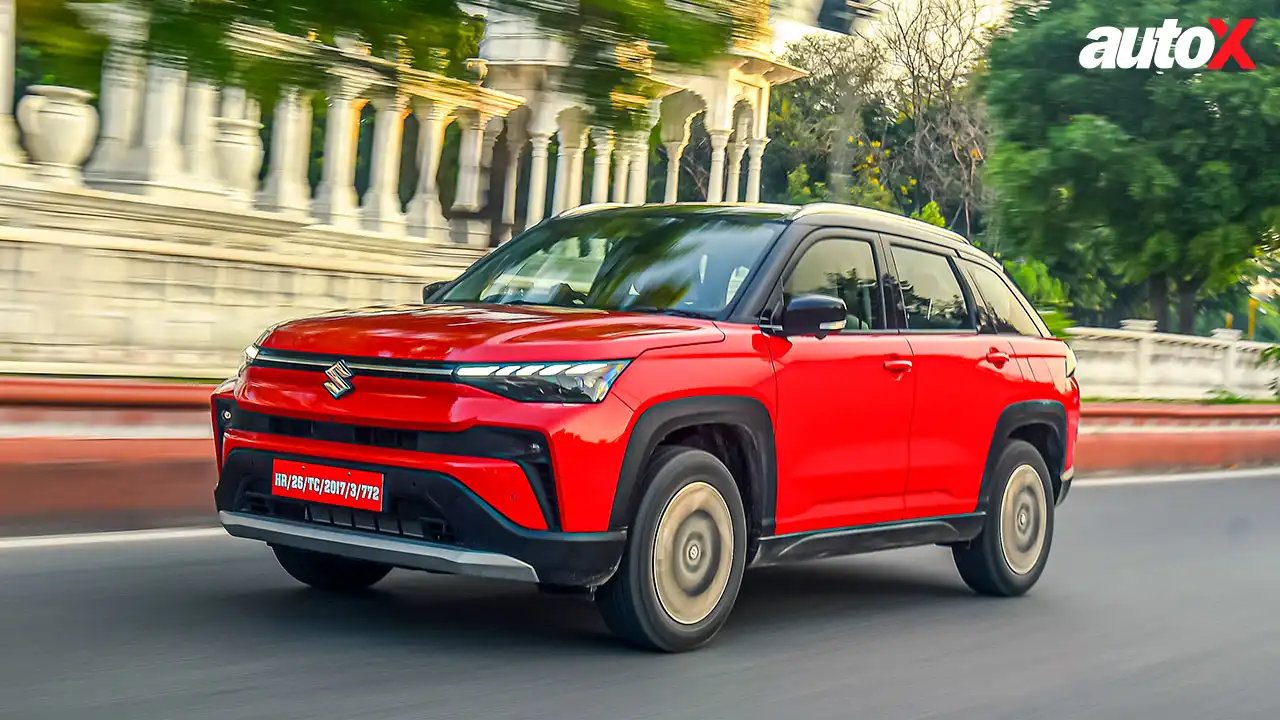
The Maruti Suzuki Victoris takes a different approach, with a more conventional SUV silhouette. Its equipment includes roof rails, aero-inspired body detailing and connected LED tail-lamps. Depending on the variant, buyers can choose LED headlamps, machined alloy wheels and dual-tone exterior finishes.
Hyundai Bayon vs Maruti Suzuki Victoris: Interior

The Bayon’s dashboard houses two 12.3-inch displays for instrumentation and infotainment. Its generative AI voice assistant uses Perplexity technology and SoundHound AI voice processing. Hyundai Bluelink adds more than 70 connected functions, while the system supports over-the-air updates for up to 19 vehicle controllers.

The Victoris counters with a 10.1-inch SmartPlay Pro X touchscreen on higher variants, an available 10.25-inch digital instrument cluster and an eight-speaker Infinity sound system with Dolby Atmos. Other equipment includes ventilated front seats, an eight-way powered driver’s seat, a PM2.5 air-quality display and a gesture-controlled powered tailgate, depending on the variant. Its Suzuki Connect system also offers remote functions and vehicle-status information.
Also Read: Maruti Suzuki Victoris Aurum Edition Launched with new Accessories
Hyundai Bayon vs Maruti Suzuki Victoris: Engine
The Bayon uses a 1.5-litre, four-cylinder naturally aspirated petrol engine producing 113.4bhp and 143.8Nm. Buyers can choose between a six-speed manual gearbox and an iVT automatic. The automatic also gets paddle shifters and Eco, Normal and Sport drive modes. The Victoris offers a 1.5-litre K15C petrol engine developing 102bhp and 139Nm, paired with a five-speed manual or six-speed automatic. A factory-fitted CNG option produces 99bhp in petrol mode and 86.5bhp in CNG mode.
| Engine | Hyundai Bayon | Maruti Suzuki Victoris |
| Engine type | 1,497cc, 1.5-litre, 4-cylinder naturally aspirated petrol | 1,462cc, 1.5-litre K15C Smart Hybrid petrol |
| Maximum power | 113.4bhp | 102bhp |
| Maximum torque | 143.8Nm | 139Nm |
| Gearbox options | 6-speed manual, iVT automatic | 5-speed manual, 6-speed automatic |
The strong-hybrid version uses a 1.5-litre M15D engine with an electric motor and e-CVT transmission. Maruti Suzuki also offers AllGrip Select all-wheel drive on select petrol automatic variants. The Hyundai Bayon has been launched at an introductory price of Rs 9.99 lakh (ex-showroom), while the Maruti Suzuki Victoris comes with a starting price of Rs 10.49 lakh (ex-showroom).


