2026 Audi Q3 First Drive Review: Evolution With Intent
The third-generation Audi Q3 is a key product for the brand. How does it fare on Indian roads, and what does it bring to the table? We find out.



Audi has sold over 26,000 units of the Q3 in India over the years and the company says that 14% of Q3 owners are repeat customers. That’s a decently high rate of brand loyalty. But in the last few years, Audi has been playing catch-up to the likes of Mercedes-Benz and BMW for most part. With the coming of the third-generation Audi Q3, the company plans to flip the script and double its market share in the next 3-5 years and the Audi Q3 will have a big role to play in that. But how does the car drive on Indian roads and does the new-gen SUV have what it takes to take the fight to its German rivals? Read on and find out.
2026 Audi Q3 First Drive Review: Design
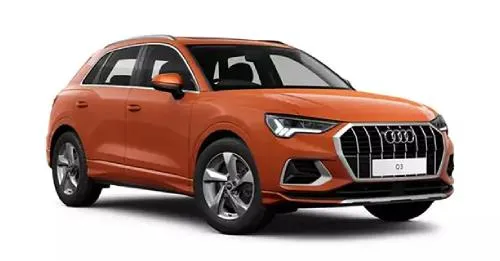
The new Audi Q3 makes a strong first impression. Its broad front grille, sharply styled lighting and upright stance give it considerable road presence, despite its relatively compact footprint. The overall silhouette remains familiar, though, with the third-generation model retaining much of the visual identity of its predecessor rather than attempting a radical redesign.

The lighting is one of the highlights. The higher-spec Zenith variant gets digital matrix LED headlights, lane and orientation lights, and customisable daytime running light signatures. The latter allow owners to personalise the front lighting, while the configurable coming-home and leaving-home signatures add a premium touch. LED rear lights, illuminated Audi rings and projection lights in the exterior mirrors are standard across both variants.
The Sage Green finish on our test car suits the Q3 particularly well. At the rear, the illuminated Audi logo and slim red light strip emphasise the car's width. The absence of a full-width connected taillamp arrangement is also a welcome change in a segment where this design treatment has become increasingly common.

The new 18-inch alloy wheels look smart, particularly with the self-levelling hubcaps that keep the Audi logo upright. The Nova gets multi-spoke wheels, while the Zenith features five-arm aero wheels with a gloss-turned black finish. A panoramic sunroof, acoustic glazing for the front door windows and power-folding, heated, auto-dimming exterior mirrors are standard on both variants.
2026 Audi Q3 First Drive Review: Features
The cabin represents a more substantial change than the exterior. Audi has redesigned the dashboard around a panoramic display comprising a 30.22cm Virtual Cockpit Plus instrument cluster and a 32.51cm MMI navigation plus touchscreen with touch response. The central screen is angled towards the driver, is tactile to operate and offers a relatively intuitive interface.

The new octagonal steering wheel lends the cabin a sportier appearance. The slim stalks on either side initially require some familiarisation, particularly the right-side gear selector, but become easier to operate with time. Material quality is generally good, although the harder plastics around the glovebox feel a little dated against the otherwise premium dashboard.
The front seats are comfortable and should prove suitable for long journeys. Both variants get electrically adjustable front seats, driver-seat and exterior-mirror memory, four-way lumbar support and front-seat heating. The Zenith adds a head-up display and a 12-speaker, 420W Sonos premium sound system, replacing the Nova's 10-speaker, 260W Audi sound system. Both get wireless smartphone connectivity, inductive phone charging, ambient lighting, a frameless auto-dimming interior mirror and a heat-reflecting windscreen.

Rear-seat space is reasonable, and the sliding rear bench allows occupants to adjust the balance between passenger room and luggage capacity. However, accommodating three adults across the back is unlikely to be particularly comfortable. The centre armrest with cupholders and a separate rear climate zone are welcome additions.

Three-zone automatic climate control, a reversing camera, park assist plus, a convenience key and an electrically operated tailgate are standard. The safety equipment includes adaptive cruise control, front emergency brake assist, driver attention and fatigue monitoring, hill-hold and downhill assist, tyre-pressure loss monitoring and rear-seat alert. The Zenith also adds proactive occupant protection and extends the side airbags and head-airbag coverage to the rear.
2026 Audi Q3 First Drive Review: Engine & Performance
Powering the new Q3 is a 1,984cc, 2.0-litre TFSI turbo-petrol engine producing 201bhp, and 320Nm of torque between 1,500 and 4,400rpm. It is paired with a seven-speed dual-clutch transmission and Audi's permanent quattro all-wheel-drive system. The claimed 0-100km/h time is 7.1 seconds, while the top speed is rated at 229km/h.

On the road, the engine delivers its power in a linear, predictable manner. There is sufficient low-end response for everyday driving, while the healthy mid-range makes overtaking relatively effortless. It feels energetic without being unnecessarily aggressive, which suits the Q3's dual role as a city-friendly SUV and a capable highway companion.
The seven-speed DCT works well for the most part, although its calibration isn't entirely seamless. Downshifts are quicker and smoother than upshifts, and there is a slight hesitation when the throttle is suddenly opened. Once underway, however, the gearbox settles into a more natural rhythm.

The quattro system provides reassuring traction when accelerating out of bends or negotiating slippery surfaces. With electronic stability control and traction control switched off, the car can be coaxed into a slide on loose gravel and mud. That said, the system is primarily about maintaining traction and stability in challenging conditions, rather than turning the Q3 into a serious off-roader.
2026 Audi Q3 First Drive Review: Ride & Handling
The Q3's ride quality is something of a mixed bag. At lower speeds, the suspension does a good job of absorbing road imperfections, lending the cabin a comfortable, well-isolated feel. As speeds increase, though, larger undulations become more noticeable, and the ride loses some of its initial composure.

On the highway, the SUV feels stable and planted. The quattro permanent all-wheel-drive system contributes to confidence when cornering, and the chassis feels capable of handling quick changes in direction without unsettling the occupants. Audi drive select and progressive steering are standard, allowing the car's responses to be tailored to different driving conditions.
However, the steering itself is a little too light and doesn't communicate much about what the front wheels are doing. While this makes the Q3 easy to manoeuvre in traffic, a greater degree of feedback would have made it more engaging on a winding road. The handling is competent, but the driving experience doesn't quite match the enthusiasm suggested by the engine and quattro hardware.
2026 Audi Q3 First Drive Review: Rivals & Pricing
Audi is yet to announce prices for the new Q3 in India. The brochure lists two variants, Nova and Zenith, with differences in lighting, wheel design, upholstery and in-cabin equipment. The Zenith gets digital matrix LED headlights, a head-up display and the upgraded Sonos audio system, among other additions. Its primary rivals will include the BMW X1 and Mercedes-Benz GLA, with the Mini Countryman also a potential alternative for buyers considering a premium compact SUV. The Q3's eventual positioning will depend heavily on its pricing and the equipment offered across the range.

European markets also receive diesel and plug-in hybrid powertrain options. Currently, India only gets the 2.0-litre TFSI engine option.
2026 Audi Q3 First Drive Review: Hits & Misses
The Q3's biggest strengths are its well-resolved powertrain, confident road manners and substantial technology upgrade. The customisable digital DRL lighting gives the exterior character, while the self-levelling hubcaps are a small but thoughtful premium detail. The three-zone climate control and the Sonos audio system, on the Zenith trim, further enhance the everyday experience.

The lane and orientation lights are another useful feature. Lane guidance helps the driver judge the car's position and width, making it easier to place the Q3 accurately on the road. The effectiveness of this feature will depend on the precise functionality available in the India-spec car.
There are, however, a few omissions. Ventilated front seats would have been particularly useful in Indian conditions, instead of seat heating. Rear sunblinds would also improve passenger comfort, particularly on longer journeys. The steering could offer more feedback, and the ride could be better controlled over undulating surfaces at speed. Finally, the limited powertrain choice may leave some buyers wanting more options.
2026 Audi Q3 First Drive Review: Verdict
The third-generation Audi Q3 is more evolution than revolution, but the changes are meaningful. The cabin is more modern, the technology package is substantially improved, and the 2.0-litre TFSI engine continues to offer a useful blend of performance and everyday usability. The ride and steering could be better resolved, but neither significantly undermines its overall competence.

These are our first driving impressions, and the final assessment will depend on the India-spec equipment, real-world efficiency and, crucially, the price. If Audi positions the Q3 competitively against the BMW X1 and Mercedes-Benz GLA, it could make a convincing case for itself. Sometimes, a familiar formula with the right improvements is all a successor needs.
Engine: 1,984 cc, 4-Cylinder
Power: 201bhp@4,500-6,000 rpm
Torque: 320Nm@1,500-4,400 rpm
Gearbox: 7-speed DCT, AWD
Fuel: Petrol
Expected Price: ₹60 lakh (ex-showroom)
X-Factor: The Digital Matrix LED lights could be potential game-changers.
|
Pros |
Cons |