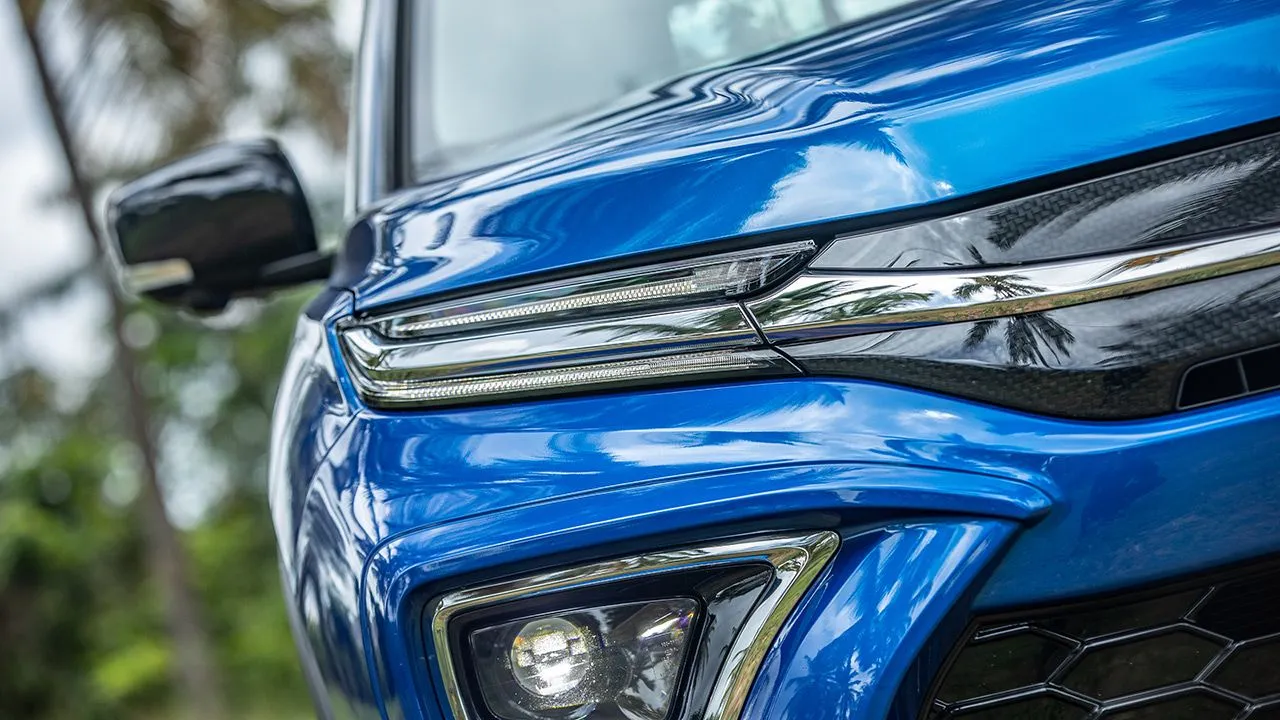
Toyota Urban Cruiser Hyryder
The Toyota Urban Cruiser GyRyder is a modern mid-size SUV with a petrol-hybrid engine and elevated safety and comfort features. It features an 8-way power-adjustable driver seat, an electronic pRead More


Toyota Urban Cruiser Hyryder Features and Specifications
The Toyota Urban Cruiser Hyryder is a 5 Seats-seater car with a wheelbase of 2600 mm and a ground clearance of 210 mm. It comes with manual and automatic transmission options. Different variants include different transmission types and fuel compatibilities.
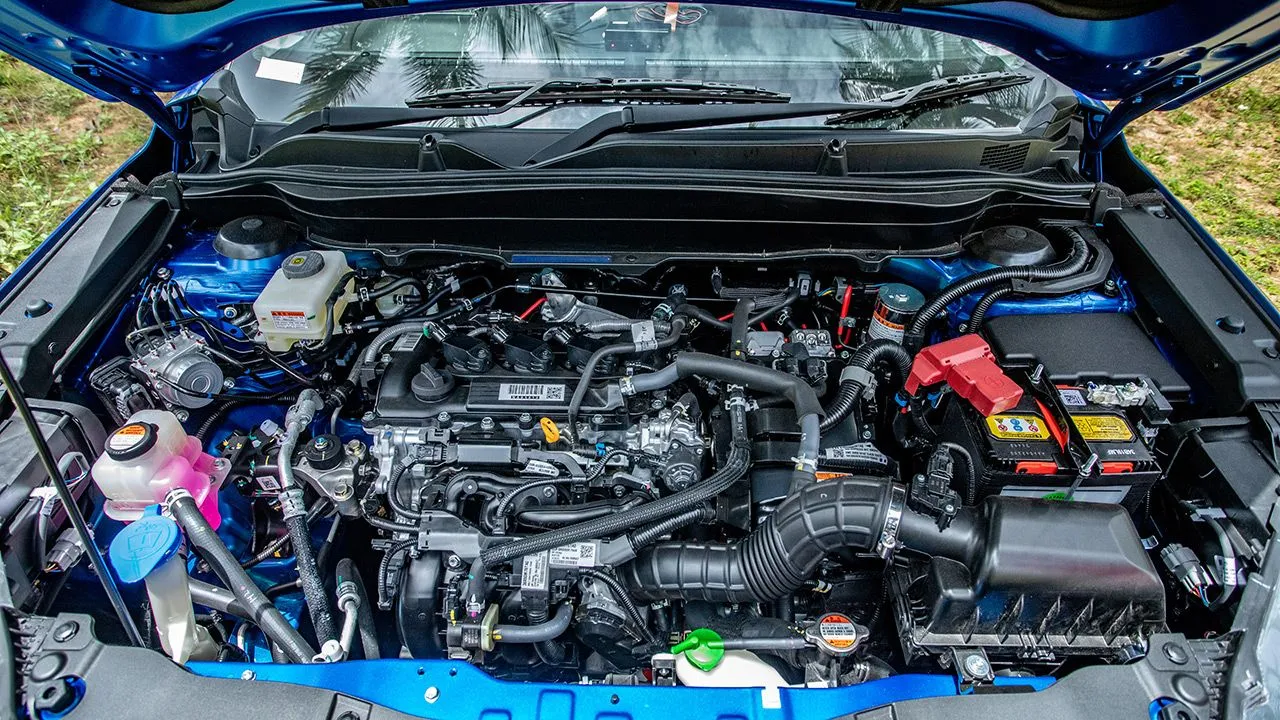
 Engine1462
 Torque136.8 Nm @ 4400 rpm
 Mileage21.11 kmpl
 Power102 bhp @ 6000 rpm
 TransmissionManual
 FuelPetrol
Toyota Urban Cruiser Hyryder Latest Updates
The three-row Toyota Hyryder has been spied testing in India, featuring a longer body and a seven-seating setup. It is expected to come with hybrid engines.
Toyata hikes the prices of the Urban Cruiser Hyryder up to ₹42700 in India.
Toyota has introduced a Tech Package for the Urban Cruiser Hyryder at ₹29,499, featuring three premium genuine accessories. It is available on all variants across dealerships nationwide.
More than 10000 units of Urban Cruiser Hyryder, affected by a fuel indicator defect, were recalled in India.
Toyota Urban Cruiser Hyryder Price
Toyota Urban Cruiser Hyryder is available in 25 variants – the base model is and the top model is
The Toyota Urban Cruiser Hyryder has a hybrid (electric-petrol) powertrain similar to the Maruti Suzuki’s Grand Vitara, just to mention, both cars share the same platform also. This advanced self-charging hybrid electric SUV comes with the credibility of a petrol engine and the futuristic approach towards the era of an electric vehicle. Here is a short know-how of the vehicle’s make and model.
Urban Cruiser Hyryder Engine & Performance
Toyota Urban Cruiser Hyryder Colour Options
Toyota Urban Cruiser Hyryder is available in 11 different colors namely Cafe White, Enticing Silver, Gaming Grey, Sporting Red, Midnight Black, Cave Black, Speedy Blue, Sporting Red with Midnight Black, Enticing Silver with Midnight Black, Speedy Blue with Midnight Black, Cafe White with Midnight Black.
- Cafe White
- Enticing Silver
- Gaming Grey
- Sporting Red
- Midnight Black
- Cave Black
- Speedy Blue
- Sporting Red with Midnight Black
- Enticing Silver with Midnight Black
- Speedy Blue with Midnight Black
- Cafe White with Midnight Black
How is the Urban Cruiser Hyryder?
 Pros
Pros
-
Hybrid technology enhances efficiency.
-
Toyota reliability.
-
Good ride comfort.
-
Stylish design.
 Cons
Cons
-
Rear seat space could be better.
-
Boot space is compromised in the hybrid variant.
-
Expensive compared to rivals.
Toyota Urban Cruiser Hyryder Expert Reviews

By Ishan Raghava
12 Sep, 2022
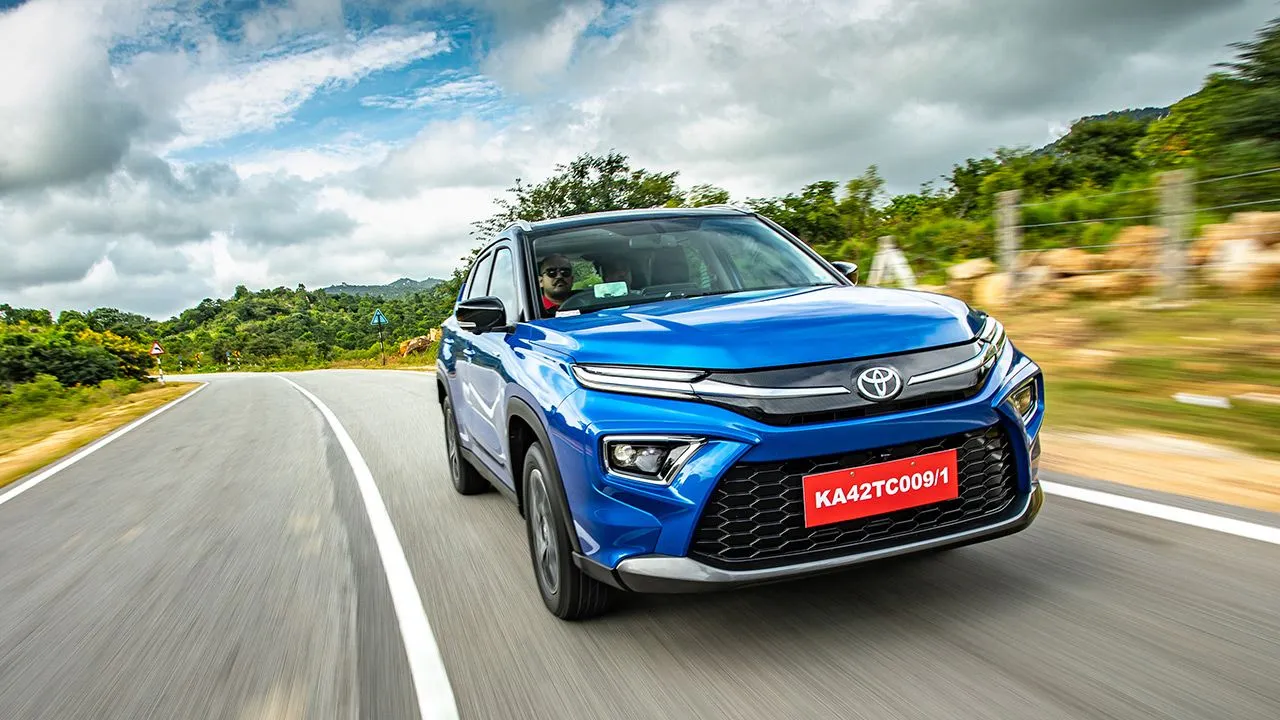
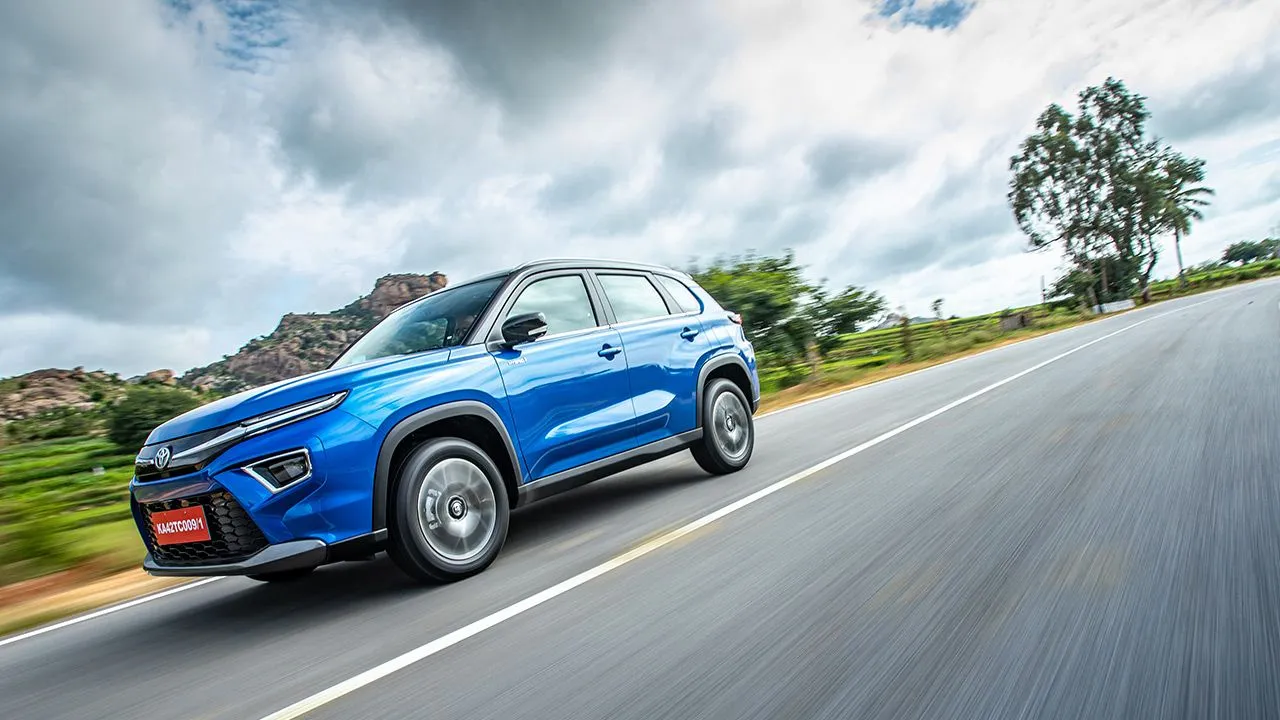
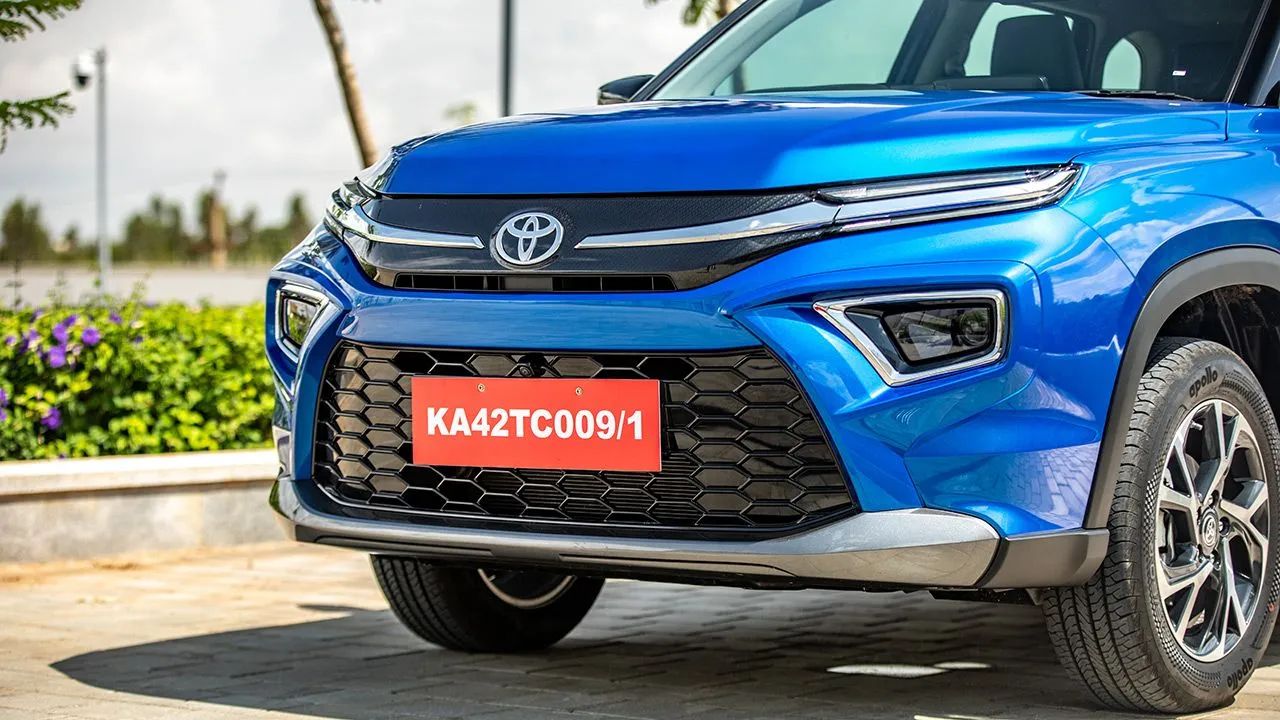
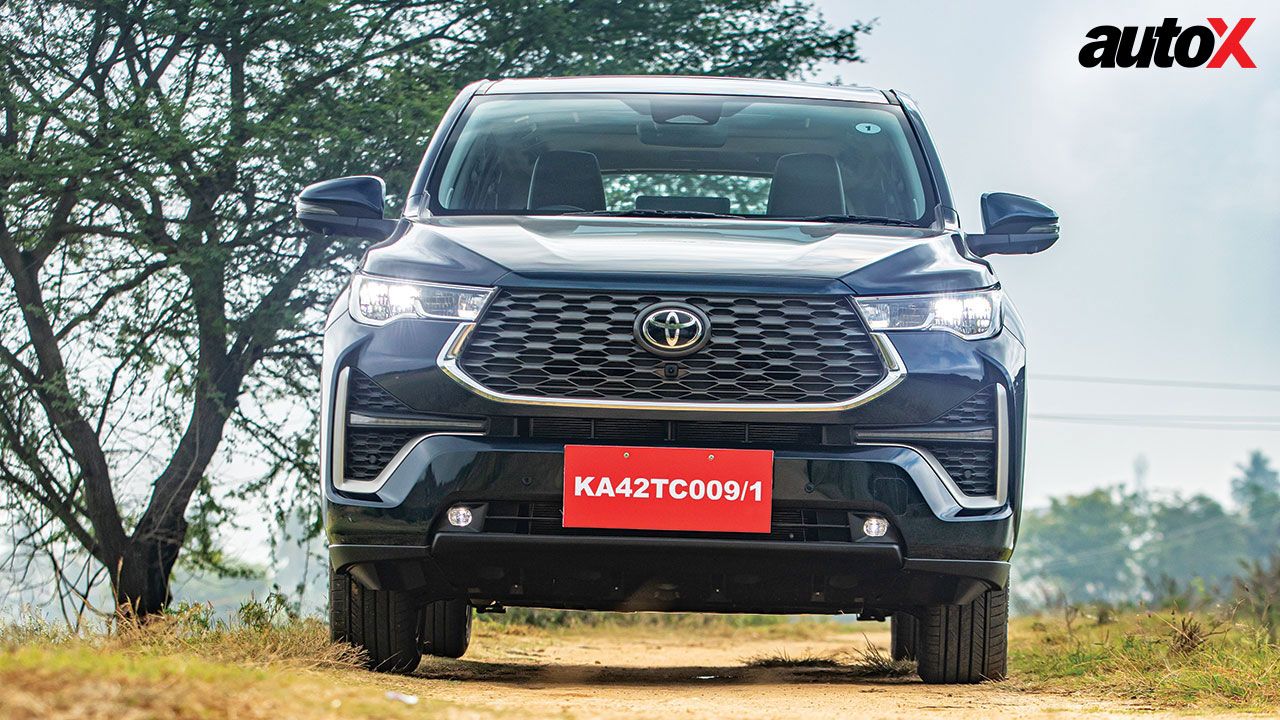
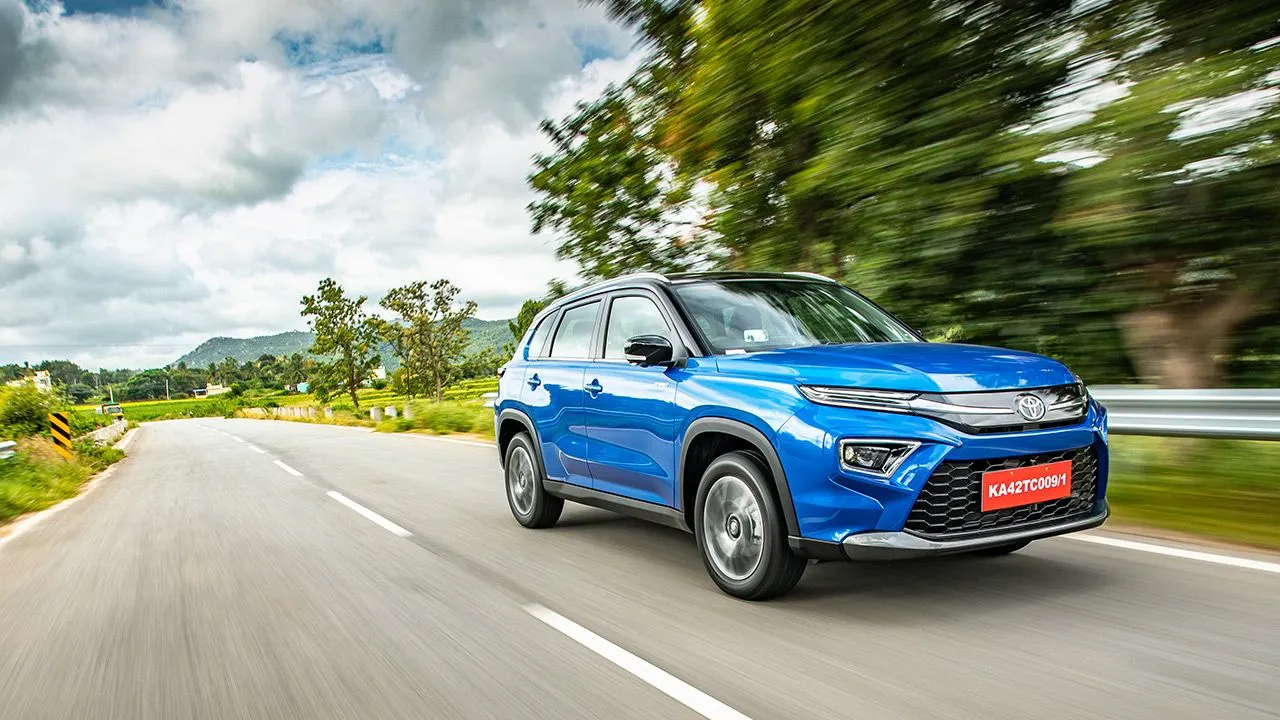
Is Toyota Hyryder’s strong hybrid technology efficient enough to convince customers to shift to hybrids? And how does it affect the driving appeal of the new SUV? We find out... Running costs of vehicles today is a common grouse of most Indian customers. And government policies and rising fuel prices are not making things easier. Plus, the fuel efficiency in our busy traffic conditions means that customers have begun to feel the brunt of refilling fuel tanks of their vehicles, and the government’s non-favourable policy towards the life cycle of diesel engine vehicles also deters most customers from buying them. Not to mention that diesel vehicles are getting more and more expensive, with increasingly difficult emission norms effectively killing small diesel engines in the Indian market. In such a scenario, does a hybrid powerplant make any sense? Well, Toyota, and by association Maruti Suzuki, seem to think so. Maruti Suzuki has been selling mild hybrid cars in India for a while, but this is the first time that either of the two manufacturers is launching a strong hybrid – with an EV mode too – for the masses. The Prius not being a mass market effort. Both manufacturers claim that not only will the hybrid system significantly improve fuel efficiency, thereby reducing running costs, but also reduce air pollution – in heavy traffic, the SUV simply switches to the EV mode and shuts the engine down. We drove the Urban Cruiser Hyryder in Bangalore to find out if these claims are true. https://www.youtube.com/watch?v=Y8RZUUXVs58 Joint Development The new Urban Cruiser Hyryder – to call it by its full name – is based on Maruti Suzuki’s global platform, which also underpins the Brezza. However, in this avatar, the Hyryder features a longer overall length, at just over 4,365mm, and a larger wheelbase, at 2,600mm. Both the Toyota Hyryder and Maruti Suzuki’s Grand Vitara are essentially the same product with a few visual changes. I must confess that I was pleasantly surprised by the way the Hyryder looks on the road, particularly, because I was underwhelmed by its design when it was revealed on the stage. Thankfully, on the road, with its inflated wheel arches, 17-inch rims, and sharp front and rear design, the Hyryder has a good road presence. The restrained use of chrome all across the car also adds to its overall appearance. The front end with its twin-layered headlight design and the rear with its sweeping taillights further give the Hyryder an excellent aesthetic appeal. Our test car looked particularly good in the bright blue paintwork, which contrasts well with its black roof. Inside the car, you can obviously feel the Maruti origins, given that the steering wheel, centre console, and many other control surfaces are from the Maruti Suzuki stable. The dual-tone interior of our test car looked quite pleasing though. Overall, the interior is quite a nice place to be, especially with the sharp-looking 9-inch multimedia touchscreen and digital instrument cluster. The driver also gets a HUD, which is quite useful in the strong-hybrid variant of the Hyryder – it not only shows speed and other data but also charging status and driving modes employed by the engine management. Seamless Integration Coming to the mechanical side of things, the Hyryder will be offered with two engine options – a mild hybrid and a strong hybrid – both paired with petrol engines. The mild-hybrid option, powered by a 4-cylinder 1.5-litre engine, will be available with both a 6-speed automatic and a 5-speed manual. The top-spec variant will have all-wheel drive with selectable driving modes. Our test car was the strong hybrid variant, with the 1.5-litre 3-cylinder engine paired to an e-CVT and a larger battery pack. In this trim, the Hyryder has a power output of 114bhp, along with a substantial torque output – Toyota hasn’t revealed the combined torque output of the hybrid unit. Once you start driving, you immediately notice that at slow and cruising speeds, the strong hybrid system of the Hyryder often goes into EV-only mode, shutting off the engine altogether and thereby contributing to the overall efficiency of the power plant. In fact, I was surprised to see that in the real world, even with my throttle-heavy driving style, we managed to get around 22km/l, which means that for regular drivers, the efficiency figure should be around 24 – 25km/l – not too far off from the official efficiency rating of just under 28km/l. Coming to my usual bugbear, the e-CVT transmission of the Hyryder did leave me underwhelmed. While there is ample torque and power available, the rubber band effect of the power delivery impacts the driving experience at high speeds. On the other hand, the ride comfort of the Hyryder is fantastic, and its suspension is tuned to deal with both good and bad roads effectively. This means that the SUV maintains excellent stability at three-digit speeds on smooth stretches, but, at the same time, doesn’t face any issues over bad roads either. Not Perfect Now, the Hyryder does have a few shortcomings. First, the headroom of the rear seat is compromised – people above six feet in height will find it a rather constricted place to be. Second, the Hyryder also doesn’t have a flat floor in the rear, meaning that a passenger sitting in the middle of the rear seat will have a tough time. Third, with its large battery, the strong-hybrid variants of the Hyryder have a rather limited boot capacity. This means that on long road trips you will have to compromise on the amount of luggage. On the other hand, the Hyryder really has very low running costs, despite being petrol powered, and could very well be a great choice for a lot of Indian customers dealing with the inflated fuel prices right now. Its efficiency levels – at least of the strong-hybrid variants – are high enough to make it a very attractive proposition for many customers. In the ongoing debate about hybrid vs electric suitability for the Indian market, I’ve always sided with hybrids for obvious reasons – there’s no need for particularly large batteries or charging infrastructure – and the Hyryder proves that a strong hybrid can offer efficiency levels that regular engines can’t match. Plus, with an EV-only drive mode, you can do short distances on electric power alone. However, the final word on hybrids and their suitability will also depend on the price premium that a strong-hybrid powertrain demands over a regular petrol engine car. If the difference in price is not too high, the lower running costs of Hybrids could make them very attractive to Indian customers, and Toyota could be the first manufacturer to benefit from it. [tabs] [tab title="Toyota Urban Cruiser Hyryder V e-Drive Hybrid"] Engine: 1,490cc / 3-Cylinder / Atkinson Cycle Motor: AC Synchronous Fuel: Petrol Transmission: e-CVT / Front-Wheel Drive Power: 114bhp (Combined) Torque: 141Nm (Hybrid System only) Price: ₹18.99 Lakh (Ex-Showroom, Delhi) X-Factor: With its good looks, great ride, and terrific fuel efficiency, the Hyryder has the potential to offer an alternative to Indian customers. Pros • Efficiency • Ride comfort Cons • Rubber-band effect of CVT • Rear headroom • Boot space [/tab] [/tabs] Read more: Toyota Urban Cruiser Hyryder prices announced
All Toyota Urban Cruiser Hyryder User Reviews (1)
cool testingcool testingcool testingcool testingcool testingcool testingcool testingcool testingcool testingcool testingcool testingcool testingcool testingcool testingcool testing
cool testingcool testingcool testingcool testingcool testingcool testingcool testingcool testingcool testingcool testingcool testingcool testingcool testingcool testingcool testingcool testingcool ...Read More
By Divyank Bansal
27 Apr, 2023
Toyota Urban Cruiser Hyryder Dealers in New Delhi
autoX has a list of 0 authorized Toyota Urban Cruiser Hyryder dealers in India. They provide servicing to all the Toyota cars including the Urban Cruiser Hyryder. Find here the contact information, full address, and Google map directions of the nearest dealer for your Urban Cruiser Hyryder around you.

Compare Toyota Urban Cruiser Hyryder with Similar Cars
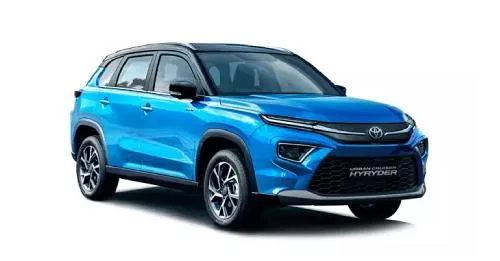
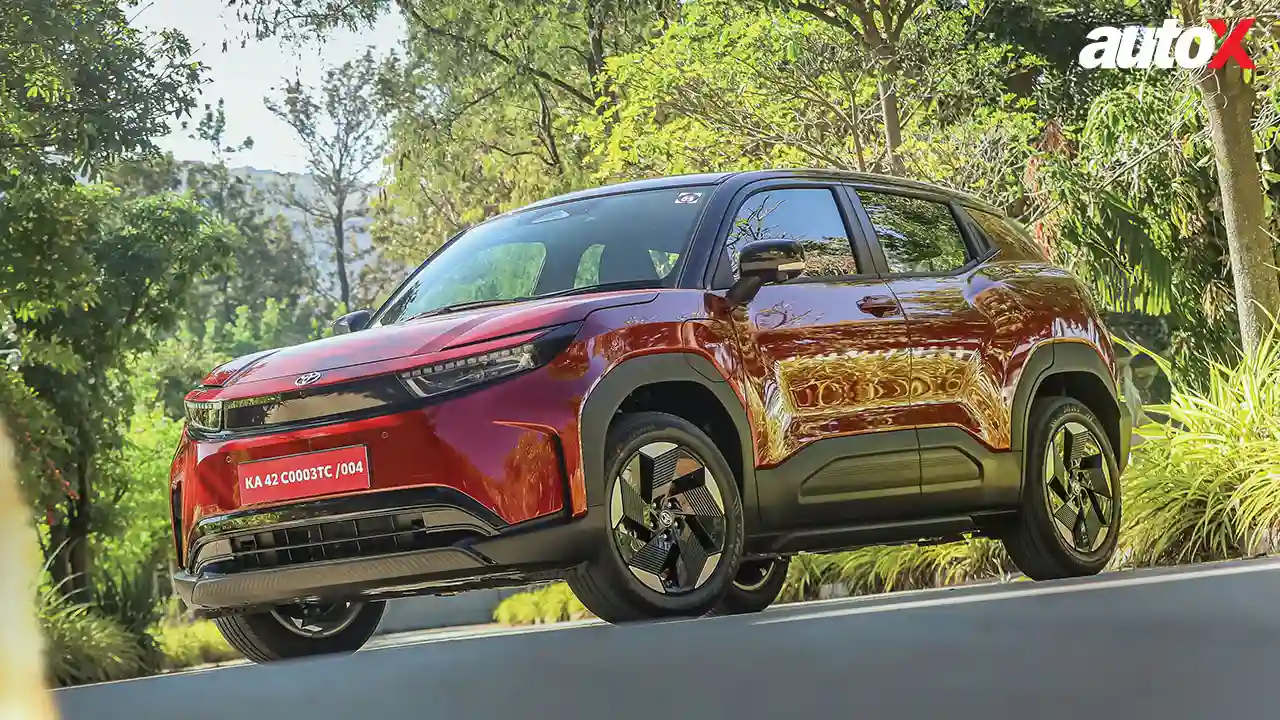
Urban Cruiser HyryderToyota
Ex-Showroom Price
₹ 10.86 Lakh
onwards
Engine
1462 - 1490 cc
Fuel Type
CNG / Hybrid (Electric + Petrol) / Mild Hybrid(Electric + Petrol) / Petrol
Transmission
Automatic / Automatic (CVT) / Automatic (e-CVT) / Automatic (TC) / Manual
Mileage
27 Kmpl
Power
91 bhp @ 5500 rpm
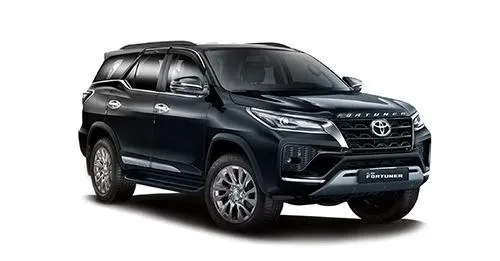
FortunerToyota
Ex-Showroom Price
₹ 33.43 Lakh
onwards
Engine
2694 - 2755 cc
Fuel Type
Diesel / Mild Hybrid (Electric + Diesel) / Petrol
Transmission
Automatic / Automatic (TC) / Manual
Mileage
14 Kmpl
Power
201 bhp @ 3400 rpm
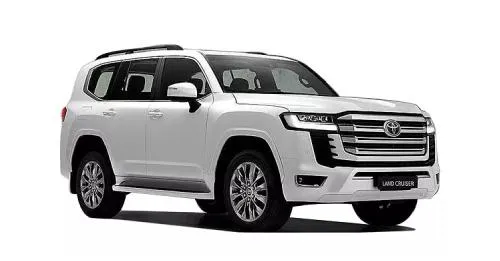
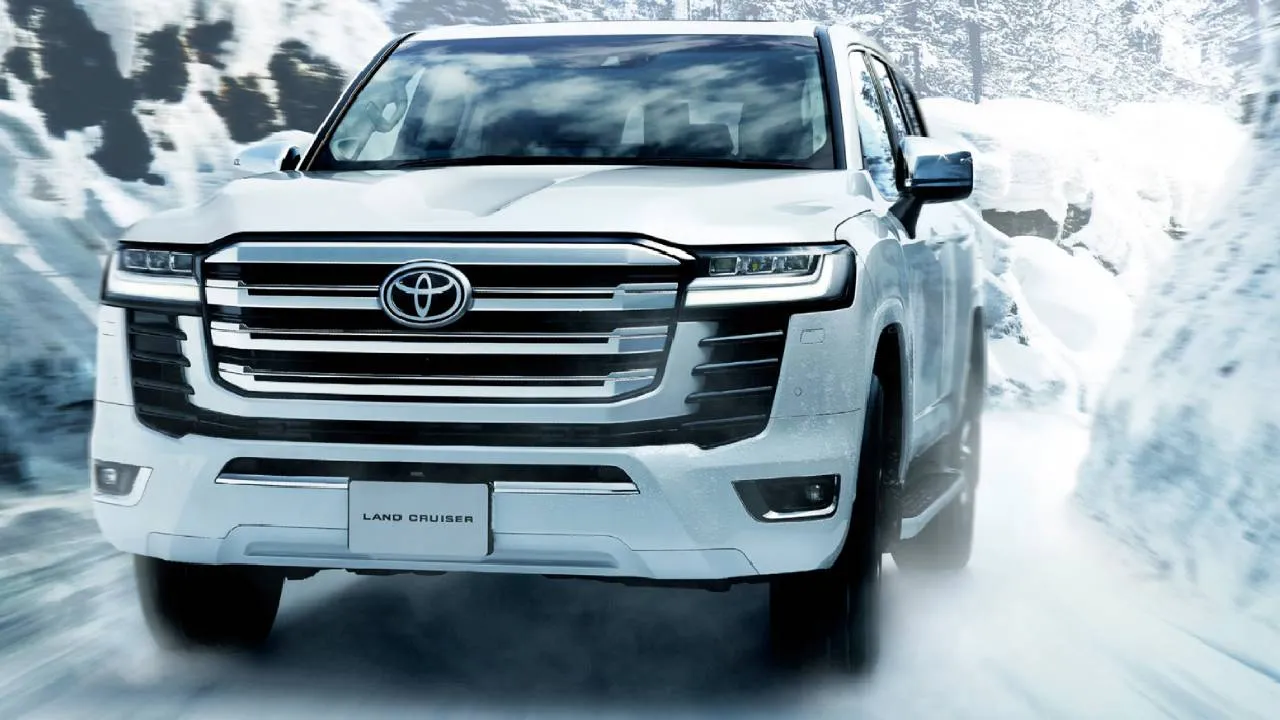
Land CruiserToyota
Ex-Showroom Price
₹ 2.10 Crore
onwards
Engine
3346 - 3346 cc
Fuel Type
Diesel
Transmission
Automatic
Mileage
11 Kmpl
Power
304 bhp @ 4000 rpm
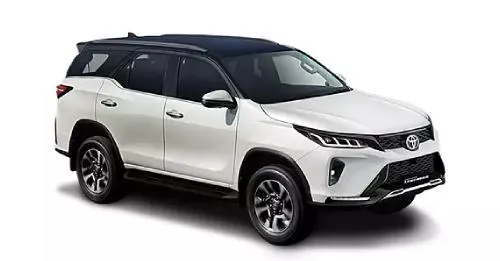
Fortuner LegenderToyota
Ex-Showroom Price
₹ 41.54 Lakh
onwards
Engine
2755 - 2755 cc
Fuel Type
Diesel / Mild Hybrid (Electric + Diesel)
Transmission
Automatic (TC)
Mileage
14 Kmpl
Power
201 bhp @ 3000 rpm
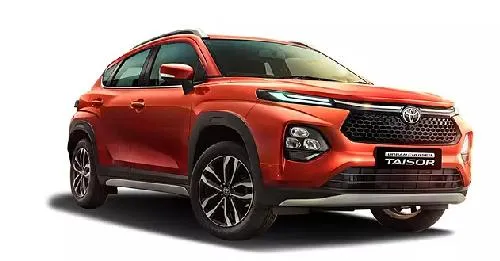
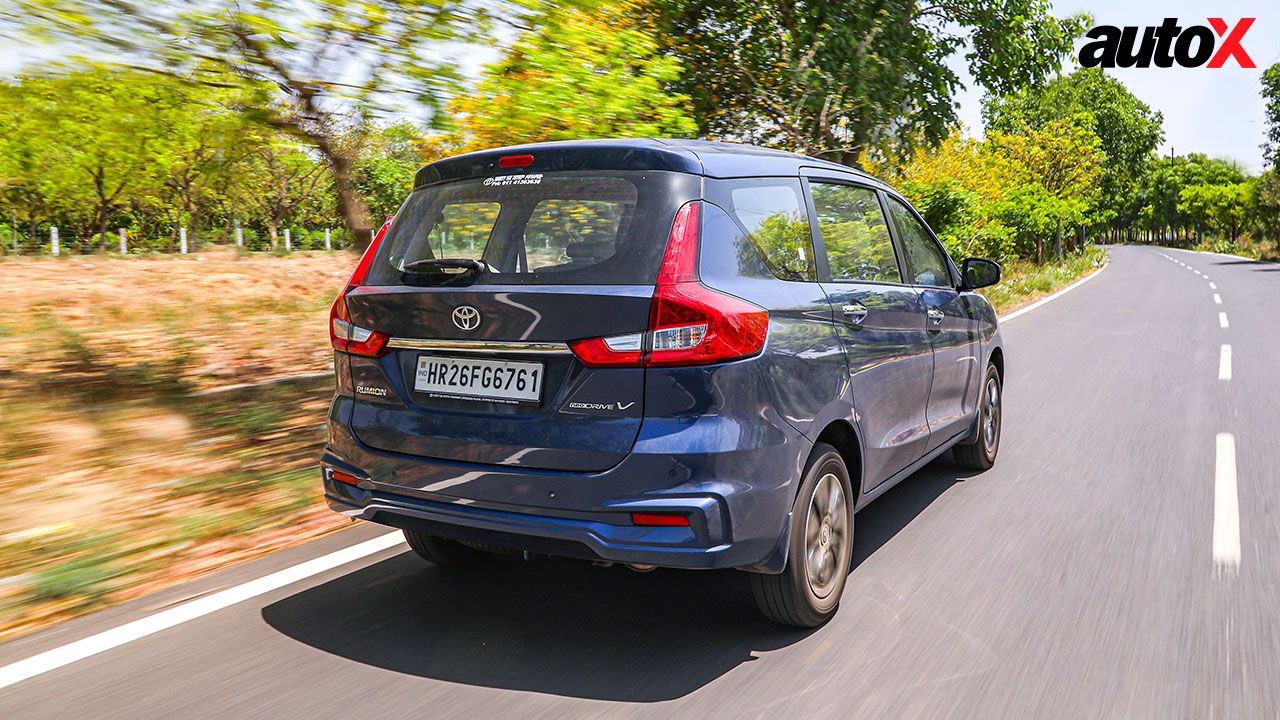
Urban Cruiser TaisorToyota
Ex-Showroom Price
₹ 7.21 Lakh
onwards
Engine
998 - 1197 cc
Fuel Type
CNG / Petrol
Transmission
Automatic (AMT) / Automatic (TC) / Manual
Mileage
22 Kmpl
Power
99 bhp @ 5500 rpm
Toyota Urban Cruiser Hyryder Images
Toyota Urban Cruiser Hyryder Questions & Answers
Q: What drivetrain and powertrain options does the Toyota Urban Cruiser HyRyder offer?-
Q: Does the Toyota Urban Cruiser HyRyder support features like Android AutoApple CarPlay?+
Q: What safety features are available in the Toyota Urban Cruiser HyRyder?+
Q: Is a limitededition or special package available for the Toyota Urban Cruiser HyRyder?+
Q: What exterior styling elements distinguish the Toyota Urban Cruiser HyRyder?+
Q: Does the Toyota Urban Cruiser HyRyder offer cruise control and TPMS?+
Toyota Urban Cruiser Hyryder Price in India
| City | Ex-showroom Price |
|---|---|
| Bulandshahr | Rs. 10.86 Lakh onwards |
| Meerut | Rs. 10.86 Lakh onwards |
| Noida | Rs. 10.86 Lakh onwards |
| Ghaziabad | Rs. 10.86 Lakh onwards |
| Greater Noida | Rs. 10.86 Lakh onwards |
| Modinagar | Rs. 10.86 Lakh onwards |
Toyota Urban Cruiser Hyryder Brochure
Download the brochure to view detailed specs and features