Toyota Fortuner
The Toyota Fortuner is a big and powerful SUV with 2WD and 4WD drivetrain options. It features several safety traits and an 8-inch touchscreen infotainment system with Apple CarPlay and Android Read More


Toyota Fortuner Features and Specifications
The Toyota Fortuner is a 7-seater car with a wheelbase of 2745 and a ground clearance of 225. It comes with manual and automatic transmission options. Different variants include different transmission types and fuel compatibilities.
 Engine2694
 Torque245 Nm @ 4000 rpm
 Mileage11.5
 Power164 bhp @ 5200 rpm
 TransmissionAutomatic
 FuelPetrol
Toyota Fortuner Latest Updates
The next-gen 2026 Toyota Fortuner launches soon in India, packing ADAS, a bigger 12.3-inch infotainment screen, and more—while sticking to the familiar 2.7L petrol and 2.8L diesel engines.
Toyota Fortuner Price
Toyota Fortuner is available in 14 variants – the base model is and the top model is
Toyota Fortuner: Overview
Indians seem to be enamoured at the very concept of an SUV. Perhaps it is the butch stance, the go-anywhere ability and the capacity to seat huge families that happen to be the reason behind it. And in Toyota's case, reliability is another important factor to be considered. The first-generation Fortuner sold like candy, and the second-generation model is no different.
Toyota has updated the second-generation Fortuner for 2021 with a mid-life facelift update, and it is now even more imposing than before, plus, it now packs all the necessary equipment that was missing in the last model. Also, as a result, the Toyota Fortuner price has seen some revisions, so let’s see if it strikes up as a value-for-money package or not.
Fortuner Engine & Performance
Toyota Fortuner Colour Options
Toyota Fortuner is available in 7 different colors namely Sparkling Black Cystal Shine, Phantom Brown, Super White, Attitude Black, Avant-Garde Bronze, Platinum White Pearl, Silver Metallic.
- Sparkling Black Cystal Shine
- Phantom Brown
- Super White
- Attitude Black
- Avant-Garde Bronze
- Platinum White Pearl
- Silver Metallic
How is the Fortuner?
 Pros
Pros
-
Powerful engines with strong road presence.
-
Good resale value.
-
Excellent off-road capability.
-
Spacious and comfortable cabin.
 Cons
Cons
-
Expensive compared to rivals.
-
Stiff ride at times.
-
Fuel efficiency is low.
Toyota Fortuner Expert Reviews

By Jared Solomon
22 Mar, 2021
The Fortuner has always been at the forefront of the SUV craze in India ever since it was launched. But now, with a few modifications and more power, it’s all set to seriously challenge the competition. Global automobile sales today are dominated by SUVs. And in India, it seems that compact SUVs are taking over the entire SUV market. However, the Toyota Fortuner still is – and will be for some time to come – the most popular and sought-after premium SUV in the country. With a facelift, a new top-end variant, and a more powerful diesel engine, the Fortuner intends to cement its position in the SUV space as the reigning king despite all the competition. So, we got our hands on the top-end diesel automatic variant to see if the new Fortuner has the substance to actually realise its intentions. The updates Despite the fact that the Fortuner has only received a few minor updates, it still looks and feels as imposing as ever. And even in the new facelift avatar, there is hardly any difference in its road presence. The biggest changes to the exterior include a new front fascia and bumper, as well as new LED headlights. At the rear, the only change is a new taillight design. Plus, the addition of new dual-tone alloy wheels is a nice touch. Inside, almost everything is exactly the same as before. In typical Toyota fashion, the cabin is modern yet simple, and the ergonomics are spot on. The only addition to the dashboard is a brand-new bigger 8-inch touchscreen, which also comes with Apple CarPlay and Android Auto. The Fortuner still comes with a JBL sound system, a 360°-view camera, and ventilated front seats. The engine options also remain the same, which includes a 2.7-litre petrol and a 2.8-litre diesel unit. However, the diesel engine now generates more power and the one we tested was the 4x4 AT variant. Performance As mentioned, the diesel engine has received a significant bump in power – it now produces 201bhp. The AT variants now produce more torque, which is rated at 500Nm. This diesel engine has always been well-built, powerful and reliable, and with the power bump, which you can most certainly feel while driving the car, things have become a lot more interesting. Now, there are three driving modes to choose from. In Eco or Normal mode, you won’t really taste the full effects of the increased power. However, put the car in Sport mode and you can feel the added power rushing through its every part like a bolt of lightning summoned by the god of thunder. Okay, the last part might not actually be true, but you get the idea. The engine is, by no means, the smoothest, but it sure makes this heavy 2.7-tonne vehicle accelerate rather quickly. Driving on the highway is now a lot more enjoyable, as you have more power at your disposal for better overtaking manoeuvres. The overall driving dynamics are still the same, which means that it’s still not the easiest car to live with as an everyday vehicle. The steering is still heavy, the suspension is slightly on the stiff side, and there is a lot of body-roll around corners. The good thing, though, is that it still inspires great confidence in you on rough roads. Also, you can bully your way through traffic in this massive and intimidating SUV. Also, the fact that it has proper 4x4 capability, with a locking differential, further adds to the Fortuner’s reputation for outstanding toughness and terrain-conquering abilities. Verdict The new Fortuner retains all of its amazing abilities and features. It also continues to be one of the most imposing and strongest-looking vehicles in its segment. With a slight design tweak, it looks a bit more relevant. Also, the diesel version now offers enough power to blast away the competition. Even though the Fortuner is not the most comfortable or refined car to live with, its reputation of being an incredibly reliable, tough and sturdy vehicle will always make it highly desirable in the Indian market. Even with the marginal price hike, the Toyota Fortuner still has enough going for it to make sure that it holds on to the throne of the premium SUV space. The Fortuner’s strong and muscular design is what catches everyone’s attention when you are driving down the road. It’s an imposing vehicle on the road, and even off it. [tabs] [tab title="Toyota Fortuner 4x4 AT"] Engine: 2,755cc / 4-Cylinder / DOHC / Turbocharged Fuel: Diesel Transmission: 6-Speed AT / Four-Wheel Drive Power: 201bhp @ 3,000 – 3,400rpm Torque: 500Nm @ 1,600 – 2,800rpm Price: ₹37.43 lakh (Ex-Showroom) X-Factor: A tough and reliable SUV that demands respect wherever it goes. Pros • Reliability • Engine performance Cons • Bumpy ride • Cabin quality [/tab] [/tabs] Read more: 2021 Toyota Fortuner, Legender launched in India Toyota has a new-age strategy of consolidation

By Abhishek Chaliha
7 Nov, 2016
India's bestselling premium SUV is back in its new second generation avatar. We go for a drive in one to access its evolution. Why does India love the concept of an SUV so much? When I first moved to the Northern part of the country I was absolutely baffled by the number of SUVs on the road. Almost all of them in white and most of them happened to be one particular model, the Toyota Fortuner. As I got a hang of things here, I understood that people aspired to the status symbol of politicians zipping around in their white SUVs for some reason. And as for the Fortuner, well it is India’s definitive premium SUV thanks to its indestructible nature, bullet proof reliability and relatively affordable maintenance costs. Despite selling well consistently over its lifespan, you would have to admit that the Fortuner was getting a bit long in the tooth in recent times. And competition from more modern rivals was putting a fair amount of heat on it. Toyota saw this coming and had an ace up its sleeve in the form of a new second generation model. But in order to find out if you can actually call it an ace we went over to drive it in the scenic environs of Vagamon in Kerala, ahead of its launch. Now we have seen images of the second generation Fortuner earlier but even in the metal, the new model appears to have a few too many sleek design lines which take it away from the traditional butch design theme of the concept of SUVs. Nevertheless, design is a subjective element and we will have to wait and see how the Indian market accepts the new Fortuner. On the face of it though, the Fortuner’s design seems to tick the essential boxes for our customer with generous doses of chrome and good road presence owing to its large dimensions. Like the exteriors, the interiors of the new Fortuner are radically new as well. Gone is the plain-Jane layout of the earlier car and what you have here instead is a modern layout generously draped in leather. Quality of plastics and fit and finish is decent too. While the seats are supportive, they could have offered more back support. Unfortunately, the electrically adjustable driver’s seat does not come with bolster adjust. The rear seat offers plenty of leg space and under thigh support but the third row as is always the case isn’t comfortable for long journeys. The equipment list of the new Toyota Fortuner packs in all of the essentials and a few extras such as a touchscreen infotainment system, cruise control, keyless entry and start / stop, rear AC vents, cooled glovebox, ISOFIX child restraint system for the rear seat with tether anchor, powered tail gate and more. On the safety front, the new Toyota Fortuner gets seven airbags, ABS with EDB and traction control for four-wheel drive models. 4WD models also get downhill assist control and all automatic models get hill start assist. In order to ensure the new Fortuner is as modern as it should be, Toyota has also fit the SUV with a new set of powertrain options. These new engines are already doing duty in the new Toyota Innova Crysta and consist of the 2.8 litre diesel engine and the 2.7 litre petrol engine. And while they perform well in the new Innova, I was eager to find out how well they perform in the larger and heavier Fortuner. Right from the moment you crank the engine you can tell that this new 2.8 litre, four cylinder turbo diesel engine is far more refined than the engines which served the earlier model. This oil burner is rather quiet while idling and NVH is well contained. The model I was driving happened to be the automatic four-wheel drive version which comes with a six-speed automatic transmission and shift-on-the-fly four-wheel drive system. With 174BHP on tap at 3,400 rpm and a peak torque of 450Nm between a handy 1,600 rpm and 2,400 rpm, the new Toyota Fortuner offers decent performance from the get go. Power delivery is linear and in-gear acceleration is adequate under normal circumstances. However, you do feel the six-speed automatic gearbox limiting the potential of the engine. Overtaking on single lane roads reveals slow gear shifts even with the engine in Power mode and the gearbox in Sports mode. Using the paddle shifters or the gear lever to change gears manually does not speed things up either. The engine also gets an Eco mode which muffles throttle response in the interest of fuel economy. While all of this is well and good, NVH levels are fairly high at the top of the rev range when a lot of engine noise filters into the cabin. This is the only glitch in what otherwise feels like a modern powertrain. Toyota has also addressed the heavy steering of the earlier model. Although it would appear that they took the issue a little too seriously as the steering in the new model is very light and feels vague at times. Especially while driving over soft surfaces off-road. Talking about issues, the previous generation was often criticised for its bouncy ride. Well like the earlier model, this second gen model too is based on its Hilux pick-up truck sibling, which means it also comes with a ladder frame chassis. The new car gets a more rigid chassis and bigger suspension components. The end result is that the new Fortuner’s ride is more comfortable than before. But there is no getting away from the fact that there is still a ladder frame chassis underneath as road imperfections still filter through. And over sharper bumps and ruts the suspension is a bit noisy while going about its business. We also took the new four-wheel drive Fortuner off tarmac for a bit and in 4-High mode the four-wheel drive system had no trouble whatsoever over slushy terrain. I also managed to sample the petrol engined Fortuner which is the only petrol premium SUV in its segment. Like the diesel model, this too came with a six-speed autobox and like the diesel model, the gearbox limited the potential of the engine. Although with 163BHP of max power at 5,200 rpm and a mere 245Nm of peak torque at 4,200 rpm, this 2.5 tonne SUV isn’t as agile as it should be. While the unit is refined and lets out a nice snarl at higher revs, it could do with more power. Having said that, if you drive this SUV in urban environs which also means slower speeds, you won’t have much to complain about. What you will have instead is a refined SUV that is rather easy to drive with its light controls. The petrol model too gets Eco and Power driving modes, although it is not available with four-wheel drive. Other gearbox options include a five-speed manual gearbox for the petrol model and a six-speed manual for the diesel model. So there you have it, Toyota’s new second generation Fortuner is here and it feels thoroughly modern inside out. It’s better equipped and comes with a set of new powertrain options that make it more competent than ever before. And while it may have a few limitations as is the case with almost all cars, the Toyota Fortuner brand is built on such strong credentials that it will simply fly off the shelves as soon as it goes on sale! https://www.youtube.com/watch?v=tn9ZUg6FfYk [tabs] [tab title=" 2.8 Diesel AT 4WD "] Engine: 2,755cc / 4-Cylinders / 16 Valves / DOHC Transmission: 6-Speed Automatic / Four Wheel Drive Power: 174bhp @ 3,400rpm Torque: 420Nm @ 1,600-2,400rpm Price: Rs 31.12 lakh (ex-showroom, Delhi) [/tab] [tab title=" 2.7 Petrol AT"] Engine: 2,694cc / 4-Cylinders / 16 Valves / DOHC Transmission: 6-Speed Automatic / Rear Wheel Drive Power: 163bhp @ 5,200rpm Torque: 245Nm @ 4,000rpm Price: Rs 27.61 lakh (ex-showroom, Delhi) [/tab] [/tabs] Also read: New Toyota Fortuner launched at Rs 25.92 lakh
Toyota Fortuner Dealers in New Delhi
autoX has a list of 0 authorized Toyota Fortuner dealers in India. They provide servicing to all the Toyota cars including the Fortuner. Find here the contact information, full address, and Google map directions of the nearest dealer for your Fortuner around you.

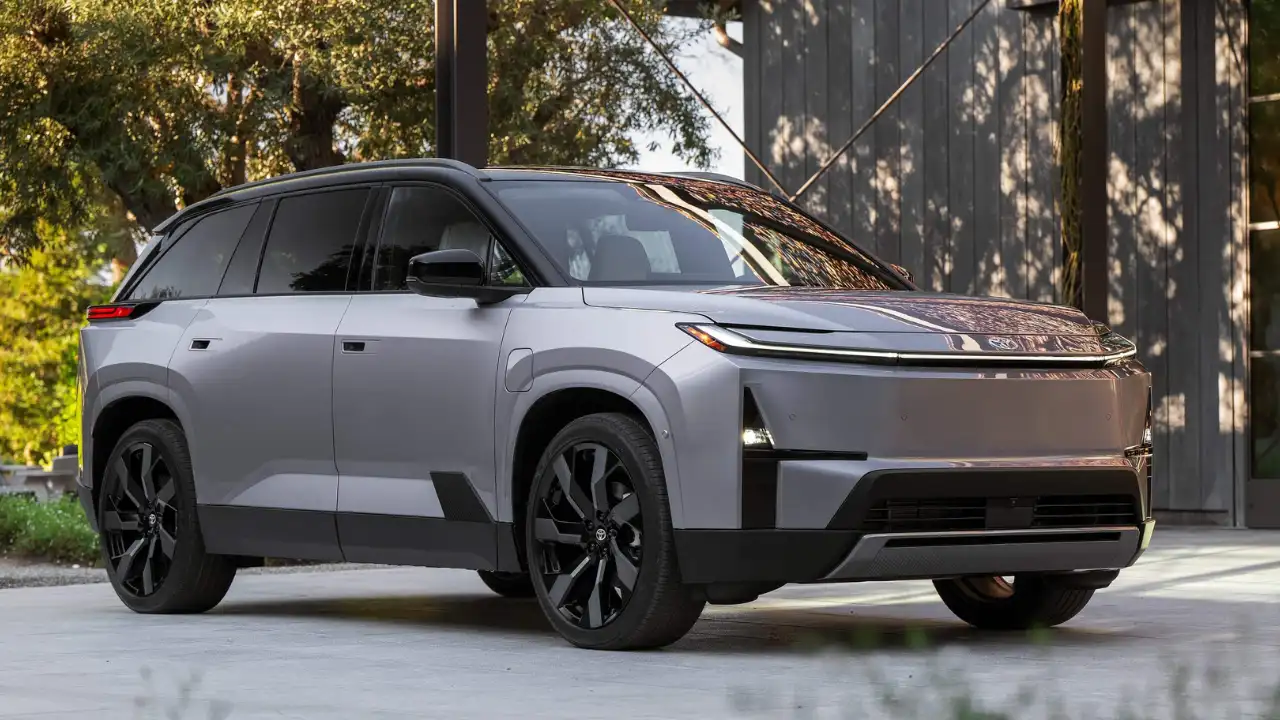
Compare Toyota Fortuner with Similar Cars
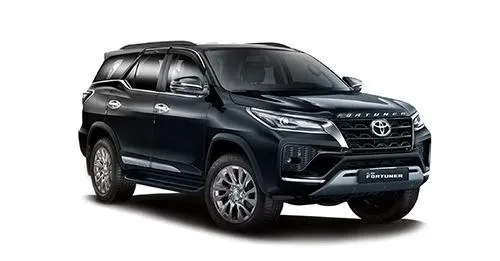
FortunerToyota
Ex-Showroom Price
₹ 33.43 Lakh
onwards
Engine
2694 - 2755 cc
Fuel Type
Diesel / Mild Hybrid (Electric + Diesel) / Petrol
Transmission
Automatic / Automatic (TC) / Manual
Mileage
14 Kmpl
Power
201 bhp @ 3400 rpm
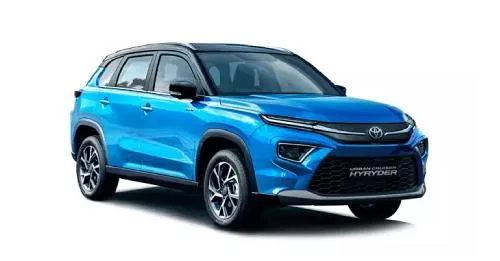
Urban Cruiser HyryderToyota
Ex-Showroom Price
₹ 10.86 Lakh
onwards
Engine
1462 - 1490 cc
Fuel Type
CNG / Hybrid (Electric + Petrol) / Mild Hybrid(Electric + Petrol) / Petrol
Transmission
Automatic / Automatic (CVT) / Automatic (e-CVT) / Automatic (TC) / Manual
Mileage
27 Kmpl
Power
91 bhp @ 5500 rpm
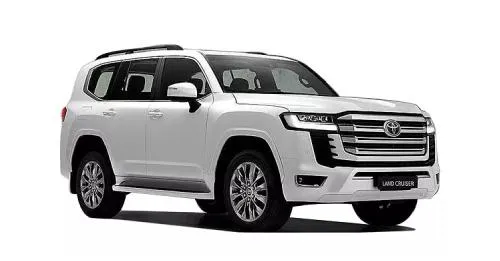
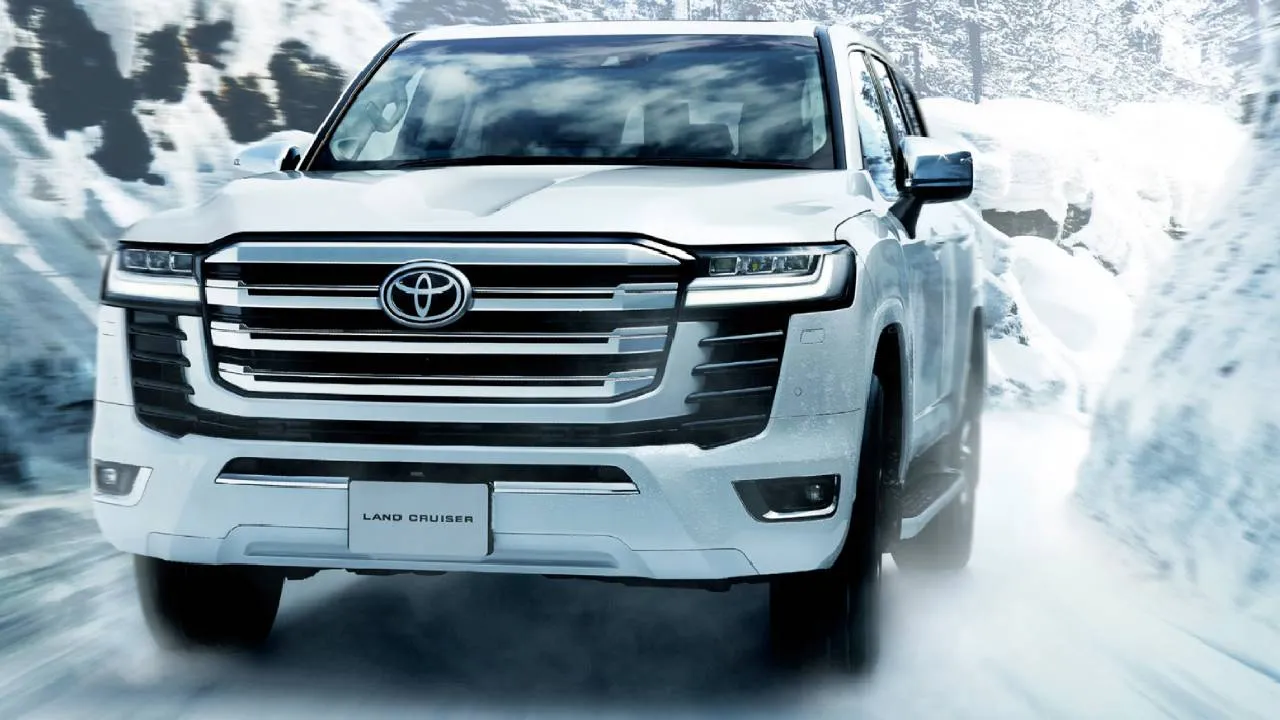
Land CruiserToyota
Ex-Showroom Price
₹ 2.10 Crore
onwards
Engine
3346 - 3346 cc
Fuel Type
Diesel
Transmission
Automatic
Mileage
11 Kmpl
Power
304 bhp @ 4000 rpm
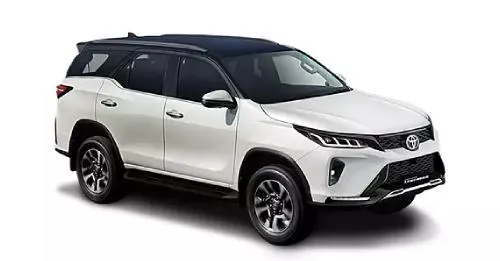
Fortuner LegenderToyota
Ex-Showroom Price
₹ 41.54 Lakh
onwards
Engine
2755 - 2755 cc
Fuel Type
Diesel / Mild Hybrid (Electric + Diesel)
Transmission
Automatic (TC)
Mileage
14 Kmpl
Power
201 bhp @ 3000 rpm
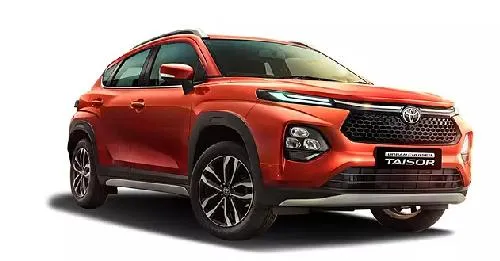
Urban Cruiser TaisorToyota
Ex-Showroom Price
₹ 7.21 Lakh
onwards
Engine
998 - 1197 cc
Fuel Type
CNG / Petrol
Transmission
Automatic (AMT) / Automatic (TC) / Manual
Mileage
22 Kmpl
Power
99 bhp @ 5500 rpm
Toyota Fortuner Images

Toyota Fortuner Questions & Answers
Q: How many seating rows and what seating layout does the Toyota Fortuner have?-
Q: Does the Toyota Fortuner get hybrid powertrain options?+
Q: What safety systems are provided in the Toyota Fortuner?+
Q: Is the Toyota Fortuner good for offroading?+
Q: What variants and enginetransmission options are available on the Toyota Fortuner?+
Toyota Fortuner Price in India
| City | Ex-showroom Price |
|---|---|
| Rohtak | Rs. 33.43 Lakh onwards |
| Gurgaon | Rs. 33.43 Lakh onwards |
| Faridabad | Rs. 33.43 Lakh onwards |
| Bahadurgarh | Rs. 33.43 Lakh onwards |
| Rewari | Rs. 33.43 Lakh onwards |
| Jhajjar | Rs. 33.43 Lakh onwards |
Toyota Fortuner Brochure
Download the brochure to view detailed specs and features