Audi e-tron
The Audi e-tron is a premium electric SUV that provides quick pick-up and silent performance. It comes with dual motors, Quattro all-wheel drive, digital displays, regenerative braking, and a reRead More


Audi e-tron Price
Audi e-tron is available in 3 variants – the base model is and the top model is
The Audi e-tron is a luxury electric SUV suitable for everyday driving. It comes with era-defining design aesthetics, a streamlined interior environment, and connect-to-the-future technology and offers a longer driving range and novel driving experience, as stated by the manufacturer.
Let’s delve into the features and specifications of this first electric SUV from the brand with four rings.
e-tron Engine & Performance
Audi e-tron Colour Options
Audi e-tron is available in 8 different colors namely Catalunya Red Metallic, Floret Silver Metallic, Galaxy Blue Metallic, Glacier White Metallic, Mythos Black Metallic, Navarra Blue Metallic, Siam Beige Metallic, Typhoon Gray Metallic.
- Catalunya Red Metallic
- Floret Silver Metallic
- Galaxy Blue Metallic
- Glacier White Metallic
- Mythos Black Metallic
- Navarra Blue Metallic
- Siam Beige Metallic
- Typhoon Gray Metallic
How is the e-tron?
 Pros
Pros
-
Premium electric SUV.
-
Quattro AWD for confident driving.
-
Spacious and luxurious cabin.
-
Silent EV performance.
 Cons
Cons
-
Limited driving range compared to rivals.
-
Expensive to buy.
-
Charging infrastructure may be limited.
-
Heavy weight affects agility.
Audi e-tron Expert Reviews

By Shivank Bhatt
5 Jul, 2021
Audi’s first-ever production EV is here to shake the conscience of luxury car buyers. But is the e-tron a mere exercise in virtue signalling or can it really walk the talk? Every time the word ‘EV’ is uttered, someone somewhere loses their mind. It may seem like hyperbole, but there is some truth to it. And that’s because people resist change. Breakthrough innovations, as history tells us, always attract more detractors than supporters. And when it comes to cars, we are all a bit more emotional than usual. So, forcing a new technology or an idea down our throats is sure to encounter more resistance than what’s conventionally expected. However, one doesn’t need the red pill to open their eyes to the truth that electric cars are the future, irrespective of whether you are ready for them or not. To give you some perspective, global EV sales grew by a whopping 41% in 2020 – this happened at a time when global car sales dipped by 16% and the world was fighting the COVID-19 pandemic. What’s more, in the first quarter of 2021, EV sales grew by 141%, with global sales hitting a total of 1.1 million units! Electric vehicles, it seems, are being lapped up by the masses faster than we imagined. So, is it about time that we start taking EVs seriously? Well, the answer is a bit more complicated. You see, if electric cars are to be the future, then they need to be as good, if not better, than their ICE counterparts. It means that they should offer similar or better levels of comfort, performance, features, reliability, and practicality. However, most of the EVs that we’ve driven in recent times seem to lag behind their ICE counterparts in one department or the other. But now, there’s a new EV in town – the Audi e-tron – and it promises to be just as good as its petrol or diesel-powered siblings. Another tall claim, or is Audi really onto something here? Sticking to the norm Unveiled in 2018, the e-tron is Audi’s first-ever fully-electric mass-production vehicle. It was supposed to be here in 2019, but the launch got delayed by nearly two years. With the e-tron, Audi is making no bones about this EV – they don’t project it to be some outlandish concept that’s here to turn the world on its head. Instead, Audi has decided to market it as somewhat of a conventional car with zero tailpipe emissions. As a consequence, the e-tron looks quite similar to the Q5 and Q7. And that’s no surprise because it’s based on the same MLBevo platform as its Q counterparts. However, the platform has been heavily modified for the electric drivetrain. Size-wise, the e-tron slots between the Q5 and Q7. That said, there’s no getting around the fact it’s quite a heavy car – it tips the scales at nearly 2.5 tonnes. The battery pack alone weighs 700kgs. Although its design is not as outlandish as some would expect from a car with the word ‘tron’ in its name, it subtly differentiates itself from its regular counterparts – the octagonal single-frame grille finished in platinum grey, the massive 20-inch wheels with orange brake callipers, e-tron monikers splashed all over the bodywork, and the tail-lamps, made up of LED strip, running across the width of the car come together to give the e-tron a sense of individuality. And did I mention that there are no exhaust pipes? Overall, it’s a very understated looking car – not great, not terrible. The interior is modern and techy, but you won’t find anything extraordinarily different from regular Audis. Similar to that of the A8 L and Q8, the e-tron’s cabin features a dual-touchscreen setup – one for infotainment and the other for climate controls. The latest MMI system works like a treat and is very easy to use. The screens are of amazing quality and have haptic feedback for improved sensitivity – sometimes, however, you might find yourself pressing the screen too hard to work your way through different menus. Audi’s brilliant and full-HD Virtual Cockpit sits in front of the driver and offers big and clear readouts. It’s without a doubt the best digital driver display in the industry. Standard features include a Bang & Olufsen sound system, wireless phone charging, a head-up display, a panoramic sunroof, four-zone air-conditioning, and so on. Oh, and it also gets the fancy soft-door closing feature. The centre console design is unique, if a bit busy, and there’s a new type of gear-selector, which is integrated under a hand rest. Although not as intuitive at first, it looks quite classy. Sadly though, the India-spec e-tron doesn't come with virtual wing mirrors – Audi tells us that it has been given a miss based on feedback received from prospective customers. A bit of a downer is what it is. On the upside, the cabin is studded with high-quality materials and offer an impressive amount of space. With a flat floor at the back, the e-tron’s rear bench is much more spacious, comfortable, and practical than regular Q SUVs of similar size. Nuts & Volts Propelling the e-tron is a 95kWh lithium-ion battery pack, which powers two electric motors – one at each axle. The total power output stands at 402bhp, and the system develops 664Nm of torque. However, these figures are just headline-grabbers. In regular driving, the e-tron’s electric drivetrain is only good for 355bhp and 561Nm. The full power of the motors is only unleashed when you put the gearbox in S or Sport mode, which allows the system to activate 'Boost' mode for a total of eight seconds. In this mode, the e-tron does the 0 – 100km/h sprint in 5.7 seconds – in normal or D mode, it does the same sprint in 6.6 seconds. In either mode, the acceleration isn't exactly neck-snapping as we’ve come to expect from electric cars – it nevertheless is pretty quick, considering that it weighs nearly 2.5 tonnes. What’s astonishing and exciting about its performance is its mid-range – if I can call it that – shove. The moment you touch the accelerator pedal at any given speed, the e-tron just lurches ahead and hits ridiculous speeds in no time. This instantaneous delivery of torque can be quite addictive, especially during overtakes or when you want to break away from traffic. At the same time, the cabin is supremely quiet and virtually no unwanted noise filters into the cabin – not even the drone of the electric motors. The e-tron does everything that you would expect from a normal car in terms of ride and handling. With air suspension on all four wheels, the ride quality is supple and absorbent – as good as that of a Q7, I’d say. There are 7 driver profiles to choose from, and the ride height can be increased by up to 50mm in Off-Road mode. That said, you don't need to be in off-road mode in daily driving conditions. In fact, in its base setting, the e-Tron's ride height of 172mm is more than adequate to go over big speed humps without scraping its underbelly. It’s quite impressive considering that a 700kg battery pack mounted low on the car's floor. When we drove the Mercedes EQC, it kept scraping its underbody over speed breakers. The e-tron does a much better job in comparison. Pressing Problem As for its handling, let’s just say there are no ugly surprises. For most of the part, the e-tron does a good job of masking its weight. The steering is light and direct, and, for a car of its shape and size, the body roll is quite well contained. But if you try to hustle it with force, physics does come into play. During quick directional changes – when you pull out of a lane for an overtake, for instance – you can feel the e-tron’s mass swinging it around. I’m not saying that it gets out of control like a boat, but it doesn’t feel entirely natural. You can feel the suspension, tyres, and chassis struggling against the laws of motion. However, sooner or later, you will get used to this behaviour. This is where electric cars differ from regular vehicles – they’re heavy, and you’ve got to live with this fact. Verdict Does the e-tron live up to the hype? Absolutely! It’s an EV that walks the talk. In almost all departments, it’s as good as any Audi SUV – a no-compromise electric vehicle. Are there any drawbacks to speak of? Well, it weighs as much as Jupiter, which would have been fine if its design were a manifestation of a sci-fi dream, but it isn’t – the e-tron’s appearance is a bit too regular. If you want to make a statement with your EV, you won’t find much here. Plus, despite various subsidies and tax benefits, the e-tron will cost you a bomb – expect an ex-showroom price north of Rs 1 crore, when it hits showroom floors later this month. However, as a luxury vehicle, it’s a complete package – the e-tron is an honest-to-God attempt at making EVs as close to a regular petrol or diesel Audi as possible. It’s a textbook example of normalising electric cars in the minds of car buyers rather than being an exercise in sanctimonious virtue signalling. Now, let’s cut to the chase – should you be buying an electric car in India? To be frank, there's no straight answer to that. I believe that if you are buying an electric car as your only vehicle, it's better to sit on the fence and wait for some more time for a simple reason – there's virtually no EV infrastructure in the country right now. But, at the same time, if you have one crore rupees lying around, and you have other cars in your garage, you should try and embrace EVs. Be a part of the future if you have the means. For daily duties, these cars offer the same level of comfort, performance, and driving pleasure, but they do all that with zero tailpipe emissions. High-end EVs, such as the e-tron, aren't a compromise. In fact, they give you an early and exclusive preview of the future of automobiles, which is worth a shot. Braking new ground: The e-tron features a clever electro-hydraulic braking system, which uses a combination of regenerative braking from electric motors and friction brakes. For braking forces of up to 0.3g – according to Audi, nine times out of ten, you don’t need more than that – the e-tron uses just the electric motors to slow the vehicle down. However, when more stopping force is required, the e-tron's computers automatically engage the hydraulic system with disc brakes and pads within milliseconds. What's more, thanks to its clever brake recuperation system, you can even drive the e-tron with just one pedal. As soon you release the accelerator pedal, the brake recuperation system kicks into action and can slow the vehicle down by up to 0.1g. It has three modes – 0, 1, and 2 – which can be selected using the paddles behind the steering wheel. When set to 0, the vehicle coasts without any resistance or drag from the motors upon lift-off. In level 1, the motors can decelerate the e-tron by up to 0.03g. And in its most aggressive setting, i.e. level 2, the system decelerates the vehicle by up to 0.1g, without touching the brake pedal. Moreover, all this also charges the battery pack. If Audi is to be believed, 30% of the e-tron's range comes from the brake recuperation system. Range & Charging: Audi claims that the e-tron can drive anywhere between 350 – 450km on a single charge. But given our chaotic driving conditions, you'll struggle to get anywhere close to that figure. Realistically, you should expect something in the range of 250 – 300km. As for charging, using a standard 22kW home charger, the e-tron can be charged up to 80% of its capacity in around four and half hours. A 50kW public charger, on the other hand, will take around two hours to juice up the battery pack to its 80% capacity. Quattro-power: With a motor at each axle, the e-tron is qualified to don Audi’s revered quattro badge. However, on most occasions, the e-tron uses the rear motor to maximise its range. However, if need be – for instance, when the car detects loss of traction – the electric AWD system can send the drive to front wheels within 30 milliseconds. [tabs] [tab title="Audi e-tron"] Motors: Two asynchronous electric motors – one for each axle Battery: 95kWh Lithium-Ion Transmission: Planetary Gear Set (Single-speed) / Electric All-Wheel Drive Power: 300kW (402bhp) Torque: 664Nm Top Speed: 200km/h Acceleration: 0-100kmh – 5.7 seconds Range: 350-450kms (claimed) X-Factor: The e-tron is shockingly good for an EV – it’s a no-comprise Audi, but goes one better with its zero tailpipe emissions. Pros • As good as any Audi should be! • Refinement Cons • Heavy • Doesn't look special [/tab] [/tabs] Also read, 2021 Audi e-tron: What to expect from Ingolstadt's first-ever EV for India? Mercedes-Benz EQS & Audi A6 e-tron Concept: First Impressions https://www.youtube.com/watch?v=VN0HHRyrmW0

By Dhruv Behl
17 Dec, 2018
Audi’s first electric car is finally here. Should Tesla be worried? So far, Tesla has had it all its own way. It’s become the poster child for electric mobility. Well, to be fair, Tesla has singlehandedly made the electric car sexy and desirable. So, in that sense, the established automakers owe it a debt of gratitude. However, it’s also the upstart that’s turned the entire industry on its head. It’s no surprise, then, that the establishments have their guns trained. We drove the all-electric Jaguar I-Pace in mid-2018 and were hugely impressed. Jaguar had beaten its German rivals to the punch by launching a production EV – and it was brilliant. It became immediately clear that the established automakers would be giving Tesla founder, Elon Musk, many more sleepless nights – even once he’s overcome the ‘production hell’ of the Model But there’s one distinct difference between all the Teslas, the Jaguar and the Audi we have here. You see, the Audi e-tron is actually coming to India. It’ll be launched a year from now – at the end of 2019, or early 2020. Of course, it won’t be cheap. It’s expected to set you back well over a crore when it hits Audi’s Indian showrooms. So, will it be worth it? It better be good! You see, in the post-Dieselgate era, VW has put all its eggs in the EV basket – and the e-tron is Exhibit A. The VW Group has all but announced that they’re stopping further development on the IC engine, which is a bit of a shame since the EV infrastructure is yet to develop in large parts of the world – namely India – and Formula 1 has shown that thermal efficiency gains are still to be had in the world of internal combustion engines. Moreover, electric motors use rare earth metals – the supply chain for which is virtually monopolised by China. But, let’s leave geopolitics out of this review for the moment. Whereas the Jaguar and Audi share essentially the same layout – a battery pack in the floor and a motor at each end, one for the front axle and another for the rear – there’s one very important difference between the two. The Jaguar uses two synchronous rare earth, permanent magnet motors, whereas the Audi uses two three-phase asynchronous motors that have no need for rare earth metals. Not only does that make it more sustainable, but also cheaper to produce. The disadvantage, however, being that it’s slightly bigger and heavier. Not exactly radical in appearance But, before we get into the technicalities, let’s start with the basics – how does it look? Well, it’s modern and striking, but not radical or especially futuristic. The e-tron looks like it fits perfectly between the Q5 and Q7 in Audi’s SUV portfolio. It doesn’t exactly have falcon doors, like the Tesla Model X. But I think that’s a deliberate move by Audi – to ease people into their electric cars by ensuring that they fit in, while still being that little bit modern and edgy of course. And, in that vein, our test car had virtual wing mirrors. This is something that we’ve seen on concept cars for some time, but the e-tron is the first car to sport them in production spec. And I happen to think that they look really cool. Essentially, the wing mirrors are replaced with cameras on the outside, while the display for each is integrated into the top of the door pads. And they haven’t just done this to be cool. Absolutely everything in this car is designed to cut through the air as efficiently as possible. It has a coefficient of drag of .28 with a set of standard wing mirrors, and a Cd of .27 with the virtual wing mirrors. Incidentally, it betters the Jaguar – which is .29 – but both are outdone by the Model X, which is ultra-slippery at .24. On the inside, as you’d expect, the quality of materials in the Audi are exceptional. But, here again, the e-tron looks and feels very much like any other brand new, top-of-the-line Audi – with the exception, again, of the virtual wing mirrors. Looking at the displays in the door pads, by the way, becomes second nature very quickly. The e-tron will have to do without this party trick in India, however, as Indian regulations don’t permit the virtual wing mirrors. The cabin is dominated by screens, which works well since the resolution of Audi’s screens – everything from the wing mirror displays to the instrument cluster and the centre console – are simply phenomenal. The trouble with massive screens on the centre console, though, is the fact that they very quickly become fingerprint magnets. Other than that, though, with haptic feedback and good functionality, they’re very intuitive and easy to use. Of course, the one thing that strikes you in the cabin of an EV is the silence – and, on that front, the Audi excels. It has an acoustic windshield, so you can literally hear a pin drop in the cabin. Despite its massive tyres – 265/45 R21’s on our test car – there was virtually no motor, wind or tyre noise. The virtual wing mirrors work their magic here as well. Suffice to say, it’s quite serene in the cabin. How fast is it? The two motors combine to produce 300kW of power, which is the equivalent of just over 400 horsepower and 664Nm of torque. It has a 95kW/h battery pack that gives it a claimed range of 400 kilometres. 100km/h comes up in just 5.7 seconds in Boost mode, which is an 8-second surge of max power. The I-Pace has a 90kW/h battery pack, but the interesting this is that both the Jag and the Audi battery packs consist of 432 pouch cells – I’m not sure why 432 is the magic number here. At any rate, the e-tron feels quite rapid from behind the wheel. In fact, because it’s so silent and refined, it’s deceptively fast – three-digit speeds come up before you know it. Top speed is limited to 200km/h to preserve range. What I can tell you is that 200 comes up very quickly indeed, and no matter what speed you’re doing, the e-tron continues to accelerate with some urgency. Suffice to say, on the highway, the e-tron is quite rapid and very well behaved. It also feels very normal and easy to drive. You just jump in and go, no fuss! But that’s a double-edged sword. It’s good because adapting to an EV becomes a non-event. But the flip side is that the driving experience doesn’t really feel special. From behind the wheel, it certainly doesn’t give you any sense of the paradigm shift that it’s heralding. Don’t get me wrong. Having full torque at zero rpm is addictive. The levels of refinement too, are something else. So, as a sustainable luxury runabout, the e-tron works exceedingly well and, with substantial range, fits into your daily life completely effortlessly. But, in seeking a middle ground for the e-tron, Audi may have robbed it of its sense of occasion. Can an EV go off-road? The rear motor is the dominant one in the e-tron. It’s only when additional power is needed that the second motor wakes up and powers the front wheels, making the e-tron all-wheel drive – which means that you can actually take it off-road. Audi had cleared a section of desert outside Abu Dhabi, on which the e-tron did very well – as long as you didn’t venture deep into the dunes, that is. EV’s have an inherent balance because all the weight is low in the chassis – since the battery pack is in the floor. The e-tron not only has a low centre of gravity but also 50:50 weight distribution – making it very well behaved when provoked. The only fly in the ointment is the fact that it weighs 2.5 tonnes. The battery pack alone – since it has a crash structure built in – weighs 700 kilos. And you can certainly feel all that weight when you push it around corners. It remains well behaved, of course, but you can sense that it’s not exactly enjoying the experience. To keep this weight in check, the e-tron is fitted with air suspension, but despite that, the ride is firm and feels quite choppy on anything less than perfect tarmac. Should you buy an EV? Well, the short answer is yes. EVs don’t exactly provide a visceral driving experience, so ‘no’ if that’s what turns you on. But, if you want to be at the cutting edge of technology, and save the planet while you’re at it, the cars themselves demand no compromises. Now we just have to make sure that the energy that goes into powering these machines is green, and that the infrastructure to support these vehicles follows. More than the cars themselves, that’s the million dollar question… Should Tesla be worried? Yes, they should. Without any baggage, Tesla still feels new and fresh – and perhaps more representative of the change that these machines are heralding – but there’s no denying that the established automakers are hot on its tail. And there’s also no denying the fact that they know how to churn out these machines by the millions – something Tesla is still struggling with. https://www.youtube.com/watch?v=m5Jh8AdzACM [tabs] [tab title="Audi e-tron"] Motors: Two asynchronous electric motors – one for each axle Battery capacity: 95kW/h Transmission: Planetary gear set (single speed) / Electric All-Wheel Drive Power: 300kW (408hp) Torque: 664Nm Top Speed: 200km/h Acceleration: 0-100kmh – 5.7 seconds Range: 400kms (claimed) X-Factor: No compromise emissions-free motoring. Pros • Extremely refined • Extremely well built Cons • Doesn’t feel special enough [/tab] [/tabs]
Audi e-tron Dealers in New Delhi
autoX has a list of 0 authorized Audi e-tron dealers in India. They provide servicing to all the Audi cars including the e-tron. Find here the contact information, full address, and Google map directions of the nearest dealer for your e-tron around you.



Compare Audi e-tron with Similar Cars
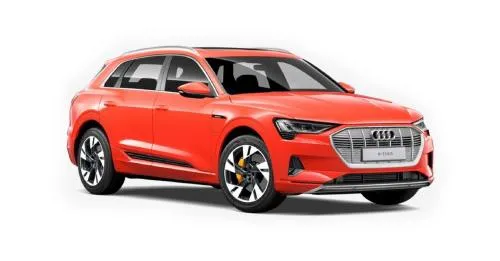
e-tronAudi
Ex-Showroom Price
₹ 1.02 Crore
onwards
Engine
-
Fuel Type
Electric
Transmission
Automatic
Mileage
394 Kmpl
Power
-
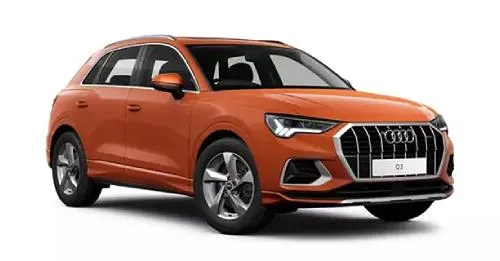
Q3Audi
Ex-Showroom Price
₹ 45.24 Lakh
onwards
Engine
1984 - 1984 cc
Fuel Type
Petrol
Transmission
Automatic (DCT) / Automatic (DCT)
Mileage
14 Kmpl
Power
192 bhp @ 4200-6000 rpm
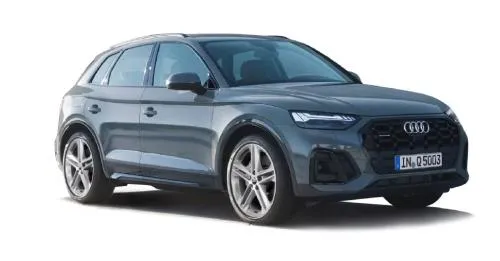
Q5Audi
Ex-Showroom Price
₹ 63.75 Lakh
onwards
Engine
1984 - 1984 cc
Fuel Type
Petrol
Transmission
Automatic (DCT) / Automatic (DCT)
Mileage
13 Kmpl
Power
265 bhp @ 5250-6500 rpm
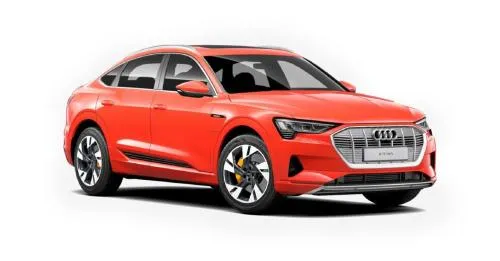
e-tron SportbackAudi
Ex-Showroom Price
₹ 1.26 Crore
onwards
Engine
-
Fuel Type
Electric
Transmission
Automatic
Mileage
484 Kmpl
Power
-
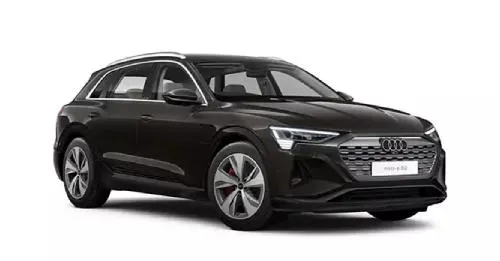
Q8 e-tronAudi
Ex-Showroom Price
₹ 1.15 Crore
onwards
Engine
-
Fuel Type
Electric
Transmission
Automatic
Mileage
484 Kmpl
Power
-
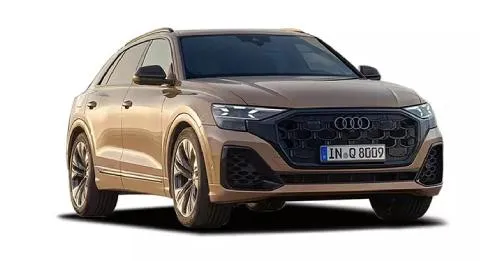
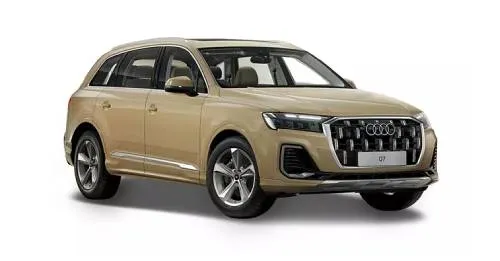
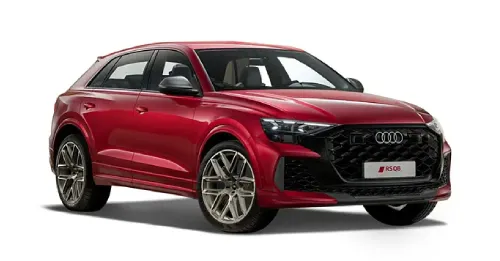

Audi e-tron Images

Audi e-tron Questions & Answers
Q: Does the Audi etron come with allwheel drive?-
Q: How many body styles of the Audi etron are available?+
Q: What is the boot space of the Audi etron?+
Q: Can the Audi etron be charged at home?+
Q: Does the Audi etron have regenerative braking?+
Top Audi Cars
Audi e-tron Price in India
| City | Ex-showroom Price |
|---|---|
| Rohtak | Rs. 1.02 Crore onwards |
| Gurgaon | Rs. 1.02 Crore onwards |
| Faridabad | Rs. 1.02 Crore onwards |
| Bahadurgarh | Rs. 1.02 Crore onwards |
| Rewari | Rs. 1.02 Crore onwards |
| Jhajjar | Rs. 1.02 Crore onwards |
Audi e-tron Brochure
Download the brochure to view detailed specs and features