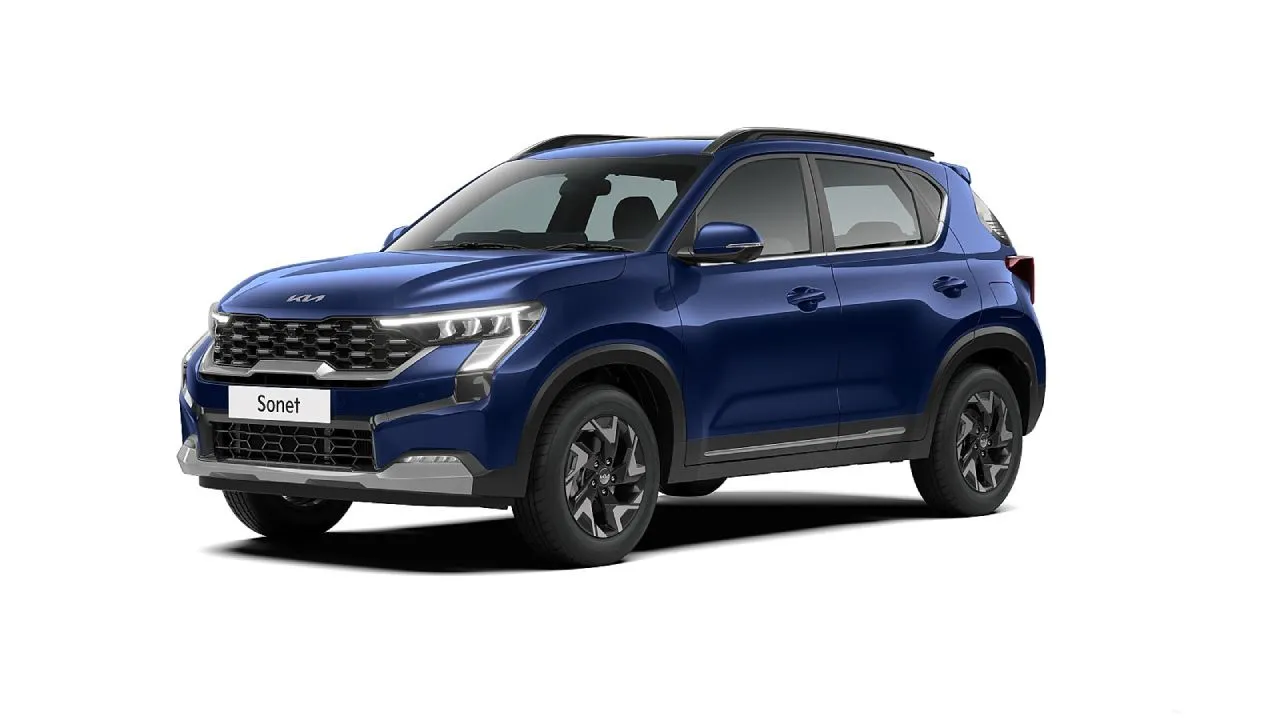
Kia Sonet
The Kia Sonet is a 5-seater SUV with plenty of convenience and safety features. It features connected car technology, ventilated front seats, Level 1 ADAS, and a 10.25-inch colour LCD cluster. IRead More


Kia Sonet Features and Specifications
The Kia Sonet is a 5-seater car with a wheelbase of 2500 and a ground clearance of 205. It comes with manual and automatic transmission options. Different variants include different transmission types and fuel compatibilities.
 Engine1197
 Torque115 Nm @ 4200 rpm
 Mileage17.5
 Power82 bhp @ 6000 rpm
 TransmissionManual
 FuelPetrol
Kia Sonet Latest Updates
2026 Kia Sonet adds new automatic variants—DCT for HTK O petrol and torque converter AT for HTE O diesel—starting at ₹9.77 lakh for compact SUV buyers.
Kia Sonet Price
Kia Sonet is available in 20 variants – the base model is and the top model is
Kia Sonet Overview
The Kia Sonet is a five-seater SUV that comes with an impressive performance and exceptional safety. The ex-showroom Kia Sonet price ranges between 7.99 Lakhs and 15.75 Lakhs, offering seven main variants and several sub-variants. This SUV goes against the Hyundai Exter and the Maruti Suzuki Brezza, in terms of power figures.
Let’s delve into the features, specifications, and other aspects of this Kia Car.
Sonet Engine & Performance
Kia Sonet Colour Options
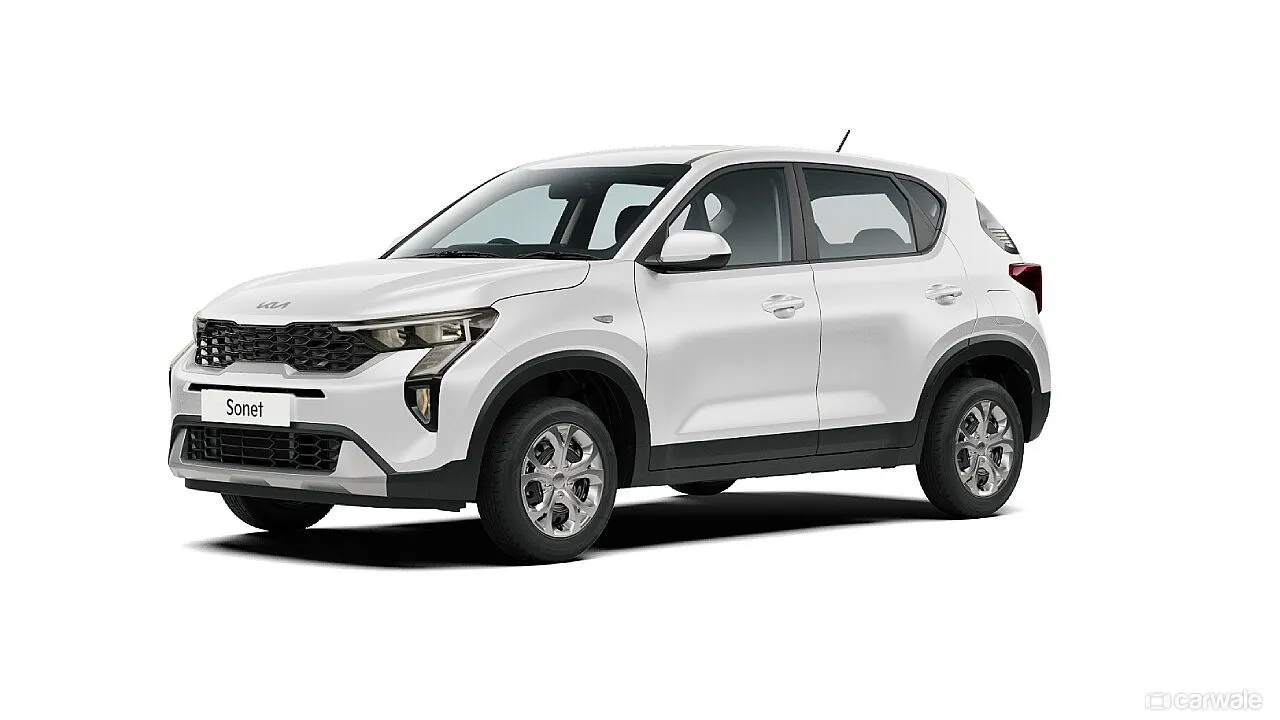
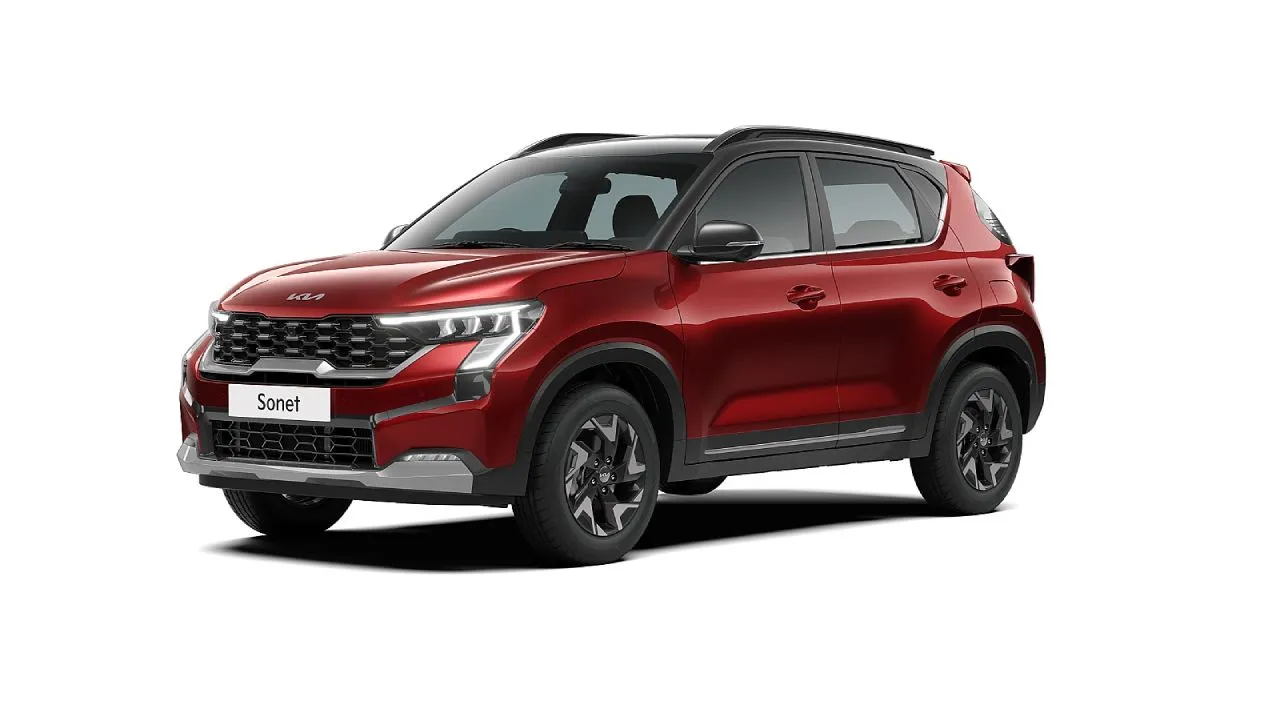
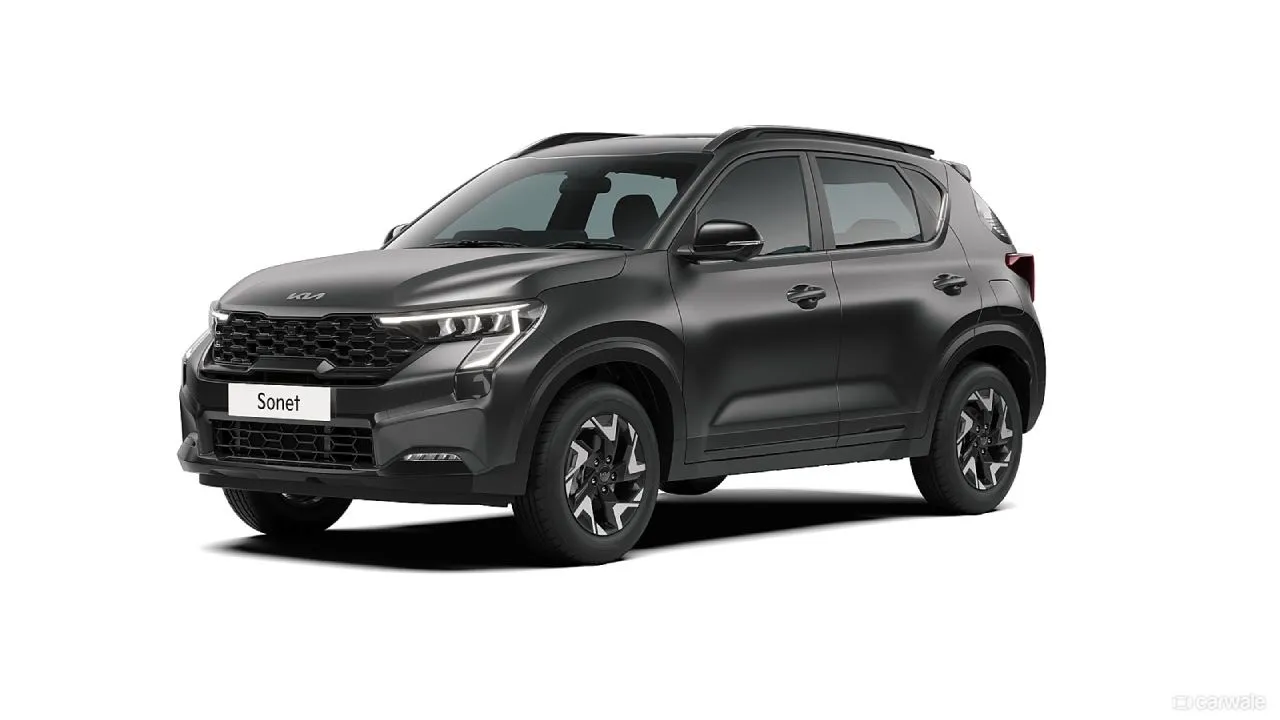
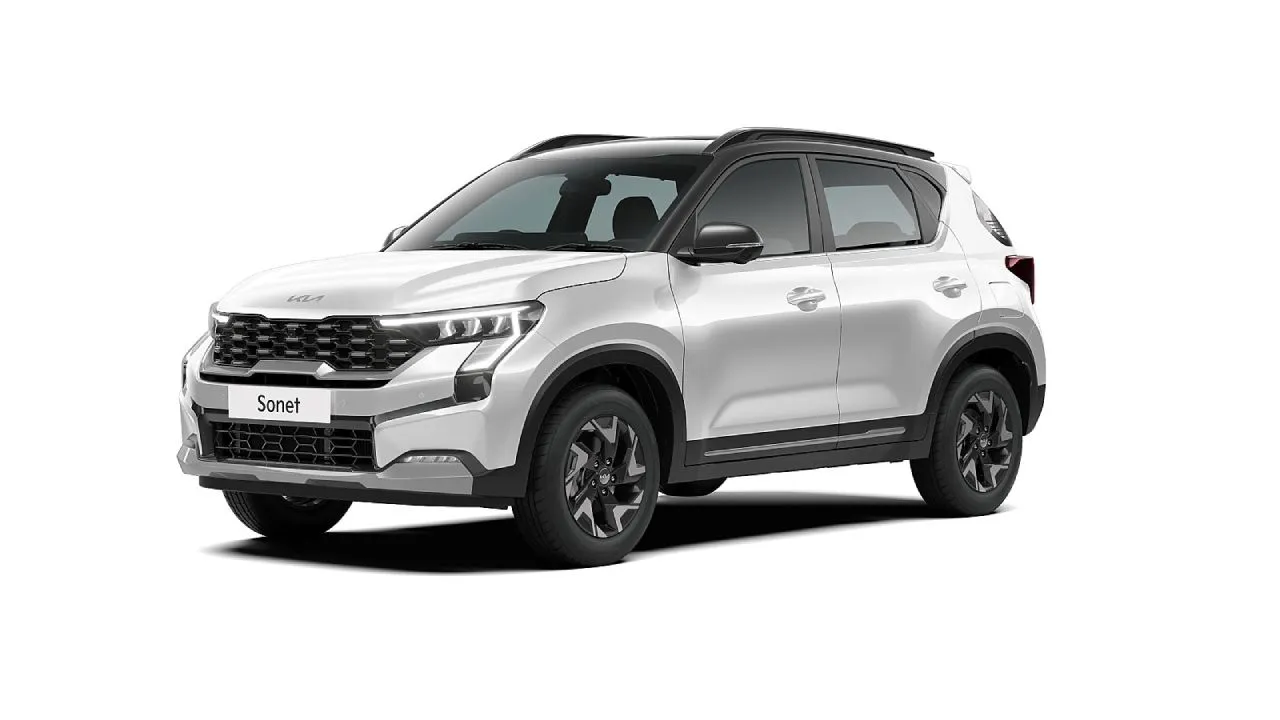
Kia Sonet is available in 11 different colors namely Pewter Olive, Glacier white Pearl, Sparkling Silver, Gravity Grey, Aurora Black Pearl, Intense Red, Imperial Blue, Intense Red with Aurora Black Pearl, Glacier White Pearl with Aurora Black Pearl, Xclusive Matte Graphite, Clear White.
- Pewter Olive
- Glacier white Pearl
- Sparkling Silver
- Gravity Grey
- Aurora Black Pearl
- Intense Red
- Imperial Blue
- Intense Red with Aurora Black Pearl
- Glacier White Pearl with Aurora Black Pearl
- Xclusive Matte Graphite
- Clear White
How is the Sonet?
 Pros
Pros
-
Bold design
-
Wide engine choices
-
Well-equipped interior
-
Good connectivity features.
 Cons
Cons
-
Rear-seat space limited
-
Firm ride quality
-
Premium pricing in top trims.
Kia Sonet Expert Reviews
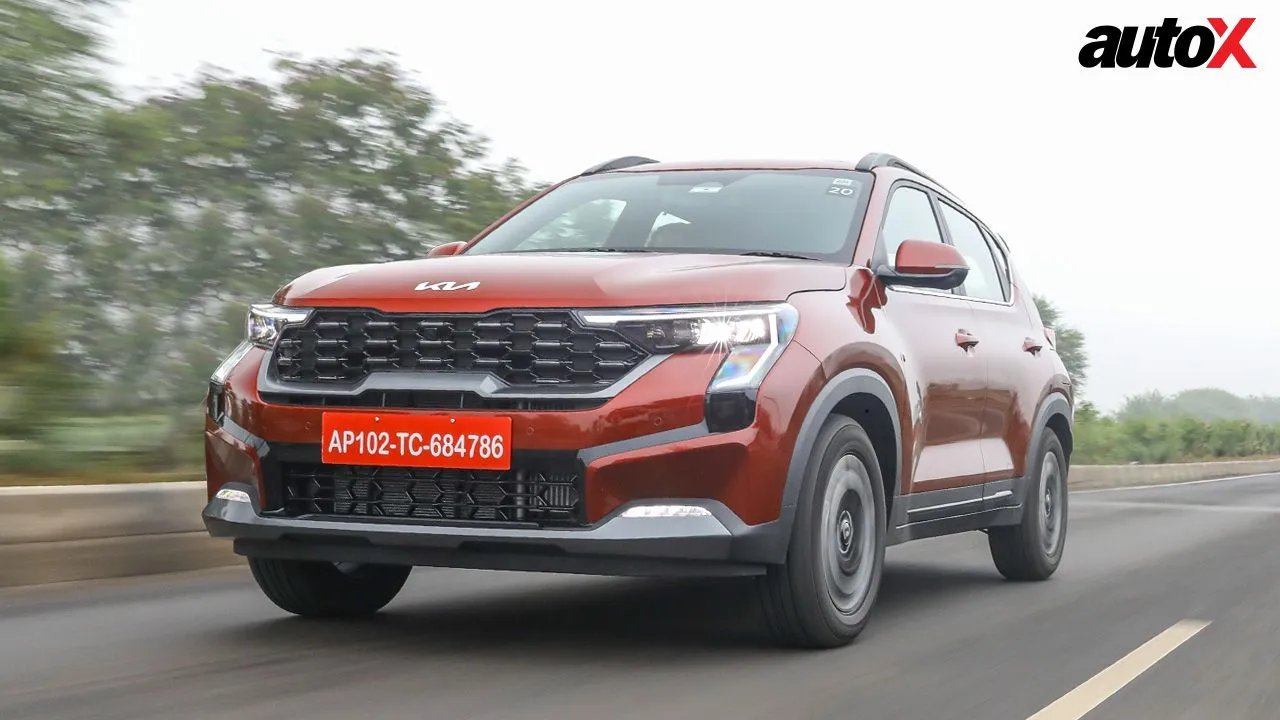
By Dhruv Paliwal
11 Jan, 2024
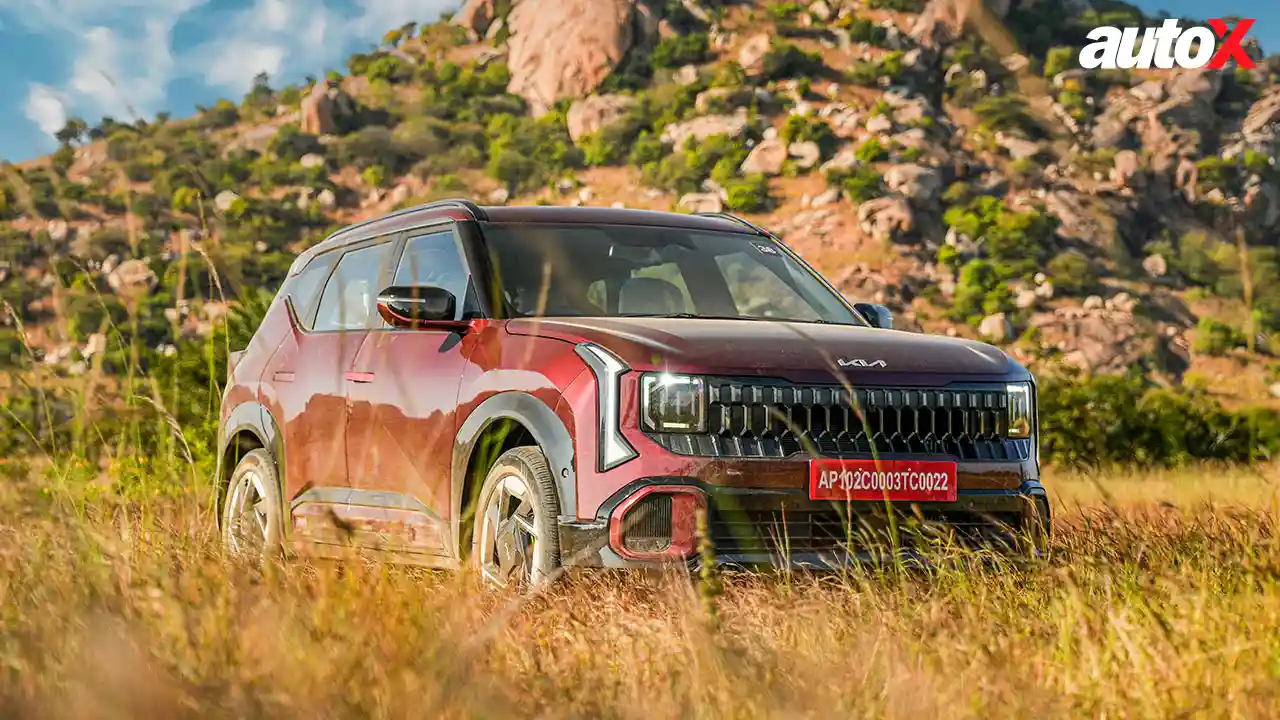
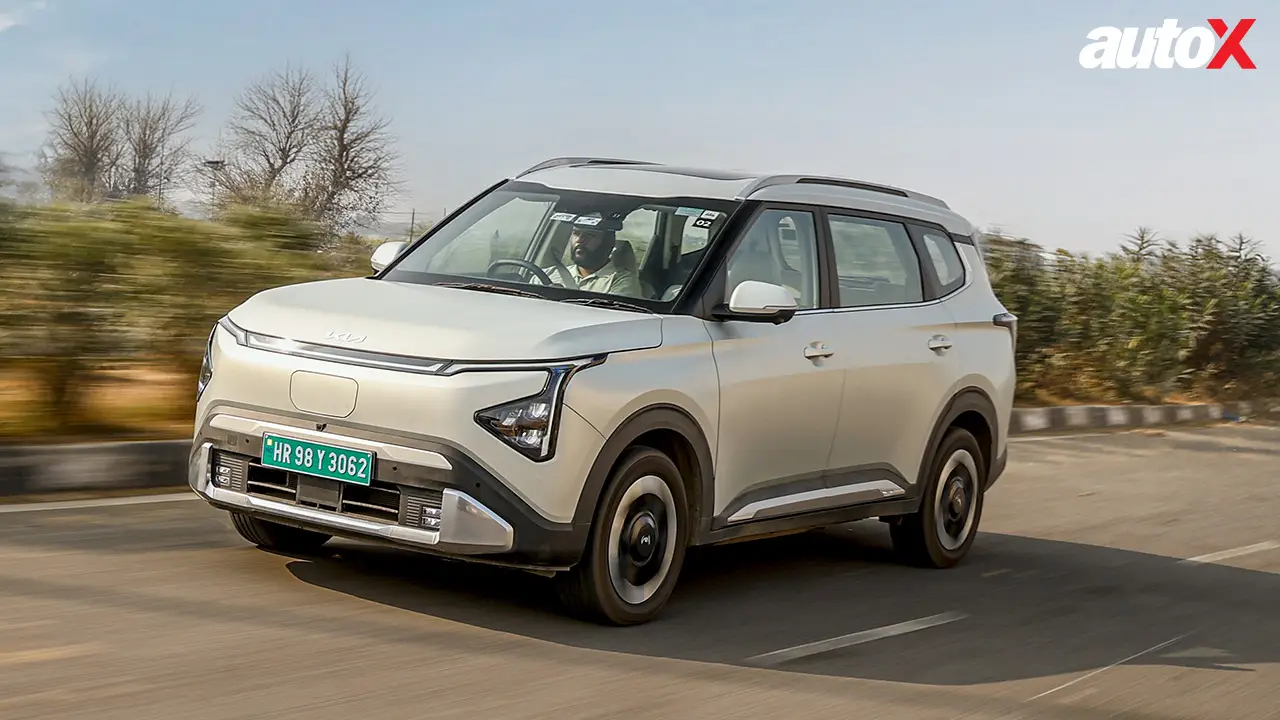
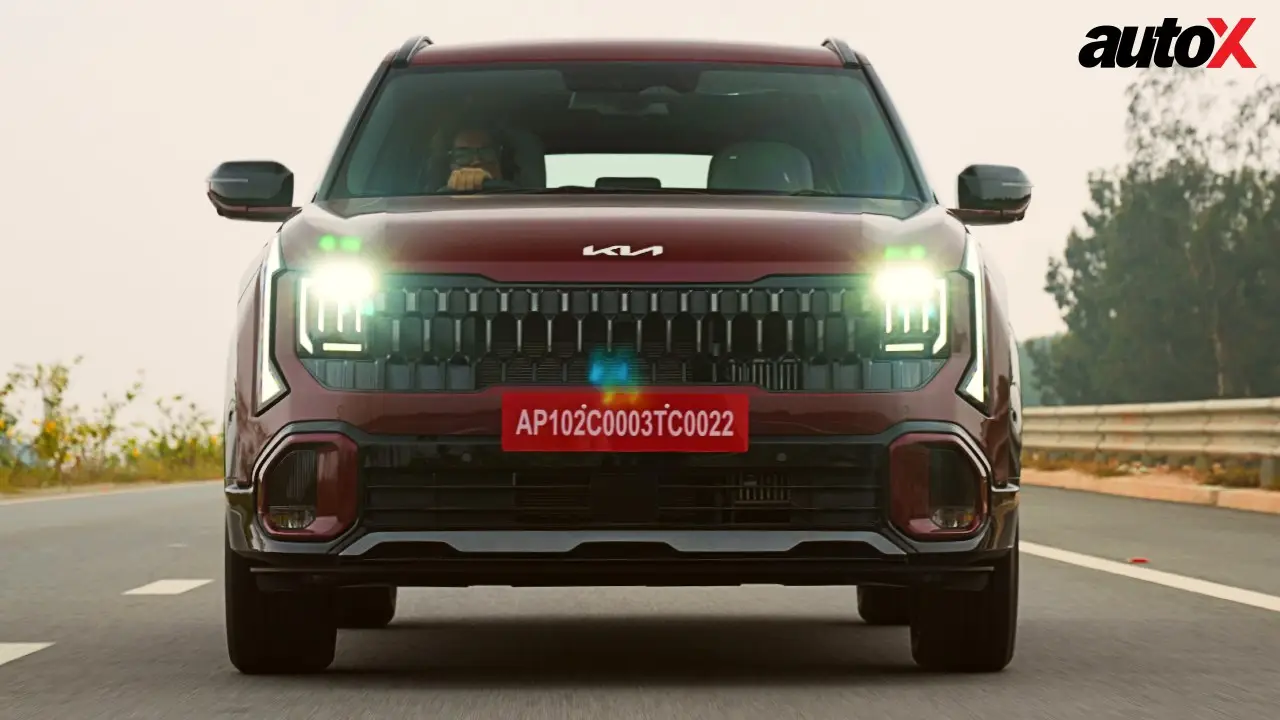
Roll back the time machine to 2020, and that was the first time I laid eyes on the Kia Sonet. It was a handsome looking SUV, but what really bowled me over about it was the fact that Kia had gone the whole nine yards when it came to delivering a complete experience. Right from the powertrain combos, to the design, and lest we forget - a bucketload of features. Furthermore, with the option of a host of variants and price points, it could truly be said that there was a Sonet for everyone. And all of that made it a segment benchmark. Fast-forward back to present day, and the Sonet’s rivals have made leaps and strides, cutting into its lead. To make things right, Kia has given the Sonet a facelift, and the question that now needs to be answered is - can it once again recreate the magic that set it apart in the first place? 2024 Kia Sonet Review: Still A Looker Kia’s Sonet has undergone a bunch of changes on the cosmetic front, starting with its front-end. The headlamps now have an inverted ‘L’ design, quite reminiscent of the XUV700 if I am being honest. The grille, bumper and the fog lamps too have gone under the scalpel, and all of these changes have given the Sonet’s front-end a sharp look. At the side, the only change are the alloy wheels, and the sharpness that we saw in the front, has been carried over to the rear as well. The tail lamps are connected by an LED bar which also serves as a brake light. The rear bumper, along with the skid plate, has been tweaked as well, and overall, the Sonet now looks fresh. In my opinion, the Sonet looks better than before. 2024 Kia Sonet Review: Under The Bonnet If you take a peak in the Sonet’s engine bay, you will that the Kia Sonet’s three engine options continue to be on offer. The 1.2-litre, naturally-aspirated, petrol engine is the most sedate offering, and if you want to dial things up a notch, there is the 10-litre, turbo-petrol motor, and lastly, there is the 1.5-litre diesel engine, which feels punchy, and is efficient at the same time. With the NA engine, Kia only offers a 5-speed manual transmission. With the turbo-petrol motor, you can choose between a 6-speed manual, or a 7-speed DCT. The diesel engine offers the most amount of choice as you get to choose between a 6-speed manual, iMT (clutchless manual transmission), and a 6-speed automatic transmission. On this occasion, we drove the diesel engine paired with the automatic transmission. To be fair, I was always a fan of this combo. Great low-down torque that keeps things moving and the automatic transmission is for the lack of a better phrase, a ‘smooth operator’. All of this means that step on the throttle lightly and quickly enough, you are easily cruising at 50-60km/h. This makes it great to drive in the city. If you want to move things along, you can step on it and the Sonet will oblige, but keep in mind that the diesel-AT powertrain of the Sonet is tuned for comfort. So, there is a small moment where, after you have stepped on the gas in a spirited fashion, you wait for the power to kick in. You can put the Sonet into Sport mode to mitigate this to an extent, and shifting down using the paddle shifters is another way of minimising the problem. Kia has also worked on reducing the engine noise under acceleration, in the case of the turbo-petrol and diesel engine, and in the diesel, it was an audible difference. Previously, the diesel clatter would emanate inside the cabin quite clearly, but now, those sound waves have been muted to quite an extent. This, in my opinion is one of the most important changes on the Sonet, but more on that later. Also Read: Tata Nexon EV Review: Building on First Mover Advantage 2024 Kia Sonet Review: Driving Dynamics For the most part, Kia has set up the Sonet on the softer side. That means that the ride quality is plush, and most of what Indian roads could throw at it will be well damped. However, the rear suspension, has this tendency to kick-back, which was more pronounced because we were driving the Sonet without anyone sitting in the back. Add in more people and luggage, and this problem will end up making itself scarce. As far as going around a corner is concerned, the Sonet takes most corners well. It’s only when you put it through quick direction changes that the softness in the suspension makes itself evident, robbing you of a bit of confidence. Another thing that I must add here is that while the Sonet is not set up to be a sporty offering, it is quite stable on highways, even at high triple digit speeds. 2024 Kia Sonet Review: Goody Bag One of the biggest updates to the Sonet has come on the features front. In fact, if you had told me this in 2020, I wouldn’t believe you as the Sonet was always a feature-rich offering. However, Kia has taken this occasion to spice it up, with first and foremost - ADAS. We had a short time with the car, particularly with the ADAS system on, and in that time, it was able to pick up the road markings quite well, but the corrections made by the system felt a little too aggressive. Kia has also updated the instrument cluster, and the touchscreen set up. The entire set up is now fully digital, and quite good-looking to be honest. Then, there’s small things like the fact that the driver seat is electrically adjustable for reach and recline, but I believe Kia might have missed a beat here by not offering a memory function, which can be highly useful when multiple family members drive the same car. Last, but not the least, Kia has also updated the Kia Connect system, adding a host of new connectivity features, but my favourite one of the lot was the 360 camera, which can be pulled up on your smartphone using the Kia Connect app! Also Read: Nissan Magnite AMT First Drive Review: Easy, And On The Money Verdict The Kia Sonet, then, has taken small incremental steps in most areas to become a better overall car. It was, always, a feature-loaded premium SUV in the sub-4 metre space, so making a statement like it did in 2020 would have been a very hard task to begin with. But, by making changes such as engine refinement, upping the safety quotient with ADAS and making the design more striking, the Sonet has maintained the status quo, and in my opinion, remains the best all-rounded SUV in the segment. But, at the time of driving the car, we didn’t really know how the Sonet’s price. Seeing that the Sonet has gained a lot of kit like ADAS, it’s likely that the price increment will be a bit steep too, and that could push it into the territory of bigger SUVs. However, if Kia can price it competitively, then, there is no doubt that they once again have a winner on their hands. [tabs] [tab title="Kia Sonet"] Engine: 1,493cc / Inline-4 Fuel: Diesel Transmission: 6-Speed AT Power: 114bhp @ 4,000RPM Torque: 250Nm @ 1,500 – 2,750RPM Price: ₹15.69 lakh (Ex-Showroom) X-Factor: Looks good, quick on its feet & has all the best features, all in one SUV. Pros • Highway stability • Interior Quality • Top-notch features Cons • Bouncy rear suspension [/tab] [/tabs]

By Ishan Raghava
11 Sep, 2020
The breakaway success of the Seltos has elevated the Kia brand and made it a household name in the Indian market. But, can Kia replicate the same success in the fiercely competitive sub-4 metre SUV segment with the Sonet? In the normal course of life, success is a wonderful thing to experience. But, as always, there are two sides to a coin. The minute you become successful in what you do, and start achieving success on a regular basis, the expectations from you start rising. Double-edged sword This situation is something that the boffins at Kia India will find themselves currently very familiar with. And rightly so, after all, with the Seltos they’ve been able to achieve phenomenal sales numbers, something no other new brand entering the Indian market has been able to achieve in recent years. Not only that, but the effect of the Seltos has been such that Kia itself has become a household name in the Indian market, which, within a year of launching a product is a terrific achievement. But this success has meant that the expectations from their sub-4 metre SUV offering, the Sonet, are already sky-high. And to add an extra layer of challenge, the current competitors in the sub-4 metre segment offer some formidable products like the Hyundai Venue, Maruti Suzuki Vitara Brezza and the Mahindra XUV 300. Styling it right Of course, one of the key aspects of every Kia vehicle is its design, and the Sonet is no different here. Right from the overall theme of the design – the Sonet is supposedly inspired by the shape of an elephant, hence the bulging body panels and the squat rear-end – to the trademark front grille and the large 3-piece tail lamps, the Sonet’s design is signature Kia. Some aspects of the design are particularly impressive, such as the big, bold grille which catches your attention with its red and black combination along with the knurled aluminium look border, to its ample-sized wheels. The Sonet, like the Seltos, is going to be offered in two design trims – GT-Line and Tech Line – and our test cars were both in GT-Line trim. Like on the Seltos, the GT-Line trim offers interesting design touches to the Sonet. These include red accents on the door cladding, wheel centres, front bumper, grille and rear bumper. And given the overall attention to detail in the design, along with the butch front end, the Sonet is a pretty handsome looking machine. If there is one aspect of the exterior design which I’m not a fan of though, it would have to be plastic insert in the C-pillar above the taillamp. Sure, it gelled well with our dark coloured test car, but I suspect that it is really going to stand out like a sore thumb on lighter coloured cars. Changing the game However, it is in the interiors that the Sonet really moves the game forward for the sub-4 metre segment. Right from the detailing, to the tactile feel of the switches, to the feature set, the Sonet sets a new benchmark for the segment. While the 10.25-inch multimedia screen certainly grabs your attention, for me it is the rest of the feature set which is more impressive. This includes my most vaunted feature in summer months – ventilated front seats. Additionally, there is a 9-speaker Bose sound system with a subwoofer, 6 airbags, in-built air purifier with a digital display, and a myriad of other connectivity options, including the UVO mobile connectivity system. But, it’s not just the features the Sonet excels at. The quality of the interior plastics is praiseworthy and the leather detailing on our GT-Line test car, such as on the door pads, was fantastic. I also am a fan of the red and black combination interior of the GT-Line version, which looks fantastic, and is extremely easy to keep clean. Sure, there are a few hard-plastic surfaces, but overall the interior feels like it could be class-leading. The Tech line version of the Sonet is offered with a more conventional black and beige interior combination. Another feather in the cap of the Sonet seems to be the rear-seat space, where it does seem to offer more space than its competitors and that could be a big game-changer. Not only is there enough legroom for two six-foot adults to sit back-to-back, but the front seats are also mounted in a way that you can easily slide your feet under the front seat, which further increases the seating comfort. The under-thigh support on the rear seat though is lacking and could be an issue on long journeys, however, there is more than enough headroom in the rear seat for even the tallest passengers. Spoilt for choice When I first drove the Seltos and looked at the number of variants it was going to be offered in (18, I think) I wondered if the Kia production managers were gluttons for punishment. And while they might indeed be gluttons of managing an insane inventory of variants, but the wide variety of variants available has certainly contributed to the success of the Seltos. It is no surprise then, that like the Seltos, the Sonet is also going to offer a long lineup of different versions to customers and offer unparalleled choice in its segment. Let’s consider the engines first – the Sonet will be offered with three engine options, a 1.2-litre naturally aspirated petrol, 1.0-litre turbo petrol and 1.5-litre turbo diesel. The 1.2-litre petrol engine is offered only with a manual gearbox, whereas the 1.0-litre petrol turbo will be offered with a 6-speed iMT (clutchless automatic) and the 7-speed DCT automatic. Interestingly, the Sonet does not offer steering-mounted paddle shifters on the 7-speed DCT gearbox, something Kia officials said would be offered at a later date. And, the 1.5-litre diesel engine in the Sonet is going to be offered in two power outputs – 99bhp with the manual gearbox and 113bhp with the 6-speed automatic. Hitting the road Number soup aside, what is the Sonet like to drive? We tested the 1.0-litre turbo petrol and the 1.5-litre diesel engines and three different gearboxes too. First up was the 1.0-litre mill, an engine we’re familiar with, having driven it in various Hyundai products and the engine didn’t disappoint in the Sonet either. With its quick-revving nature and 118bhp, the Sonet with the 1.0 engine is quick on its feet and has an adequate punch for everyday driving. The first gearbox I tested with the 1.0 engine was the iMT clutchless automatic, which I have to say offers excellent driving experience, especially for the minuscule price premium it commands over a manual gearbox. Sure, the first-to-second gear shift can be a tad slow, but overall, I prefer the iMT gearbox to any AMT gearbox I’ve driven till date, and it certainly is a big step up from AMT’s and truly worth the money. So, if you’re looking to go auto on a budget, no current gearbox and price combo is better than the iMT offerings in the market. Just one practical tip about iMT gearboxes though, for best-quality shifts, it’s best if you lift your foot off the accelerator when changing gears. However, with its 113bhp and 250Nm, the 1.5-litre diesel engine of the Sonet in the automatic variant is deeply impressive and is perhaps my pick amongst the engines on offer. With almost a 50% torque advantage over the 1.0-litre turbo petrol (250Nm vs 172Nm), the 1.5-litre diesel engine delivers fantastic punch and refinement and is truly quick on its feet. The decently quick-shifting 6-speed torque converter automatic also helps in making the Sonet quite fun to drive, and with its low-down torque, I found the 1.5 diesel to be a more relaxing car to drive than the turbo petrol version. Additionally, on certain variants, the Sonet also offers different Traction and Drive modes that you can toggle through depending on your driving conditions. The refinement of the Sonet – both in petrol and diesel versions – is very good, with NVH levels firmly under control, and that contributes to the plush feeling of the Sonet’s interiors. Out on the road, the suspension of the Sonet is set up very well, and while it’s slightly on the stiffer side, that means it handles bad roads quite well and is rock solid at speed. And the steering of the Sonet also provides a decent amount of feel, which makes it quite enjoyable to throw around when you’re in the mood for some enthusiastic driving. If I had to nit-pick, and I have to, the digital and analogue instrument cluster is something that is not perfect in the Sonet. Sure, the 4.2-inch screen in the cluster works well and even provides navigation instructions, but the side-mounted rev counter and fuel and temperature gauge are not intuitive to read and take some getting used to. https://www.youtube.com/watch?v=RdcU6o03Yfo Bullseye If I had to summarise the Sonet, I would say that its highlights are excellent quality, and is class-leading when it comes to the number of features the SUV offers. Additionally, the rear seat space and boot space of the Sonet is also exemplary and feels quite large for the segment. And on the road, with its combination of engine and gearboxes, the Sonet is fun to drive and comfortable at the same time. Despite all its qualities though, pricing of the Sonet will still remain an important factor for the Sonet’s success. And that is something that Kia can’t afford to mess up. But keeping the positives of the Sonet in mind, I would have to say that competition does have a very tough challenge on their hands, once Kia announces the prices of the Sonet on the 18th of September, exactly a week from now. [tabs] [tab title="Kia Sonet 1.0 T-GDi"] Engine: 998cc / 3 Cylinder / Turbocharged Fuel: Petrol Transmission: 6-Speed iMT / 7-Speed DCT / Front-Wheel Drive Power: 118bhp @ 6,000rpm Torque: 172Nm @ 1,500-4,000rpm Price: ₹9.49 lakh – ₹12.89 lakh (Ex-showroom) X-factor: If they get the pricing right, with its space, design and features, the Sonet could be the next champion of the sub-4 metre SUV segment. Pros • Quality & design • Feature-loaded Cons • No paddle-shifters • Busy centre-console design [/tab] [tab title="Kia Sonet 1.5 CRDi VGT"] Engine: 1,493cc / 4 Cylinder / Turbocharged Fuel: Diesel Transmission: 6-Speed Manual / 6-Speed Automatic / Front-Wheel Drive Power: 113bhp @ 4,000rpm Torque: 250Nm @ 1,500-2,750rpm Price: ₹10.39 lakh – ₹12.89 lakh (Ex-showroom) X-factor: If they get the pricing right, with its space, design and features, the Sonet could be the next champion of the sub-4 metre SUV segment. Pros • Quality & design • Feature-loaded Cons • No paddle-shifters • Busy centre-console design [/tab] [/tabs] Read more: Kia Sonet: 5 Fast Facts Sponsored Feature: Getting adventurous with the Kia Seltos
Kia Sonet Dealers in New Delhi
autoX has a list of 0 authorized Kia Sonet dealers in India. They provide servicing to all the Kia cars including the Sonet. Find here the contact information, full address, and Google map directions of the nearest dealer for your Sonet around you.
Compare Kia Sonet with Similar Cars
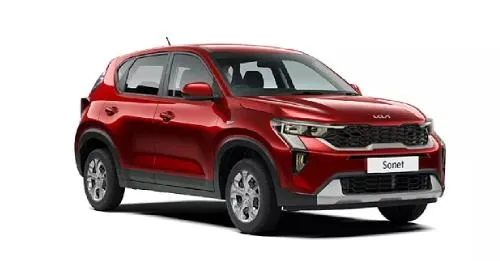
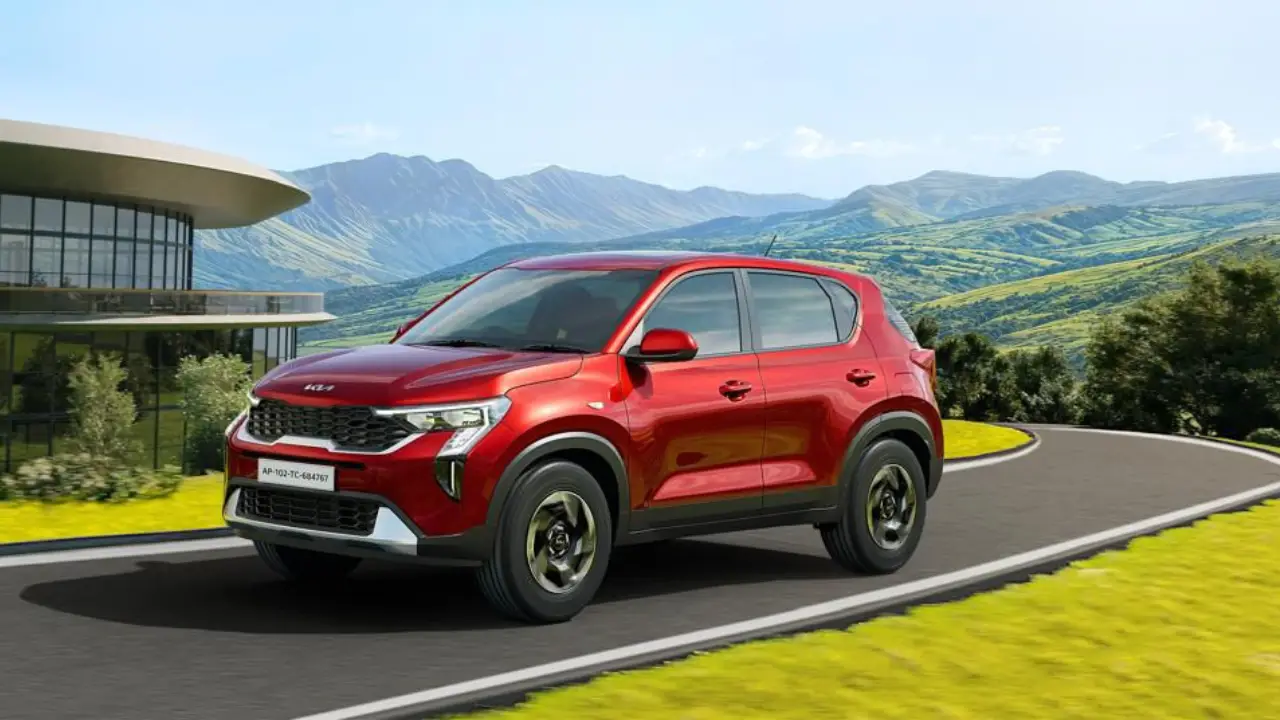
SonetKia
Ex-Showroom Price
₹ 7.30 Lakh
onwards
Engine
998 - 1493 cc
Fuel Type
Diesel / Petrol
Transmission
Automatic (DCT) / Automatic (TC) / Clutchless Manual (IMT) / Manual
Mileage
17 Kmpl
Power
82 bhp @ 6000 rpm
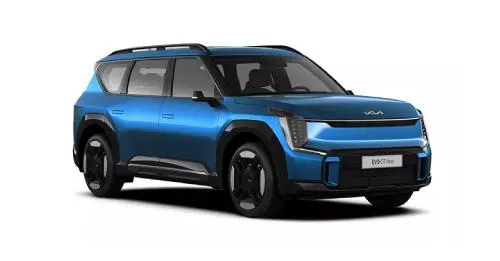
EV9Kia
Ex-Showroom Price
₹ 1.30 Crore
onwards
Engine
-
Fuel Type
Electric
Transmission
Automatic
Mileage
561 Kmpl
Power
-

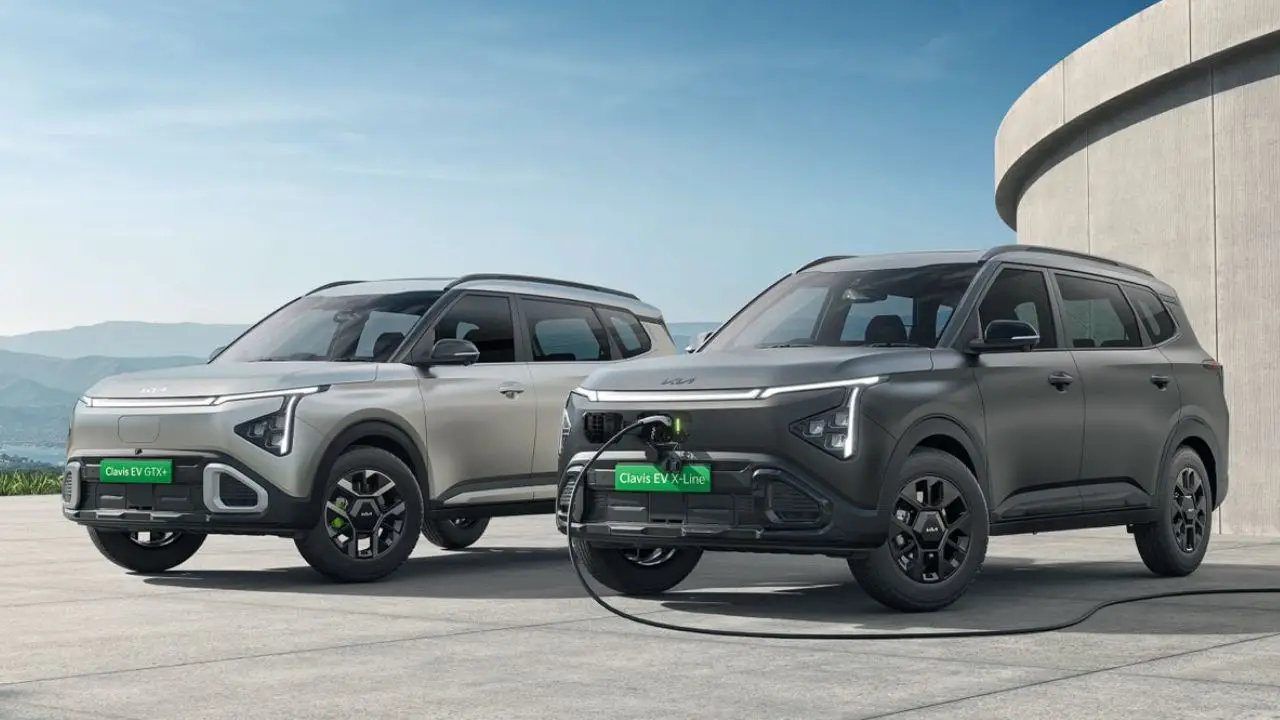
Carens ClavisKia
Ex-Showroom Price
₹ 11.08 Lakh
onwards
Engine
1482 - 1497 cc
Fuel Type
Diesel / Petrol
Transmission
Automatic (DCT) / Automatic (TC) / Clutchless Manual (IMT) / Manual
Mileage
19 Kmpl
Power
158 bhp @ 5500 rpm
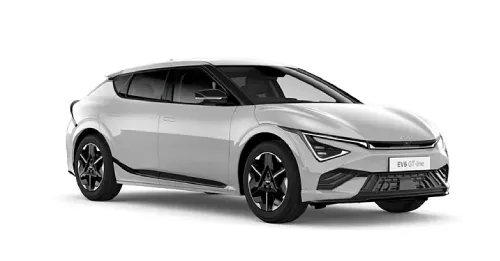
EV6Kia
Ex-Showroom Price
₹ 65.97 Lakh
onwards
Engine
-
Fuel Type
Electric
Transmission
Automatic
Mileage
-
Power
-
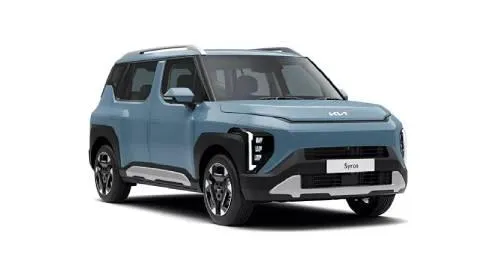
SyrosKia
Ex-Showroom Price
₹ 8.67 Lakh
onwards
Engine
998 - 1493 cc
Fuel Type
Diesel / Petrol
Transmission
Automatic (DCT) / Automatic (TC) / Manual
Mileage
-
Power
118 bhp @ 6000 rpm


Kia Sonet Images

Kia Sonet Questions & Answers
Q: Does the Kia Sonet have ventilated seats?-
Q: What is the ground clearance of the Kia Sonet?+
Q: Is there a sunroof in the Kia Sonet?+
Q: Is the Bose sound system available in the Kia Sonet?+
Q: Does Kia Sonet offer a diesel automatic option?+
Top Kia Cars
Kia Sonet Price in India
| City | Ex-showroom Price |
|---|---|
| Rohtak | Rs. 7.30 Lakh onwards |
| Gurgaon | Rs. 7.30 Lakh onwards |
| Faridabad | Rs. 7.30 Lakh onwards |
| Bahadurgarh | Rs. 7.30 Lakh onwards |
| Rewari | Rs. 7.30 Lakh onwards |
| Jhajjar | Rs. 7.30 Lakh onwards |
Kia Sonet Brochure
Download the brochure to view detailed specs and features