MG Astor
The MG Astor is a compact SUV with a stylish design and segment-first AI tech features. It includes a personal AI assistant, digital cluster, a 10.1-inch touchscreen infotainment system, ADAS, aRead More


MG Astor Features and Specifications
The MG Astor is a 5-seater car with a wheelbase of 2585 and a ground clearance of 205. It comes with manual and automatic transmission options. Different variants include different transmission types and fuel compatibilities.
 Engine1498
 Torque144 Nm @ 4400 rpm
 Mileage15.43
 Power108 bhp @ 6000 rpm
 TransmissionManual
 FuelPetrol
MG Astor Price
MG Astor is available in 13 variants – the base model is and the top model is
MG Astor is a five-seater SUV having sharper looks, extant features, and a personal AI assistant. It has a spacious cabin crafted for relaxed and enjoyable travel as stated by the manufacturer. Though the carmaker proclaimed it to be powerful and agile enough to provide absolute authority in every situation, a few motorists are doubtful about the performance.
Let’s have a look at its specifications and features to understand how it has been prepared.
Astor Engine & Performance
MG Astor Colour Options
MG Astor is available in 7 different colors namely Aurora Silver, Glaze Red, Candy White, Starry Black, Candy White with Black Dual Tone, Havana Grey, Green with Black roof.
- Aurora Silver
- Glaze Red
- Candy White
- Starry Black
- Candy White with Black Dual Tone
- Havana Grey
- Green with Black roof
How is the Astor?
 Pros
Pros
-
Premium compact SUV with a stylish design.
-
Level 2 ADAS safety features.
-
Good interior quality.
-
Competitive pricing.
 Cons
Cons
-
Petrol-only option (no diesel).
-
Average Performance.
-
Boot space is not segment-best.
MG Astor Expert Reviews

By Dhruv Paliwal
29 Mar, 2022
In a sea of SUVs that come across as safe and bold, the MG Astor does things a little differently. We find out how… The MG Astor’s entry into the Indian market was quite unconventional, to say the least. It’s the only ICE car to have been launched after its EV counterpart – the ZS EV – in India. In fact, the ZS EV recently got a facelift. But I digress. Let’s get back to the Astor. So, is the manner of the Astor’s arrival the only thing that’s unconventional about it? Or, will we find more if we dig deeper? Hides its Size Well What if I told you that the MG Astor is bigger than the Hyundai Creta and Kia Seltos? You might not believe me at first, especially just by looking at the pictures here. However, the fact is that the only car in the segment that’s bigger than the Astor is the Nissan Kicks. So, how does the MG mask its size? Well, it’s simple, really – understated European styling. You see, while its Korean counterparts are busy chasing that macho boxy design with in-your-face styling, the Astor goes the other way. The testosterone has been dialled back in the Astor’s design. It features smooth lines, a sloping roofline, and delicately crafted elements, like the ‘celestial’ chrome grille, headlamps, taillamps, and 17-inch alloy wheels, which make it stand out in the crowd. I must admit, even the Astor badging on the boot looks on point, and it’s coming from someone who, until now, found such ostentatious displays of one’s own name quite hideous. Travelling First Class MG has done up the interior of the Astor quite well. The top-spec variant that we had on test sported the black and Sangria red colour scheme, and it makes the Astor’s interior look quite sporty. I must add that it’s the only claim the Astor can make of being a sporty SUV, but more on that later. The seats are comfortable. However, the front seats are best suited to small- to medium-size people due to the contoured sides that keep you snug. The overall quality of the interior is top-notch – in fact, it’s the new benchmark in the segment. Not only are the touchpoints draped in top quality materials, but even the hard plastic bits have a nice textured finish to them. It, however, is not without a couple of problems. First, the gear lever feels a little flimsy, not in its construction but in the way it’s fitted. Second, the huge panoramic sunroof gets a see-through blind, which will be a big problem during summer. As far as the ride is concerned, there is pretty much nothing you can fault it for. The Astor’s suspension has been tuned to soak up pretty much anything you can throw at it. Yes, occasionally, a really bad bump will cause an alarming sound, but there’s hardly anything that would make things uncomfortable inside the cabin. In fact, the speed breakers in my society, for which I need to come to a dead stop in my Skoda Rapid, can be taken on by the Astor without even lifting off the throttle. Get in the Captain’s Seat, or maybe not Now, in terms of driveability, the Astor exudes mixed feelings. That’s not to say that the Astor is a bad car to drive – it’s more that it likes to be driven in a certain way, i.e. with a light foot. You see, the 1.3-litre turbo-petrol engine, along with the six-speed torque converter, has been fully geared for comfort. The engine makes its power in a linear fashion, and the shifts are almost imperceivable. If you mash the throttle, the transmission gets confused, and after a slight lag, it relents and downshifts. So, by the time you are ready to make the overtake, it’s already too late. Also, to get the best out of this duo, you need to be a bit easy on it. And once you do that, you’ll find that the Astor can build up speed quite easily. City speeds or highway speeds, this powertrain is comfortable doing both. What’s especially great about it is its refinement. The engine here is a three-cylinder unit, but you wouldn’t notice just by driving alone, and that’s the highest praise one can confer. There are no vibrations or that typical three-cylinder thrum. I would even go as far as to say that, in terms of refinement, it’s the best three-cylinder engine out there. There are a couple of niggles that the driver may face. You see, like many, I prefer driving with the seat set on the lower side and if you share my preference (for reference, I am 5’7”), you’d notice that the bottom-most part of the instrument cluster gets hidden behind the wheel. Even though it’s only a tiny bit of the screen, it shows two vital pieces of information: the odometer reading and, more importantly, the driving range. I found myself leaning forward every time I wanted to check the range. Now, that can be problematic, given the fact that the Astor is a thirsty car. While we didn’t have the car long enough to put it through a proper fuel efficiency test, we did drive it for around 250kms, and the overall efficiency on the digital read-out never went above 8km/l. Granted, we were driving it with a heavy foot during the shoot, and the car generally stayed in lower gears, but even then, it should at least be able to get into double digits. Now, even if I could afford that kind of fuel efficiency, I would definitely want a bigger fuel tank for a better range. And finally, the inside rearview mirror has a manual adjustment, and in a car that looks this premium and costs this much, it just doesn’t cut it. Gimmicky Gadgets MG’s trump card has always been technology, and the Astor is no exception – it’s the least expensive car in India to get ADAS. From initial impressions, the system here feels better than that of the XUV700, but any conclusive assessment would require a side-by-side test of the two. Now, if you are one of those who think that ADAS would allow you to relax and let the car drive by itself, think again. Multiple times, I got too close to the car in front of me to test the efficacy of the system, and while I could feel the brakes being applied, the force was nowhere strong enough to bring the Astor to a stop. As far as the AI robot is concerned, I think it’s the gimmick of all gimmicks. Whenever I tried speaking to it, it simply ignored me, although I could see its eyes moving up and down. And then suddenly, out of nowhere, it would start talking even when I didn’t ask it to. The Astor also gets a 360-degree camera, but its resolution is so low that we wouldn’t recommend using it even during the day. It has, however, been calibrated beautifully, and whenever you are in a tight space, making a turn or parking, it automatically pops up on the screen with the required angle. I truly wish MG would put better cameras on the Astor, which would make this a very capable system. The touchscreen on the Astor is crisp, and the touch interface works well. However, it has a habit of freezing out of the blue, and sometimes, it just acts weirdly by unmuting itself, even when you have explicitly muted the system. Honestly, these feel like software kinks that can be sorted out through over-the-air updates. https://www.youtube.com/watch?v=3IX-VPWXryg Verdict So, how unconventional is the MG Astor exactly? The design is understated to mask its size, the interior is lavish enough to be of a car that sits a few segments higher, and the powertrain is refined and smooth, but not sporty. On the flip side, it’s very thirsty and features gadgets – the cornerstone of MG’s presence in India – that don’t always work very well. Who would buy the Astor then? It’s simple, isn’t it? Unconventional buyers – those who look around and see the Hyundai Creta as the safe bet, the Kia Seltos as the bold bet, and the German duo of the Taigun and Kushaq as too clinical and feel that neither of them suits their purpose. [tabs] [tab title="MG Astor Savvy Turbo"] Engine: 1,349cc, Inline 3-Cylinder, Turbocharged Fuel: Petrol Transmission: 6-Speed Torque Converter / Front-Wheel Drive Power: 138bhp @ 5,600rpm Torque: 220Nm @ 3,600rpm Price: ₹17.72 Lakh (Ex-Showroom) X-Factor: An unconventional SUV that stands out in a crowd with its high levels of refinement. Pros • Premium cabin • Ample interior space • Refined engine & gearbox Cons • Fuel efficiency • Sunroof blind is see-through • Poor quality 360-degree camera [/tab] [/tabs] Read more: All-new MG EV teased; to be revealed in Q4 of 2022

By Shivank Bhatt
30 Sep, 2021
The MG Astor's understated appearance may not bowl you over at first, but it could very well be, as our first impressions suggest, the proverbial dark horse of the segment. If you thought choosing the right COVID-19 vaccine for yourself was a task, spare a moment for those who’re currently scratching their heads to pick a mid-size SUV. It’s a much bigger conundrum if you ask me. The options you have are virtually endless. The list starts with the established Koreans – Hyundai Creta and Kia Seltos – and, in all honesty, it’s quite difficult to look past this duo. But let’s assume you do. The next obvious stop is the German/Czech pair of Volkswagen Taigun and Skoda Kushaq. These are brilliant cars in their own right and, again, very hard to ignore. If you don’t mind a little bit of cross-segment shopping, you’ve also got the likes of the new Mahindra XUV700, MG Hector, Tata Harrier, et al, waiting to woo you with their big SUV-like flex. All in all, you’re spoilt for choice. Albeit, it might not necessarily be a good thing in this case because all of the aforementioned contenders are well-rounded products, so it just adds up to the confusion. Now, making life all the more difficult for mid-size SUV buyers is MG Motors with the all-new Astor. Compared to its rivals, the MG Astor made its debut with relatively less fanfare. But that’s no reason to take it lightly. If anything, the Astor is a dark horse in the running and after taking it for a quick spin, we believe it definitely has a lot of promise. Sharp Cookie The Astor is basically the petrol-powered version of the ZS EV that’s on sale in India. But this is the facelifted version that’s currently on sale in the global markets. It doesn't take a genius to figure out that the Astor is a ZS in a fancy frock – the silhouette and overall shape is quite similar. That said, it looks quite stylish and appealing. Unlike its bigger brother, the Hector, which is all bling and has a love-it-or-hate-it design, the Astor’s design is inoffensive and easy on the eyes. It’s been designed to mature European tastes, you can tell. Mind you, I’m not saying it’s dull. Some design elements rather pop out beautifully. The ‘celestial’ chrome grille, hawk-eye LED headlamps, 17-inch turbine-inspired dual-tone alloy wheels, and a neat rear end with smart LED tail-lamps, all give it a premium look. The paint quality is really impressive, too. On the whole, the Astor is smart and contemporary, but it doesn’t have the macho appeal of some of the other pseudo-SUVs in its segment. Although it's wider and longer than the Creta, it looks quite compact. That’s also down to the fact that it has a smaller wheelbase than the Creta. All told, the Astor’s outer appearance is likeable, and I think it’ll age gracefully. Quality Stuff It’s the interior of the Astor where MG has pulled out all the stops. The touch-and-feel of components, consistent panel gaps, and the quality of materials used – everything here probably sets new benchmarks. I say probably because I want to give its rivals some benefit of the doubt! Whether it’s the soft-touch dashboard, Sangria red-and-black upholstery with contrast stitching, perforated flat-bottom steering wheel, beautifully crafted seats, or the premium roof-liner, the Astor’s cabin has taken the game forward in terms of quality and fit-and-finish. If you’re a tech geek, you’ll love the Astor’s cabin even more. It’s packed with features in typical MG fashion. The top-of-the-line version on test here was equipped with a 10.1-inch HD touchscreen with Android Auto and Apple CarPlay connectivity – although these aren’t wireless; 6-way electrically-adjustable driver seat, a huge panoramic sunroof, 360-degree camera, heated ORVMs (first-in-segment), and a 7-inch fully-digital instrument cluster among others. The display is crisp and the user interface isn’t cheesy or over-the-top if you’re wondering. You can control almost all the features from the screen, but fortunately, there are physical buttons for volume settings, climate controls, fan speed, and more. It’s a smart cabin and it’s quite appealing. That said, the 360-degree camera's quality is hopeless. It’s like you’ve gone back in the days of VGA definition from the early 2000s – the resolution is really bad and looks cheap. If there’s any other complaint, it’s that the Astor doesn’t have ventilated seats. That’s a big miss in an otherwise premium cabin. The main highlight of the Astor's cabin has to be the mini Robo that sits on top of the dashboard with creepy eyes. It’s a cool AI feature – you can speak to it, it can wink-and-blink at you, tell jokes, and give you information on virtually everything. Usual commands for in-car features can also be routed through AI. An interesting feature for sure, but I have got a feeling that you’ll quickly grow out of this after 5-6 months of ownership. For me, the actual cool, and convenient feature, is the Bluetooth key. You can access your Astor, and even drive it, without having to bother with the physical key. Since it doesn’t depend on cellular network/internet, it’s functional everywhere (basement, remote areas, et al.) Space and comfort-wise, the Astor is quite impressive. The seat squab at the back is cushy and there’s enough room for three adults to sit in comfort. The transmission hump is low and you get rear AC vents as well as 2 USB ports. It doesn’t feel as roomy as the Creta though, but it’s definitely more spacious than the Taigun and Kushaq. MG hasn’t revealed the boot space at the moment, but the Australia-spec version, which is the same car with the same engine options and identical dimensions, suggests that it’s 359 litres. That makes it the smallest boot of the bunch, which was quite evident when we checked it out in person. The high loading lip doesn’t make it very convenient either. Free & Easy A racetrack and a family SUV definitely may make strange bedfellows, but that’s what happened at the Astor media drive as we only got to experience it at the Buddh International Circuit (BIC). The Astor is available only in petrol options – a naturally-aspirated 1.5-litre engine available with a 5-speed manual or CVT automatic, and a 1.3-litre turbo three-cylinder paired exclusively to a 6-speed torque converter. Since the turbo motor sits at the top of the range, it was the one that we got to drive. Even though we didn’t get enough time with the Astor, initial impressions were hugely promising. The engine is supremely refined and it’s quite responsive at low revs. There’s no sudden turbo kick as the power delivery is nonchalant and linear. Performance is more than adequate as we could easily clock 160km/h on the back straight. The 6-speed gearbox – which is sourced from Aisin – is tuned for comfort though. It’s smooth shifting, but a bit slow, especially in kick-down as it takes its own sweet time to drop gears. Unlike the turbo automatic versions of the Creta/Seltos or Taigun/Kushaq 1.5, the Astor is an easy rider. Its drivetrain doesn’t have the get-up-and-go attitude of its rivals. At the same time, you can say that it's an effortless engine/gearbox – something that you’ll appreciate more in daily driving than racetracks. The Astor’s driving dynamics are, thankfully, more car-like. Unlike the Hector, which rolls and pitches around corners like a big teddy, the Astor is more balanced as the handling is quite neutral. It’s softly-sprung, of course, but it is surprisingly well-behaved and planted around bends. The steering, for a change in an MG, has a decent feel and feedback. It has three modes – Normal, Urban, and Dynamic. In Urban mode, it’s featherlight (nearly dead), but it weighs up and has some heft in Dynamic mode. At high speeds, the Astor feels confident and stable. The braking performance is more than decent – it has disc brakes on all four corners. However, you’ll notice the tail squirming when you stomp on the brake pedal at high triple-digit speeds. As you might know, BIC is the last thing to check a car’s comfort and ride quality. But despite having limited time with the car, it was pretty evident that the suspension is tuned for comfort. Going over kerbs during the track session suggested that the ride is pretty supple at high speeds. At low speeds, it was even better. The Astor glides over speed breakers and rough roads without any fuss. For everyday driving, we reckon it’ll be a comfortable companion. The Astor’s top trims will be equipped with Level 2 ADAS systems. These include lane keep assist, lane departure warning, blind-spot detection, rear-cross traffic alert, adaptive cruise control, automatic emergency braking, speed assist systems, and the works. We got to experience some of these systems, and in a controlled environment, they worked flawlessly. That said, I’m not sure if you can fully rely on these systems – I won’t. I’ve no problem with the technology – these systems have been tested for tens of thousands of kilometres, of course – but on our roads, where you have a billion people and a million things to come in your way, it’s hard to put all of your trust in the car's computers. MG has an interesting take on this, though – they say that when they have the technology, why not have customers experience it? Whether the infrastructure supports these ADAS systems today or not, it’s a different matter. The main aim is to introduce customers to the tech so that it becomes commonplace in the future. Verdict To come to a definite and objective conclusion, I would’ve liked to drive and experience the Astor for a longer duration. Having said that, from whatever little time I got to spend with the Astor, it’s a big thumb’s up from me! The Astor is without a doubt a very well-rounded product. The design is classy, the interior quality is segment-best, it’s stuffed with features, there’s ample space in the cabin, the ride quality is impressive, and it’s more car-like to drive. Barring some small niggles, it’s a complete package and one that’s ready to take the battle to the big boys of the segment. Honestly speaking, it has the makings of a winner provided MG gets its pricing right. And from what we’ve come to expect from the brand, chances are that they won’t make a hash of this. Like I said in the beginning, it’s the dark horse of the segment, and one that can surprise its opponents and audience alike. [tabs] [tab title="MG Astor 220Turbo"] Engine: 1,349cc / 3-Cylinder / Turbocharged Fuel: Petrol Transmission: 6-Speed Automatic / Front-Wheel Drive Power: 138bhp @ 5,600rpm Torque: 220Nm @ 3,600rpm Price: ₹17.7 Lakh (Ex-Showroom) X-Factor: Handsome design, high-quality interior, and an effortless drivetrain make the Astor a complete package. Pros • Interior quality • Features • Effortless to drive Cons • Doesn't look butch • Slow transmission [/tab] [/tabs] https://www.youtube.com/watch?v=c9yM7KuL4so Also read, MG Astor: What all does it offer? MG Astor: Better SUV than the Hyundai Creta & Kia Seltos? | Preview
MG Astor Dealers in New Delhi
autoX has a list of 0 authorized MG Astor dealers in India. They provide servicing to all the MG cars including the Astor. Find here the contact information, full address, and Google map directions of the nearest dealer for your Astor around you.
-1765283705639.webp)

Compare MG Astor with Similar Cars
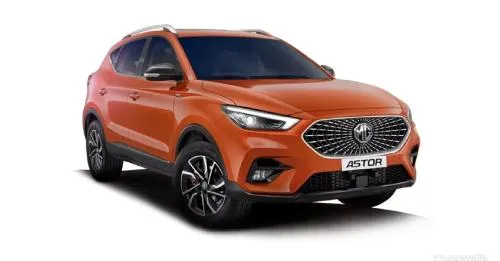
AstorMG
Ex-Showroom Price
₹ 9.98 Lakh
onwards
Engine
1349 - 1498 cc
Fuel Type
Petrol
Transmission
Automatic (CVT) / Automatic (TC) / Manual
Mileage
15 Kmpl
Power
138 bhp @ 5600 rpm
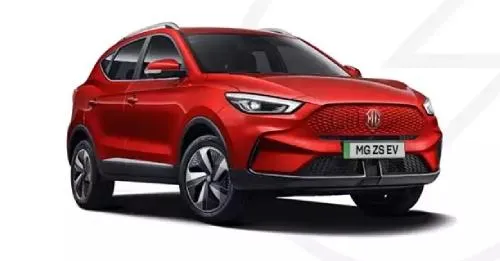
ZS EVMG
Ex-Showroom Price
₹ 18.98 Lakh
onwards
Engine
-
Fuel Type
Electric
Transmission
Automatic
Mileage
461 Kmpl
Power
-
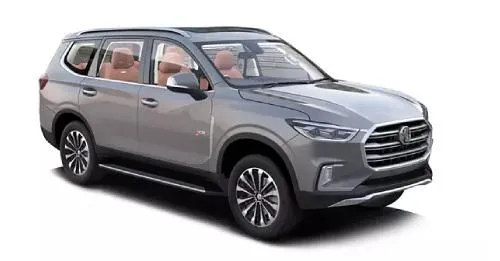
GlosterMG
Ex-Showroom Price
₹ 32.60 Lakh
onwards
Engine
1996 - 1996 cc
Fuel Type
Diesel
Transmission
Automatic (TC)
Mileage
13 Kmpl
Power
212 bhp @ 4000 rpm

CybersterMG
Ex-Showroom Price
₹ 75.00 Lakh
onwards
Engine
-
Fuel Type
Electric
Transmission
Automatic - 1 Gears
Mileage
-
Power
-

M9 EVMG
Ex-Showroom Price
₹ 69.90 Lakh
onwards
Engine
-
Fuel Type
Electric
Transmission
Manual
Mileage
-
Power


MG Astor Images

MG Astor Questions & Answers
Q: What engine and transmission options are available for the MG Astor?-
Q: Does the MG Astor support connectedcar features and overtheair OTA updates?+
Q: What is the boot space capacity of the MG Astor?+
Q: Is the infotainment system of the MG Astor userfriendly and featurerich?+
Q: What safety technologies does MG Astor offer?+
Top MG Cars
MG Astor Price in India
| City | Ex-showroom Price |
|---|---|
| Rohtak | Rs. 9.98 Lakh onwards |
| Gurgaon | Rs. 9.98 Lakh onwards |
| Faridabad | Rs. 9.98 Lakh onwards |
| Bahadurgarh | Rs. 9.98 Lakh onwards |
| Rewari | Rs. 9.98 Lakh onwards |
| Jhajjar | Rs. 9.98 Lakh onwards |
MG Astor Brochure
Download the brochure to view detailed specs and features