Hyundai i20
The Hyundai i20 is a premium hatchback with a stylish design and a feature-rich interior. It includes blue ambient lighting, rear AC vents, a 10.25-inch HD touchscreen infotainment system, and aRead More


Hyundai i20 Features and Specifications
The Hyundai i20 is a 5 Person-seater car with a wheelbase of 2580 mm and a ground clearance of -. It comes with manual and automatic transmission options. Different variants include different transmission types and fuel compatibilities.
 Engine1197 cc
 Torque-
 Mileage-
 Power82 bhp @ 6000 rpm
 TransmissionManual
 FuelPetrol
Hyundai i20 Price
Hyundai i20 is available in 16 variants – the base model is and the top model is
The Hyundai i20 has been a popular choice among car enthusiasts and urban commuters alike since its initial release. Now, the manufacturer has launched the i20 Facelift which comes with better engine capabilities and features. It has a mesmerizing exterior design, a tech-loaded interior, and plenty of safety features.
Let's take a closer look at what this exciting new Hyundai car model offers.
i20 Engine & Performance
Hyundai i20 Colour Options
Hyundai i20 is available in 8 different colors namely Amazon Grey, Fiery Red, Fiery Red with Abyss Black, Atlas White, Atlas White with Abyss Black, Typhoon Silver, Starry Night, Titan Grey.
- Amazon Grey
- Fiery Red
- Fiery Red with Abyss Black
- Atlas White
- Atlas White with Abyss Black
- Typhoon Silver
- Starry Night
- Titan Grey
How is the i20?
 Things We
Like
Things We
Like- Popular premium hatchback
- Feature-loaded
- Efficient engines
- Good safety features.
 Things We
didn’t like
Things We
didn’t like- Expensive top trims
- Rear seat headroom limited
- Not very sporty in base variants.
Hyundai i20 Expert Reviews

By Ishan Raghava
4 Dec, 2020
In its third-generation avatar, the Hyundai i20 sets a new high point in terms of pricing of premium hatchbacks. But the question is – with its new platform, engines, and design, does it also set a new benchmark in the segment? The Hyundai i20, when launched in 2008, was a landmark product that created a new segment in the Indian market. But 12 years ago, the thought of Indian consumers paying premium prices for a hatchback was unimaginable. The question back then was – is the Indian consumer willing to pay over 8 lakh rupees for a hatchback, no matter how luxurious and well-equipped it is? The OG Well, the answer came relatively quickly. The i20 was a smash hit and created the premium hatchback segment. The Maruti Suzuki Baleno, for instance, was a direct by-product of the i20’s success. In fact, such has been the success of the i20 in India in the last 12 years that our country remains the single biggest market for the i20 worldwide. And it would be fair to say that in terms of quality, standard equipment levels, and refinement, the outgoing i20 was still the segment benchmark in the Indian market. In its third-generation avatar, then, the i20 aims to set more benchmarks, and the first one is its pricing. With its top-of-the-line versions costing just over `11 lakh, the i20 clearly is treading into unknown territory. But it’s not just the pricing of the new i20 that’s surprising – from its brand-new design and a new platform to new engines, gearboxes, and class-leading equipment, the i20 is a terrific package, at least on paper. But will Hyundai manage to convince customers to pay this kind of a price premium over its rivals, such as the Baleno and the Honda Jazz, or even the outgoing i20, for that matter? Well, we spent a full day driving the i20 in varying road and traffic conditions to find out. Sharp looker The first, and the most obvious, change is the completely new design of the new i20. Based on Hyundai’s new global design direction, the i20 features sharper styling, intricate detailing, and a very well-balanced stance. Our dual-tone test car, for instance, featured black detailing at the front, wing mirrors, roof, side skirts, and even rear bumper. Combine this with a large front grille, sleek headlamps, and a sharply inclined bonnet, and you get a uniquely attractive front-end design. In profile, the i20’s large glasshouse and the presence of a unique glass window in the C-pillar give it quite a balanced look, which is aided by the restrained use of chrome and 16-inch wheels filling the wheel arches. If there’s something that might bother you in profile, it’s the positioning of the door handles on the front and rear doors. Those with keener eyes must’ve noticed that the handles of the two doors are mounted on separate planes, which is something that really bothers the obsessive-compulsive stickler in me. Thankfully, though, in terms of the overall design, it’s not a very conspicuous anomaly. Now, the rear design of the i20 is probably going to be the most polarizing aspect of the car. With its full-length, sharply styled ‘Z’ shaped taillights, the rear design of the i20 is quite distinctive. But the huge chrome strip in between the taillights is likely to polarize people quite a bit. Still, there is no doubt that the new i20 is a beautifully styled car, which not only looks unique but also is sure to be a hit with Indian customers. And I’m not exaggerating when I say that in terms of perceived value, the i20’s design and detailing exude a premium feel in oodles. Raising the bar The interior of the i20 greets you with a welcome sight of a brand-new design, which is a breath of fresh air. In this new layout, the i20 features a cleaner and more simplified design, with minimal switches scattered inside the cabin, and yet it’s packed with standard equipment to the gills. The first highlight that you notice is its quality. And I must say that the new i20 really moves the game forward in the premium hatchback segment in terms of interior quality. Apart from the lack of soft-touch plastics in some places, the i20’s interior is simply class-leading in its build quality, tactile feel, and fit-and-finish. One of the hallmarks of Hyundai’s recent products is that they’ve all been very well equipped. But the i20 takes it forward and sets a new benchmark here. For instance, in the top-spec models, you get 6 airbags, climate control, an air-purifier, a digital instrument cluster, a wireless charging pad with cooling function, and much more. There are also a lot of segment-first features, such as the all-digital instrument cluster and BlueLink connectivity. But that’s not all, it also offers the biggest and, by far, the best multimedia experience in its segment, with the 10.25-inch touchscreen and a fantastic sounding 7-speaker Bose audio system. Of course, an important aspect of the premium hatchback is its interior space. Now, the new i20’s platform has grown – it’s now 41mm wider and 10mm longer, which translates into more space inside the car. The rear seat has ample legroom, but the headroom might be a bit of a squeeze for people taller than 6 feet. Nevertheless, the front seats are quite large and exceptionally comfortable. Matters of power Like other Hyundai products, the i20 will also be available with a varied choice of engines and manual and automatic transmissions. The petrol engine options will include the 1.2 naturally aspirated petrol and the 1.0 turbo petrol. And, with the BS-VI norms firmly in play now, the older 1.4-litre diesel engine has been replaced by a much more powerful 1.5-litre engine. While the 1.2-litre mill is perfectly fine for everyday driving – and will be offered with a manual gearbox and clutchless manual gearbox options – it was the 1.0-litre turbo unit that piqued my interest. With 118bhp of power and eager-to-rev nature, the 1.0-litre engine feels perfectly suited to the platform and weight of the i20. Right from the word go, the i20, with the turbo engine, is eager to accelerate and feels fast enough for most driving styles. After all, even today, an acceleration time of under 10 seconds for a 0 – 100km/h run is not bad for Indian road conditions. Pair this with the decently tuned 7-speed DCT, and the i20 emerges as a car that’s a breeze to drive both in city traffic and on the highway. Now, Hyundai engineers have been making progress by leaps and bounds in terms of improving the dynamics of their cars, and this is evident in the i20, especially when you compare it to the last-generation car. The i20’s suspension setup feels absolutely spot-on – both its ride-quality on broken roads and high-speed stability are very well sorted out. Even when you’re pushing the car hard, with a full load on-board (I tried it with four full-size occupants) the i20’s suspension doesn’t bottom out – the understeer remains very controlled and totally predictable, and the high-speed composure remains unaffected. Pleasantly, the steering of the i20 also offers pretty good levels of feel and makes the i20 very engaging to drive. Another thing that you immediately notice about the i20 is its refinement – once inside, you will find yourself very well isolated from the outside world. In fact, the one sentence I used to succinctly summarize my experience of the i20 to a friend who was interested in buying one was – ‘It feels plush’. But that price? Now, I guess, it’s time to address the elephant in the room. My biggest issue with the i20 is its pricing. When I first saw the pricing at the i20’s launch, the first word that came into my mind was ‘overpriced’. Sure, it offers tons of standard equipment, more space, new engines, technology, and the whole nine yards, but upwards of 11 lakhs ex-showroom for a hatch? Frankly, it was hard to swallow. But, after having experienced the car in various conditions, I believe the i20 sets a new benchmark in the premium hatchback segment. With its styling, chassis, suspension setup, engines, gearboxes, and list of standard equipment that’s longer than the list of names in a phonebook – and let’s not forget the polished and refined feel you get while driving it – it simply had me convinced. Sure, it’s not perfect. In fact, I’d like a few things to change in the i20, such as the inclusion of a set of analogue dials – I passionately hate digital instrument clusters – paddle shifters for the DCT gearbox, and a slight reduction in price. But to be brutally honest, if you’re looking for the best premium hatchback in India, there is nothing beyond the new i20 – in fact, the competition has a lot of catching up to do. It really is that good! The i20’s digital cluster does look impressive, but it takes time getting used to the interface and understanding the displayed information. [tabs] [tab title=" Hyundai i20 1.0 Turbo GDi"] Engine: 998cc / 3-Cylinder / Turbocharged Fuel: Petrol Transmission: 6-Speed iMT / 7-Speed DCT / Front-Wheel Drive Power: 118bhp @ 6,000rpm Torque: 172Nm @ 1,500-4,000rpm Price: ₹8.8 - 11.33 Lakh (Ex-showroom) X-Factor: With its class-leading quality, features, great look, and excellent performance, the i20 resets the premium hatchback benchmark. Pros • Great design • Terrific quality • Loaded with standard equipment Cons • Still pricey • No paddle shifters in the DCT [/tab] [/tabs] Also read - All-new Hyundai i20 launched at Rs 6.79 lakh All-new Hyundai i20 variant information revealed https://www.youtube.com/watch?v=z-yoimqhE3M

By Arup Das
9 Apr, 2015
Hyundai unleashes the Hyundai I20 Active to bully its rivals with its additional body cladding, improved ground clearance and class leading features Every time a cross-hatch passes by, I wonder why anyone would pay a premium to buy a beefed up hatchback. I guess it’s all about perception. The rugged looks, additional body cladding, and the raised suspension can actually make one feel as though it’s more than just a compact car – like a compact SUV in fact. Okay, I admit it – it’s certainly an ego boost. In the last two years, we have seen three contenders in this cross-hatch segment – Volkswagen with the Cross Polo, Toyota with the Etios Cross, and Fiat with the Avventura. But Toyota is the only player to have tasted some success. Now, Hyundai has joined the bandwagon. Still considered uncharted territory, Hyundai decided to raise the stakes and sent the very popular Elite i20 to gain some weight. The result of their efforts is the Hyundai I20 Active. The Korean car manufacturer is staying away from the word ‘cross,’ and insists on calling the i20’s body builder brother an ‘SUV looking car’ or ‘sports styled vehicle.’ We’ll let you decide what to call it. But we did hit the sunny beaches of Goa to find out if Hyundai has successfully decoded this segment. It was nice to see that the Hyundai I20 Active in the flesh. It’s quite similar to the sketches Hyundai had revealed previously. If you thought the Elite i20’s honeycomb grille was a crowd pleaser, then you’ll love the simple horizontal design of the front grille of the Active with its rugged and prominent faux bull-bar. The Active is a no-nonsense cross-hatch, I mean ‘sports styled vehicle,’ which looks all set to bully its competition. Hyundai engineers thought that the Elite’s slim fog lamps were too suave for this tough guy. Therefore, to compliment its butch looks, it comes with big circular lamps with cornering lights – which is also a first in this segment. And it’s quite a practical feature too, as every time you take a turn these additional lights switch on and give you a better view of the road ahead. Like the other vehicles in this segment, the Active gets additional body cladding, skid plates and ski rails. It comes with 16-inch wheels, though they look a tad small thanks to the 20mm increased ground clearance compared to the Elite. As Goa has a lot of unmarked speed breakers that creep up on you without any warning, we ended up going over them slightly faster than we would have liked – but not even once was there any danger of scraping the underbody. The Active merely sailed over them without a care in the world. One must give Hyundai credit for rapidly evolving, and learning from their mistakes. Last time we saw LED lights on the last generation i20, it didn’t go down well – as it appeared to be a poor after market job. This time around, they’ve decided to integrate the LED lights in the wraparound headlamp cluster. So, in this case, it really does look like a string of pearls and adds a premium touch to the car. The Active’s rear remains fairly similar to the Elite, except for a more aggressive bumper and big round reflectors cum reverse lights. The cabin remains exactly like that of the Elite, but now the Active gets two-tone interiors – blue and black, or, yes, hold your breath, Tangerine Orange. And I, for one, give the latter a thumbs-up. Personally, I would have preferred a simple all-black cabin with chrome or aluminium inserts, but, according to Hyundai, the Active is for young buyers and the cabin brings out the exuberance they are looking for. The reason why the orange combination looked better was because it was used judiciously on the dashboard and gear lever – while, in case of the blue, there was just too much of it everywhere, especially on the dashboard. The Active retains all the bells and whistles available in the Elite, like the entertainment system with Bluetooth Connectivity and 1GB of memory, a reverse camera, chilled glove box, rear A/C vents, airbags, ABS, ionizer cluster, and the list goes on. For additional comfort, the driver’s seat comes with a height adjustment option. The Active gets sporty aluminium pedals too, which adds some novelty. Hyundai has a treat for all audiophiles too, as this new avatar comes with 8-speakers – so now you can wake up your neighbours if you choose to. In terms of cabin space, like the Elite, it has generous leg and shoulder room. It also has plenty of cubbyholes to store knick-knacks. The Hyundai I20 Active is powered by the 1.2 Kappa VTVT petrol and the 1.4 U2 CRDi diesel engines, just like the Elite. The former churns out maximum power of 82bhp with 114Nm of torque and is mated with a 5-speed gearbox, while the latter is the more powerful powerplant – as it pumps out 89bhp with a healthy 220Nm of torque via a 6-speed transmission. We got to drive the diesel, which will make up the majority of sales. Hyundai has changed the gear ratios to ensure an increase in performance, by 11 percent to be precise. Though we’ll only know how much of a difference it really makes when we do a thorough road test, the initial response from the engine certainly felt better than before. It appears more linear, and the engine performs well in the low to mid-speed range. Even though the Active’s suspension has been raised, Hyundai has ensured that neither the ride nor its handling capabilities have been compromised. To our surprise, it didn’t wallow and offered a plaint ride. It doesn’t even look like a car on stilts. In the narrow, winding roads of Goa, the Active remained planted on the tarmac and when we hit bad patches it sailed through easily. What is commendable is that the Active, weighing more than the Elite, didn’t feel bulky or heavy – and there’s no excess body roll. This is good news, as it remains fun to drive. The Hyundai I20 Active is an interesting take on the segment, and gets many things correct. For starters, it’s all about making a funky statement and feeling macho – something that this car achieves. Increasing the ground clearance to 190mm, without compromising the ride quality, is a masterstroke by Hyundai. It’s loaded to the gills with features, and has two very refined engines. The 1.2 Kappa VTVT petrol provides linear power delivery, while the 1.4 U2 CRDi diesel has enough torque to keep you adequately pinned to the seatback. The Hyundai I20 Active boasts of having the longest wheelbase in the segment, and this translates to a spacious cabin – where five people can sit comfortably, especially on long drives. It also has 285 litres of boot space, which adds to the Active’s practical nature. The additional features, like the new projector headlamps, with integrated LED daytime-running lights and cornering lamps, will not make its way to the Elite i20. Personally, we love these features and hope Hyundai reconsiders this decision. The light steering still lacks feedback, but, on the whole, Hyundai has a brilliant product on its hands once again. It just goes to show what you can achieve when you start with a solid base. Sure, the price is a little steep, but no other vehicle in this segment comes close to what the Hyundai I20 Active offers. Also, let’s not forget, the Elite on which it’s based is a premium hatchback – so it’s pricing is no surprise. The question is – should you go for the Elite or the Active? Well, it’s all about which avatar of the i20 matches your personality. No matter which of the two you choose, Hyundai will continue to see its sales soar. [tabs] [tab title="Hyundai i20 Active (1.4 U2)"] Engine: 1,396cc / 4 Cylinders / DOHC / 16 Valves / Turbocharged Fuel: Diesel Transmission: 6-Speed Manual / Front-Wheel Drive Power: 89bhp @ 4,000 rpm Torque: 220Nm @ 1,500rpm Price: Rs. 7.63-8.89 Lakhs (Ex-showroom, Delhi) [/tab] [tab title="Hyundai i20 Active (1.2 Kappa)"] Engine: 1,197cc / 4 Cylinders / DOHC / 16 Valves Fuel: Petrol Transmission: 5-Speed Manual / Front-Wheel Drive Power: 82bhp @ 6,000 rpm Torque: 114Nm @ 4,000rpm Price: Rs. 6.38-7.09 Lakhs (Ex-showroom, Delhi) [/tab] [/tabs]

Hyundai i20 Dealers in New Delhi
autoX has a list of 0 authorized Hyundai i20 dealers in India. They provide servicing to all the Hyundai cars including the i20. Find here the contact information, full address, and Google map directions of the nearest dealer for your i20 around you.
Compare Hyundai i20 with Similar Cars
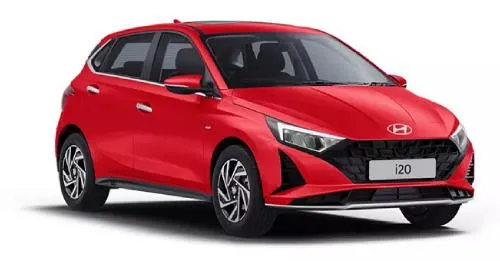
i20Hyundai
Ex-Showroom Price
₹ 6.87 Lakh
onwards
Engine
1197 - 1197 cc
Fuel Type
Petrol
Transmission
Automatic (CVT) / Manual
Mileage
18 Kmpl
Power
87 bhp @ 6000 rpm
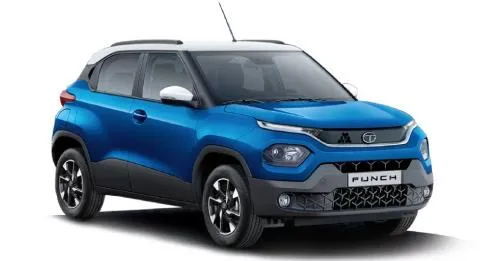
PunchTata
Ex-Showroom Price
₹ 5.50 Lakh
onwards
Engine
1199 - 1199 cc
Fuel Type
CNG / Petrol
Transmission
Automatic / Automatic (AMT) / Manual
Mileage
26 Kmpl
Power
87 bhp @ 6000 rpm
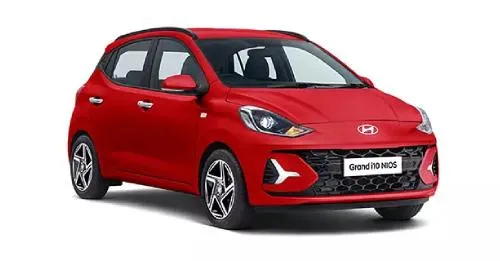
Grand i10 NiosHyundai
Ex-Showroom Price
₹ 5.47 Lakh
onwards
Engine
1197 - 1197 cc
Fuel Type
CNG / Petrol
Transmission
AMT / Manual
Mileage
27 Kmpl
Power
82 bhp @ 6000 rpm
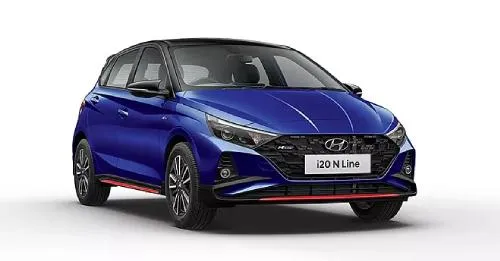
i20 N LineHyundai
Ex-Showroom Price
₹ 9.14 Lakh
onwards
Engine
998 - 998 cc
Fuel Type
Petrol
Transmission
Automatic (DCT) / Manual
Mileage
20 Kmpl
Power
118 bhp @ 6000 rpm
Hyundai i20 Safety Ratings

Adult
8.84 Max. 17 Adult

Child
36.89 Max. 49 Child

Hyundai i20 Images

Hyundai i20 Questions & Answers
Q: What is the boot capacity of the Hyundai i20?-
Q: Does the Hyundai i20 have rear AC vents?+
Q: What are the transmission options available in the Hyundai i20?+
Q: Is the Hyundai i20 good for tall drivers and passengers?+
Q: How many airbags does the Hyundai i20 offer?+
Q: Is the Hyundai i20 available with a sunroof?+
Hyundai i20 Price in India
| City | Ex-showroom Price |
|---|---|
| Rohtak | Rs. 6.87 Lakh onwards |
| Gurgaon | Rs. 6.87 Lakh onwards |
| Faridabad | Rs. 6.87 Lakh onwards |
| Bahadurgarh | Rs. 6.87 Lakh onwards |
| Rewari | Rs. 6.87 Lakh onwards |
| Jhajjar | Rs. 6.87 Lakh onwards |
Hyundai i20 Brochure
Download the brochure to view detailed specs and features