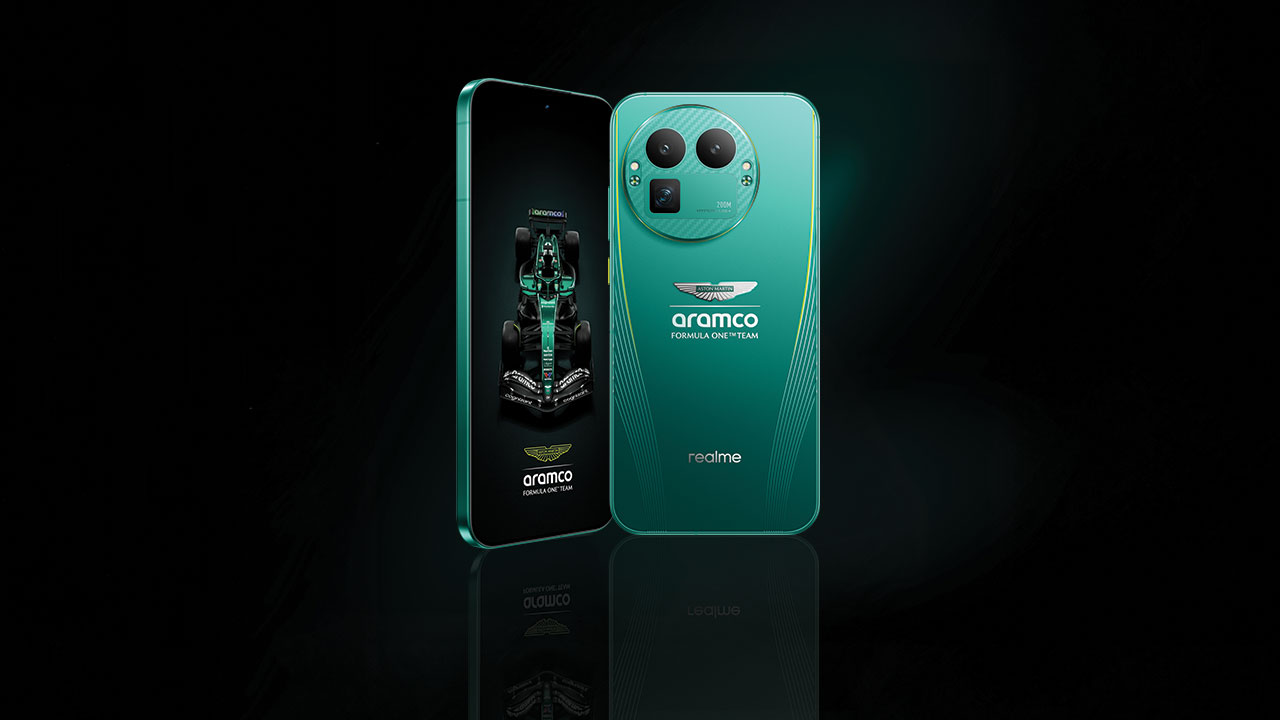
Realme GT 7 Dream Edition Review: The Perfect Smartphone for F1 Fans?
A power-packed visual marvel, born from the union of speed, heritage, and style, the Realme GT 7 Dream Edition is a smartphone made in collaboration with the Aston Martin F1 team.
By Aakash S Paul
Photography By Hiyan Chauhan
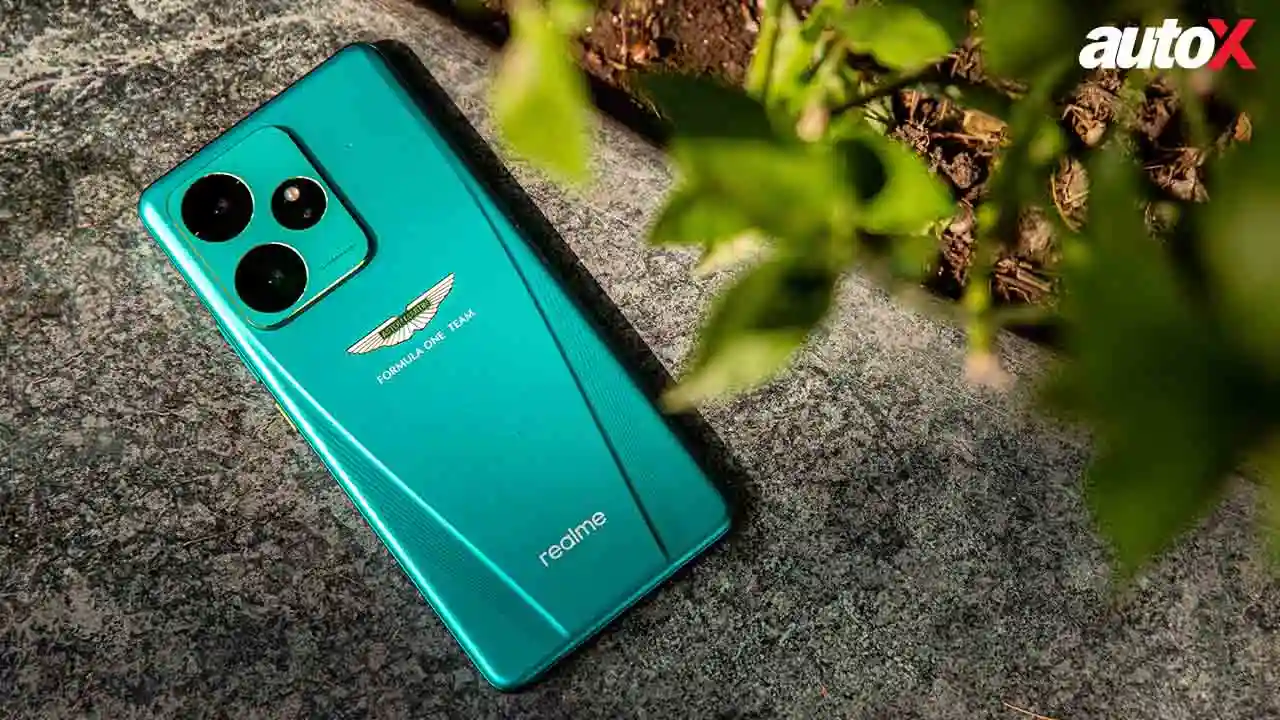
It would not be a stretch to say that the smartphone market has become a bit dull, given the sheer number of devices launched every month. The real issue, however, is that most of these devices have identical features and specifications. So, it’s refreshing to see a special edition device made in collaboration with an F1 team. As the resident F1 fanatic at autoX, I was naturally excited when I received my review unit of the Realme GT 7 Dream Edition, made in collaboration with the Aston Martin Aramco F1 Team. The question, however, is – is it the perfect smartphone for fans of Formula 1?
Special Delivery
The Realme GT 7 Dream Edition starts off strong, offering an impressive unboxing experience. I have long felt that unboxing phones, even flagship models, has become a rather dull affair. It comes in a rather large box, finished in the Aston Martin Racing Green colour. Inside, there is another sleek black box, which splits open to reveal a thick coffee table book, encased in a cover. The booklet is a nice touch, featuring images from Aston Martin’s racing history and detailing the collaboration between the two brands.
Beneath the black box lies the device itself. Pulling a tab on the lower half of the black box reveals a tray that holds a 120W fast charging brick, a Type-A to Type-C cable, some paperwork, a back cover with a carbon fibre finish, and a rather fancy SIM ejector tool, shaped like the Aston Martin F1 car. Kudos to Realme for their attention to detail and offering such a great unboxing experience. My only gripe is that the back cover doesn’t quite match the premium feel of the rest of the package.

As for the phone…well, it comes in an ornate green shade adorned with golden highlights. Not only does it stay true to Aston Martin’s signature colours, but it also looks downright stunning. This is one device I would recommend putting a clear case on – you know, just to flaunt its design. The edge of the camera island and the lenses have a golden highlight, and so does the power button. The back also has a textured pattern, which mimics the flow of air in a wind tunnel. The Dream Edition definitely looks different from the regular GT 7, and not just because it’s finished in a different colour.

Fire up the phone, and you are greeted by an Aston Martin-themed UI, running on Android 15. Most of the native icons have a distinct look, which hints at the amount of effort that has gone into making this phone unique. The phone does feature some unwanted apps, but the good news is that you can easily get rid of them. What’s more, the phone comes with a promise of four major OS updates.
Also Read: Lava Shark 5G Review: The New Budget King in India
The 6.78-inch LTPO screen has a resolution of 1264 x 2780 pixels and a peak brightness of 6,000 nits. The AMOLED unit offers good colour reproduction, but I don’t think it’s the best unit out there. With a refresh rate of 120Hz, the UI feel smooth and responsive. For protection, the phone gets Corning Gorilla Glass 7i and IP69 dust and water resistance, which is decent. That said, I was a bit disappointed by the quality of the dual speakers. Yes, they are fairly loud, but they fall short in the low end, resulting in an audio experience that seems a bit thin and cheap.
Firing on All Cylinders
Like the regular Realme GT 7, the Dream Edition is powered by the Mediatek Dimensity 9400e chipset. The phone even has a "GT Mode" to enhance performance. It scored impressively in synthetic benchmarks, earning a score of over 21.5 lakh in AnTuTu, 2,215 in Geekbench’s single-core test, and 7,337 in the multi-core test. The GPU also performed admirably, scoring 15,186 in Geekbench and 5,374 in the 3D Mark Wild Life Extreme test.

But these numbers only tell part of the story. In daily use, the 9400e had no trouble handling anything I threw at it. During my time with it, the UI was consistently smooth and multitasking was seamless. The real surprise was how effortlessly it handled heavier workloads, like gaming. Titles such as Battlegrounds Mobile India, Real Racing 3, and Asphalt Legends ran beautifully at their highest settings. Simply put, the GPU is a powerhouse when it comes to graphics-intensive tasks.
What stood out even more was thermal management – even after 20-30 minutes of gaming, the phone did not become uncomfortably hot. The cooling system clearly does its job well, minimising heat build-up and reducing the risk of performance throttling. For that, Realme deserves serious credit.
Also Read: Pioneer VREC-H320SC Dashcam Review: When Safety Comes First
The power-packed performance of this phone is perfectly complemented by a large 7,000mAh battery. It easily lasts two days on a single charge. The phone comes with a 120W charger, which can take it from 0 to 100% in just under an hour – an impressive feat indeed. Even more impressive were the short charging bursts during the test –15% in just six minutes and 50% in merely 20 minutes. My only niggle is that the GT 7 does not come with wireless charging.
A Flash of Brilliance
Coming to the cameras, the GT 7 features a 50MP main sensor, accompanied by a 50MP telephoto, and an 8MP ultrawide lens. When shooting pictures, you can choose between two different modes – Vibrant and Crisp. In Crisp mode, the colours are a lot more muted and neutral, while the Vibrant mode snaps Insta-ready high-saturation images. I like the images taken by the main lens in most cases; however, I did notice that it occasionally struggles with focus. Photos from the telephoto lens have an impressive level of detail. That said, both lenses suffer from some sharpening and noise issues in on low-light shots. There’s also a digital 5x zoom, which performs decently in broad daylight, but quickly deteriorates when the lighting becomes challenging. The ultrawide lens is only good for daylight photography, for most shots from it look artificially enhanced and lack details.
When shooting videos, the main sensor supports up to 8k at 30fps, though the footage isn’t particularly noteworthy. I’d recommend sticking to the 4k mode, which can even shoot videos at 120fps. Just like stills, videos also lean towards favouring green and blue shades. Video stabilisation is just about decent but nothing exceptional.
Here, too, the ultrawide lens tends to produce the most disappointing visuals and is limited to 1080p at 30fps. The telephoto is much better and can handle 4k footage at 60fps. I was glad to see seamless transitions between different zoom levels while recording. I was also impressed by the performance of the front camera – it produced good results both in the photo and video modes. There are plenty of filters to tweak the look of the photo or enhance facial features if needed. I did, however, notice that the edge detection around hair wasn’t perfect in some photos
A Class Apart
The GT 7 Dream Edition demands a premium of ₹10,000 over the regular GT 7. While both devices have identical hardware, their unboxing experiences are quite distinct. Realme has done an excellent job of making the Dream Edition feel special. And if you happen to be a fan of Formula 1 or Aston Martin, it’s not a huge price to pay for a phone that looks unique and runs amazingly fast and cool.