Volkswagen Tiguan R-Line Long Term Report: Month 2 - Frolicking Around
A month deeper into ownership, the Tiguan R-Line reveals its real-world strengths and flaws, from efficiency gains to ride comfort and tech quirks.
By Ishan Raghava

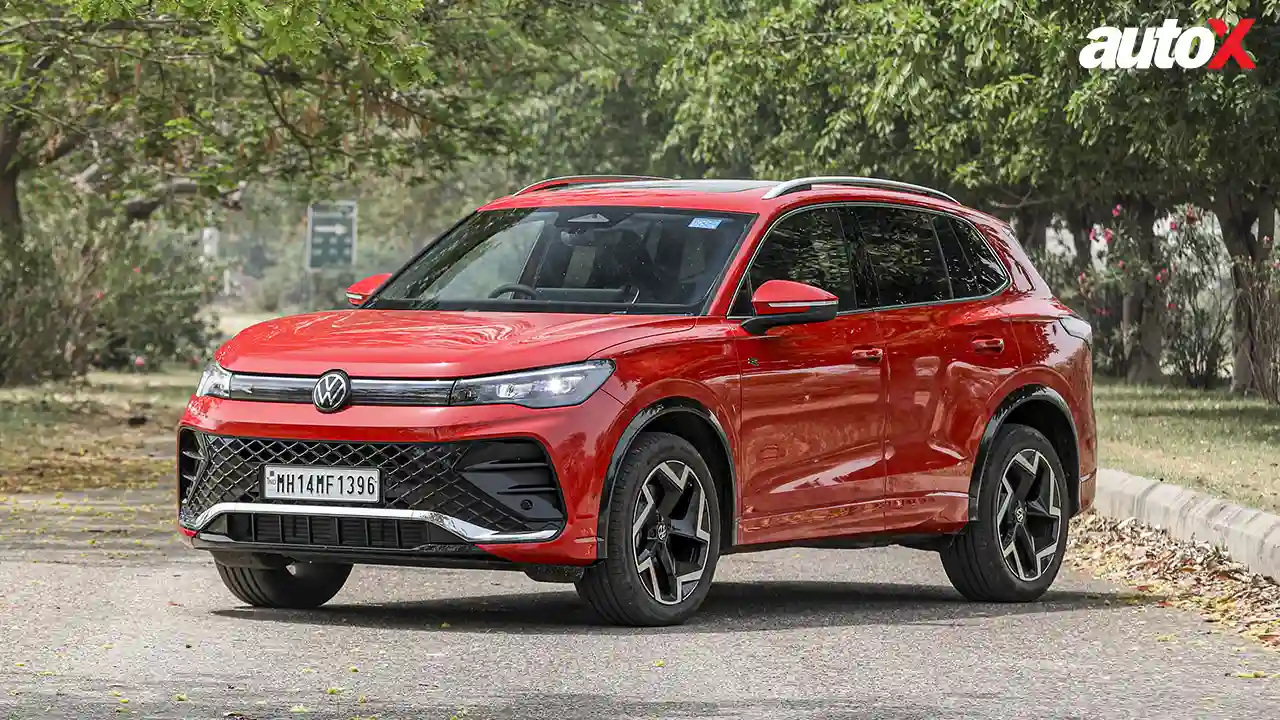
It’s not commonly known that the Tiguan is one of VW’s most successful products worldwide. And it’s easy to see why – the Tiguan has excellent dimensions for urban driving: not too big, yet spacious enough for a small family. At the same time, it delivers better fuel efficiency figures than its predecessor. The earlier version would give me a fuel efficiency of 5.5 to 6 km/l, but over the last 1,000km, the new Tiguan has measured around 8.2 km/l. Sure, this might not be as good as a hybrid, but for me it’s nearly a 40% improvement, which saves a lot of money! Plus, no hybrid SUV drives as well as the Tiguan does.
However, not everything about the Tiguan is perfect. The suspension is still a bit too stiff – I don’t mind it, but my occasional passengers do. However, it lacks two key features. First, the front seats don’t have electric adjustment. This is not a deal-breaker, since the seats themselves are fantastic and offer excellent bolstering support. But more importantly, it lacks keyless entry and exit, which is a bummer.
Over the years, we’ve become so accustomed to keyless access that having to rummage for a key feels outdated and annoying. VW India did indeed miss a trick here. Another issue is that the ADAS response is a bit too aggressive for my liking. Even when reversing at less than walking pace, if the ADAS detects an obstacle, the braking response is so aggressive that it can be quite startling. That said, once I turn off the ADAS and drive the Tiguan normally, the pleasure of driving it quickly makes me forget this flaw.
When it came: November 2025
Current odo reading: 5,120km
Mileage this month: 1,180km
Fuel efficiency: 8.2km/l
What’s good: Great seats
What’s not: Aggressive ADAS


