F1: Ferrari Debut Upside-Down Rear Wing at Second Bahrain Test
Ferrari tests a 180-degree rotating rear wing on the SF-26 at Bahrain F1 2026 pre-season test, aiming to cut drag, boost top speed and exploit a gap in the new aero rules.
By Divyam Dubey

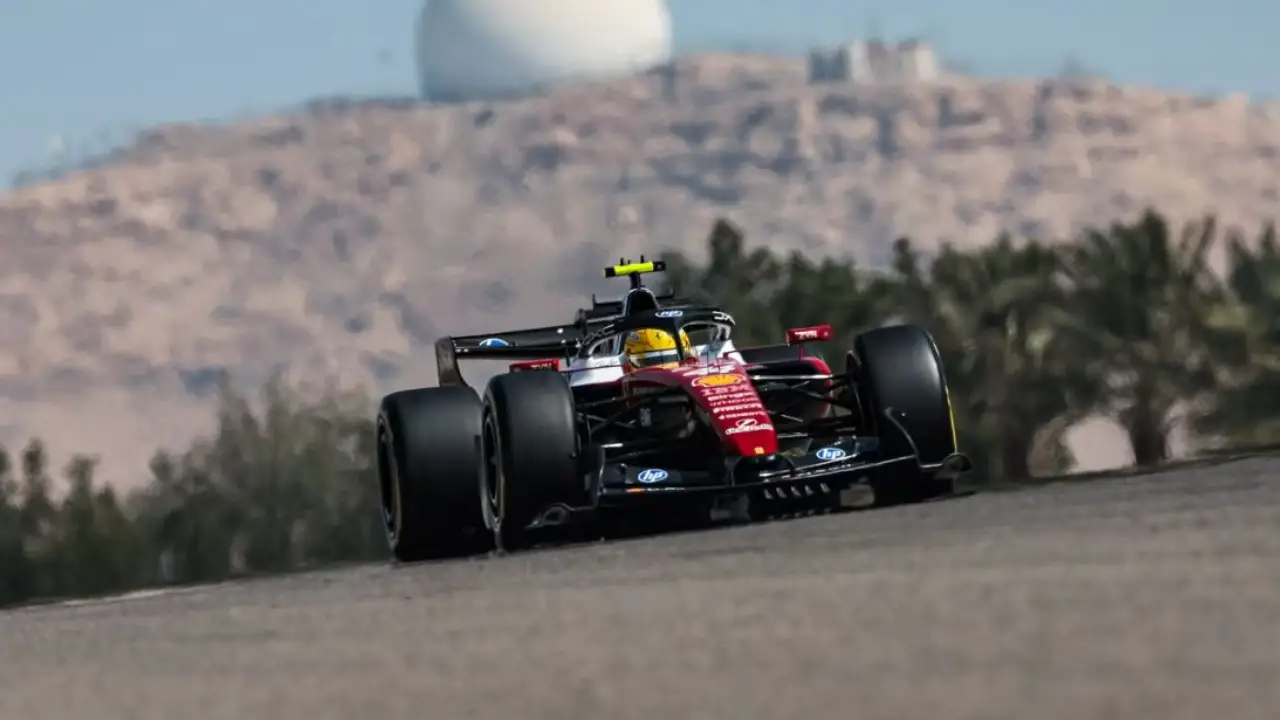
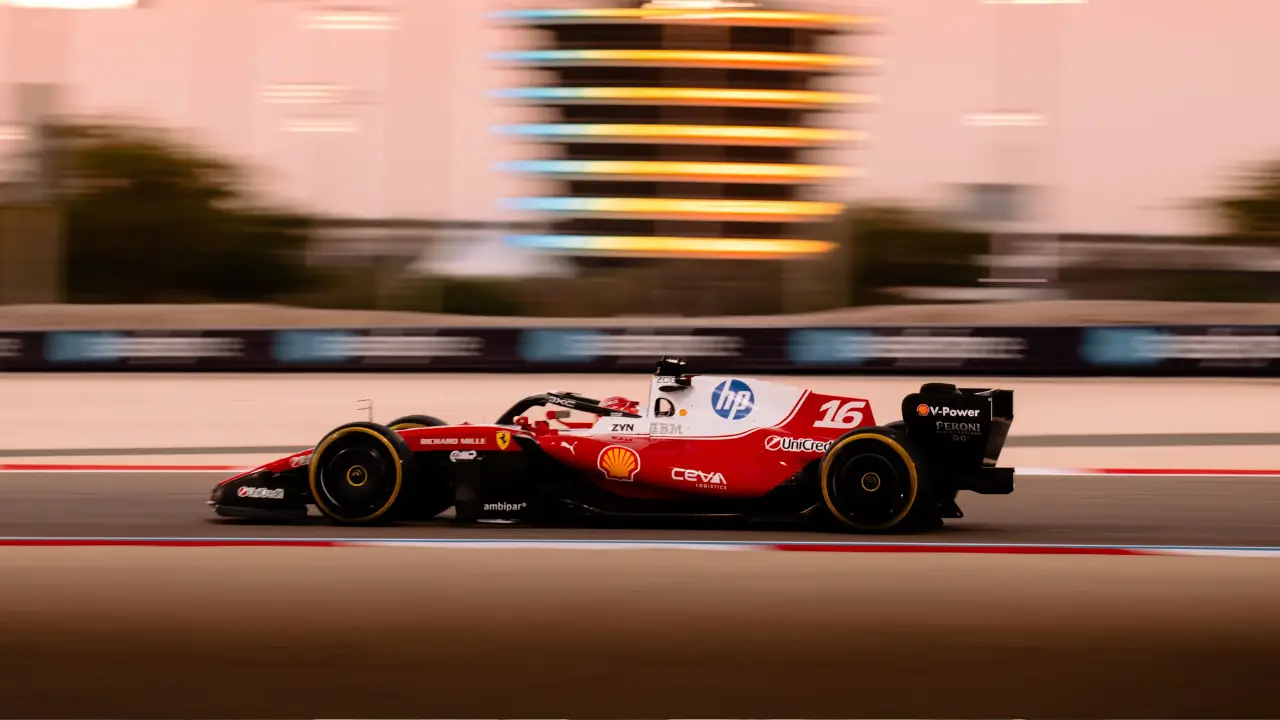
Ferrari brought a major talking point to the second Bahrain F1 2026 pre-season test with a new rear wing on the SF-26. Lewis Hamilton ran the updated car during the morning session at the Sakhir circuit as the team continued its testing programme, though Hamilton’s running was briefly interrupted by an 'issue' shortly after the wing was spotted, limiting his initial lap count.
The new rear wing uses a mechanism that changes the position of the upper wing plane while the car runs at high speed. It is one of the most unusual aero solutions seen so far in testing and quickly drew attention in the paddock. Ferrari is exploring every detail of the 2026 rules to find performance gains, and this rear wing is a clear sign of that approach.
Also Read: F1 2026 Engine Drama: FIA Moves to Close Mercedes’ Compression Trick
The update followed another new aero part that appeared on the car during the previous day of running in Bahrain.
F1: How the Rotating Rear Wing Design Works
The system works by rotating the upper element of the rear wing by 180 degrees when the car enters its low-drag mode on the straight. Instead of flattening like most active aero systems, Ferrari’s design flips the upper plane completely. As the car runs down the main straight, the wing element becomes inverted, giving the rear end a very different airflow pattern compared to standard solutions.
As the driver approaches braking zones, the wing returns to its normal position for cornering. The rotation happens within the time limits set by the rules for aerodynamic movement. This action aims to stall airflow over the rear wing and diffuser more effectively than traditional low-drag setups used by other teams in the pit lane.
F1: Benefit of Rotating Rear Wing
The goal of this development is to reduce drag and improve top speed on long straights. By flipping the wing upside down, Ferrari wants to create a small amount of lift to offset the downforce that still exists in low-drag mode. The design also helps cut rolling resistance from the tyres during high-speed running, which can support better straight-line performance.
Ferrari seems to have found a section in the 2026 technical regulations that does not stop the full rotation of active aero surfaces. The rules define how quickly the wing can move, but do not limit the final angle or orientation in its secondary position. The team also tested a small winglet behind the exhaust to manage hot gases and influence rear downforce, showing a clear focus on how exhaust flow interacts with rear aerodynamic parts.