This Land Rover Defender Dakar D7X-R Is Built to Conquer Dakar 2026
A wider stance, high-clearance setup, and Dakar-focused livery give the Land Rover Defender D7X-R a strong presence for the 2026 rally.
By Divyam Dubey


Land Rover is gearing up for the 2026 Dakar Rally with the Defender Dakar D7X-R, a version built to handle long stages, rough terrain, and strict Stock-class rules. It’s still based on the Defender OCTA and uses the same D7x aluminium monocoque frame, but gets rally-focused upgrades to meet World Rally-Raid Championship requirements. Power comes from a BMW-sourced 4.4-litre twin-turbo V8 that now runs with an FIA-approved restrictor. The brand has logged long test runs across different terrain to make sure the SUV is ready for Dakar conditions.
Also Read: Dakar 2026: Land Rover Tests D7X-R Prototype, Signs Rally Legend Peterhansel
Engineers, drivers, and support crews have worked together on performance and durability checks, and the entry will run on FIA-certified sustainable fuel when the rally begins in Saudi Arabia in January 2026.
Defender Dakar D7X-R: Design
The Defender Dakar D7X-R comes with wider arches, stronger body sections, and functional panels shaped to deal with dunes, rocks, and steep climbs. The wider track and raised height help with balance on uneven surfaces. The exterior updates focus on airflow, clearance, and dust control at high speeds. Everything here is built around keeping the SUV steady on tough rally stages.

Ground clearance now stands at 370mm thanks to updated suspension geometry built for soft sand and mixed terrain. The wider stance supports 35-inch off-road tyres that are standard in rally-raid use. A large 550-litre fuel tank sits in the rear cabin to handle stages that stretch beyond 800km, reducing the need for stops. These changes help the Defender keep moving through long sections that usually decide Dakar stage results.
Defender Dakar D7X-R: Interior
Inside, the setup follows FIA rally guidelines, so you get a full roll cage, six-point harness seats, and basic navigation equipment for the driver and co-driver. A single motorsport control unit manages key systems to keep things simple.
-1764151224580.webp)
The head-up display helps with navigation, and the switches and panels are placed for quick access during long hours in the desert. The layout is stripped back and built for focus.
Defender Dakar D7X-R: Engine
The 4.4-litre twin-turbo V8 is the same one used in the OCTA but now runs with a restrictor to meet Stock-class rules. The eight-speed automatic gearbox stays unchanged but uses a shorter final drive for better torque at slow speeds in deep sand or rocky patches.
Suspension components co-developed with Bilstein help at high desert speeds, while six-piston front and four-piston rear brakes manage stopping power.
Also Read: Range Rover Sport SV at autoX Awards: Best Cars of 2025 Ranked
A system called Flight Mode controls torque when the SUV goes airborne, protecting the driveline during landings and keeping performance consistent across tough Dakar stages.
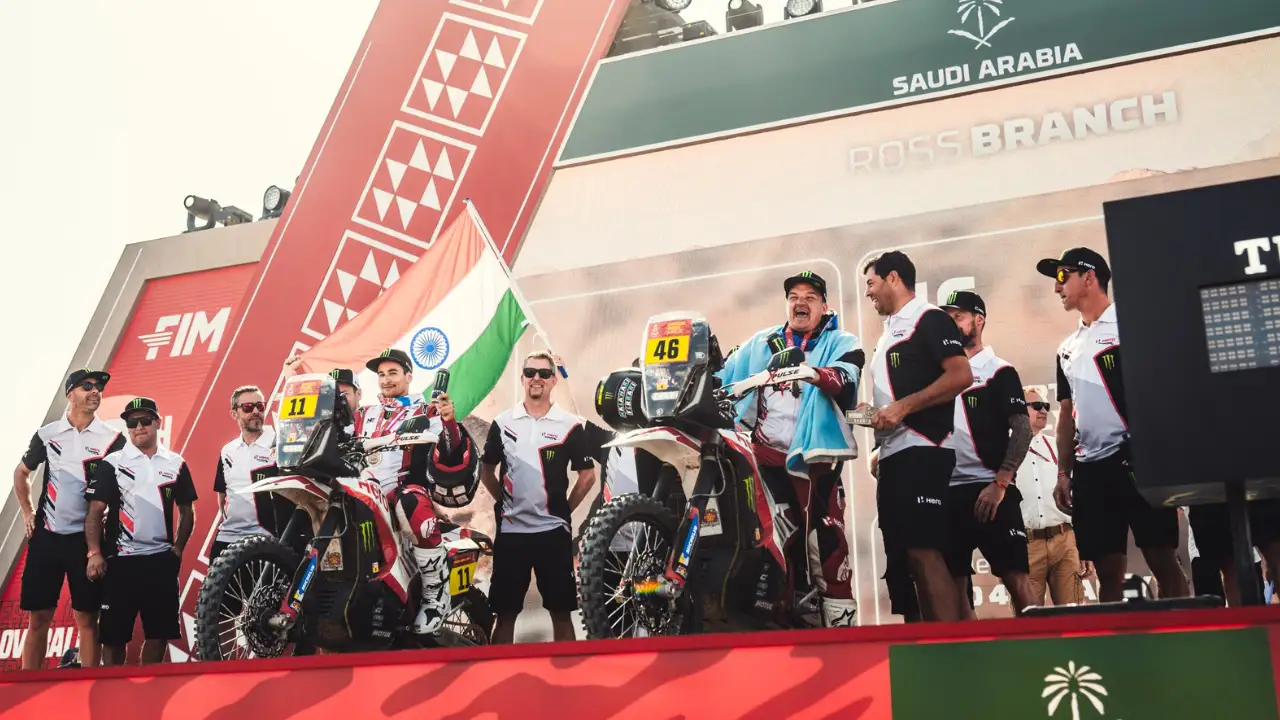
-1768543280565.webp "Dakar Rally 2026: Stage 11 Keeps Overall Battle Tight as Focus Shifts to Final Push")
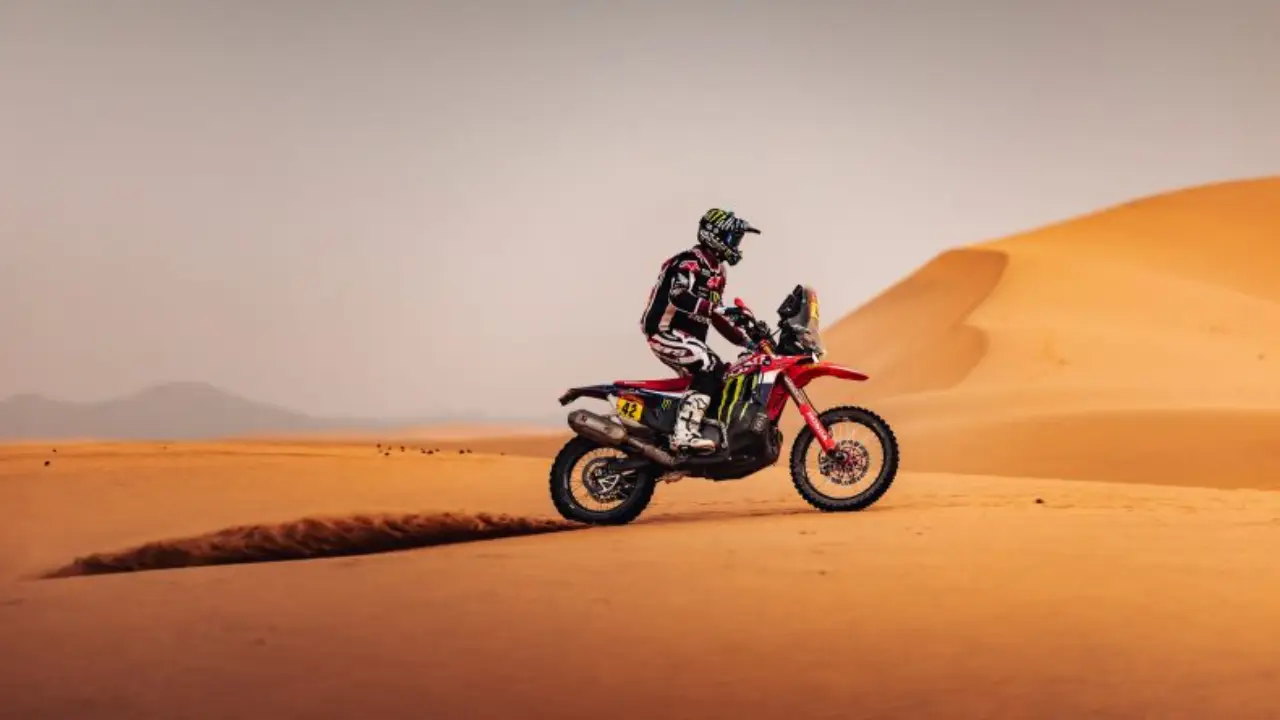
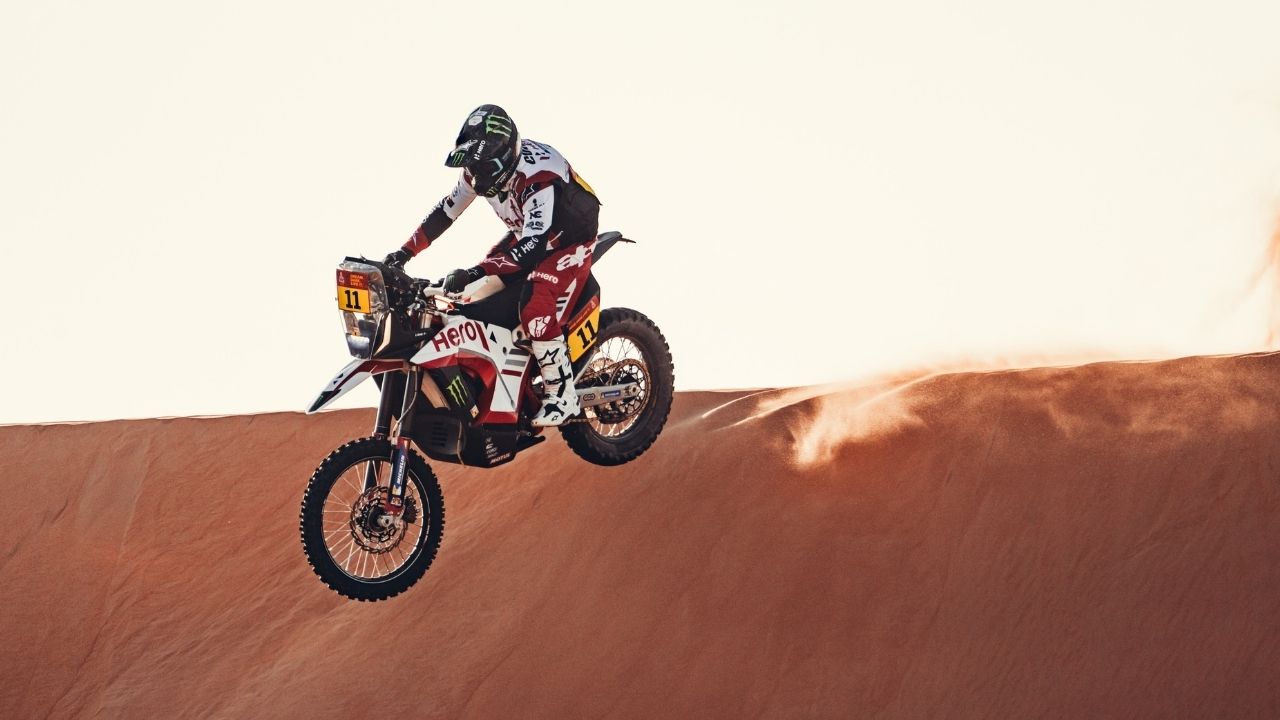
-1768289096281.webp "Dakar Rally 2026: Hero MotoSports Holds Top 10 in Stage 8 with Cornejo P6 Overall, Branch P8")