This New Hypercar From Italy Packs 7.0-Litre Quad-Turbo V12 and Makes 2,127bhp!
On the design front, the Giamaro Katla adorns gullwing doors, distinctive LED DRLs, C-shaped LED taillights, a vented bonnet, and a large diffuser.
By Reetika Bhatt

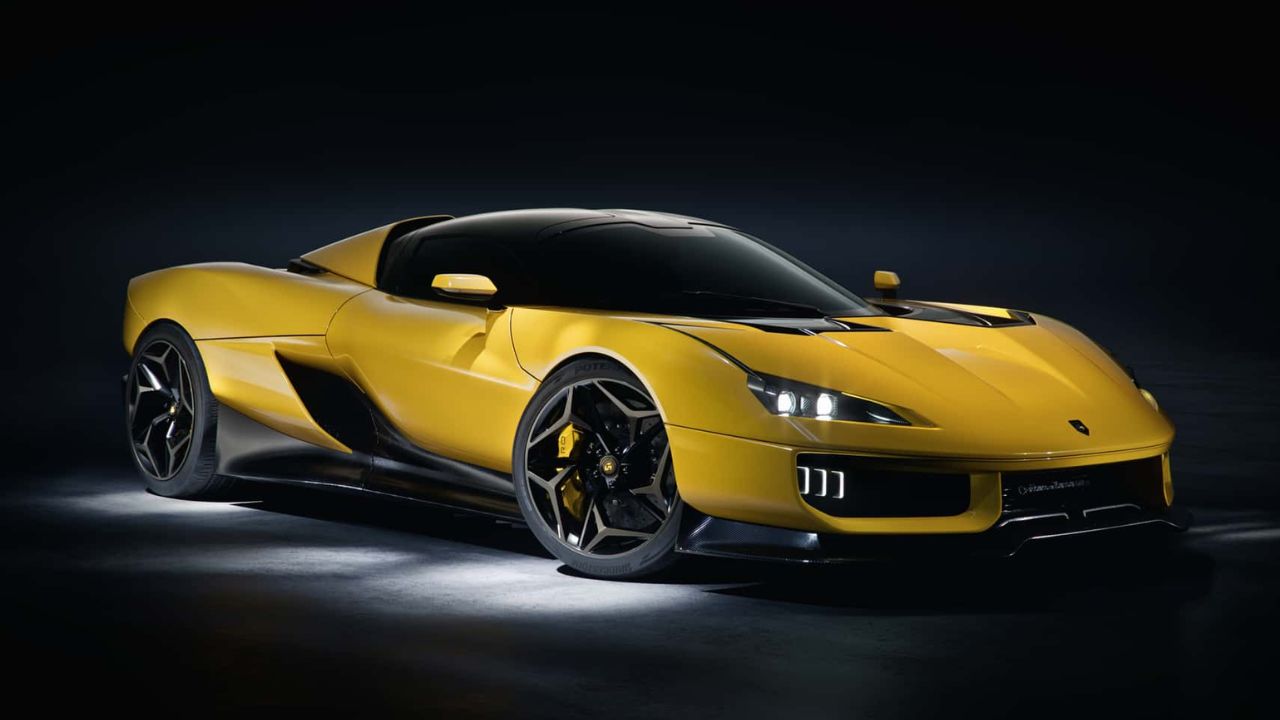
The Giamaro Katla is a new hypercar from Italy that brings extreme performance and bold design to the segment. It is powered by a massive 7.0-litre quad-turbocharged V12 engine that produces 2,127bhp, placing it among the most powerful production cars ever built. Designed for speed and presence, the Katla features a low-slung body, sharp lines, and aerodynamic detailing that reflect its performance focus. The car represents a serious effort by Giamaro to establish itself in the high-performance market, offering cutting-edge engineering and raw power. With its combination of aggressive looks and an engine built for maximum output, the Katla stands out as a strong new entry in the world of ultra-high-performance vehicles.
Giamaro Katla: Dimension, Weight, and Styling
The Katla measures 4,791mm in length with a 2,750mm wheelbase and features a carbon fibre monocoque frame weighing 170 kg, resulting in a total claimed weight of 1,450 kg.
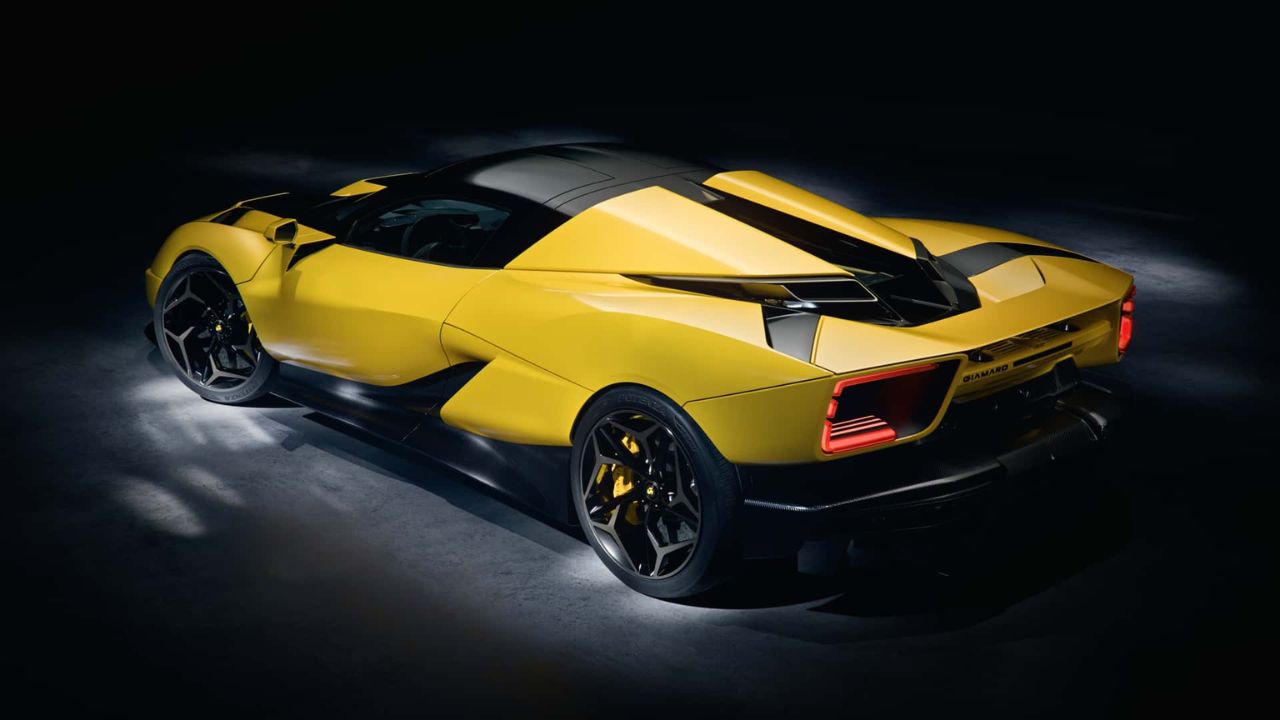
Its styling is fairly typical of modern supercars, though the manufacturer has released limited details. The car adorns gullwing doors, distinctive LED DRLs, and a vented bonnet. It also has an aerodynamic design that channels air toward its mid-mounted engine. The rear is equipped with C-shaped LED taillights and a large diffuser.
Also Read: WEC: McLaren Teases its Le Mans Hypercar Ahead of 2027 Entry
Furthermore, the model rolls on 20-inch wheels at the front and 21-inch at the rear, wrapped in Bridgestone Potenza Sport tyres. The braking setup is substantial, featuring 10-piston callipers up front, 4-piston callipers at the rear, and 420mm brake discs on all four corners. An active rear spoiler boosts downforce and functions as an air brake.
Giamaro Katla: Interior Layout
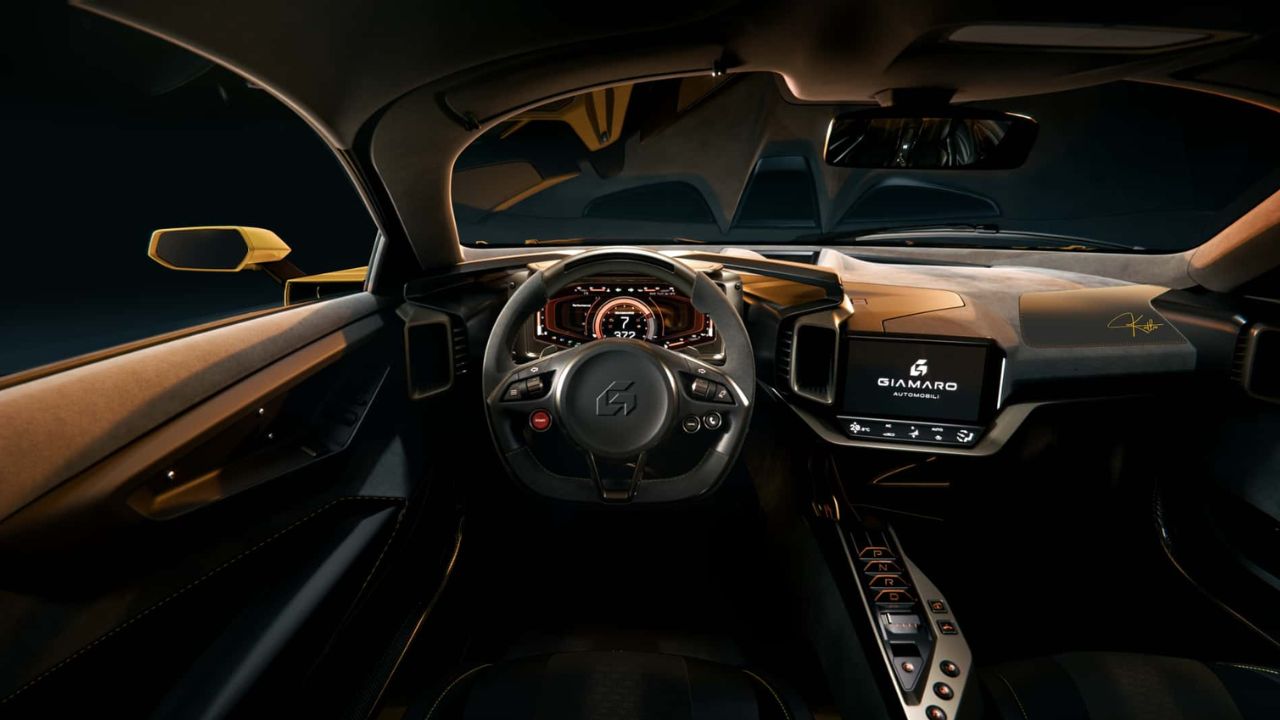
Giamaro Automobili has kept details about the interior largely under wraps but describes it as having an aviation-inspired design with the use of carefully woven textiles, aluminium, and carbon fibre. The cabin also includes sporty seats, an infotainment screen, a push-button gear selector, a minimalist arrangement of controls, a digital instrument panel, and a flat-bottom steering wheel.
Giamaro Katla: Power Figures and Suspension
The Katla offers two powertrain options: one with 1,647bhp and 1,556Nm of torque, and a more powerful variant delivering 2,127bhp and 2,008Nm. Power is directed exclusively to the rear wheels through a limited-slip differential paired with a seven-speed gearbox, while an 11-speed dual-clutch transmission is reportedly in development.
Also Read: Renault 5 Turbo 3E Electric Mini-Supercar Breaks Cover
The car maintains a 42:58 front-to-rear weight balance and uses a suspension system built from solid aluminum alloy components combined with electronically adjustable dampers. The ride height also adjusts automatically to optimise aerodynamic performance without sacrificing everyday usability.