TVS Ntorq 150 vs Hero Xoom 160: Specs, Features, and Performance Compared
The TVS Ntorq 150 is more affordable than the Hero Xoom 160 (Rs 1.49 lakh), with prices starting at Rs 1.19 lakh. The top-spec variant is priced at Rs 1.29 lakh. Both are ex-showroom figures
By Sanorita


The TVS Ntorq 150 is the latest addition to India’s sporty and feature-rich scooter segment. While it’s built on the same platform as its popular sibling, the Ntorq 125, the 150 comes equipped with several new features that make it stand out. We compare this largest-capacity Ntorq 150 with Hero's popular Xoom 160, which has a more muscular design and a bigger engine. Let’s see which scooter offers the best combination of style, performance, and value.
TVS Ntorq 150 vs Hero Xoom 160: Design
The higher capacity Ntorq retains the sharp and youthful style of its 125cc sibling, but elevates it with a more powerful, aggressive stance. It comes with a repositioned headlamp setup, which is a quad-LED projector unit. The new DRLs double as turn indicators, while winglets are added on the sides. With the front cowl removed, the Ntorq 150 looks sharper, streetfighter-inspired, and its exposed handlebars add to the sporty character.
Also Read: TVS Ntorq 150 Launched at Rs 1.19 Lakh; Gets Projector Headlamps & Traction Control
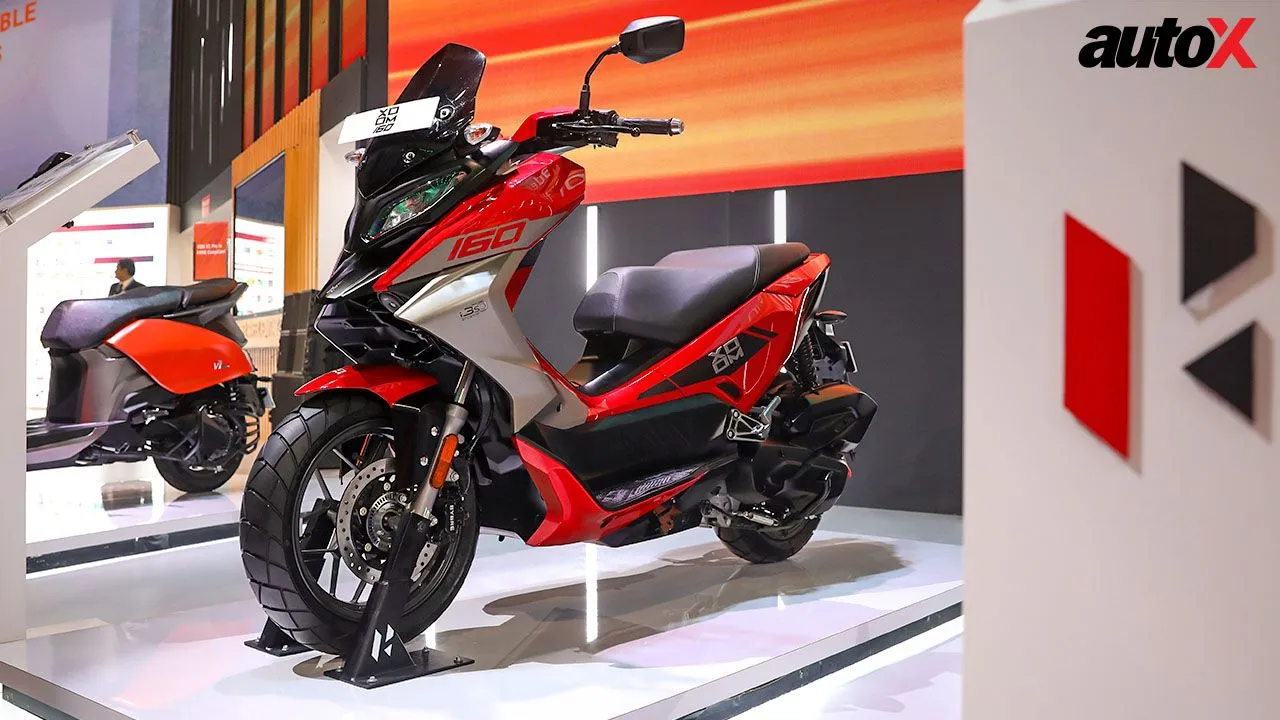
In contrast, the Hero Xoom 160 gives a pure maxi-scooter vibe, with a larger, muscular, and adventure-inspired design. It has a more commanding road presence with a tall windscreen, an ADV-styled front beak, and chunky body panels. Other highlights include a long, cushioned seat and a slanted footrest.
TVS Ntorq 150 vs Hero Xoom 160: Dimensions
Compared to its Hero rival, the TVS scooter is shorter, narrower, and significantly lighter. Its compact frame, 770mm seat height, and 115 kg add to its nimble and rider-friendly nature. In contrast, the Hero Xoom 160 is a fully-fledged maxi scooter with a noticeably larger footprint. The more substantial build, coupled with a longer 1348mm wheelbase and a heavier 142 kg kerb weight, provides superior stability and a planted feel on the open road.
| TVS Ntorq 150 | Hero Xoom 160 | Difference | |
| Length | 1,861mm | 1,983mm | -122mm |
| Width | 740mm | 839mm | -99mm |
| Height | 1,120 | 1,214 | -94mm |
| Wheelbase | 1,285mm | 1,348 | -63mm |
| Ground Clearance | 155 | 155 | |
| Seat Height | 770mm | 787mm | -17mm |
| Kerb Weight | 115 kg | 142 kg | -27 kg |
TVS Ntorq 150 vs Hero Xoom 160: Engine
Both scooters significantly differ in performance. The Ntorq uses a 149.7cc air-cooled engine that churns out 13.01bhp and 14.2Nm. It accelerates from 0-60km/h in just 6.3 seconds, and has a top speed of 104km/h.
In contrast, the Hero Xoom 160 comes with a larger 156cc liquid-cooled engine that delivers 14.59bhp and 14Nm. According to the company, the Xoom 160 can sprint from 0 to 60km/h in just 6.5 seconds.
TVS Ntorq 150 vs Hero Xoom 160: Hardware and Features
The scooters come well-equipped, but with distinct focuses. The TVS Ntorq 150 features telescopic front forks, a rear coil spring with hydraulic dampers, front disc and rear drum brakes, and single-channel ABS. It rides on 12-inch tubeless tyres and includes a 5-inch full-TFT display with over 60 connected features via the SmartXonnect app, including navigation, call alerts, Alexa, and smartwatch support. Notably, it also offers traction control. Other highlights are USB charging, a front glove box, and 22 liters of under-seat storage.
Also Read: Hero Xoom 160 First Ride: Is It Truly the 'Super Scooter' It Claims to Be?
The Hero Xoom 160, on the other hand, uses telescopic front forks and dual rear shocks. It gets disc brakes at both ends and dual-purpose tyres on 12-inch alloy wheels. Key feature highlights include a backlit LCD with Bluetooth, turn-by-turn navigation, keyless ignition with smart key functions like remote seat opening and a ‘find-my-scooter’ feature.
TVS Ntorq 150 vs Hero Xoom 160: Price
The Hero Xoom 160 is significantly more expensive than the TVS Ntorq 150, with its ex-showroom price starting Rs 1.49 lakh. For reference, TVS scooter is priced at Rs 1.19 lakh for the standard and Rs 1.29 lakh for the top variant. These are ex-showroom prices.