Germany vs China: The EV Design Wars - Letter from the Editor
As EVs – especially those from China – increasingly resemble amorphous blobs, German automakers are embracing their heritage styling to stand out.
By Dhruv Behl


At the recently concluded German mobility show in Munich, Teutonic giants BMW and Mercedes unveiled their latest generation EVs in the form of the iX3 and GLC, respectively – both of which will go head-to-head in the global marketplace.
If you’ve heard of the ‘Red Pig’, you’ll recognise the GLC instantly – and no, I’m not being derogatory. If anything, it’s a term of endearment in this instance.

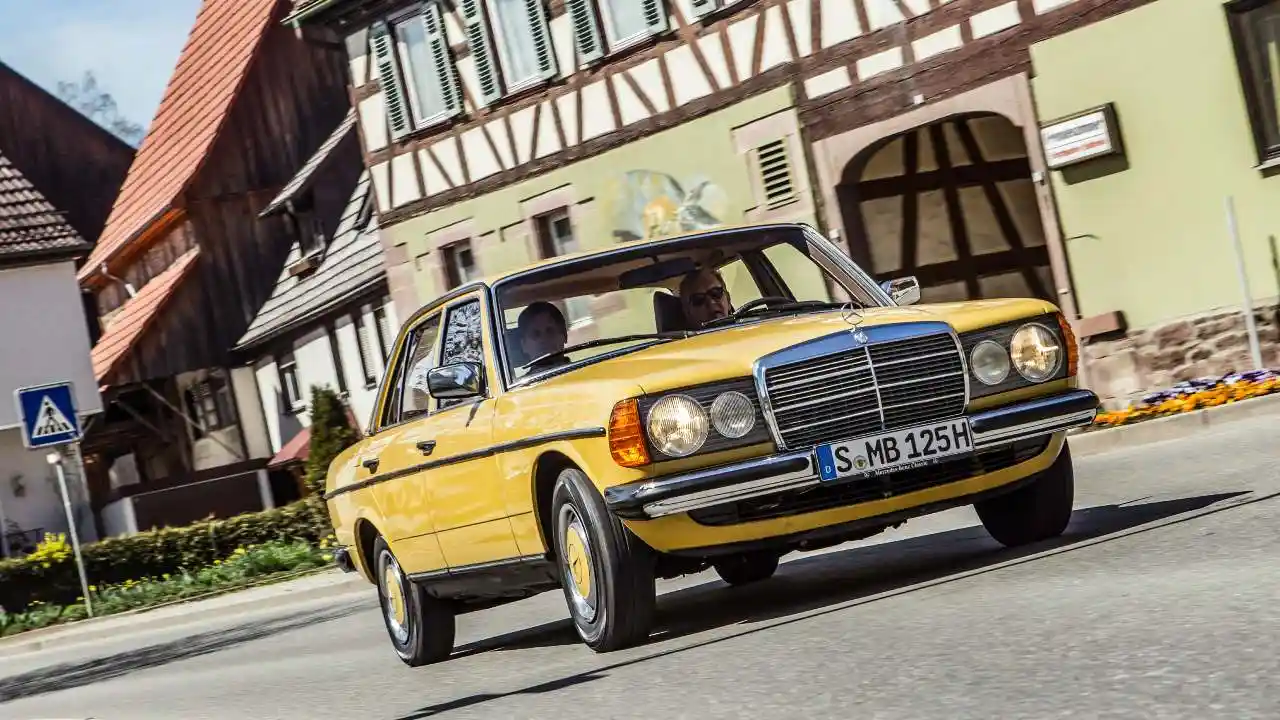
In 1967, Mercedes engineers Hans Werner Aufrecht and Erhard Melcher founded AMG to make high-performance race engines. In ‘71, AMG took a two-tonne 300 SEL, enlarged the V8 to 6.8 litres, and created one of the fastest four-door cars on the planet. In addition to its bright red paint and racing livery, its legend was enhanced by the Mercedes-Benz production car's massive chrome grille at the front – a design signature that clearly inspired the brand-new GLC EV.

Mercedes has swapped out the metal and chrome with 942 individual backlit LEDs that form the new-age interpretation of this iconic grille. The lasting effect is that you would never mistake the GLC for anything but a Mercedes-Benz. Even if you saw it from a mile away, that three-pointed star would still stand out. Even more impressive is that, despite the imposing grille, the GLC has a coefficient of drag of just 0.26 Cd.
In Bavaria, the swinging '60s were perhaps even more pivotal. BMW was facing bankruptcy and possibly even a takeover by Mercedes-Benz. Herbert Quandt and a new range of BMWs turned out to be saviours – the first Neue Klasse (New Class) model was the BMW 1500 of 1962.

Here again, chrome has been replaced by an LED light signature that simulates the erstwhile metal face while retaining its distinct identity.

LED, it seems, is the chrome of the modern era, and these two German giants are utilising it quite effectively to embrace their heritage to differentiate their vehicles in a sea of anonymous aerodynamic shapes.
At Munich, I also drove a pair of Chinese XPengs, and while they were surprisingly impressive, I could barely tell one from the other after completing the drive.

Yes, their different sizes put them in separate segments, but there was nothing distinctive about either – a trait shared with many EVs from around the globe, and especially those coming out of China.
That said, there’s no doubt that China has taken the lead in terms of battery technology and in-car technology, which is all the more reason for traditional automakers to embrace their past to leapfrog themselves into the future. Whether it works or not is something that we’ll have to wait and see…