Is India’s Luxury Car Market Held Back by Poor Service? - Letter from the Editor
If India is creating 12 new millionaires an hour, why is the luxury car market still growing in the low single-digits and failing to reflect this surge in wealth on our roads?
By Dhruv Behl

Well, the answer is quite evident, really. According to the Mercedes-Benz-Hurun India Wealth Report, millionaire households in India with a net worth of more than 8.5 crores have grown by almost 500% from 2017, with these fortunate few now totalling a sizable 871,000 households. And yet the Indian luxury car market is only about 50,000 units a year, give or take – and growing by just a whisker.
Yes, the luxury car market has achieved somewhat of a critical mass over the past few years, but it still hasn’t hit that long-awaited take-off point. At best, there’s tepid growth year-on-year. And I can tell you why that is. The answer is quite simple, really – service costs, and the ambiguity therein!
Some time ago now, I sent a luxury car to the service centre to fix an armrest that, instead of staying locked in place, had freed itself to slide back and forth at will. The demand to repair it was for the princely sum of Rs 50,000. I declined their offer, in place of spending just Rs 10 on a bottle of super glue and a plastic insert wedged into the armrest channel to lock it in place. Yes, it was no longer adjustable, but I was richer by Rs 49,990 – so I counted it as a win.
Nevertheless, I gave the service centre the benefit of the doubt, labelled myself a cheapskate and moved on. But, since then, I’ve heard enough luxury car service centre horror stories to fill a Stephen King novel. This was brought agonisingly close to home once again during a recent service centre experience with a luxury car due for its first service at 8,000 kilometres and 7 months.
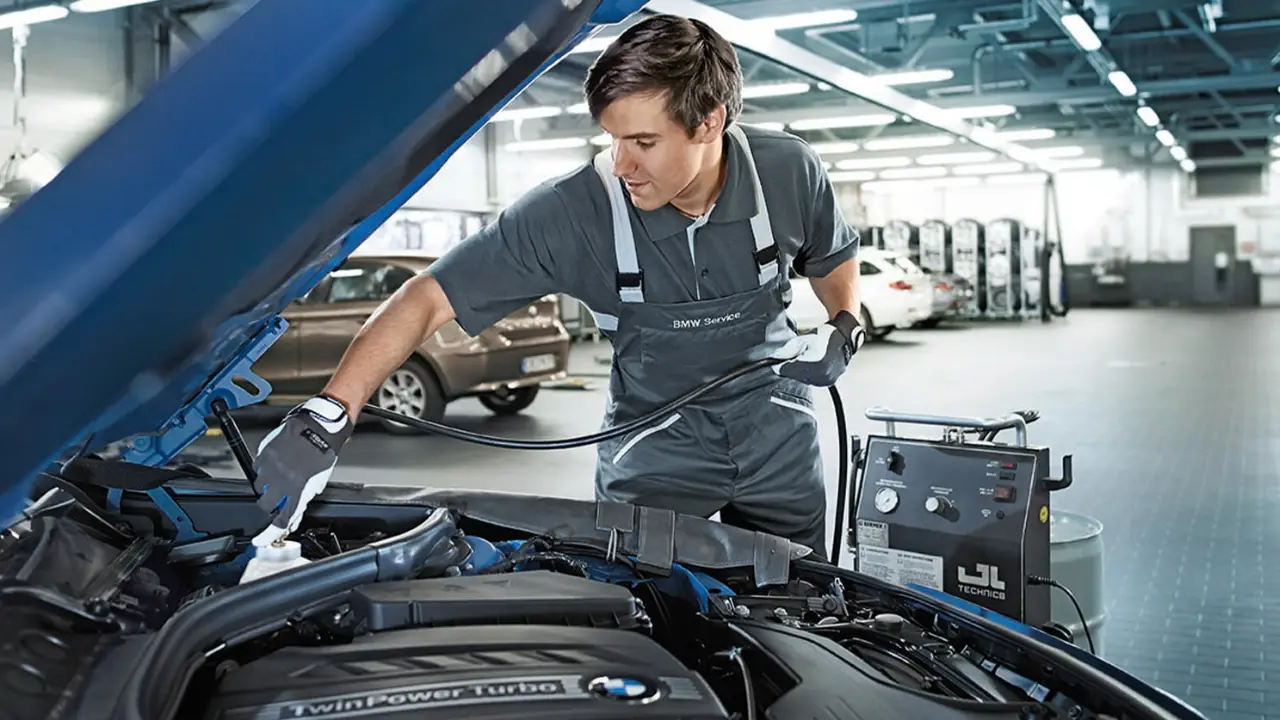
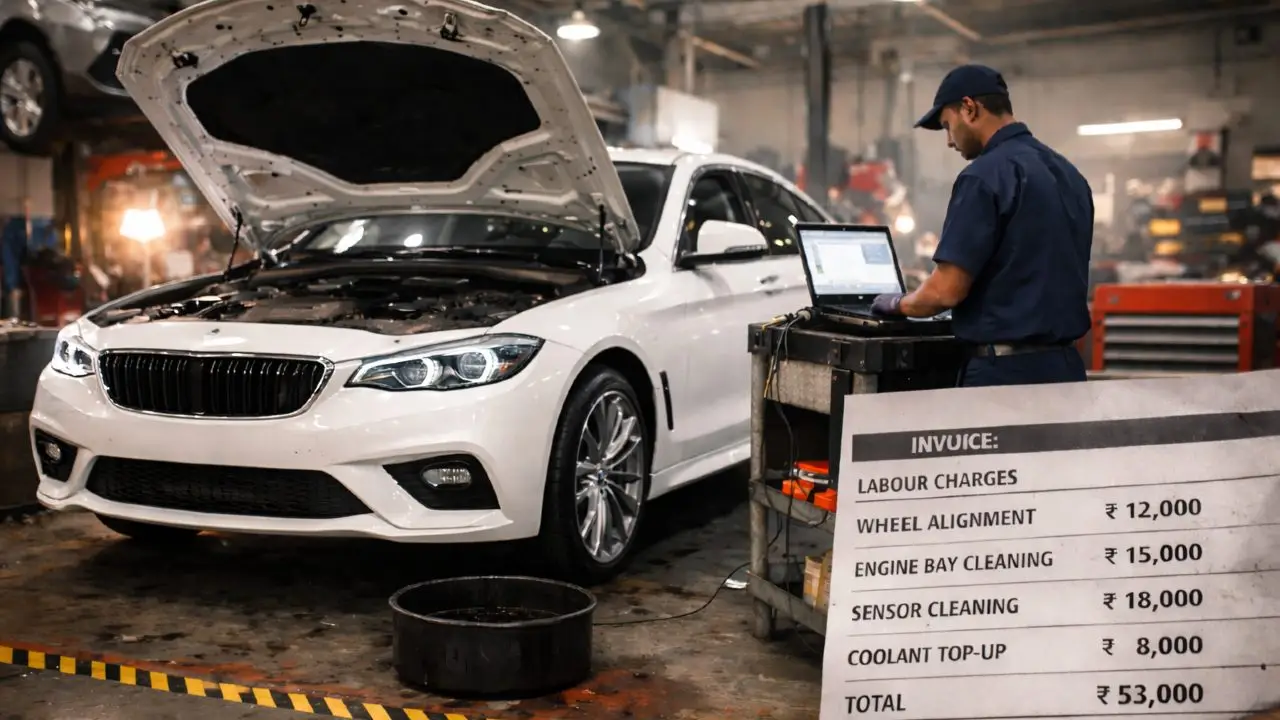
The vehicle in question is covered by a service package (a must of luxury car ownership), so it should have been a simple case of getting serviced and returned with a smile and a fresh reservoir of engine oil. Instead, I got a call at midday stating that it’s also in need of alignment, balancing, sensor cleaning (with dry ice no less), wheel cleaning and a top up of coolant – none of which was covered in the service package, and the sum total of which would amount to just over Rs 50,000 (the going rate it seems for any visit to a luxury car service centre).
As per this estimate, which required Sherlock Holmes level of decoding, alignment and balancing would take 3.5 hours, engine bay cleaning would take 2 hours, wheel cleaning another 2 hours and general cleaning a further 1.5 hours, for a total of 8 hours, excluding the time needed to actually service the vehicle – which added up to more hours than were left in the day, considering the car was due to be returned by day’s end.
Contrast this with the time taken for the items that were actually required (and covered in the service package) – an oil change in 15 minutes, an air filter change in 15 minutes, and a cabin filter change in 10 minutes. I respectfully declined the additional work and avoided even the mildest dent to my wallet. But I wonder how many owners take the service advisor’s word as gospel, receive a hefty bill in exchange, and then tell their friends and family about the exorbitant costs of luxury car ownership.
A few years ago, Mercedes-Benz India introduced their ‘Retail of the Future’ initiative, wherein it centralised the invoicing of all new cars in order to increase transparency. Frankly, I’m surprised other carmakers haven’t followed suit, and the next step towards lasting customer satisfaction would be to centralise service invoicing as well, with an AI-based system to scrutinise invoices and estimates in real-time – ensuring sustained transparency throughout the ownership experience.
If the industry can implement this, then that take-off point towards exponential growth may finally be just a step away…