Opinion: A 5-Star NCAP Rating is Not a Safety Guarantee
Our understanding of NCAP stars is too simplistic. To avoid commonly held and potentially dangerous misconceptions, Srini lists twelve things you must know about car safety ratings.
By Srinivas Krishnan

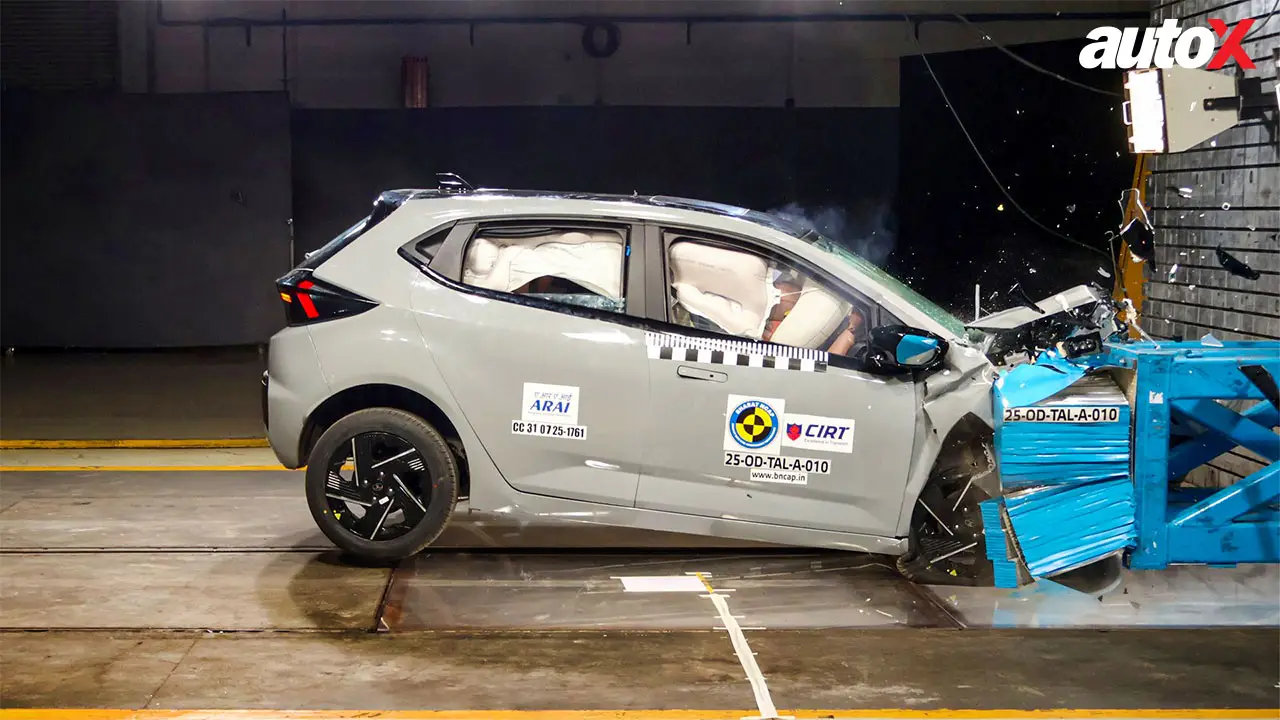
Very often, we simply look at the Global or Bharat New Car Assessment Programme (NCAP) star ratings and immediately jump to various conclusions. Sometimes these conclusions can be injurious to health. For instance, you may think that, if you are driving around in a 5-star rated car, then you are invincible and that nothing can happen. But nasty things do happen, right? Even occupants of the most well-engineered/safety-feature-equipped cars perish in crashes… What gives? And does a car with 3 stars or below mean it’s an unsafe car? Some occupants emerge unscathed from crashes, while some don’t from the same model of car – why? Can you trust a list of ‘the safest cars in India’ based on the number of stars? It’s time to bust some myths, and reveal some untold facts.
In my last column, I highlighted how Bharat NCAP 2.0 differs from the previous version (autoX.com/opinion) and is for the better. This time around, as promised, is the second part on safety ratings and new car assessment programmes.
The objective of this column is to clear some perceptions and share some undisclosed information about GNCAP/BNCAP safety ratings, so that you don’t fall prey to marketing spiel. Most OEMs tom-tom their safety ratings and give you the impression that you are driving a Main Battle Tank. Well, they are not to be blamed, as these safety ratings – while highly important and critical – also function as marketing collateral, mainly because the ratings given after tests are conducted by an independent third party. But as a prospective car buyer or user, you need to understand the nuances of star ratings – the really important stuff the ads leave out.
I’ve had long conversations on road safety with a professional automotive and road safety engineer and researcher who goes by the anonymous handle @RSGuy_India, and he has been generous in allowing me to adapt his blog on this topic. So here goes…
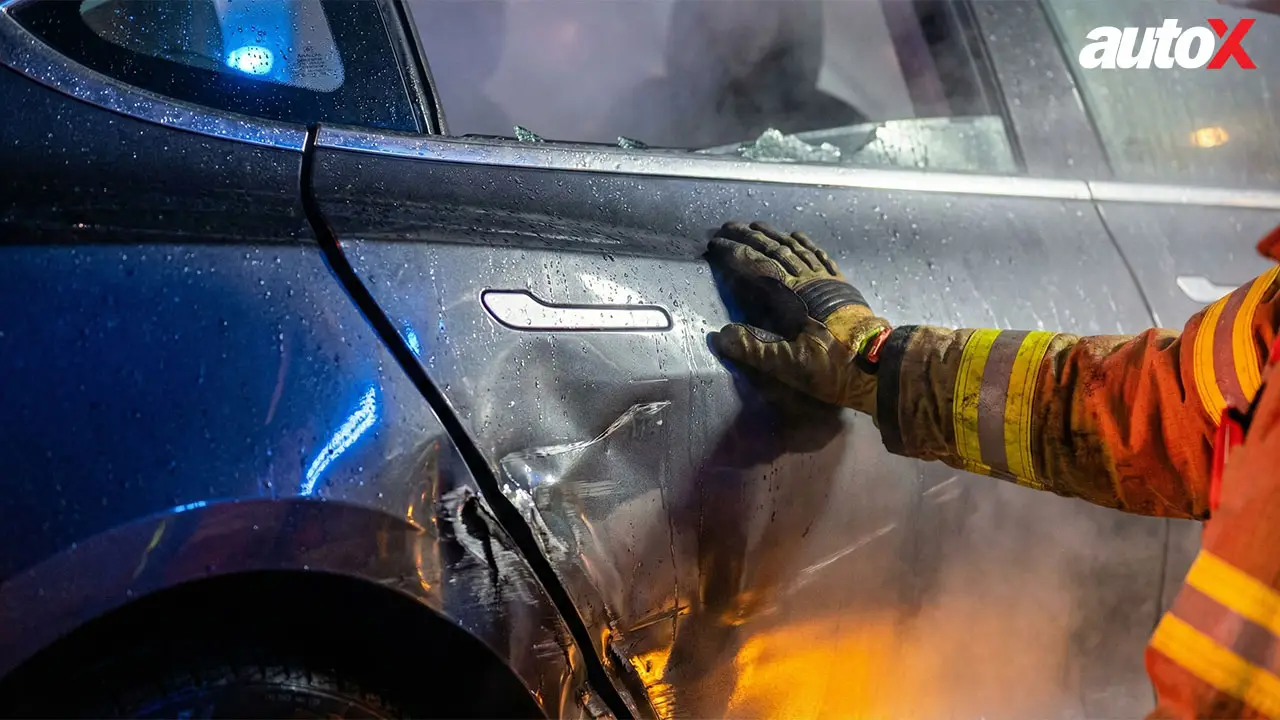
1. NCAP ratings assess risks of injuries and not vehicle damage. Crash test scores provided in NCAP ratings are for determining the risk of injuries to different body parts in a crash. The exterior vehicle damage is irrelevant to the rating unless it leads to specific occupant cabin areas to collapse. So, don’t go judging a car’s safety performance just because how a car ‘looks’ after a crash or crash test.
2. NCAP ratings are irrelevant for cars with unbelted occupants. Even if a single occupant is not wearing the seatbelt, the NCAP rating for everyone is as good as zero. Ratings apply only if all occupants are restrained, including children in recommended child seats.
3. Despite the different types of tests in the current BNCAP regime, they represent a fraction of the kind of crashes that occur in India. In other words, we have way too many types of crashes that occur in real life that NCAP tests don’t cover. Remember, crash tests are primarily designed using crash data from Western countries that have homogenous traffic and mostly cars. For example, the frontal-offset crash test – the most popular – represents a head-on crash between two cars of similar weight. However, most crashes in India involve fixed rigid objects, heavy vehicle underrides, rollovers, or two-wheelers. We have seen rollover crashes, where a vehicle trips on a median and ends up on the other side of the road – what’s the guarantee that a 5-star rated car will save you in a crash like this? Sometimes, an entire shipping container falls over a car – will the occupants emerge alive? A 5-star rating is no guarantee in crashes like these.
4. Following the above, NCAP ratings are not transferable to all crash scenarios. If a car does great in a front or side impact, it doesn’t mean it’ll do well in other types of tests, eg., rollovers. As each crash type engages different car components, you cannot extrapolate that a 5-star rating in one crash would apply to other crashes as well.
5. Compare the NCAP ratings within the segment. This is one of the most misunderstood aspects of NCAP ratings. When you look at safety ratings, keep it within the class/category for a more relevant comparison. For example, you can compare the rating of a compact SUV with another one of similar weight/body type, but not between hatchbacks, sedans and SUVs. Also, never assume that a 5-star rated hatchback will perform better than a 2-star rated large SUV just because of the ratings. In real-world crashes, mass matters much more than crash test ratings.
6. Super important: NCAP ratings apply only up to the test speed. All crashes are governed by the laws of physics. Kinetic energy is proportional to the square of speed – in other words, doubling the speed quadruples the energy. Therefore, don’t expect the same performance even at speeds 10km/h higher than the test speeds. It is possible for a frontal impact at 80km/h to kill belted occupants or a side impact at 50km/h to split the car into two. Also, the speeds used in the BNCAP tests are at 64, 50 and 32km/h for frontal, side-barrier, and side-pole tests respectively – these figures are borrowed from what’s observed in the West, that too in the 1990s.
7. NCAP ratings apply only to the occupants seated in the tests. Every crash test is conducted with a fixed number of occupants in the car. For example, the GNCAP crash test has two front occupants in the front row and two children (in child seats) seated in the rear. Whereas the EuroNCAP crash test also includes rear occupants. Crash test ratings apply only to the occupants present in the vehicle at the time of testing. A full load of five passengers, even if you assume all are belted, will give a different result in real life on our roads.
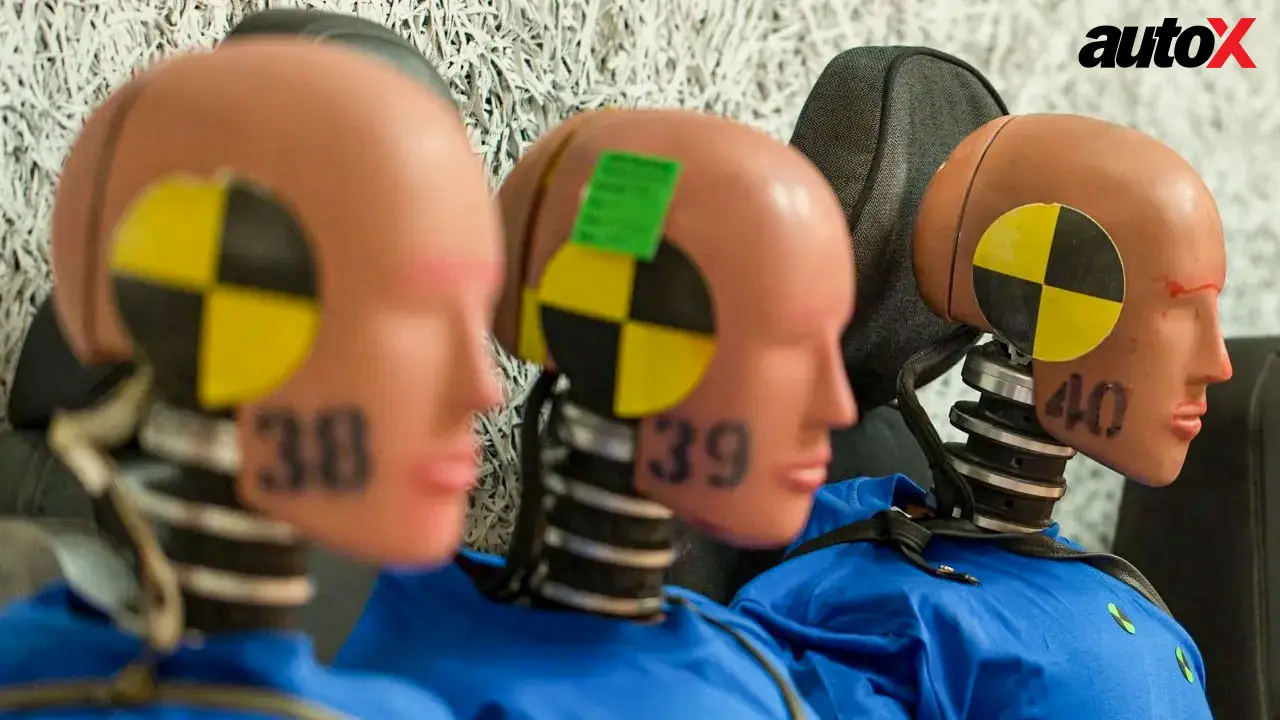
8. Crash test dummies are not perfect representations of every driver or occupant. Do the current Anthropomorphic Test Devices or crash test dummies represent the average Indian male? No, because the most commonly used dummy represents an average male in the western world i.e., 5’9” tall and 77kg. The average Indian male does not match those parameters. Although some tolerance is considered, large variations from the dummy will get very different crash test results. However, the female one, at 5’ and 50kg, may be more relevant to the median Indian woman. But a point to note is that these dummies are positioned perfectly in the seat. Not all of us are always in that position while driving. Even slight changes in posture – like sleeping, bending over to check the phone, and (shudder) legs up on the dash – may affect performance in real life.
9. Lower NCAP rating can be for reasons beyond the crash test performance. Always check the report to understand why a car has received a lower NCAP rating. It may happen that a car has done well in the crash tests but was given lower ratings for not having some electronic features.
10. NCAP ratings expire. Crash test protocols keep getting revised, and cars need to be retested under the new protocols to be able to claim the safety stars. Remember, the same car which scored 4/5 stars in the older protocol may not even score 3 stars in the newer one. GNCAP ratings typically expire after four years, and OEMs may even display the expired rating due to oversight. It’s good to be alert.
11. Pay even closer attention to child safety ratings. Child safety ratings are only applicable if the child is seated in a manufacture-recommended child seat – not on the lap or even strapped with a seat belt. The brand that was tested may not be the one available in India, and performance parameters between the tested child seat brand and the market-available brand may not be the same. Ideally, BNCAP should use child seats that are widely available in India, inform which seat brand was used in the test and list out the recommended ones too. Only then could it be relevant to us.
12. NCAP ratings cannot be compared across regions. Each country/region’s NCAP has different tests and scoring criteria. A car that scored 5-star in BNCAP/GNCAP can very well score just 1-star in stricter and more mature NCAP programs. Don’t fall for click-baity articles/videos that compare ratings across multiple regions.
None of this is meant to diss NCAP protocols. They are vital tools to understand how safe cars are when they are subject to the same standards. They are a term of reference, both for OEMs and for consumers. And importantly, they bring road safety centre-stage – as a nation, we never gave importance to safe cars till the GNCAP came along, and it forced OEMs to pay attention to making safer cars for India. Bharat NCAP 1.0 adopted all tests from Western countries. But, going forward, the goal of Bharat NCAP 2.0 and subsequent protocols should be to adapt to Indian crashes and conditions.
So, if you’ve understood the implication of what you’ve read so far, having a 5-star rating doesn’t mean that you can take risks on the road. As @RSGuy_India says, "The NCAP rating is extra insurance, not a guarantee for car safety. If car buyers don’t understand these NCAP limitations, we may soon have people dying in 5-star-rated cars without understanding ‘WHY?’"