Opinion: Bharat NCAP 2.0: A Smarter, Tougher Safety Regime India Desperately Needs
The proposed Bharat NCAP 2.0 protocol is more holistic and better adapted to the Indian road environment. Here’s what you need to know.
By Srinivas Krishnan


The Bharat New Car Assessment Programme, implemented in 2023, was a shot in the arm for a country that sees itself as a global automotive hub – both as a manufacturing and exporting nation and as a giant consumer of automobiles. Besides, for a country with a reputation for having some of the most unsafe roads in the world, having an NCAP protocol in place shows that the industry and the Government are taking scientific action to curb road fatalities and injuries. While the Central Motor Vehicles Rules govern cars to make them road-worthy, the BNCAP protocols – though voluntary – made them crash-worthy, so to speak.
A nation’s independent new car assessment programme showcases the country’s maturity as an important player in the global ecosystem, as it establishes guardrails on the kinds of cars that are manufactured and sold for its citizens, while also proclaiming to the world that made-in-India cars meet a certain level of quality and safety. Good so far.
Now, the Government has released a draft of a new BNCAP that will come into effect in October 2027. Compared to the 2023 version, BNCAP 2.0 is much more comprehensive in establishing the car’s overall role in the road environment and takes into account India’s unique driving and road conditions. Here are some key differences demonstrating why BNCAP 2.0 is vastly better:
1. In BNCAP 1.0, there were three verticals across which new cars were assessed: Adult Occupant Protection (AOP), Child Occupant Protection (COP) and safety assist technologies. In BNCAP 2.0, there are five verticals, each with a weightage: Safe Driving (10%), Accident Avoidance (10%), Crash Protection (55%), Vulnerable Road User Protection (20%), and Post-Crash Safety (5%).

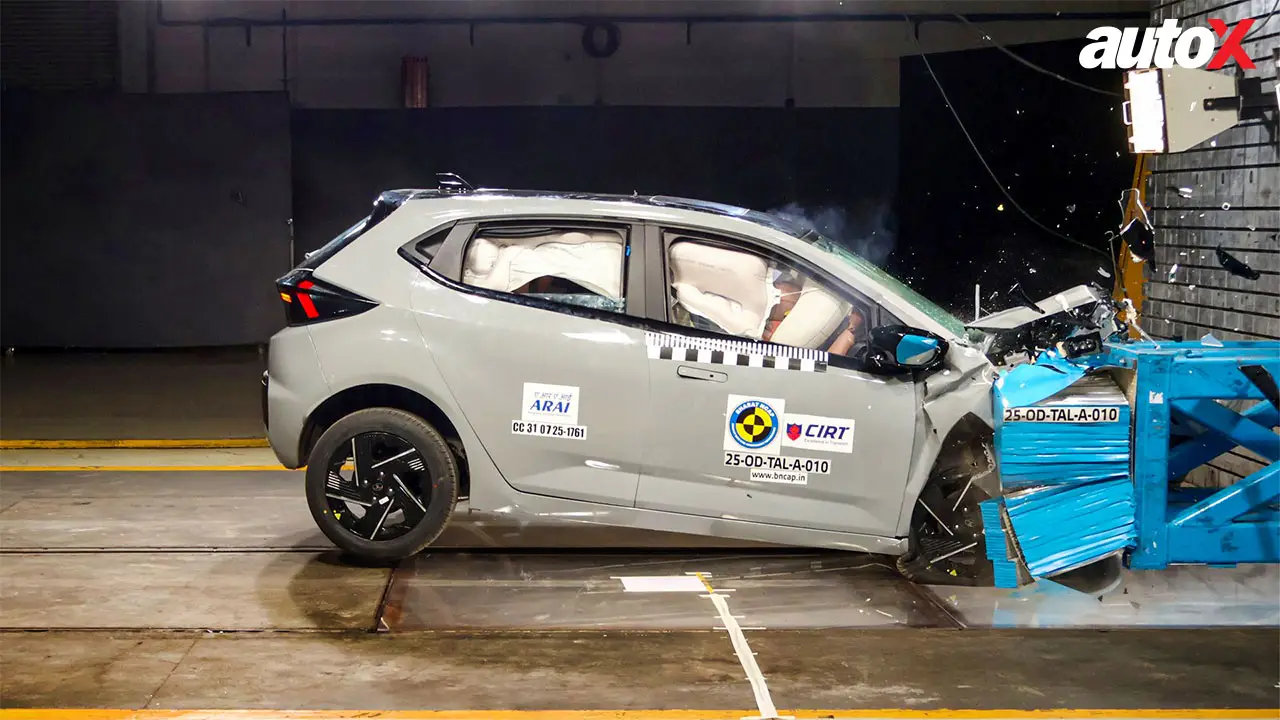
2. Mandatory crash tests have expanded from three to five. The 64km/h frontal offset deformable barrier, 50km/h side mobile deformable barrier and the 32km/h oblique side pole crash tests are now joined by new 50km/h full-width frontal and 50km/h rear mobile rigid barrier tests. Specifications are even more exacting on the use of Anthropomorphic Test Devices (ATD), better known as crash test dummies.
3. To me, the most significant change in the BNCAP protocol is the vertical dedicated to vulnerable road users, which gets a substantial 20% weightage. Now, the handful of you who read this column regularly know that I keep bleating on about the fact that VRUs are frankly treated in our country like caca. About 20% of fatalities are VRUs like pedestrians and cyclists, while a staggering 45% are two-wheeler riders. Yes,65% of fatalities on Indian roads are VRUs. BNCAP 2.0 lays out mandatory pedestrian tests (legform to bumper, adult headform to windshield and engine hood area, child headform to engine hood area) and optional assessments of Autonomous Emergency Braking (adult pedestrian, child pedestrian, and even car-to-motorcyclist rear-end collision).
4. Technology gets a boost. Electronic Stability Control (ESC) is now mandatory, while AEB, though optional, also receives a score. Technologies that autonomously help prevent crashes are also given importance.
5. The other major change is post-crash safety with 5% weightage. Electrical and fuel safety will be assessed to prevent fires and shocks after a crash, as will Occupant Extrication. The protocol gives optional scoring for multi-collision braking, SOS/e-call, rescue sheet system and hazard warning light system, etc.
6. Finally, star ratings and thresholds have changed. Plus, there are additional qualifiers for the ratings. For example, for vehicles aiming to achieve three stars and above, the AOP score should be a minimum of 55% of the total Crash Protection vertical score. And no vehicle can earn five stars if it scores no points in any of the five verticals. And when ATD body regions are monitored, no 5-star rated vehicle should have injuries in certain red-coloured zones.

These are just the highlights. The last date for feedback on the draft BNCAP 2.0 is December 20, 2025, and hopefully, there won’t be any lobbying by OEMs to dilute these provisions by then. Fingers crossed.
Meanwhile, I sent the PDF of the draft protocol to an automotive and road safety engineer and researcher (who prefers to remain anonymous, but posts on X using the handle @RSGuy_India) to get his reactions to it. He felt that it was much more representative than BNCAP 1.0, though the downside is that cars can become more expensive. “The inclusion of a test like full-width frontal so early into the BNCAP regime is certainly a good move. This will test carmakers, as they need to think holistically about engineering their vehicles. And a lot of emphasis on ADAS technologies, like AEB, Blindspot Sensors, Lane Change Assist, Driver Drowsiness, etc., can greatly help, looking at the kind of crashes here in India.”
RSGuy_India and I continued our conversation, and we have something interesting coming up in the next column. It’s on crash test ratings, something that will open your eyes. Till then, stay strapped in and drive safely into the new year.