Aprilia Tuono 457 vs Royal Enfield Continental GT 650 – Twin-Cylinder Showdown
Two very different takes on the twin-cylinder formula. One chases tech and agility, the other banks on character and heritage — which wins?
By Aakash S Paul

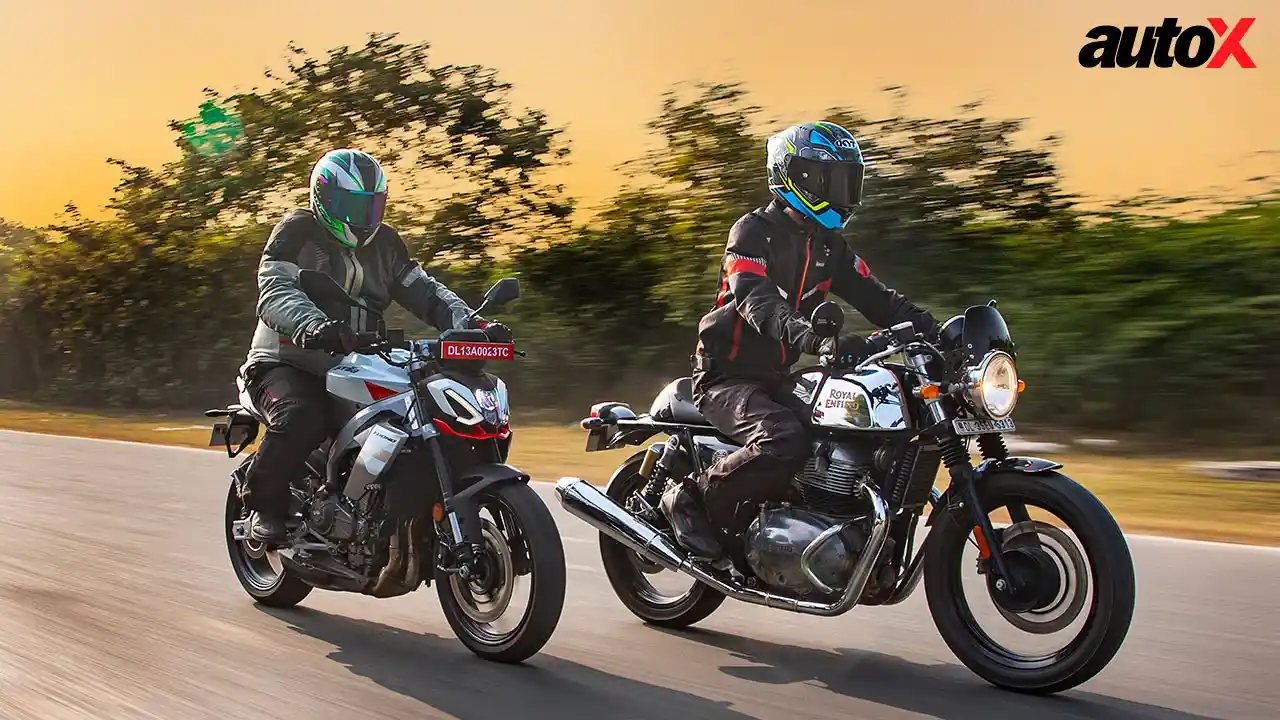
Buying a twin-cylinder motorcycle in India has finally moved beyond the realm of wishful thinking, even though the recent GST reshuffle tried its best to spoil the party. There are numerous tempting options available in the market now, many of which are relatively affordable. However, if you are looking for your first middleweight twin, you need to give the matter some extra thought. After all, it’s not a decision to rush – get it wrong, and your dream of owning a cool machine can quickly turn sour.
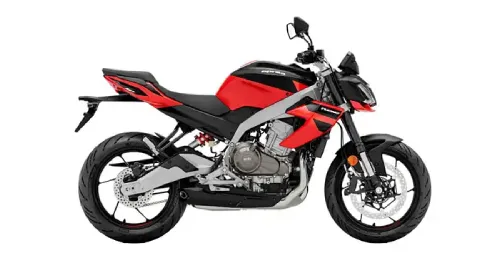
Two motorcycles sit squarely in this space, and interestingly, both machines are shaped by fundamentally different approaches to the art of motorcycling. In one corner, we have the fresh face of the Aprilia Tuono 457, the road-biased sibling of the RS 457. Not only is it fast, but it’s also tech-laden. In the other corner, we have the Royal Enfield Continental GT 650 – a long-established player in the segment. It might not offer the same amount of technology, but it is much lighter on the pocket and packs an extremely competent engine. So, the question is – which way should you lean: the tech-bro or the bare-knuckle boxer?
Engine Performance & Character: Aprilia Tuono 457 vs Royal Enfield Continental GT 650
While their engine displacements differ clearly, the power outputs of both machines are nearly identical. Yes, the Continental GT produces significantly more torque, but it is also much heavier (more on that later). On the move, both machines offer plenty of grunt and can get off the line with a similar sense of urgency. Also, both are almost equally fun to ride.
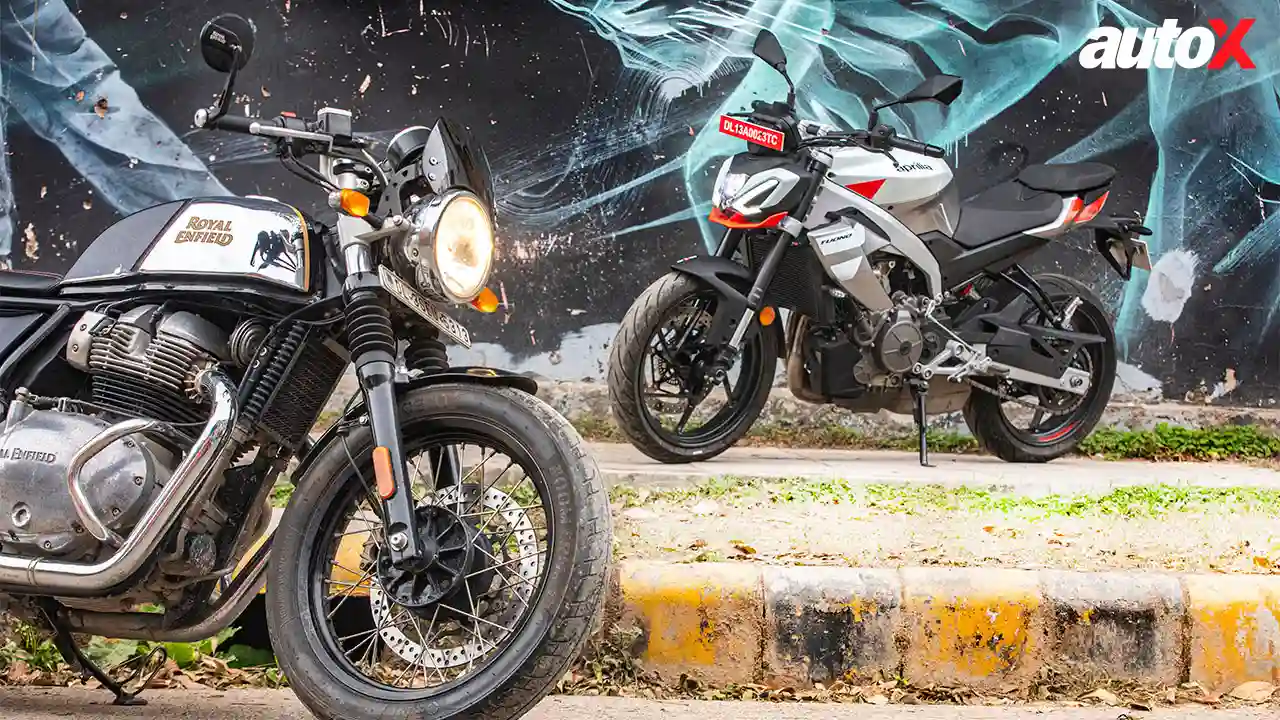
That said, the Tuono 457 is surprisingly more tractable of the two, meaning fewer gear shifts in city riding. The lighter clutch of the Tuono 457 further reinforces this advantage, reducing fatigue in start-stop traffic and making daily commuting more comfortable.
The engine soundtrack, just like design, is subjective, but it’s a crucial consideration in this segment. Once again, both bikes have a 270-degree crank, but they have different soundtracks. The Continental GT’s sound features a solid low-end and is accentuated by a few higher frequencies that Royal Enfield riders will instantly recognise. While I definitely like the Continental GT’s exhaust note, my heart beats a little faster when I hear the raw and guttural roar of the Tuono 457’s.
Engine Heat Management in Traffic: Tuono 457 vs Continental GT 650
Larger-capacity engines tend to produce more heat, which can be especially problematic in traffic. Having experienced the 650cc parallel-twin in various RE motorcycles, I must say that heat management isn’t exactly its strong suit. And given the unforgiving nature of Indian summers, it’s something to be wary of.
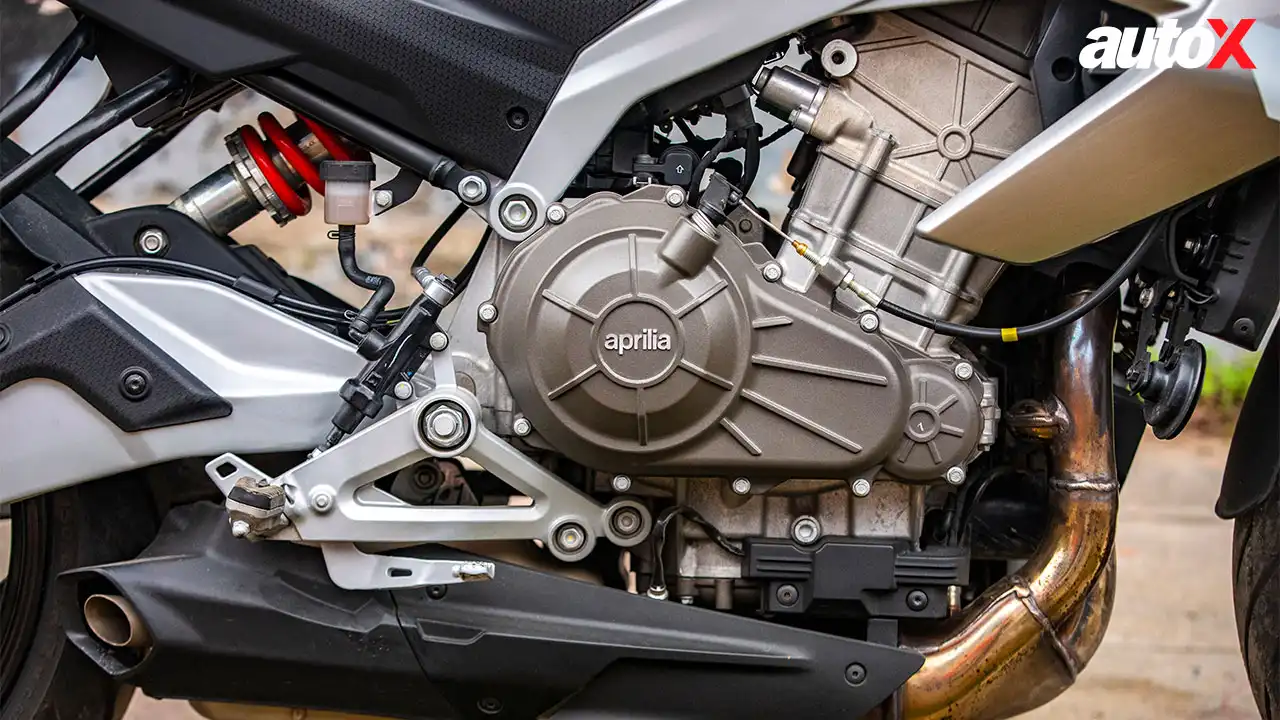
Initially, I was of the impression that the Tuono would win this battle, but that’s not exactly the case. Its smaller displacement liquid-cooled engine should have fared better than the Continental GT’s air- and oil-cooled engine.
However, that did not happen. The Tuono, too, gets a bit too hot when you are stuck in traffic for long durations. So, there is no real winner here. That said, the Continental GT’s design places the rider’s leg closer to the engine, making incidental contact with it more likely.
Weight Comparison & Handling: 175kg vs 214kg
Weight can be a real point of concern, especially for those riding a bigger bike for the first time. After all, the last thing you want is a bike that’s too heavy for you to handle. At 214kgs, the Continental GT is undeniably hefty, and you can feel all that weight. The Tuono 457, on the other hand, weighs much less – 175kgs to be precise. Consequently, it feels noticeably easier to manoeuvre, especially at parking speeds and in tight spaces.
Riding Position, Seat Height & Comfort Differences
In terms of ergonomics, the Tuono 457 offers a more relaxed riding position than the RS 457. The tube-type handlebars sit higher and are wider, resulting in a more upright posture.
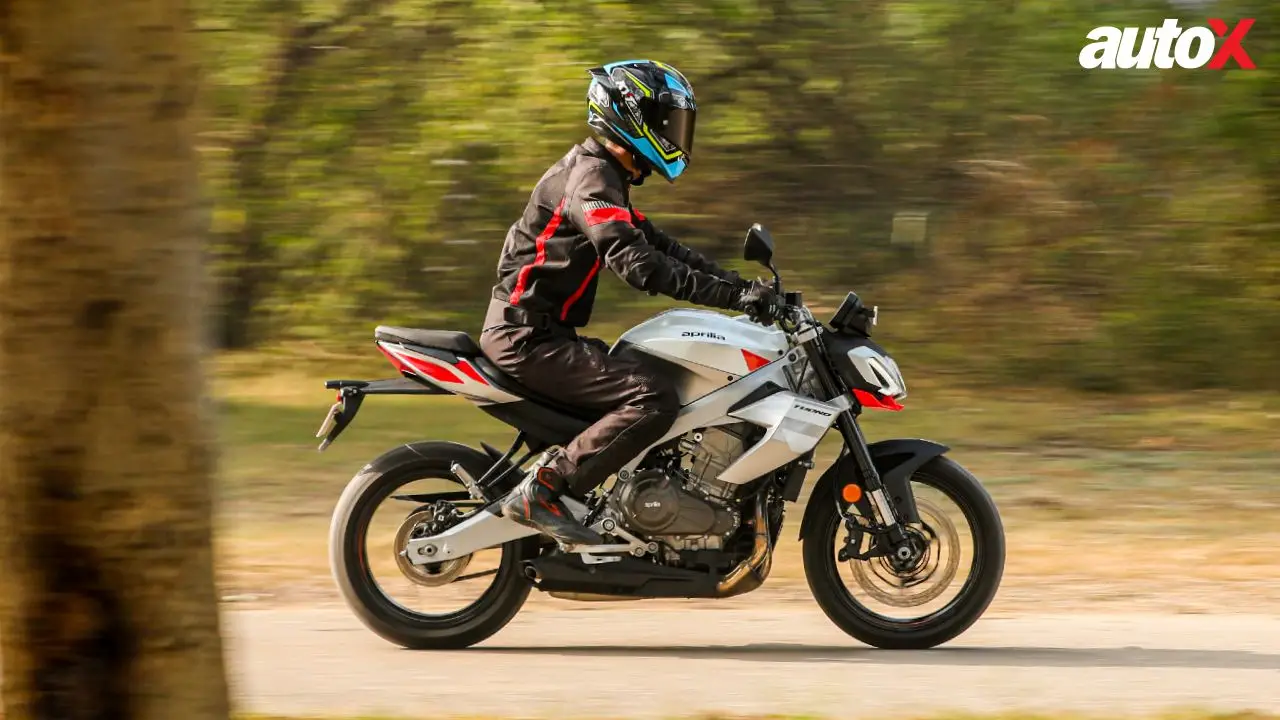
That said, the rear-set footpegs still require you to lean slightly forward. With a seat height of 800mm – 20mm lower than that of the Continental GT – the Tuono should, in theory, feel more accessible. Still, in practice, I found it more difficult to mount and dismount because of the higher pillion seat.
The Continental GT comes with clip-ons, placing the rider in a more aggressive position, albeit not to an extreme degree.
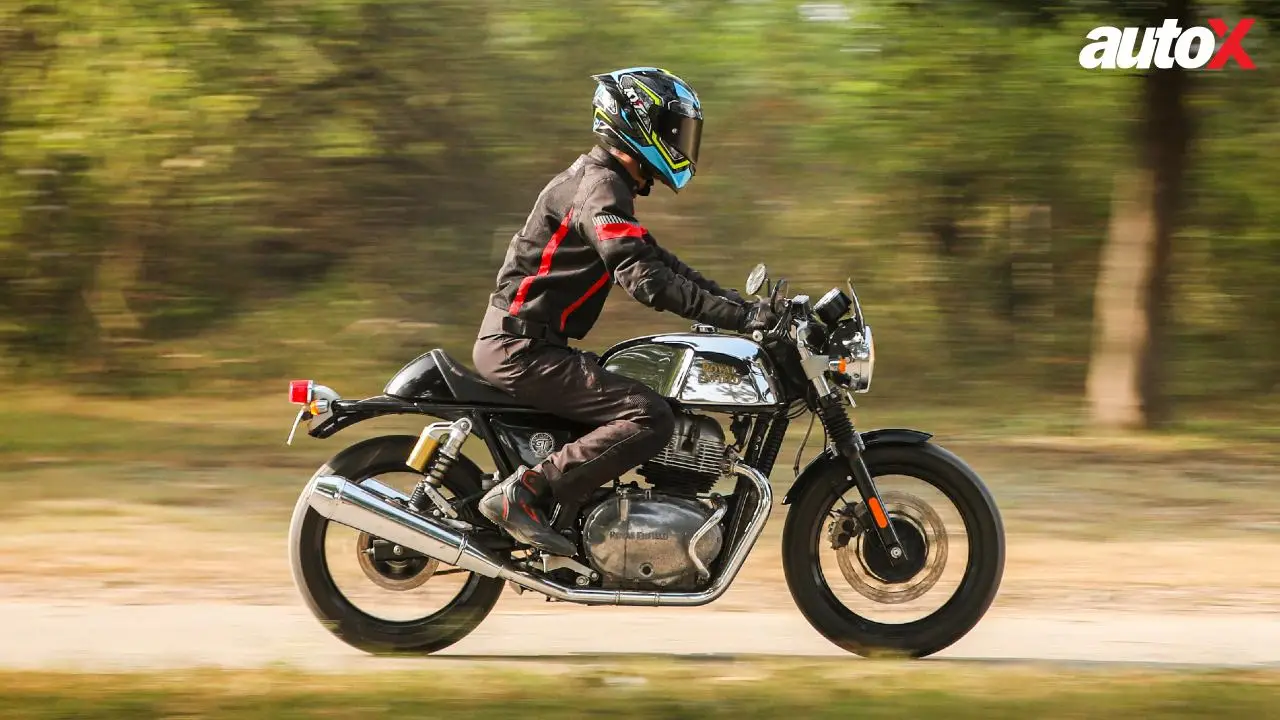
The real distinction between the two lies in seat design. While both bikes have relatively firm cushioning, the Continental GT’s flatter seat does not push you towards the tank like the Tuono 457’s slanted seat.
In terms of suspension, the Tuono 457 feels stiffer than the Continental GT. The twin rear springs of the Continental GT do a better job of absorbing road imperfections. This, combined with relaxed ergonomics, makes the Continental GT feel more comfortable to ride in the city.
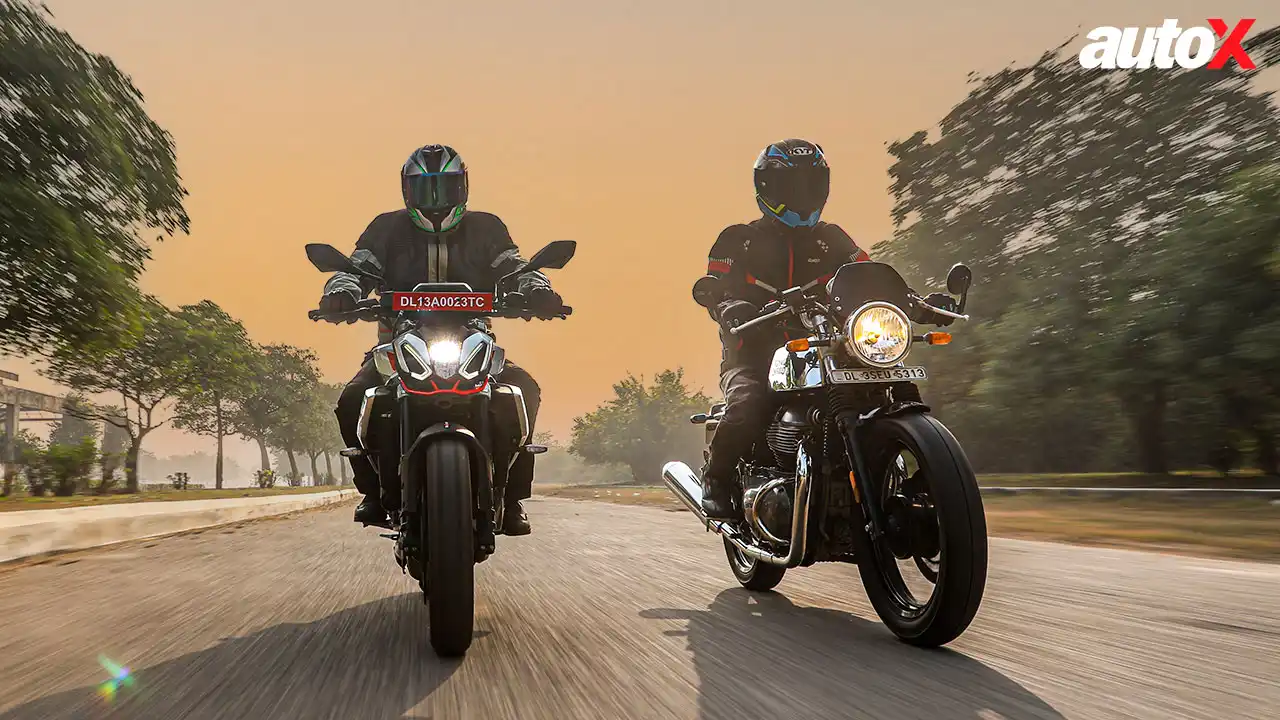
The Tuono 457, however, comes with pre-load adjustable front and rear suspension, offering greater versatility. This makes the Tuono better suited to track use and inspires greater confidence when riding hard through twisty roads.
Instrument Cluster, TFT Display & Electronic Features Compared
The Tuono 457 has an edge in this department, for it comes with a 5-inch coloured TFT instrument cluster. The Continental GT, on the other hand, features two analogue dials and a small, monochrome LCD display.
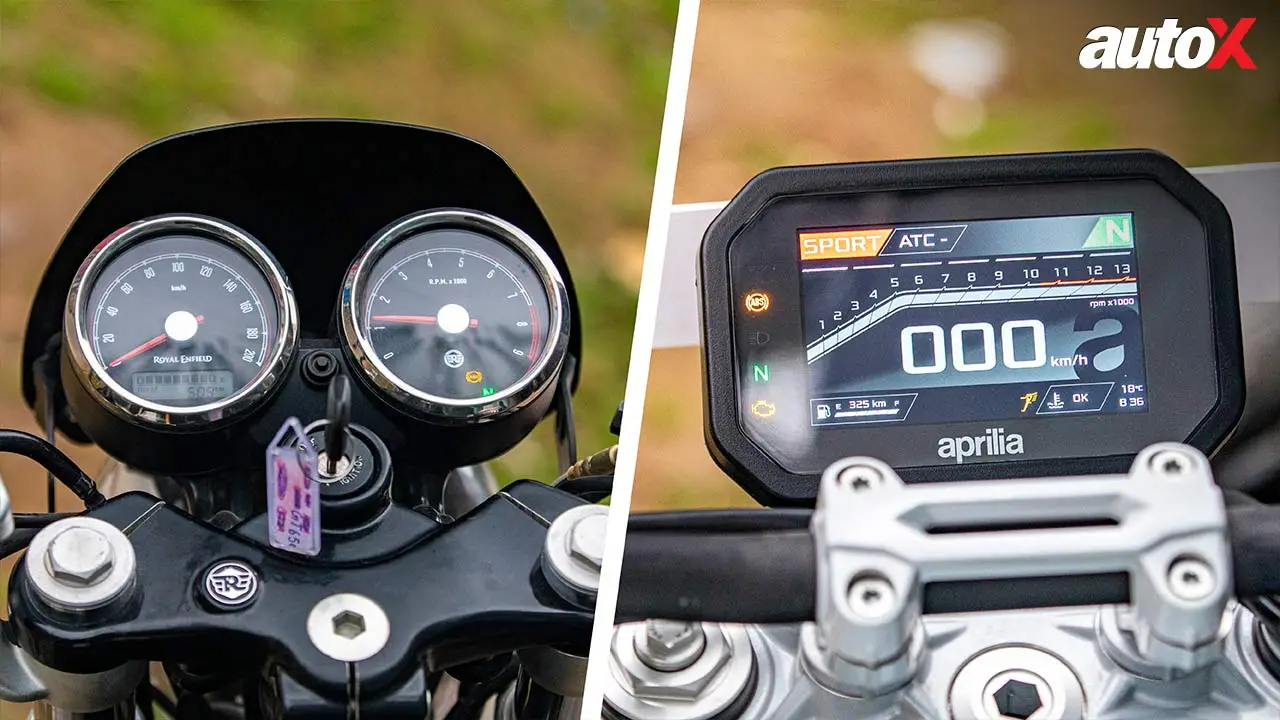
While the aesthetics of the analogue dials have a certain visual charm, the Tuono’s modern interface offers far more information. The screen is crisp, easy to read at a glance, and supported by a well-designed, intuitive UI. In fact, it’s one of the better displays in the segment.
In terms of electronic safety features, the Continental GT adopts a minimalist approach. Apart from dual-channel ABS, there is little in the way of electronic assistance. The Tuono, on the other hand, benefits from a ride-by-wire system, three riding modes, traction control modes, and the option to disable the traction control and rear ABS. All this not only enhances rider engagement but also makes the Tuono a more reassuring choice for beginners.
After-Sales Service & Ownership Experience in India
When it comes to the buying experience, Royal Enfield clearly has an advantage in India – you are far more likely to stumble across an RE showroom than an Aprilia showroom. The Italian company’s presence is not as widespread. So, even when it comes to servicing and part availability, the Continental will be easier to live with over the long term.
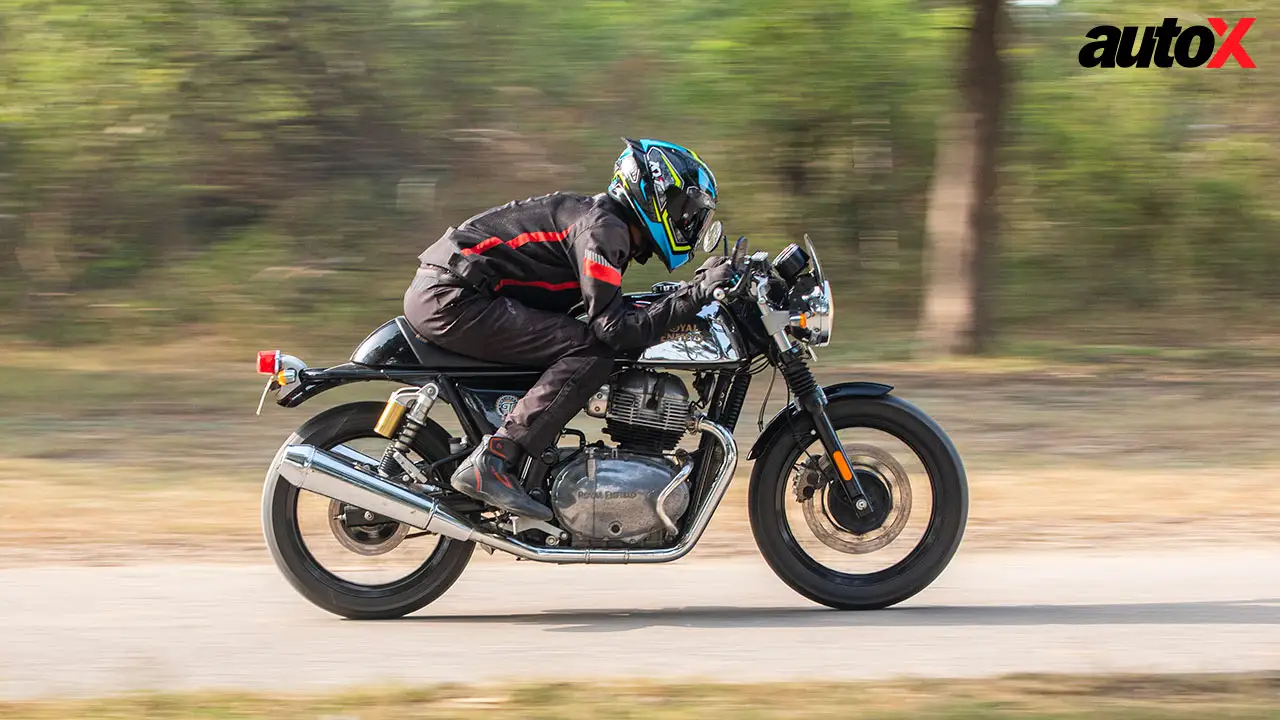
Also, I have come across reports from some Aprilia customers who were dissatisfied with their service experience. That said, Royal Enfield bikes are not immune to mechanical issues either. So, while troubleshooting might be tricky for both bikes, the fact that there are more RE showrooms and bikes on the road tilts the balance in favour of the Continental GT.
Price Comparison & Final Verdict: Which Twin Should You Buy?
Finally, there is the matter of price. The Continental GT starts at Rs 3.50 lakh (ex-showroom), and even with the better-equipped variant featuring LED lighting and alloy wheels, it will cost Rs 3.71 lakh (ex-showroom). The Tuono, by comparison, commands a premium of about Rs 50,000 over the base Continental – a sizable difference in the segment.
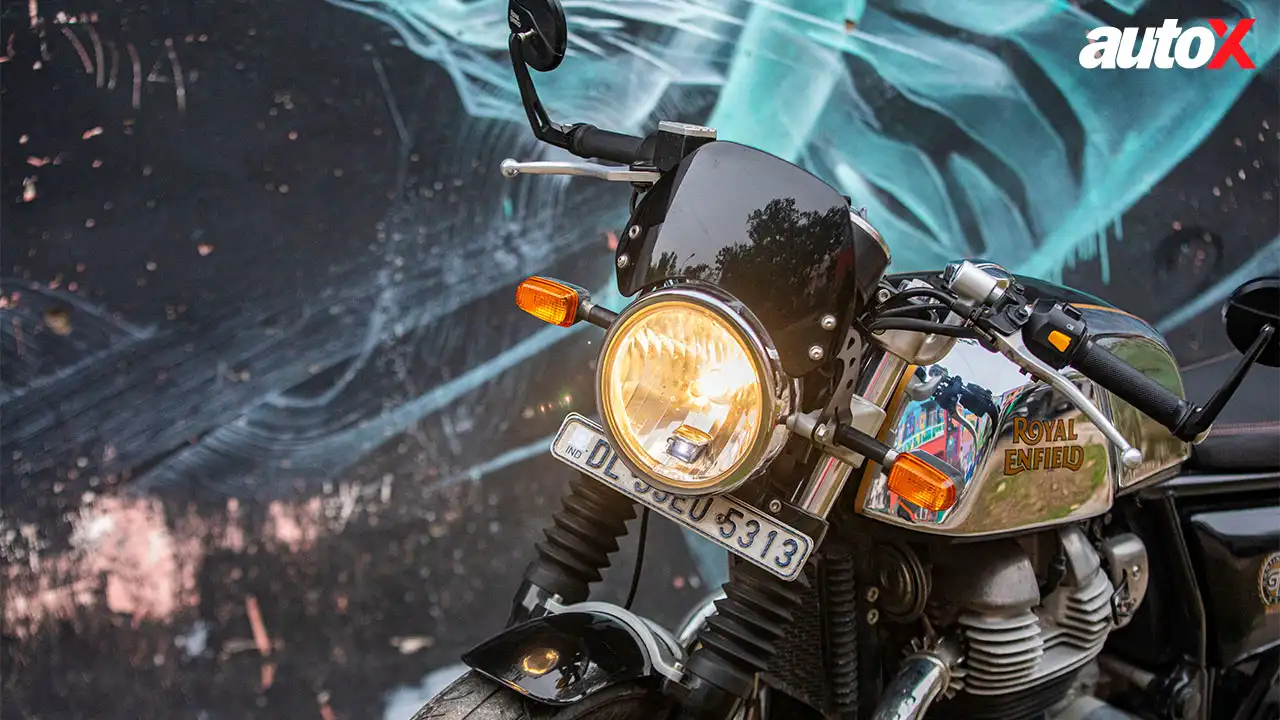
For those who want a big-displacement engine at a relatively accessible price point, the Continental makes a lot of sense. It may lack modern, fancy features, but this does little to detract from the riding experience. It is also perfect for enthusiasts who prefer bikes with fewer electronic interventions. What’s more, even with its price out of the equation, the Continental is still an appealing proposition, thanks to its ergonomics, a timeless, proven engine, and fantastic styling.
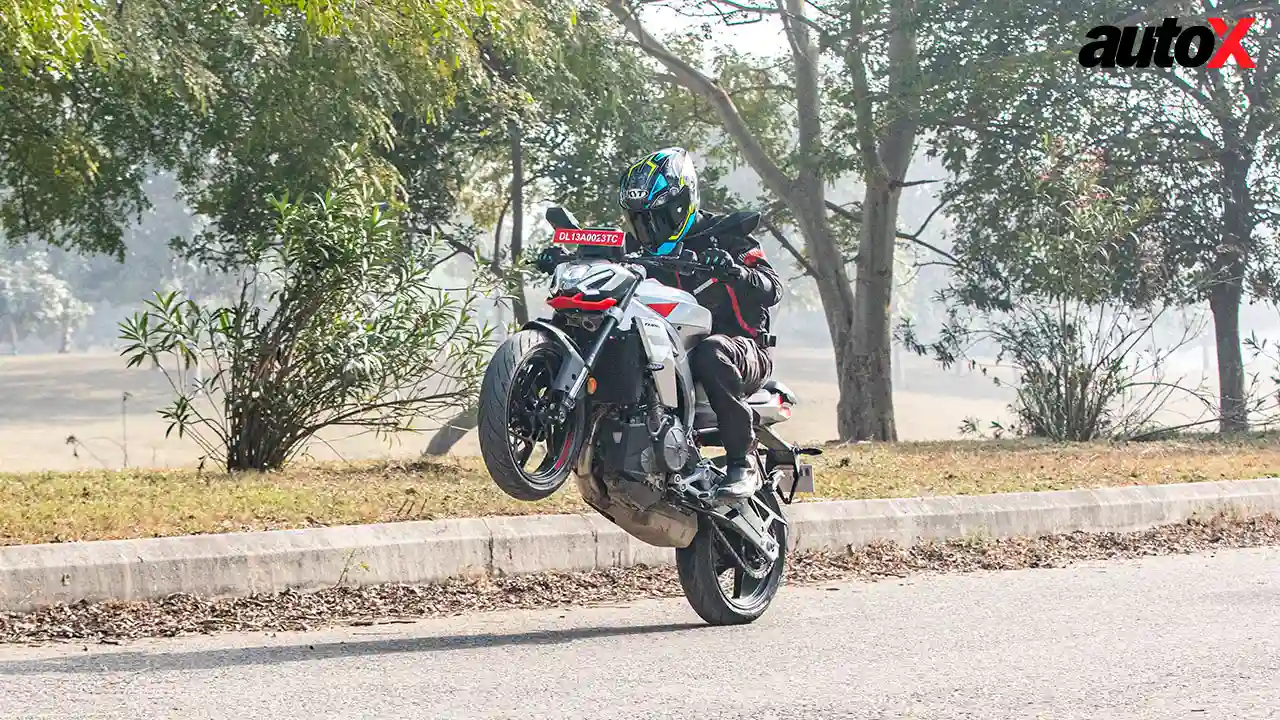
The Tuono 457, while more expensive, offers additional features that justify its premium price. Its preload-adjustable suspension makes it a motorcycle you can grow with, adapting as your skills improve. It can also switch from road to track mode in the blink of an eye. The lighter weight, nimbler handling, and loads of raw power make it a super fun bike to ride. If I were in the market for my first twin-cylinder motorcycle, I would definitely pick the Tuono, although I would almost certainly replace that annoying seat with something a bit more comfortable for daily use.
Engine: 649cc, Parallel-Twin
Transmission: 6-Speed
Power: 46.8bhp
Torque: 52.3Nm
Fuel: Petrol
Price: Rs 3.82 lakh, ex-showroom
X-Factor: Still an attention grabber and a genuine style statement.
|
Pros |
Cons |