TVS Orbiter First Ride Review: Does It Have The Go To Match The Show?
It looks like a futuristic concept and comes packed with features to match. But does the new TVS Orbiter have the substance to back up its undeniable style?
By Karan Mathur
Photography By Hiyan Chauhan

TVS is on an electric offensive. After the sensible iQube catering to family buyers and the radical TVS X aimed at thrill-seekers, the company has now introduced the Orbiter to occupy the crucial middle ground. Targeted at what TVS calls the ‘new-age urbanite,’ this scooter prioritises head-turning design, everyday comfort, and a feature-rich experience over outright performance.
It enters a fiercely contested space, ready to lock horns with rivals like the Suzuki e-Access and the Hero Vida. But in a segment where substance matters just as much as style, can the Orbiter strike the right balance? We spent a day riding it around TVS’s test track in Hosur to find out.

TVS Orbiter First Ride Review: Styling and Ergonomics
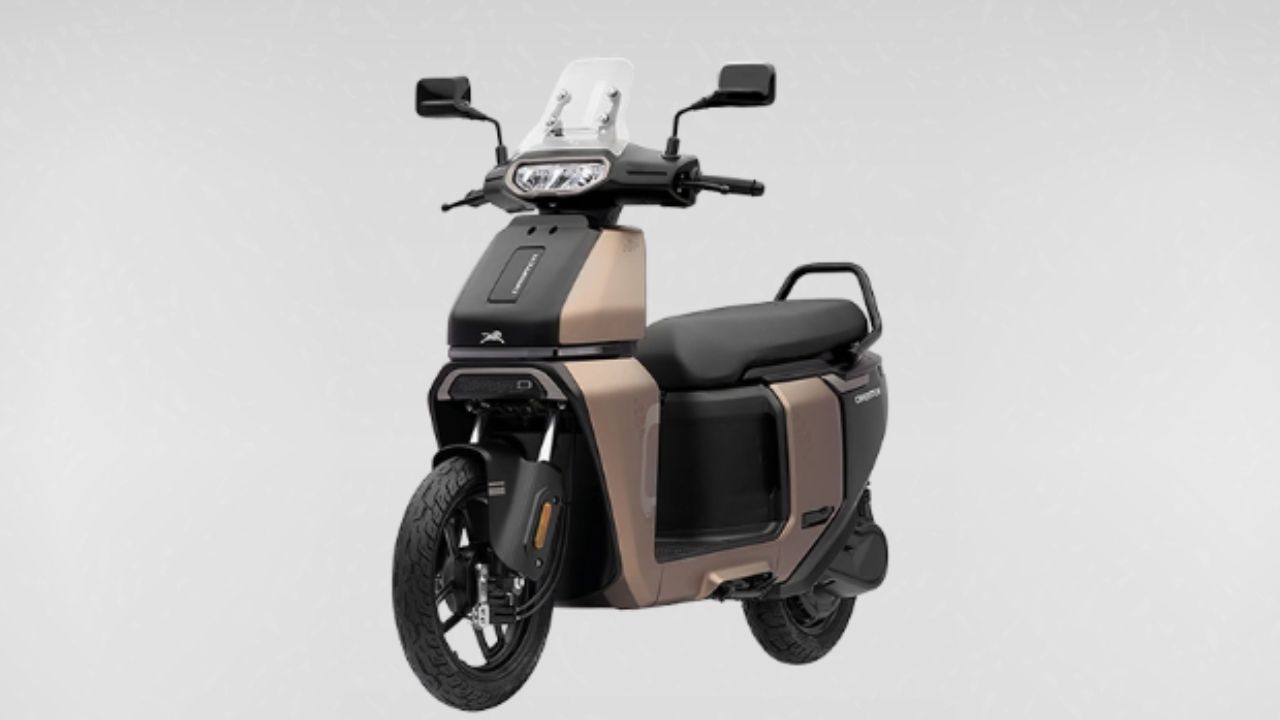
Let’s start with the Orbiter’s biggest highlight – its design. There’s no two ways about it – this is a fun, quirky, and undeniably stylish scooter that turns heads everywhere it goes. With a palette of six vibrant colour options, including three striking tri-tone schemes, like the Sunburst Neon on our test unit, it looks fresh, youthful, and distinctly modern.
The design strikes a smart balance between form and function. The continuous LED DRL strip with integrated indicators looks sharp and futuristic, while TVS claims the body panels are sculpted for better aerodynamic efficiency. Small but thoughtful touches – like the flush-fitting pillion footpegs, contrasting accents on the mudguard, and a tinted windscreen – add a layer of sophistication that elevates its overall presence.

Ergonomically, the Orbiter is built for accessibility and comfort. The 763mm seat height is accessible for most riders – my 5’6” frame could easily flat-foot the scooter. The 290mm-long footboard offers generous space, and the upright riding stance feels natural, with the handlebar falling comfortably to hand.
That said, the package isn’t flawless. While the components feel sturdy, the overall fit and finish could use refinement – some sharp and rough edges betray its otherwise premium appeal. The large ORVMs offer excellent visibility, but their glossy piano-black finish feels out of place, clashing with the scooter’s otherwise playful, modern design.
Also Read: TVS Ntorq 150 First Ride Review: The Best 150cc Scooter?

TVS Orbiter First Ride Review: Features and Practicality
The Orbiter’s another highlight is that it’s packed with features that genuinely elevate the daily riding experience. At the centre of it all is a bright, full-colour LCD display that displays everything – from speed and range to turn-by-turn navigation and call alerts, thanks to Bluetooth connectivity.
You also get two ride modes – Eco and City – along with reverse assist and a hill-hold function, the latter being especially useful for new riders tackling steep inclines. Cruise control makes the list too, though its execution feels a little odd – it only works up to 60km/h, which limits its usefulness on open highways.

In terms of practicality, the Orbiter delivers on most fronts. A convenient USB charging port sits neatly in the front apron, complete with a dedicated slot to hold your phone. The 34-litre under-seat storage is generous too, although it can’t accommodate a full-face helmet – a potential deal-breaker for riders who value both safety and convenience. To be fair, TVS claims it can hold two half-face helmets, but I was hoping it would surprise me.
Its ground clearance, at 165mm, is another mixed bag. While adequate for most city conditions, the scooter’s underside did scrape on a tall speed breaker, suggesting it’s best suited for smooth, well-paved urban roads rather than rougher terrain.
Also Read: Vida VX2 Plus First Ride Review - Getting it Right!

TVS Orbiter First Ride Review: Performance and Handling
The Orbiter is powered by a 3.1kWh battery pack paired with a BLDC hub motor, which produces a peak power output of 3.35bhp. On the road, these numbers translate to a performance that’s adequate but not exhilarating. Its acceleration is smooth and linear, with a claimed 0 – 40 km/h time of 6.8 seconds, which feels about right from the saddle.
It won’t snap your neck back, but it’s quick enough to dart through city traffic with confidence. The Orbiter also impresses with its composure; there are no vibrations, no jerky power surges –just a calm, predictable delivery that makes it an easy scooter to live with.

Handling is the Orbiter’s another strong point. At just 112kgs, the Orbiter feels light, agile, and delightfully flickable in traffic. Its unconventional 14-inch front and 12-inch rear wheel setup gives it impressive stability, allowing it to hold its line through corners with confidence – even at top speed. However, the package is let down by its braking performance. The scooter comes equipped only with drum brakes and a Synchronized Braking System (SBS). During our tests, the rear wheel tended to lock up too easily, even under moderate braking, causing unwanted skids. For a scooter designed with new urban riders in mind, this lack of assured stopping power is a bit of a concern.
Also Read: Suzuki e-Access First Ride Review: A Solid Offering

TVS Orbiter First Ride Review: Verdict
So, where does that leave the TVS Orbiter? It’s a scooter with two distinct sides. On one hand, you get a sharply styled, exceptionally comfortable, and feature-rich machine that fits perfectly into the urban landscape. It’s easy to ride, practical for daily errands, and loaded with enough tech to satisfy the modern commuter. On the other hand, its modest performance won’t thrill experienced riders, and its subpar braking setup is a significant drawback, which is not easy to overlook.
Ultimately, the Orbiter is built for the ‘new-age urbanite’ – someone who values design, comfort, and connectivity over outright performance. If you’re looking for a stylish, tech-forward city scooter and are willing to ride within its limits, the TVS Orbiter makes for a compelling choice.