Hyundai Grand i10 Nios vs Maruti Suzuki Swift: Comparison
With the Grand i10 Nios, Hyundai has stepped up the game to fend off the Maruti Suzuki Swift at its own game. Here's the full lowdown on how the new Hyundai stacks up against the segment leader.
By Arup Das


The Maruti Suzuki Swift and Hyundai Grand i10 – this time in Nios spec – face off once again in a battle for supremacy.
Mark Twain once wrote, ‘Truth is stranger than fiction, but it is because fiction is obliged to stick to possibilities; the truth isn’t.’ But I think it’s the unpredictability of life that makes it worth living and enjoying. One step and everything as you know it can change.
Take the automobile sector, for instance, a drastic change happened in the last decade – as a result of which hatchbacks today have roughly 48% market share. Earlier, they were considered to be an affordable option, but now they’re looked upon as a safe and stylish option that even offers enough driving pleasure for those who enjoy being behind the wheel.
How did this happen? The winds of change began 14 years ago with the launch of the Maruti Suzuki Swift, and ever since then it’s been the leader of the premium hatchback segment. The only rival that has consistently been pegging away is the Hyundai i10. And now with the launch of its latest avatar, the Grand i10 Nios, it was inevitable for us petrolheads to get curious and try to answer the question – whether Hyundai’s sense and sensibility approach will allow it take pole position or will the flair of the Swift be enough for it to retain its numero uno slot?

Grand aesthetic
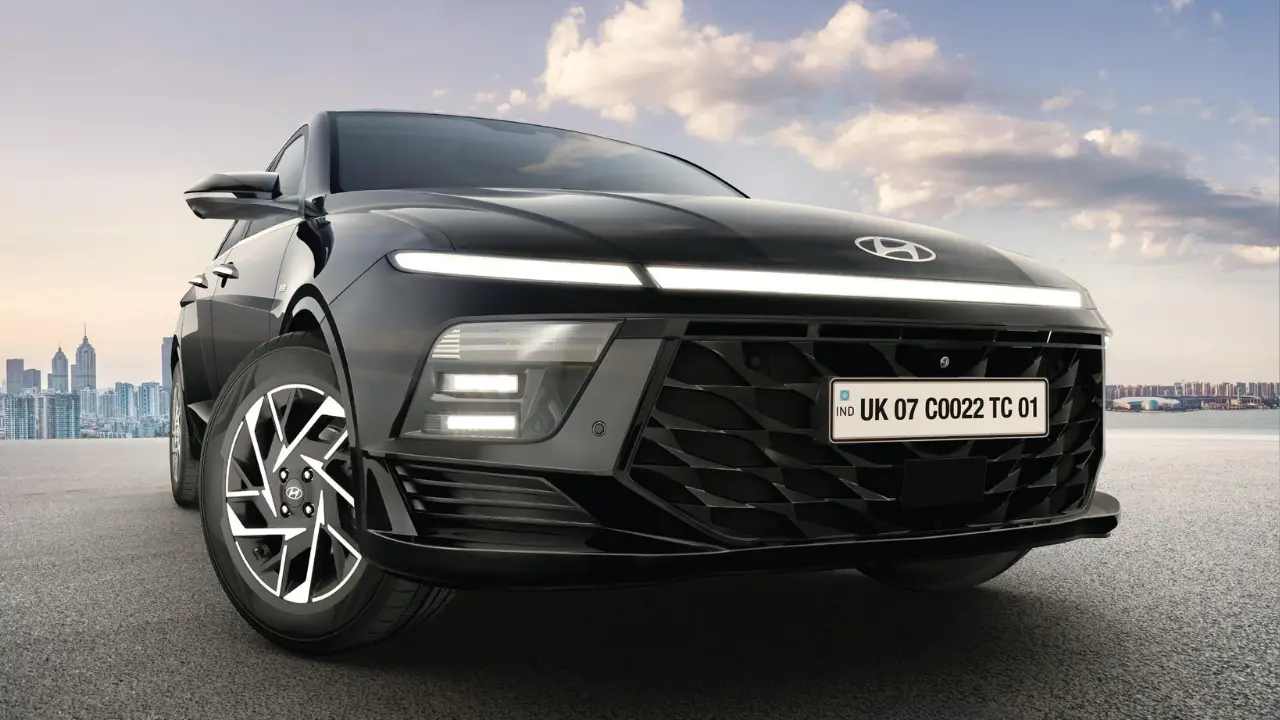
Both the Swift and the Nios come with massive front radiator grilles and swept-back headlights, dispelling any hint of being dainty hatchbacks. This isn’t the top spec Swift, but the top variant comes with LED projector lamps, while the Nios sticks to a set of projector lamps. Both cars offer a clear and top-notch light distribution, but the Swift’s white LED lights do feel more premium. The Nios gets Boomerang shaped LED DRLs that flank the front grille, while the Swift’s DRLS are integrated within the headlight cluster.
In terms of design, the Nios looks bold, with prominent lines both on the bonnet and on the sides. When you come to the rear, though, the Hyundai looks plain, and the small rear lamps evoke the image of the Tata Tiago.
Coming to the Swift, it has a clean sporty design, but the strong shoulder line and black pillars give the profile some character. The rear door lever, which is neatly tucked into the C-pillar, helps considerably as well.

Fortress of solitude
The cabin of the Nios looks fresh and is better built than the Swift. It comes with an 8-inch infotainment system, which is the largest in its class. Our test car is the Sportz variant, with an all-black cabin, unlike the Asta’s dual-tone grey interior. Hyundai has tweaked its instrument cluster, with a combination of an analogue tachometer and a 5.3-inch digital display that shows speed, fuel level, etc.
The Nios gets soft cushioned seats, with good side bolstering. On short drives, the seats are quite supportive, but, on long drives, you tend to sink into them. In typical Hyundai style, though, the Nios comes with plenty of new toys, like a wireless phone charger and an option to keep the rear-view camera feed on the infotainment screen.
Plus, the Nios excels in terms of its cabin space. It offers plenty of room for three adults in the rear – an aspect that has been the Swift’s weakness.
On the other hand, the build quality of the Swift’s cabin is average, and in time you will get to hear rattles from the panels. The plastic quality, however, is smartly camouflaged by the all-black theme. The presence of a flat-bottom steering wheel makes the cabin feel sporty. The 7-inch touchscreen infotainment system is intuitive, and both hatchbacks offer Apple CarPlay, Android Auto, and voice commands.
The Swift’s seats also provide decent side support, and on long drives it offers better back support. Even though the Nios is feature-laden, the Swift offers more convenient elements, like automatic headlamps, an auto-dimming inside rear-view mirror, and adjustable front seat headrests, which is available in all variants, except the entry-level trim. In terms of safety too, the Swift comes with Isofix child seat anchors.

Power play
Both the Nios and the Swift petrol variants come with 1.2-litre petrol motors that have an output of 82bhp, while the Nios offers 114Nm and the Swift 113Nm of torque. Apart from this similarity, both cars are like chalk and cheese.
The Nios provides just about enough power in the city, as long as you make sure the tachometer needle doesn’t go below the 1,200rpm mark. Once it does, the car forces you to downshift.
The Swift, on the other hand, provides much better grunt in slow-moving traffic – allowing you to cruise in third gear, even when the rpm needle is hovering around 1,000. Both cars are happiest in the mid-range though, but the Swift’s response makes it the zippier of the two.
The Nios does offer a decent burst of power between 2,500 and 3,000rpm, but the window of opportunity is quite small, and before you can revel in it, the power disappears like a distant memory – and the power delivery becomes flat again.
On the highway too, the Nios doesn’t feel as urgent as the Swift. This can be frustrating, especially when you need to overtake. The gears ratios in the Swift are tuned in such a manner that the car feels more eager. Also, the K-Series engine continues to feel urgent, even after 4,000rpm – making it more willing to gather speed.

In the real world
The Swift’s USP has been its dynamic handling characteristics. Thanks to its Heartect platform, you can chuck it around corners and it’ll stick to its line without raising any eyebrows. Sadly, it’s not perfect, as the light and uncommunicative steering plays spoilsport. Now, on a standalone basis, you may not notice this, but drive both cars back-to-back and you can really feel the difference in the steering response of the two cars.
Hyundai’s newfound philosophy is to make driving fun again, and you can feel this immediately from the driver’s seat. The steering of the Nios is better weighted, while the steering and chassis inspire a great deal of confidence while driving. It offers a lot more feedback than the Swift and makes you feel far more connected to the driving experience – especially when negotiating bends or driving at higher speeds.
https://www.youtube.com/watch?v=mfU8vxmh1M4
Which one then?
Traditionally, both these hatchbacks have catered to different buyers. The Swift has always been the more youthful and outgoing one, while the Grand i10 has been more staid and sensible. The Swift still retains its peppy engine, but it no longer necessarily takes the crown in terms of driving dynamics.
The Grand i10 Nios, then, is all set to rattle the Swift’s cage. It does, of course, offer better quality and more comfort, but it now also offers a driving experience that can rival the Swift as well. With the Nios, you do get your money’s worth, it looks fresh, comes loaded with features, and offers a crisp steering and excellent chassis.
Where the Nios loses out, though, is in regards to its more conventional appearance when compared to the Swift, which continues to have that edgy look that young buyers crave. Plus, the K-series engine continues to feel as rev happy as ever. Other than that, though, the Nios trumps the Swift at its own game. But if you think about it objectively, the Swift will have to wield all of its charms to hang on to its leadership position – because the i10 is now better than ever!
Also read - Kia Seltos vs Hyundai Creta vs MG Hector vs Tata Harrier: Comparison
Hyundai Venue vs Mahindra XUV300 vs Tata Nexon vs Maruti Suzuki Vitara Brezza: Comparison
Engine: 1,197cc / 4 Cylinders / 16 Valves
Fuel: Petrol
Transmission: 5-Speed Manual / Front-Wheel Drive
Power: 82bhp @ 6,000rpm
Torque: 114Nm @ 4,000rpm
Price: ₹5–7.14 Lakh (Ex-showroom)
X-factor: The responsive steering, cabin quality, and pricing make it an attractive proposition.
| Pros • Spacious cabin • Wireless phone charger | Cons • Evolutionary Looks • Unexciting engine |