Hyundai Venue vs Skoda Kylaq vs Kia Syros - Three of a Kind
They share a segment but not a philosophy. Space, features and driving feel set these compact SUVs apart – we tell you which suits you best.
By Aakash S Paul
Photography By Kapil Vashist
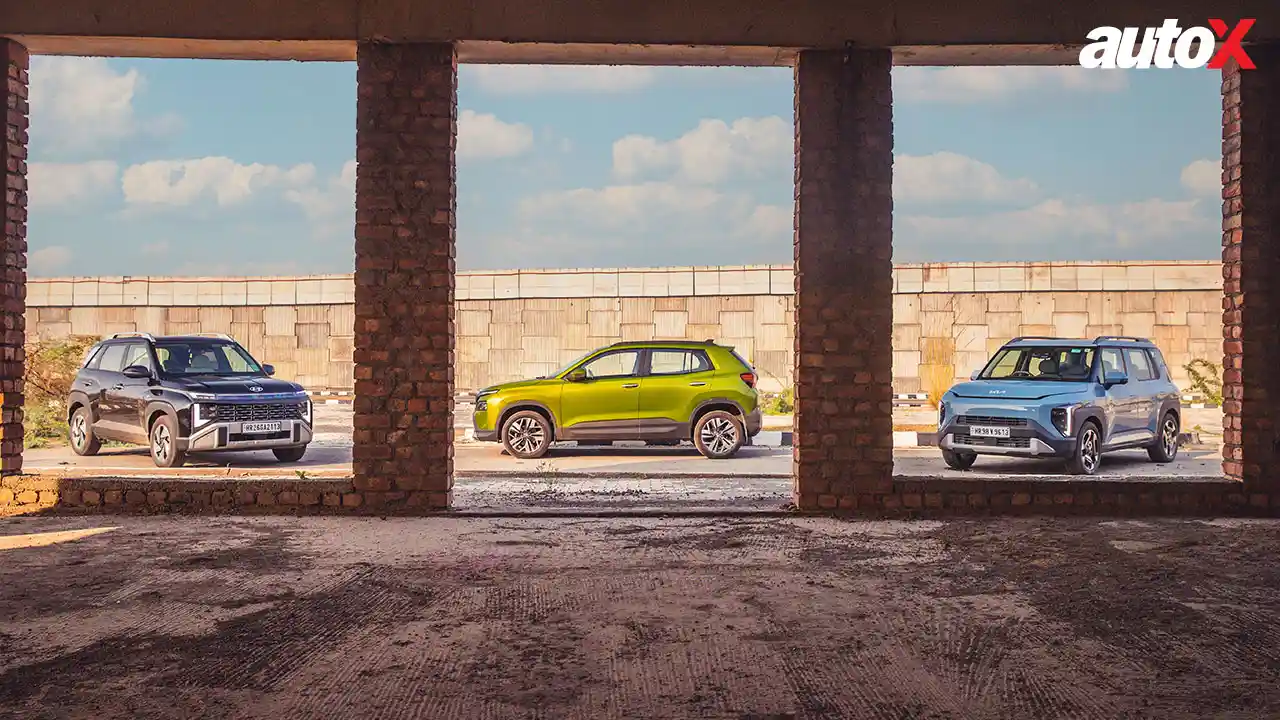
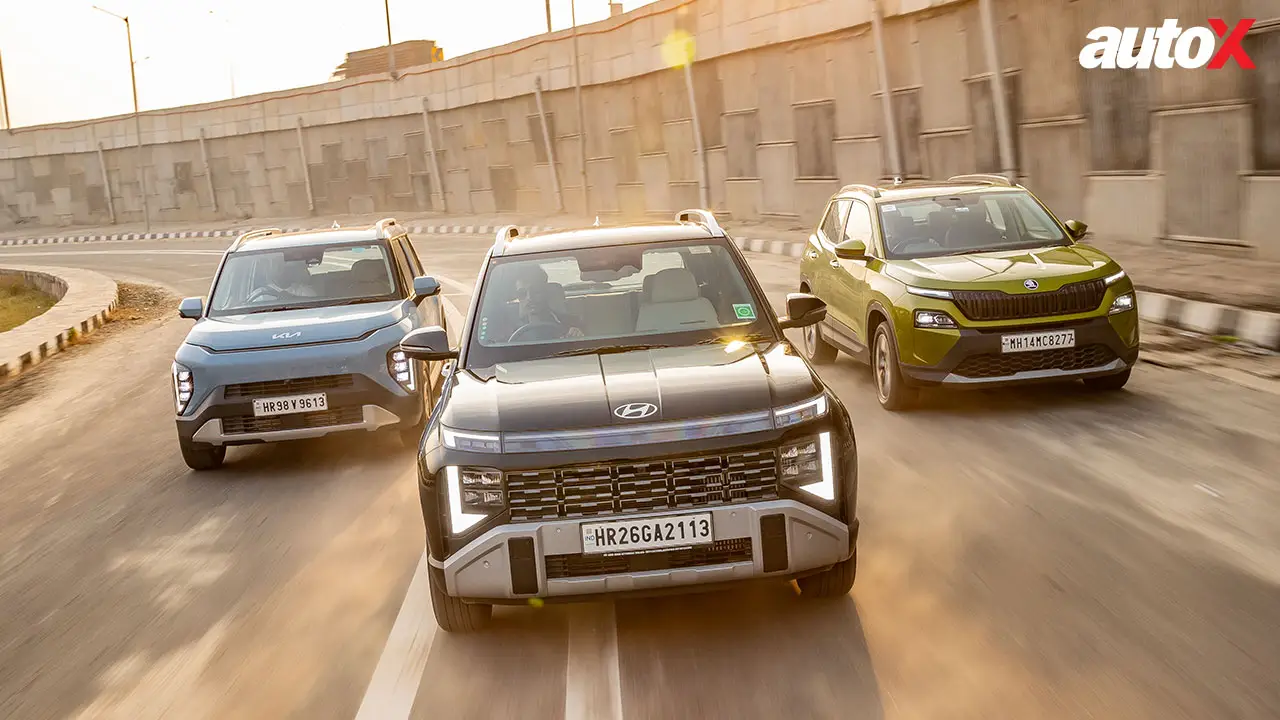
The compact SUV has become the default choice for Indian buyers seeking the SUV form without the inconvenience that comes with owning one. As a result, the segment has not only expanded rapidly but also diversified dramatically. Carmakers now recognise that merely ticking feature boxes is no longer sufficient and that it’s essential for a product to have a distinct character to stand out. Consider the Kia Syros, for instance, which is engineered with a clear focus on space and comfort. Contrast that with the Skoda Kylaq, which prioritises driving engagement to such an extent that we previously included it in our hot hatch comparison. And then there is the updated Hyundai Venue, which enters the fray with added features and improved cabin space.
So, while all three occupy the same segment, they pursue mass appeal through very different approaches. The question, then, is simple: which one best suits your needs and is the better overall product? Let’s find out.
Venue vs Kylaq vs Syros Design & Road Presence
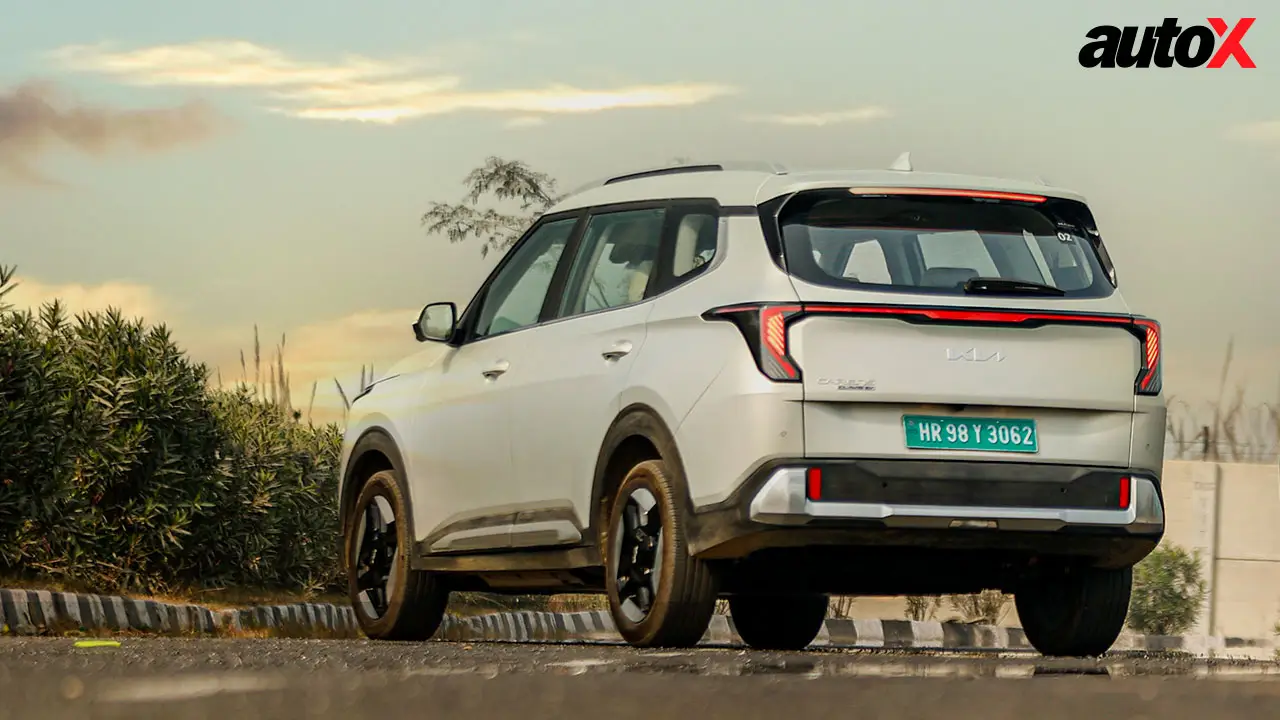
Design is a matter of subjective preference, and these SUVs are no exception. Personally, I really like the clean, futuristic, and bold design of the Syros.
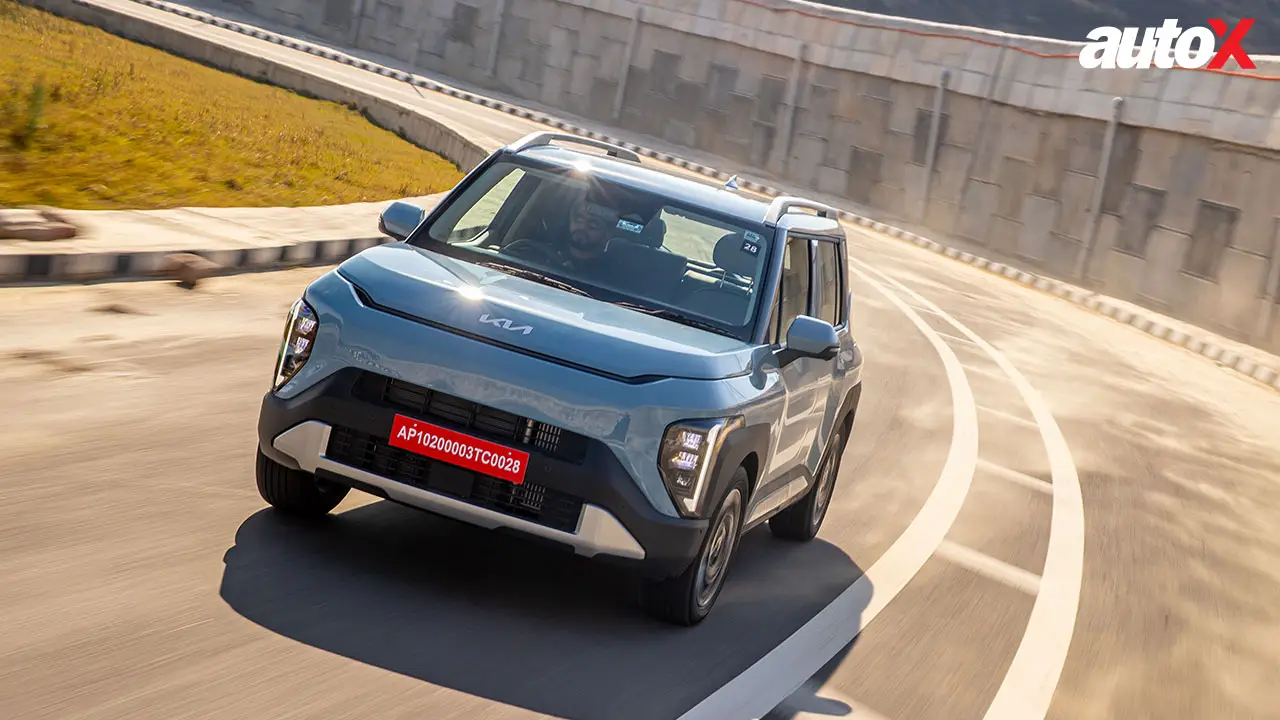
It is my favourite of the lot. The closed-off grille and the boxy proportions help it stand out from the crowd. Yes, from certain angles, it looks more like a tallboy than an SUV, but that is the only criticism I have. That said, I am well aware that many people dislike its styling. In fact, some openly despise it.
The Venue and the Kylaq, on the other hand, look far more like conventional SUVs.
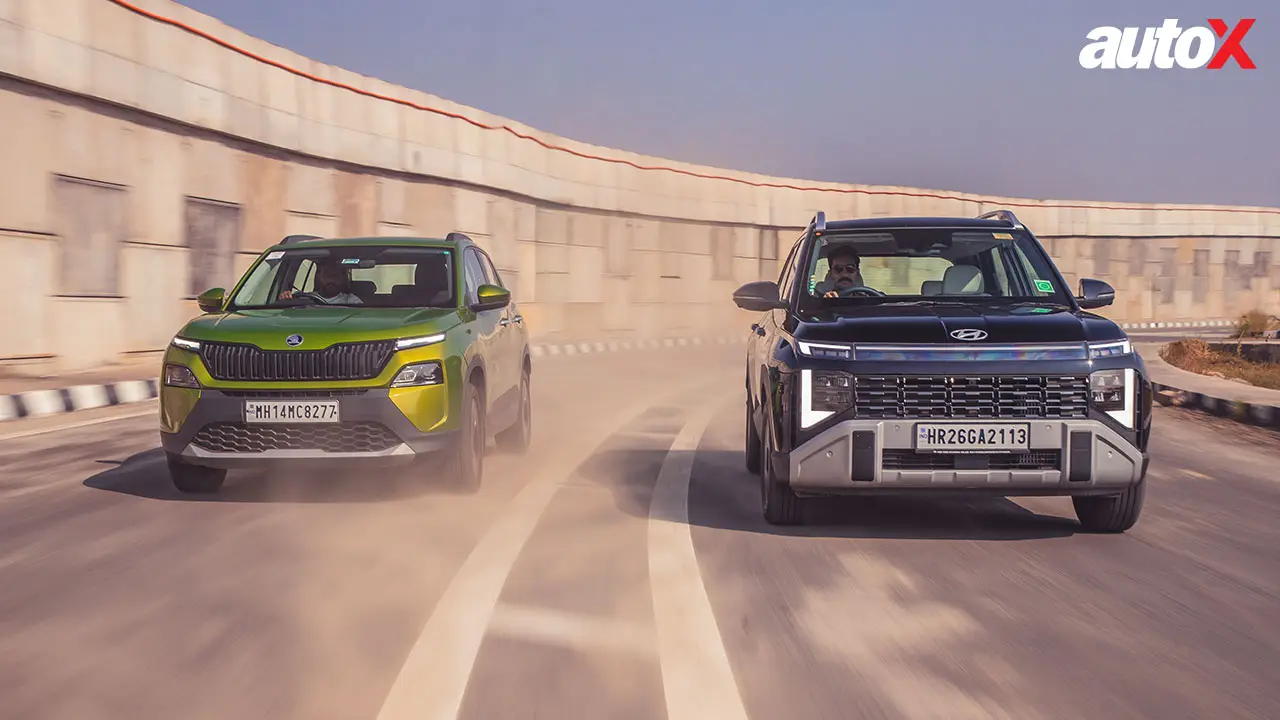
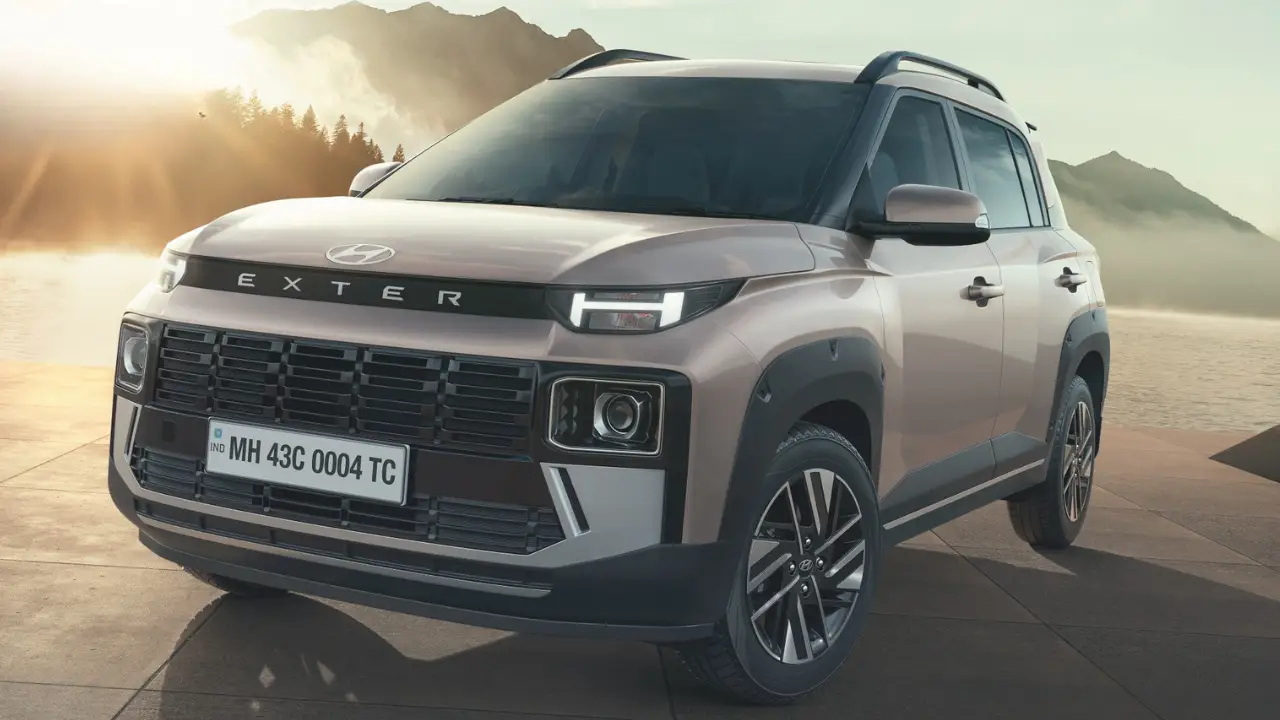
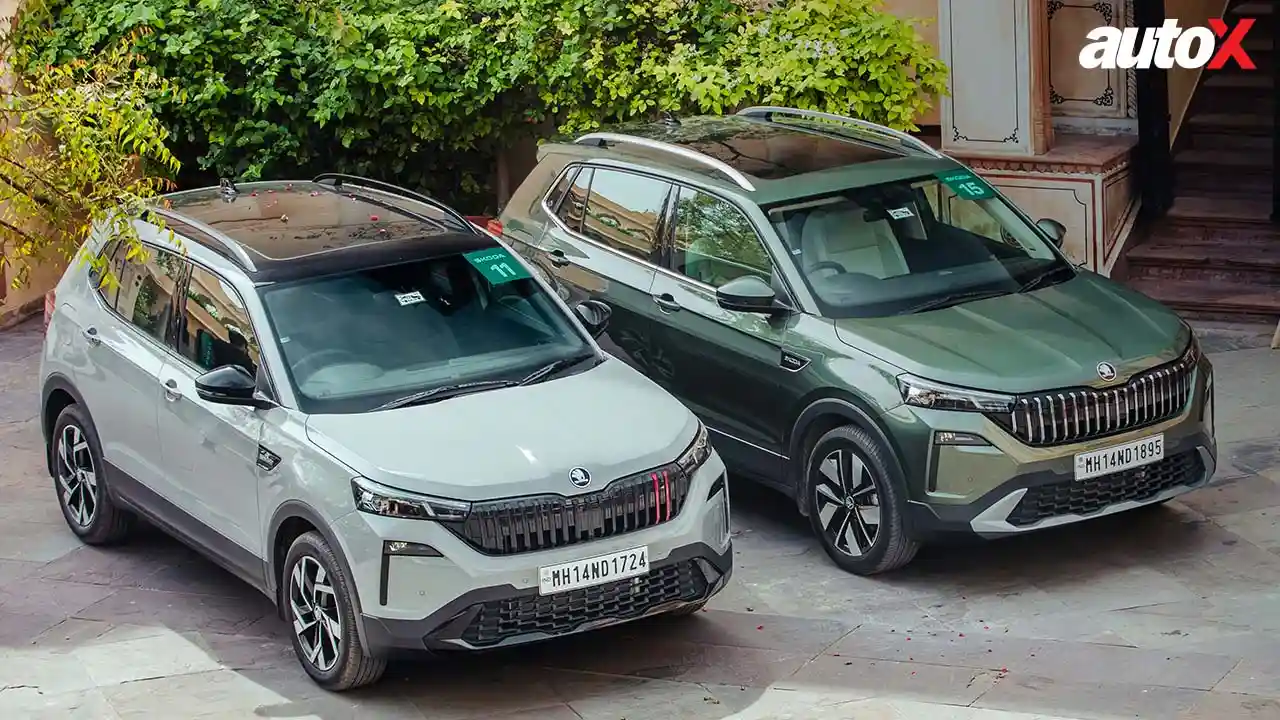
As a result, most buyers are likely to gravitate toward one of these two options for exterior design. Hyundai recently updated the Venue with a new front fascia and rear section, making it look more imposing. I still dislike the gaping maw created by the front grille, but the new boxy stance brings it closer to the traditional SUV silhouette. However, between the Venue and the Kylaq, I prefer the latter. The Kylaq has a simpler yet more cohesive face, and its smart 17-inch alloys add significantly to its visual appeal. Surprisingly, the Venue is the only SUV of the three to get 16-inch alloys, and those, too, are rather plain.
Venue vs Kylaq vs Syros Interior Design, Features & Cabin Experience Compared
The Kylaq has a well-put-together interior, and the dashboard looks good, too. However, the extensive use of hard plastic surfaces does knock it down a notch compared to its rivals.
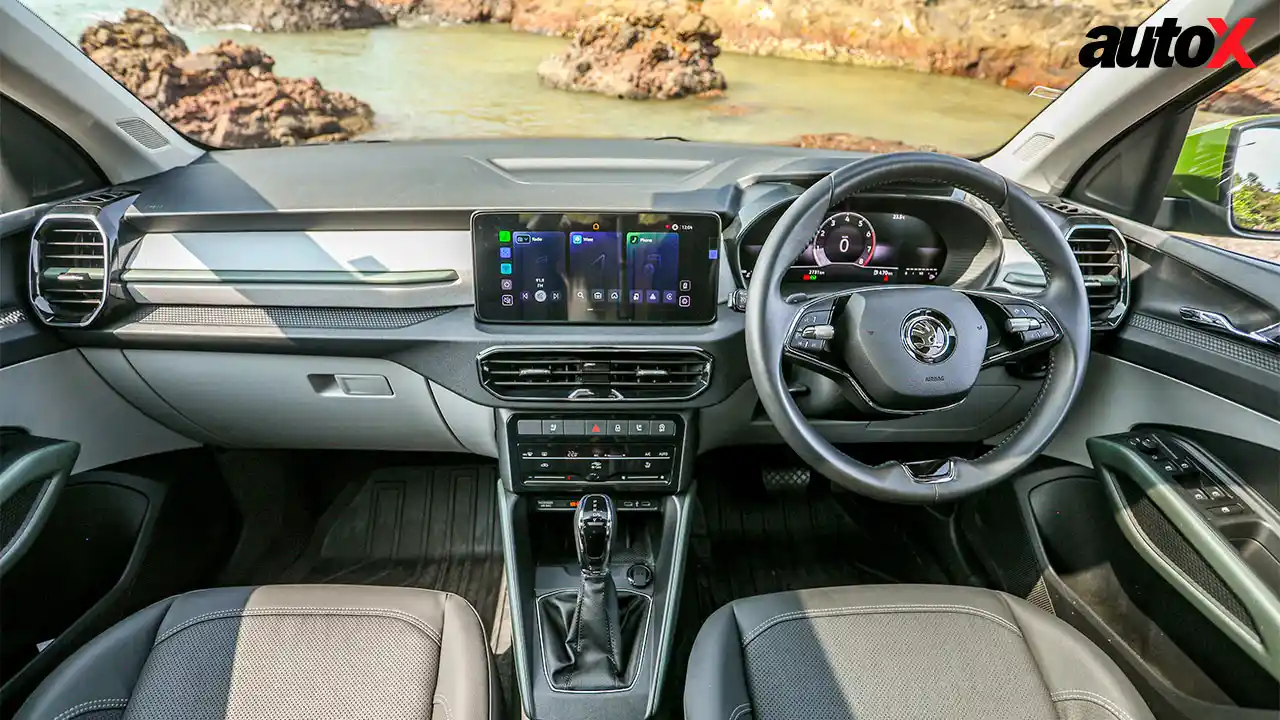
It also features an almost all-black cabin, which, while sporty in appearance, can feel slightly claustrophobic compared with the brighter interiors of the Venue and Syros. The Venue, with its updated dashboard, offers the brightest ambience of the three. I particularly like the new white inlay running across the middle of the dashboard and onto the door panels.
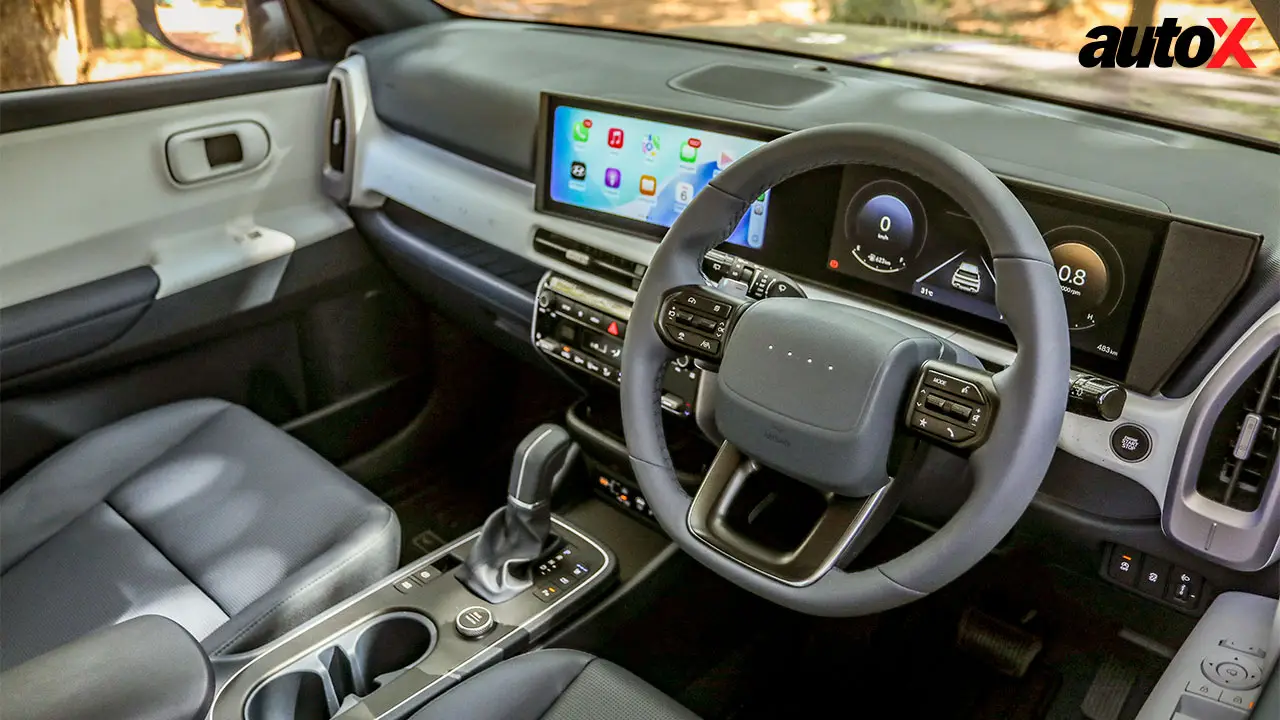
That said, I would not call it the most cohesive design overall. In my view, the Syros strikes the best balance, combining an airy feel with the most coherent and thoughtfully executed cabin design.
In terms of features, all three support wireless Android Auto and Apple CarPlay. However, the Kylaq lags behind because this feature is not standard and is reserved for higher trims. Both the Syros and Venue offer it as standard across the range.
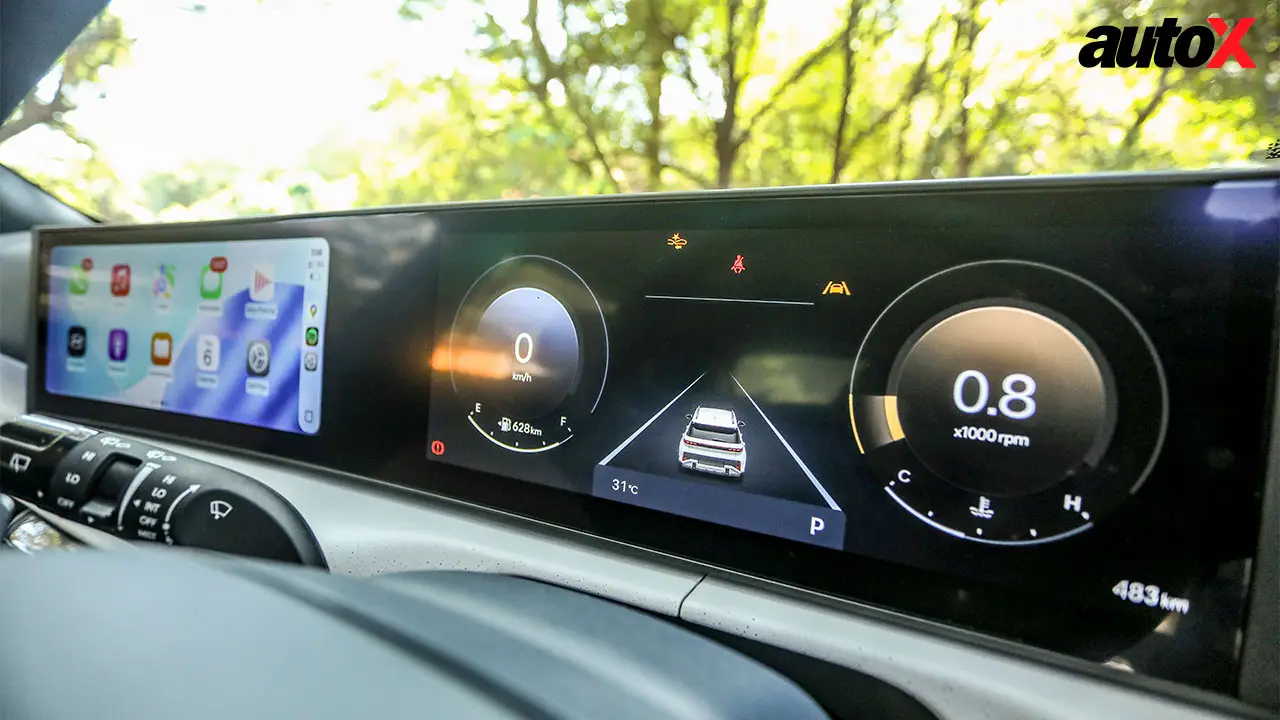
Screen size is another area where the Kylaq trails with a 10-inch touchscreen, while the Syros and Venue both get larger 12.3-inch displays. Thankfully, all three systems are comparable in terms of touch response and overall functionality. The same applies to the instrument clusters. The Syros and Venue feature 12.3-inch digital units, whereas the Kylaq uses a smaller 7-inch display. Once again, functionality remains broadly similar across all three.
The Syros also gets an additional 5-inch screen positioned between the touchscreen and instrument cluster for climate control.
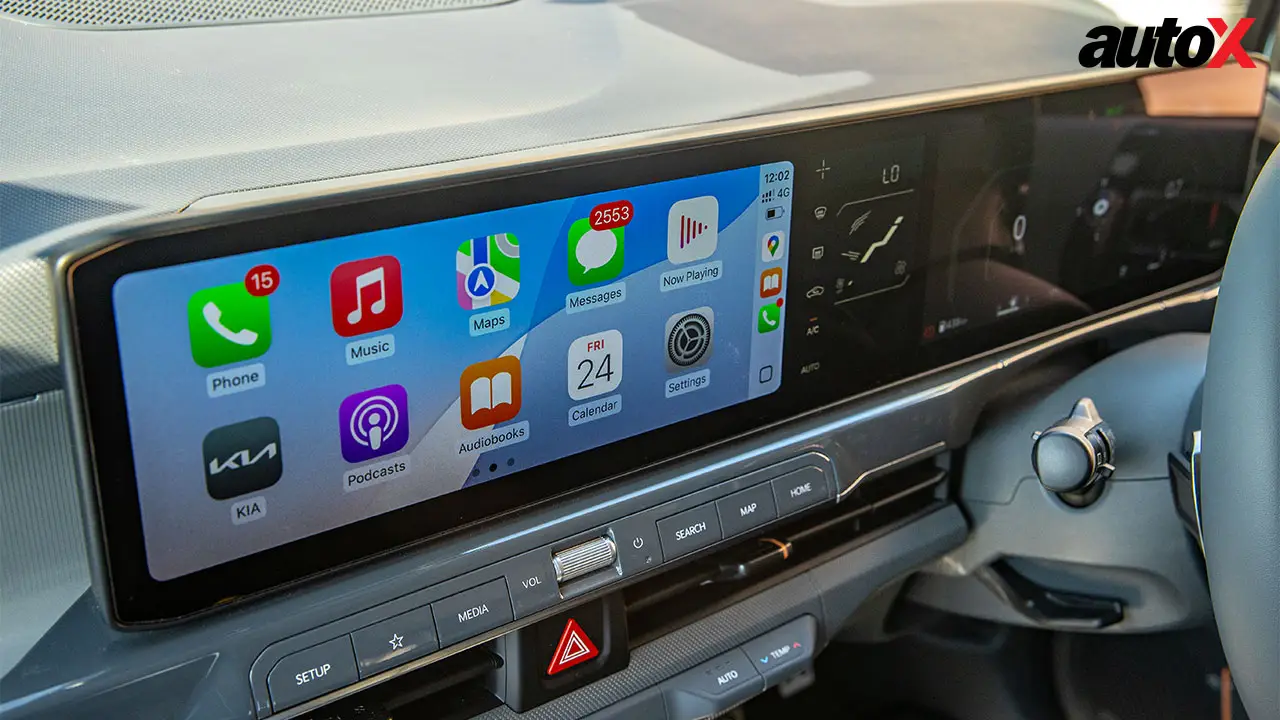
Now, I have always found screen-based AC controls cumbersome to use on the move, but thankfully, Kia has sensibly retained physical buttons for adjusting temperature and blower speed.
All three SUVs offer ventilated front seats, but the Syros goes a step further by providing ventilation for the second row seat base as well. It also includes the small but genuinely useful feature of one-touch operation for all four windows. Another point of differentiation is the sunroof: the Korean duo offer large panoramic units, while the Kylaq has a considerably smaller one.
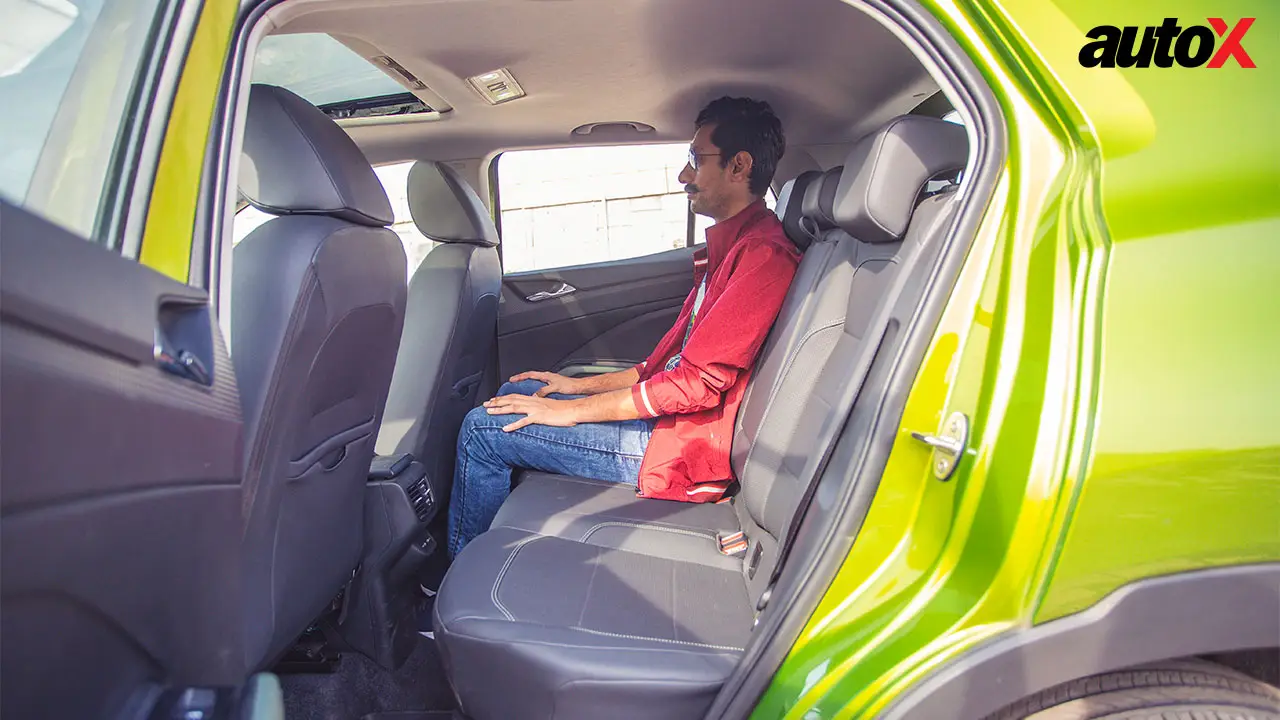
Seat cushioning and overall comfort are commendable in all three, but I particularly like the bolstering on the Kylaq’s seats. They do the best job of ensuring comfort for occupants on longer journeys.
Venue vs Kylaq vs Syros Rear Seat Space, Practicality & Boot Capacity
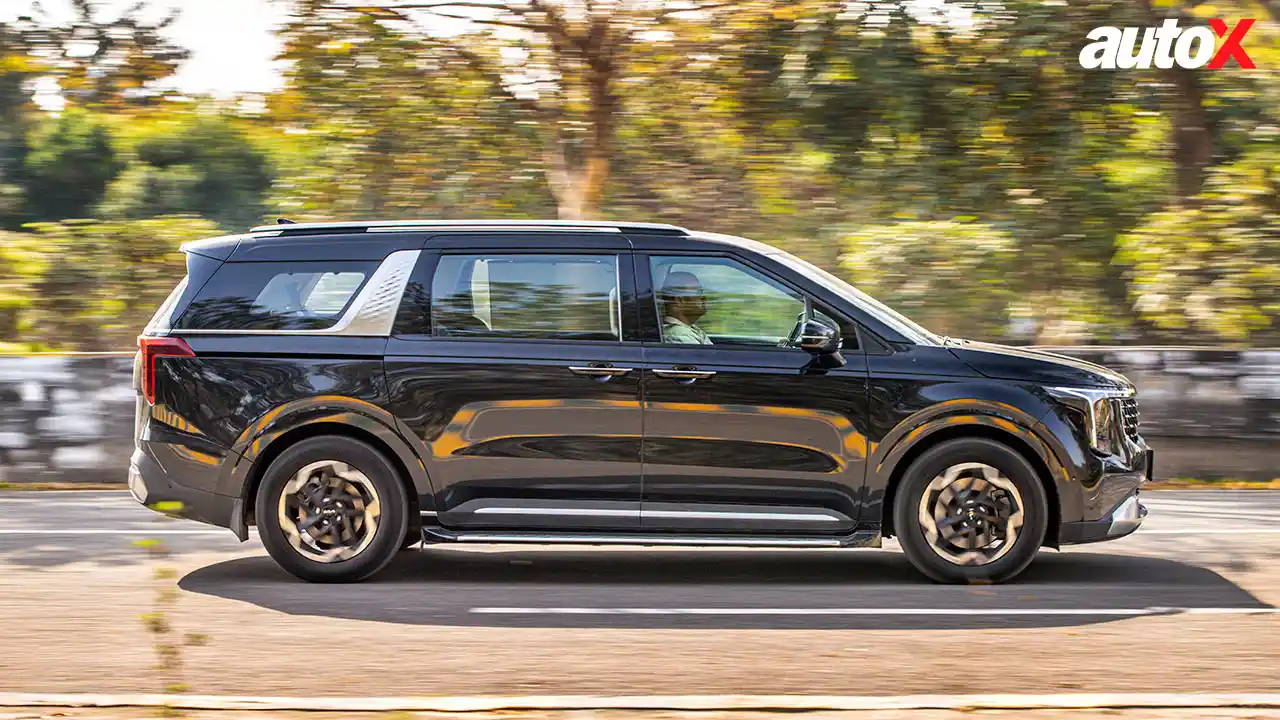
When it comes to the second-row experience, the Syros is comfortably the best of the lot. The space on offer is generous, the bench is supportive, and there are a few unique features. It is the only car on the list to offer an adjustable rear bench.
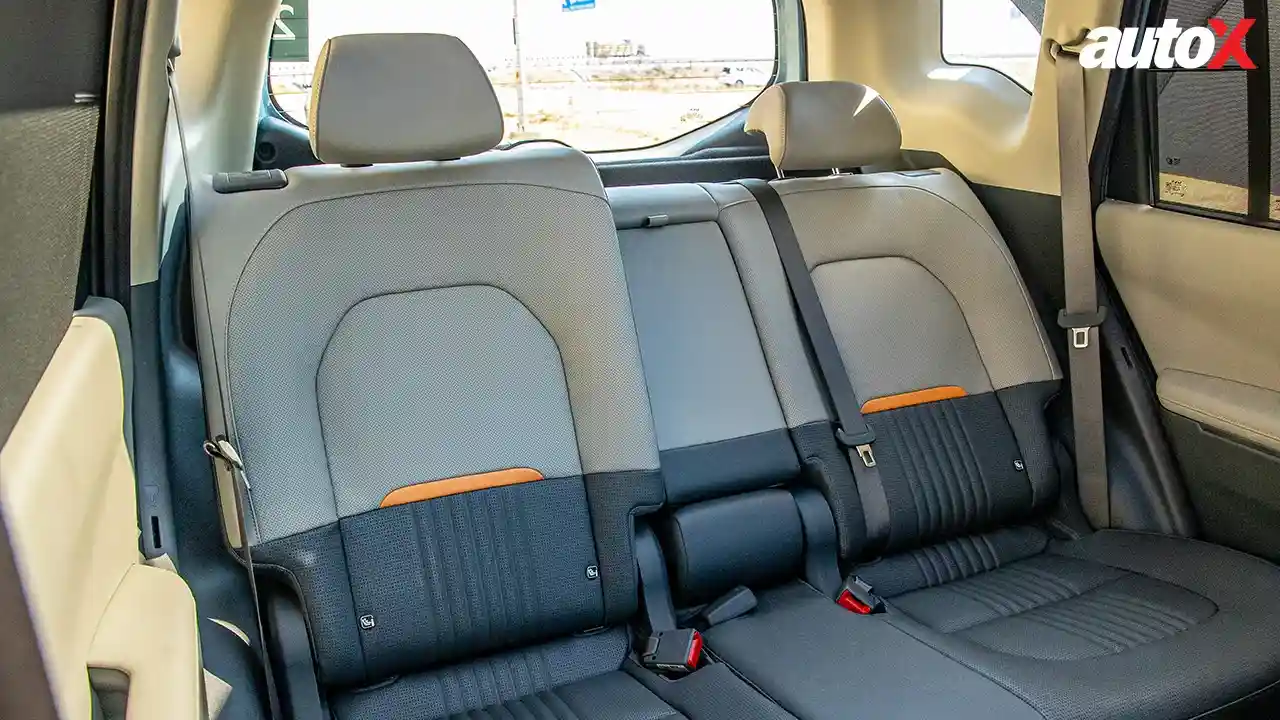
Not only can you vary the recline angle, but you can also slide the seat to increase the legroom. At six feet tall, I could sit with ample knee room, even without sliding the rear bench fully back, while the front seats were adjusted to my preference.
The Venue comes close in terms of outright space, while the Kylaq is clearly the most cramped. This is surprising when you consider the spec sheets, as the Kylaq actually has the longest wheelbase of the three, at 2,566 mm.

The Syros and Venue measure 2,550mm and 2,520mm, respectively. That said, the Kylaq’s rear seat is not completely unusable. It can comfortably accommodate two adults for shorter commutes.
The sliding rear bench in the Syros also helps expand boot space, bringing the maximum luggage capacity to 465 litres.
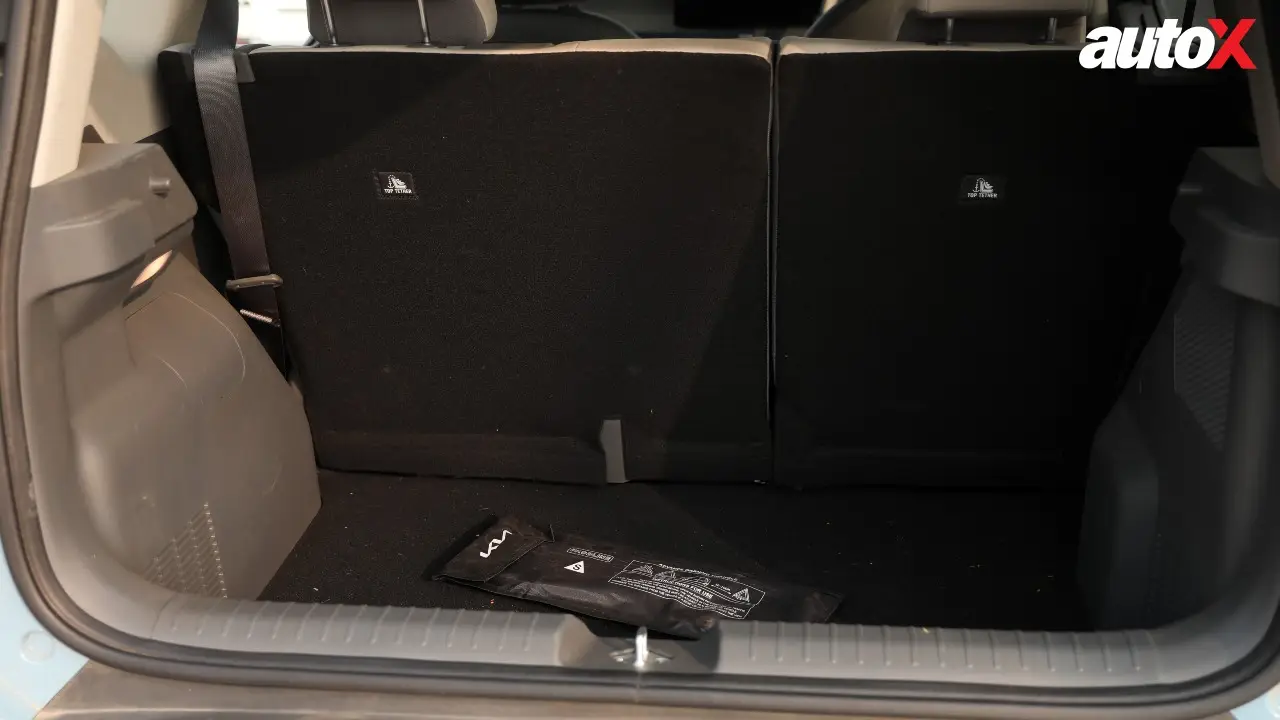
The Venue and Kylaq offer similar boot volumes, with the Kylaq once again trailing the pack. This suggests that Skoda has, perhaps, not made the most efficient use of the available space, given that the Kylaq has the longest wheelbase.
Venue vs Kylaq vs Syros Engine Options, Performance & Driving Modes
All three SUVs are offered with a 1.0-litre turbo-petrol engine, with the units in the Venue and Syros being identical. As a result, their output figures are also the same.
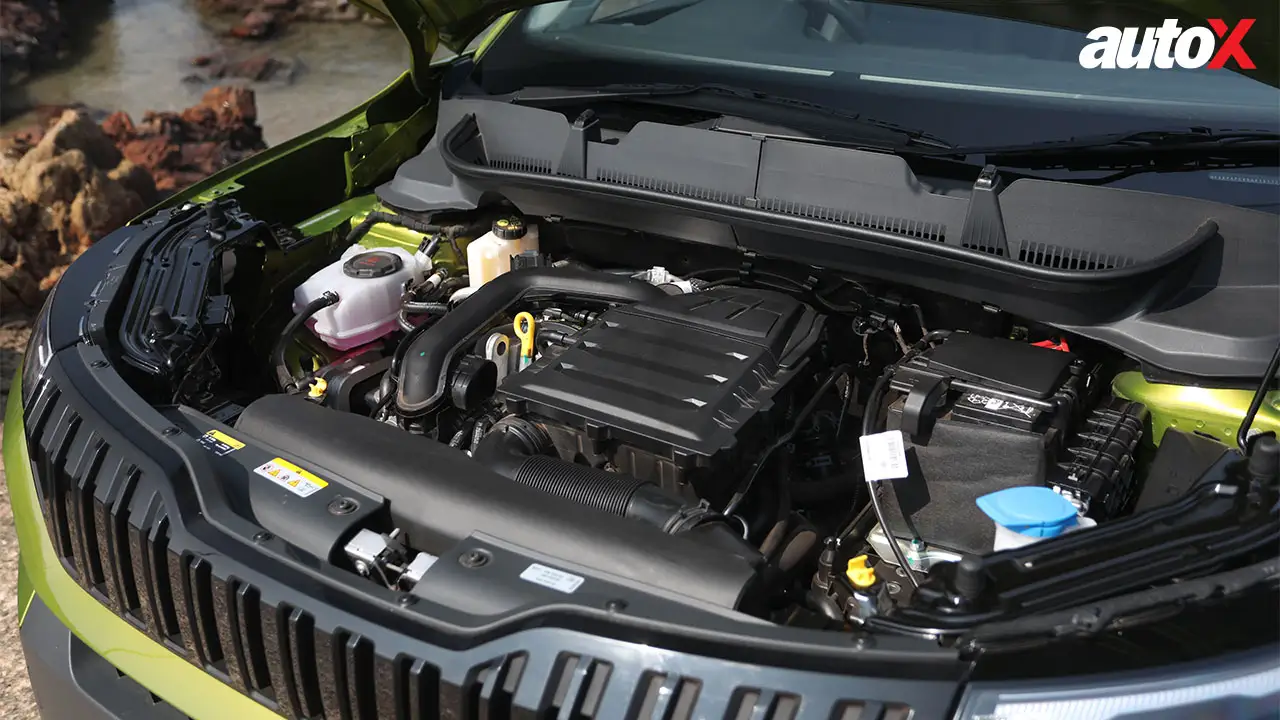
On paper, the Kylaq offers slightly less power but has a marginally higher torque figure. In real-world driving, all three deliver adequate performance. They have enough punch for quick overtakes and can maintain highway speeds comfortably, even with a completely occupied cabin.
That said, there are clear differences in how this performance is delivered. The Kylaq feels the most eager off the line, largely due to the pronounced surge you feel once the turbo kicks in.
The Syros and Venue, on the other hand, offer a more linear, progressive throttle response, which is better suited to urban driving. The presence of multiple drive and traction modes in these two further helps tailor the driving experience to varying conditions.
Where the Kylaq clearly falls behind is in powertrain choice. Both the Venue and Syros are also available with a frugal yet punchy 1.5-litre diesel engine, while the Venue also offers a 1.2-litre naturally aspirated petrol engine. This breadth of options makes the Venue the most versatile.
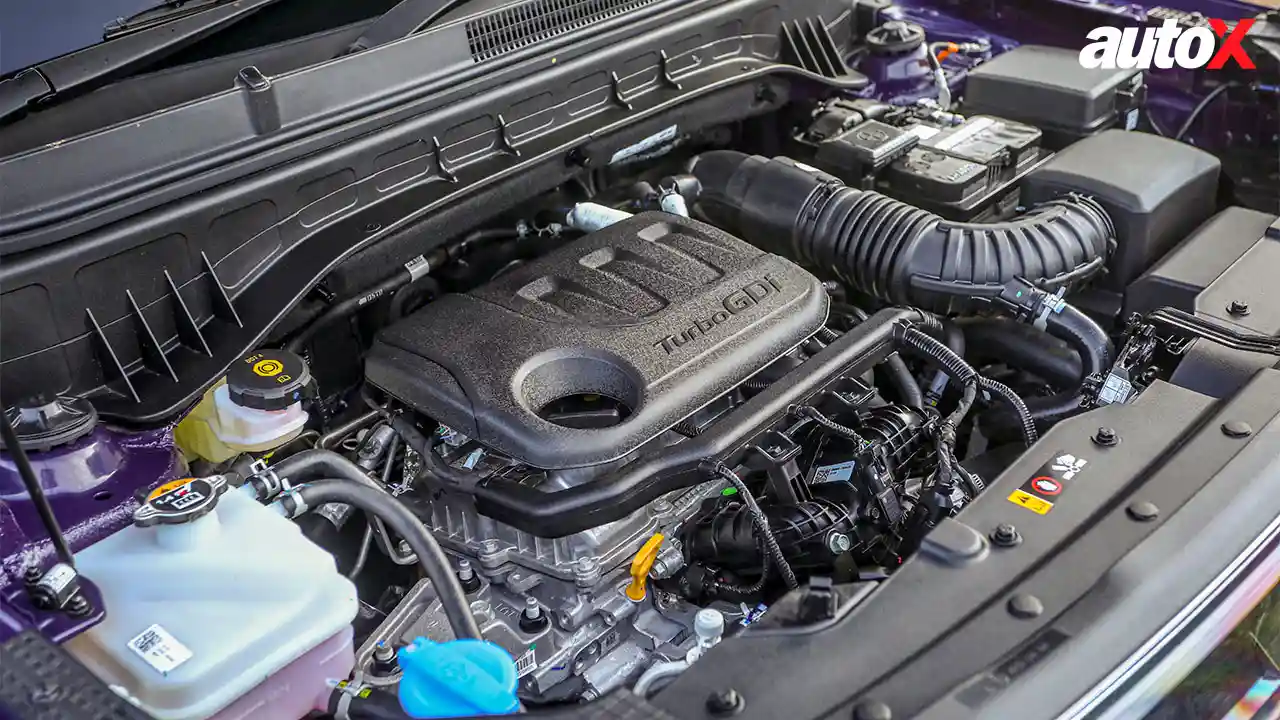
In fact, we tested the all-new (for the Venue) diesel-automatic variant in this comparison. The diesel motor is punchy, and the automatic gearbox is adequate for most driving conditions. The diesel motor also returns roughly 30-40% more mileage compared to the turbo-petrol. However, once you start pushing the Venue, you notice that the gearbox struggles to keep up. Another downside is the comparatively loud engine noise that seeps into the cabin.
It’s also worth noting that the higher trims of the Syros and Venue are equipped with Level 2 ADAS, which offers up to 16 autonomous safety features. The Kylaq, on the other hand, does not come with ADAS features. While not everyone values ADAS, having the option is undoubtedly beneficial.
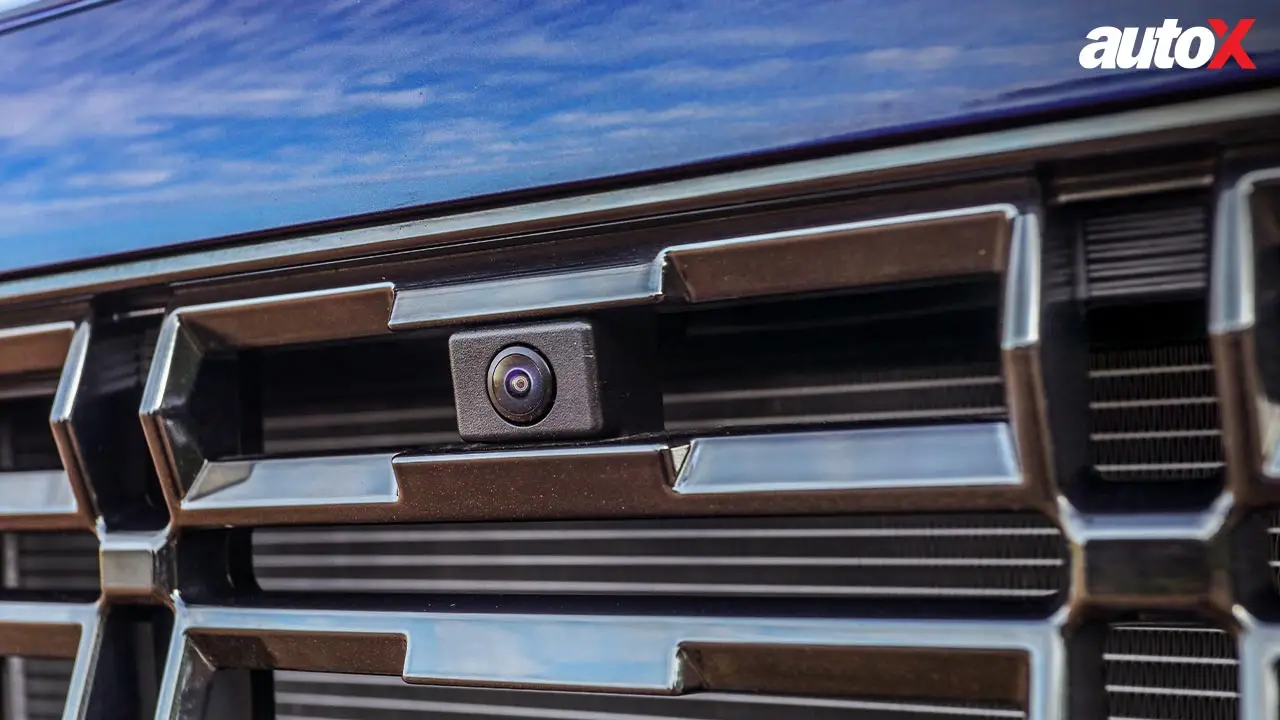
More importantly, both the Syros and Venue come with a surround-view camera system, but the Kylaq misses out. Even its rear-view camera lags behind in terms of resolution and overall image quality.
Venue vs Kylaq vs Syros Ride Comfort, Handling & Steering Feel
When it comes to suspension tuning, the Venue is the most softly sprung of the lot. Both drivers and passengers will appreciate its ability to absorb rough city roads. However, this soft setup also makes it feel slightly bouncy at highway speeds, with noticeable body roll around sharper corners.
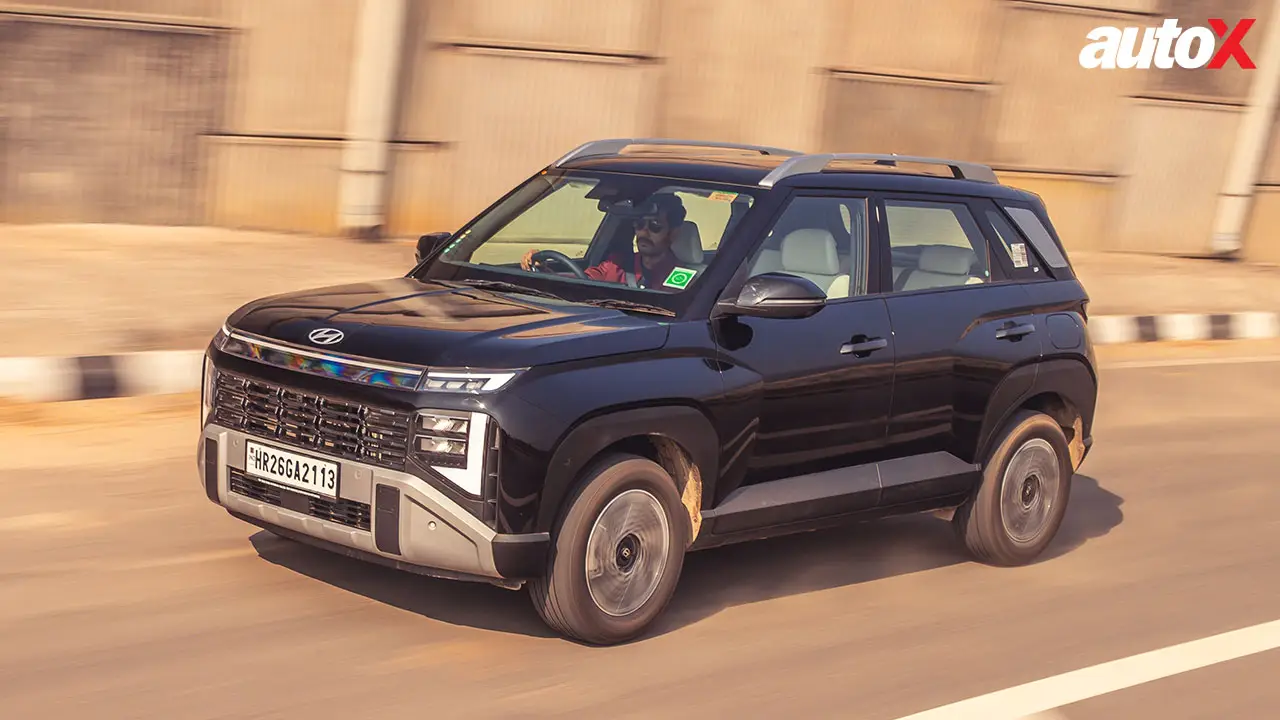
The light and rather lifeless steering only exacerbates the issue when driving enthusiastically. On the plus side, that same light steering makes the Venue easy to manoeuvre in traffic and effortless to park.
The Syros, by comparison, feels the stiffest, though it still delivers acceptable ride comfort.
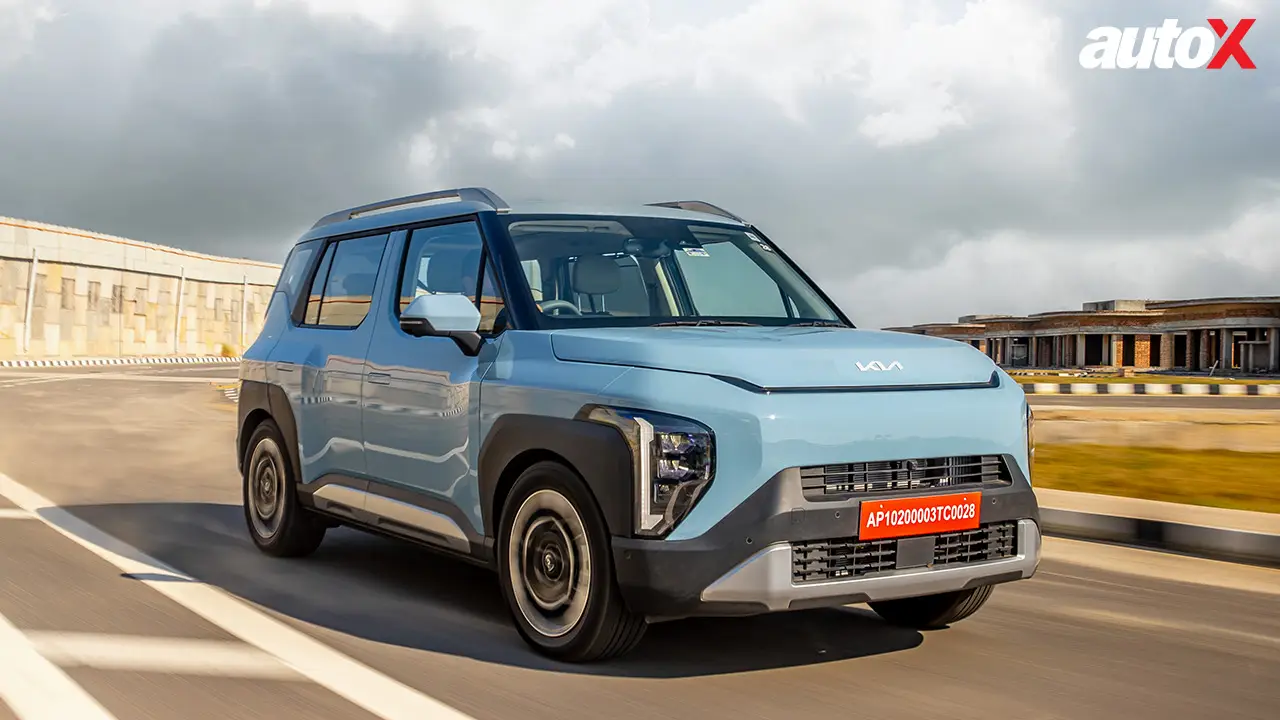
You can push it harder than the Venue without feeling unsettled, and the steering has more heft and accuracy, which further enhances the overall experience.
However, it is the Kylaq that stands out for its driving experience. It manages to combine a plush ride over most road imperfections with excellent body control through fast corners. While its absorption is not quite as plush as the Venue’s, it is noticeably better than the Syros’.
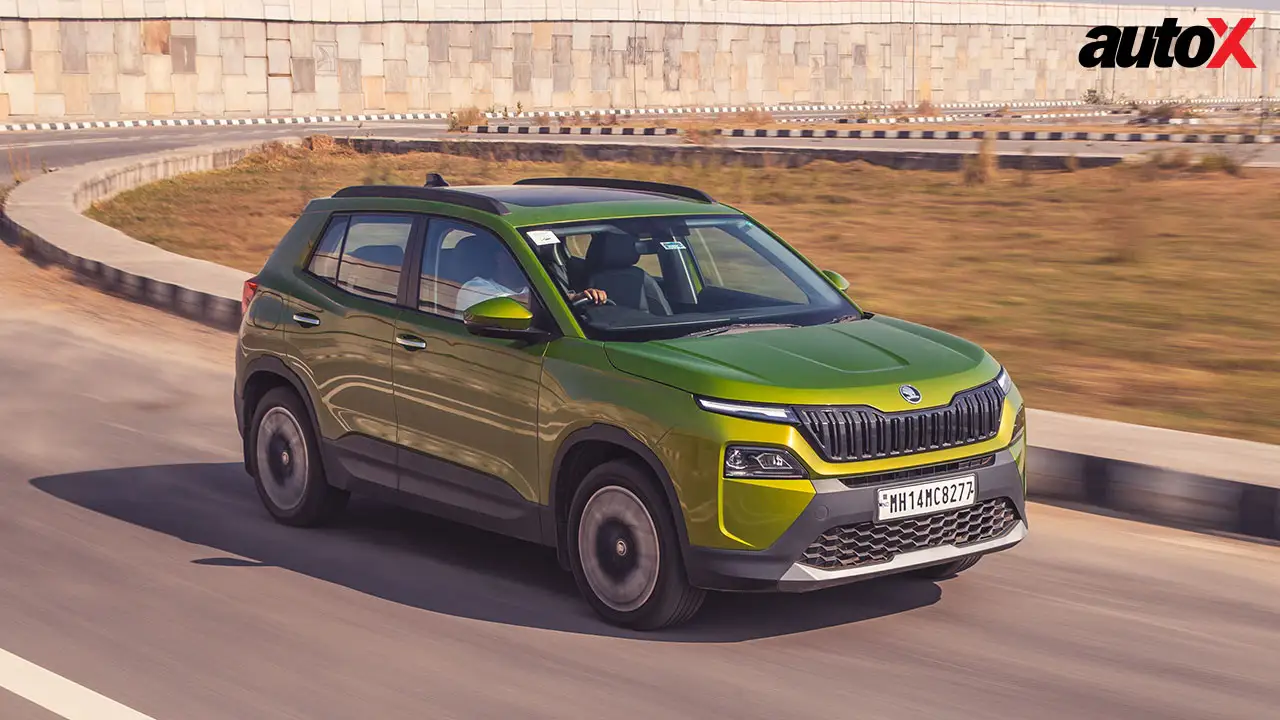
The steering is the most precise of the lot, and its size and shape feel spot-on. Overall, it strikes the best balance between passenger comfort and driver engagement. This is where the Kylaq’s European engineering truly shines.
Verdict: Which Compact SUV Makes the Most Sense?
Each SUV here targets a distinct type of buyer. They excel in different areas, and each makes a compelling case for themselves.

That said, the Syros emerges as the strongest all-rounder. It offers the most space, excellent comfort, and a satisfying driving experience. Its only real drawback is the polarising exterior design. Of the three, the Syros comes closest to being a true Jack of all trades.
If you can live with slightly compromised rear-seat space and have no interest in a diesel, the Kylaq is the next best choice. It delivers the highest level of driver engagement at a very attractive price point, making it the enthusiast’s pick of the trio. For younger buyers and those just starting a family, the Kylaq offers driving thrills unmatched in this segment.

The Venue sits somewhere between the Kylaq and the Syros. It does not encourage spirited driving, but its light steering and softly sprung suspension make it exceptionally easy to live with in urban environments. Space and features are both competitive, and it also benefits from the strongest brand value of the three, lending it added street credibility. Combined with the widest range of powertrain options, the Venue remains a sensible and well-rounded choice. It is not a weak contender by any measure; it simply has the misfortune of competing in a fiercely competitive segment
Engine: 1,493cc 4-Cylinder
Transmission: 6-Speed AT FWD
Power: 113.9bhp
Torque: 250Nm
Fuel: Diesel
Price: Rs 15.69 lakh Ex showroom
X-Factor: The SUV that combines space, features and brand power in a single package.
|
Pros |
Cons |