Mahindra XEV 9S First Drive Review - Mass Appeal
With the success of the XEV 9e, Mahindra is looking to take the fight further with its more conventional XEV 9S. We drive it to see how it fares in the real world.
By Ishan Raghava
Photography By Sunil Chauhan

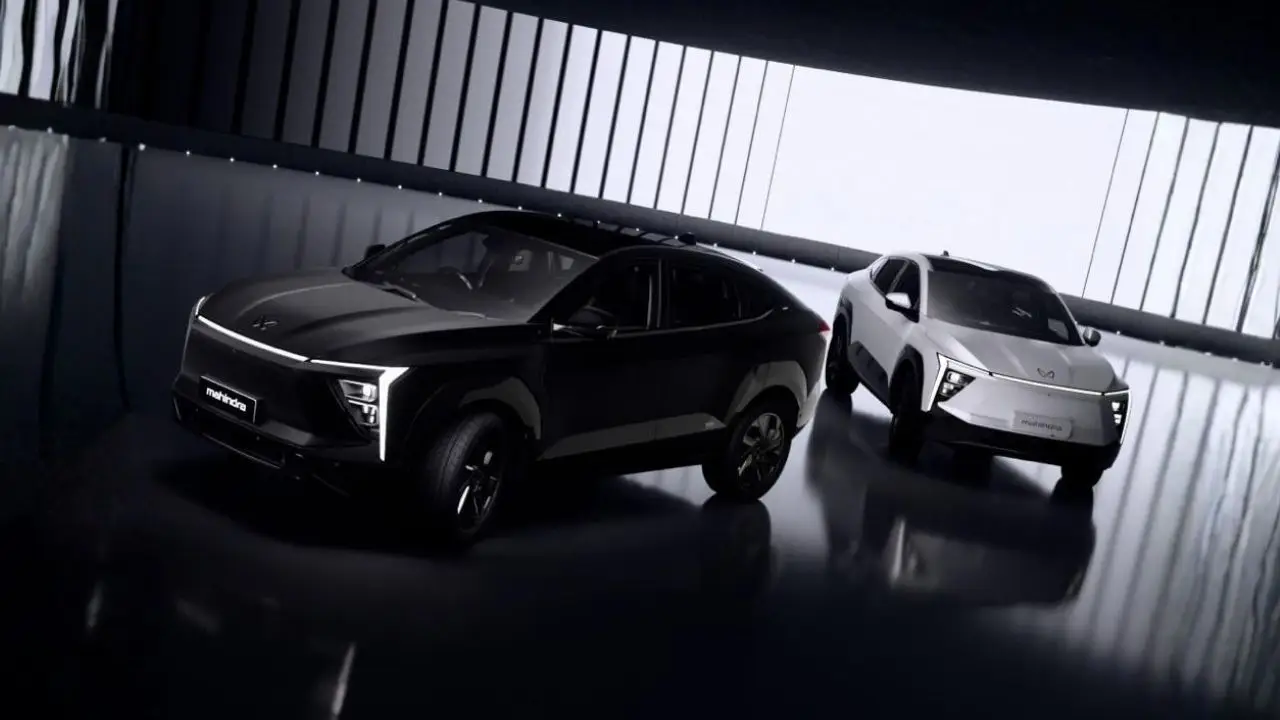
The launch of the Mahindra XEV 9e was a pivotal moment for the Indian EV landscape. It wasn’t just about Mahindra showcasing ambition as a manufacturer but also about Indian consumers getting an EV that was affordable, futuristic, and realistically usable as an everyday vehicle. That said, for many customers, the coupe-like roofline of the 9e meant compromised practicality. Nevertheless, as the sales figures clearly show, the 9e is definitely a hit.
The success of the 9e naturally opens the door for Mahindra to use the same platform and package to appeal to an even wider audience – and this is where the XEV 9S comes in. You see, unlike the aggressive styling of the 9e, the 9S’ design is much more conventional, which means more space, better practicality, and even three rows of seating. But the real question is simple – does the 9S make sense for Indian buyers? Well, we drove it briefly in Bangalore to find out just that.
Mahindra XEV 9S Design: What’s New Compared to the XEV 9e?
At first glance, the 9S' design may seem a bit confusing. You see, while Mahindra has given it a new face, it also carries many of Mahindra's style traits. Up front, a full-width unibrow-style DRL sets the tone, while headlights are vertically stacked on either side. Of course, there’s no grille per se, but you do get the vertical lines that are quickly becoming a Mahindra signature.
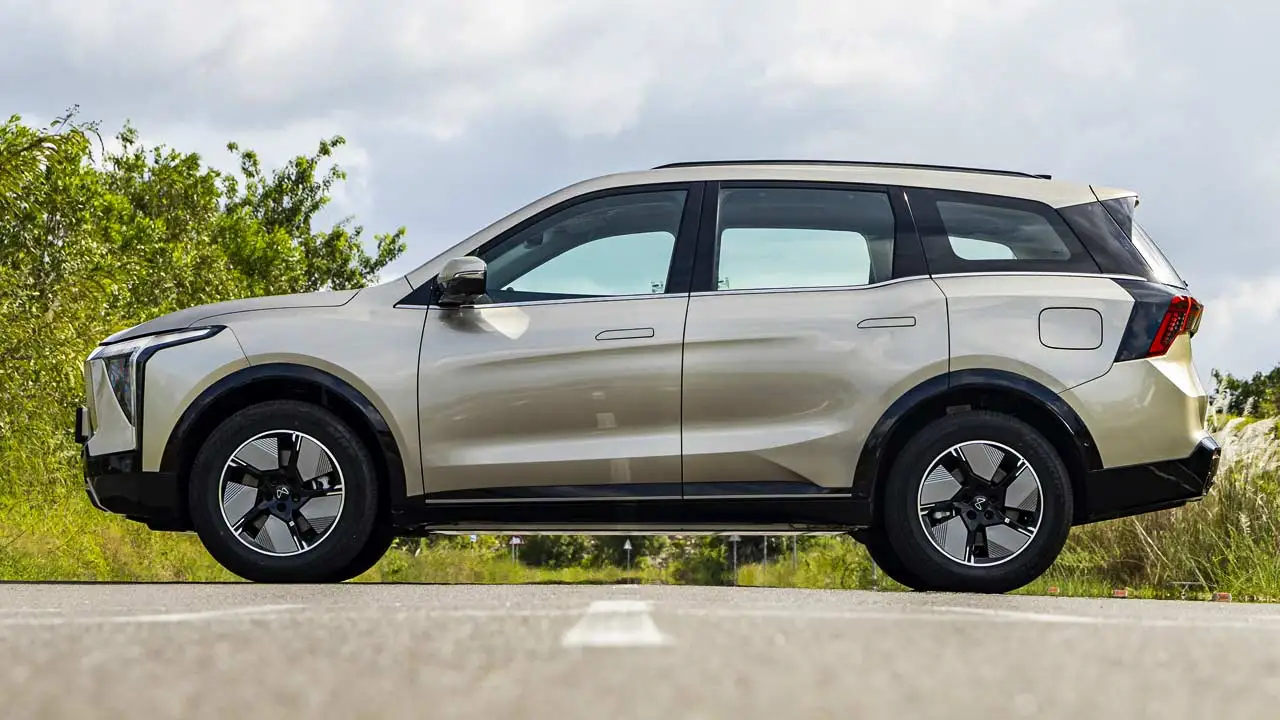
In profile, you get more design elements that are typically Mahindra – flush door handles and a strong shoulder line over the rear wheel arch, which is quite similar to that on the XUV700 and reinforces the family DNA. The 18-inch aerodynamically designed wheels, however, seem a bit boring to me – either a larger size or a more aggressive design would’ve looked much better. The rear end of the 9S is also somewhat similar to that of the XUV700, which is not a bad thing. Overall, I think the Mahindra design team has done a good job with the exterior styling. The 9S does resemble the XUV700 in places, but it still manages to carve out its own identity.
Mahindra XEV 9S Interior Review: Screens, Features, Comfort & Practicality
The real change, however, is inside.

The 9S now features a three-screen dash layout – an instrument cluster, a main touchscreen, and a dedicated passenger screen. And believe me, it looks really futuristic. Physical control buttons are minimal, though oddly, the central touchscreen’s brightness feels inadequate even at max settings – Mahindra says that they are already working on it.
As expected of a modern Mahindra, the 9S comes loaded with features, including a massive panoramic sunroof, a host of Level 2 ADAS features, an immersive audio system, and a whole lot more.

The overall interior quality is excellent, and all surfaces and controls feel very premium to touch and use. The first and second-row seats are extremely comfortable, and depending on the variant, you get ventilated seats in both rows, along with recline and slide options for the second row. There’s even a control in the second row to change the settings of the front passenger seat to increase your legroom when needed.
The 9S is the first SUV in the segment to offer a third row of seating; however, the space here is rather limited, and the floor is high, which forces you to sit in a knees-up position.
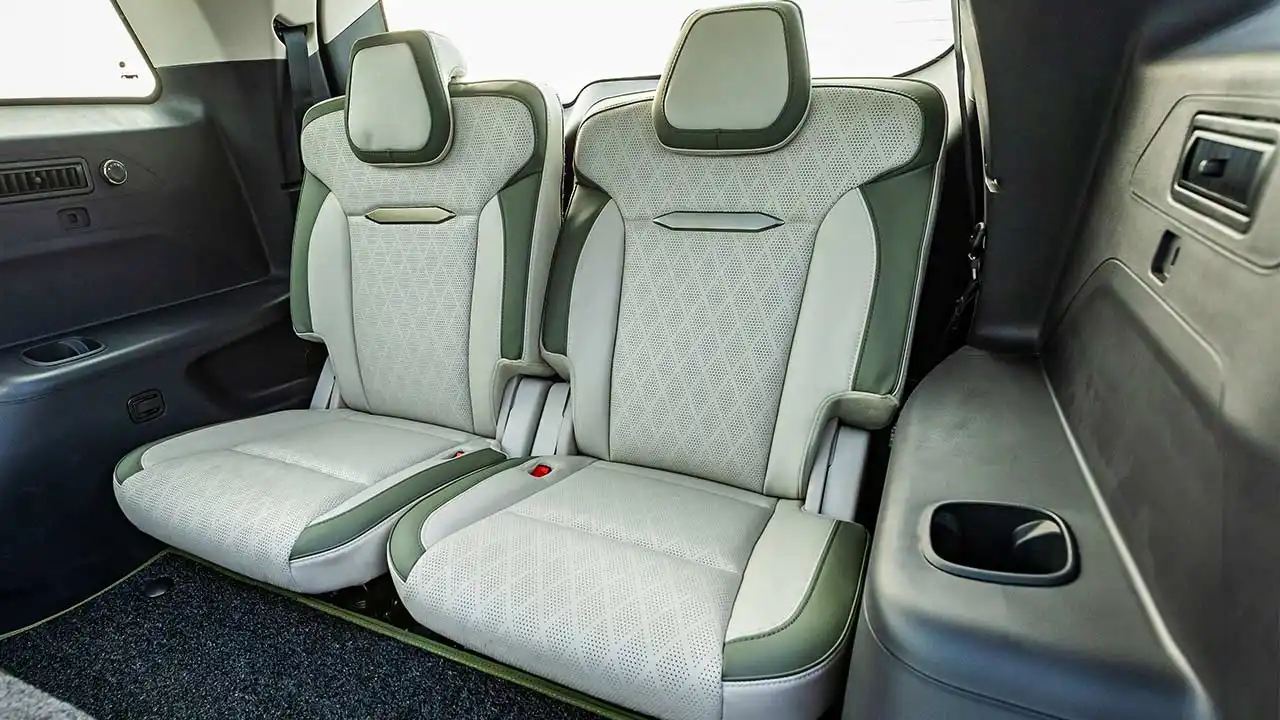
In short, adults simply won’t be comfortable here – this row is strictly for children. With all three rows up, the boot space is limited as well, but the frunk adds meaningful usability and can accommodate a few soft bags. That said, folding the third row gives you a pretty large, practical boot space.
Mahindra XEV 9S Performance Review: Real-World Drive, Power & Ride Quality
Finally, we come to what is, for me, the most important aspect of any car – the driving experience. Since the 9S is based on Mahindra’s Inglo platform, which we’ve already experienced, we know most of the fundamentals. The 9S will be available with three battery options – 59kWh, 70kWh, and 79kWh. The range-topping version we tested produces 282bhp and 380Nm and claims to do the 0 – 100km/h sprint in just seven seconds.
On the road, the 9S’ acceleration is pretty linear but rapid, making triple-digit speeds effortless.
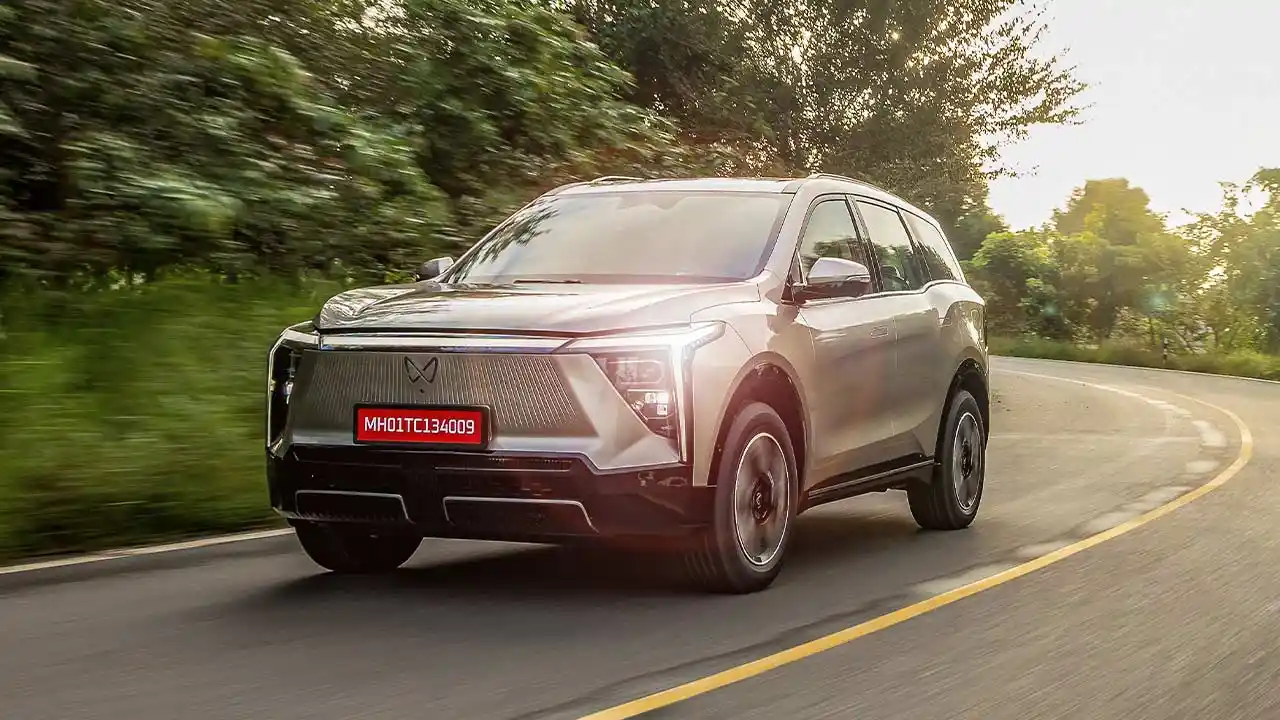
There are several driving modes, allowing you to customise the powerplant response to your preference. The steering is also fairly linear and reasonably direct, which adds to the overall driving experience. It also has steering modes.
Now, we drove a pre-production car, and one issue stood out. The adaptive suspension clearly needs more work, for on certain stretches, the car felt wallowy and out of place in a straight line, which is quite unusual. Cornering, even at high speeds, was not a problem, but straight-line undulations significantly upset the suspension. Mahindra’s engineering team acknowledged this and assured us it would be resolved before production models roll out.
Mahindra XEV 9S Verdict: Pricing, Range & Should You Buy One?
Honestly, the 9S has a lot working in its favour. It looks pretty good – perhaps a bit conservative, but appealing nevertheless – and offers a high degree of practicality, thanks to the spacious interior, which directly addresses the 9e’s issue regarding limited rear seat space. Quality levels are excellent, and the feature list is exhaustive – in fact, I can’t think of a feature it lacks.
The driving range is practical, too. While Mahindra claims that the 79kWh version offers 679km (MIDC) on a single charge, I suspect the real-life range will be around 500km, which is more than enough for most urban commuters.

And then there’s the pricing. With an ex-showroom price range of ₹19.95 – 29.45 lakh, the 9S positions itself competitively, especially for a three-row SUV of its size. It ticks more or less all the boxes.

`
Engine: Single Motor RWD
Battery: 79kWh
Power: 282bhp
Torque: 380Nm
Range: 679km (MIDC)
Price: ₹29.45 Lakh Ex showroom
X-Factor: Mahindra’s new flagship SUV offers it all – space, features, quality, range.
|
Pros |
Cons |