Maruti Suzuki Dzire AMT vs Honda Amaze CVT Comparison - Automatic Reign
The Amaze CVT quietly nails the basics and then ups the game with ADAS. The question is – does it justify the premium over the Dzire AMT?
By Siddharth
Photography By Hiyan Chauhan
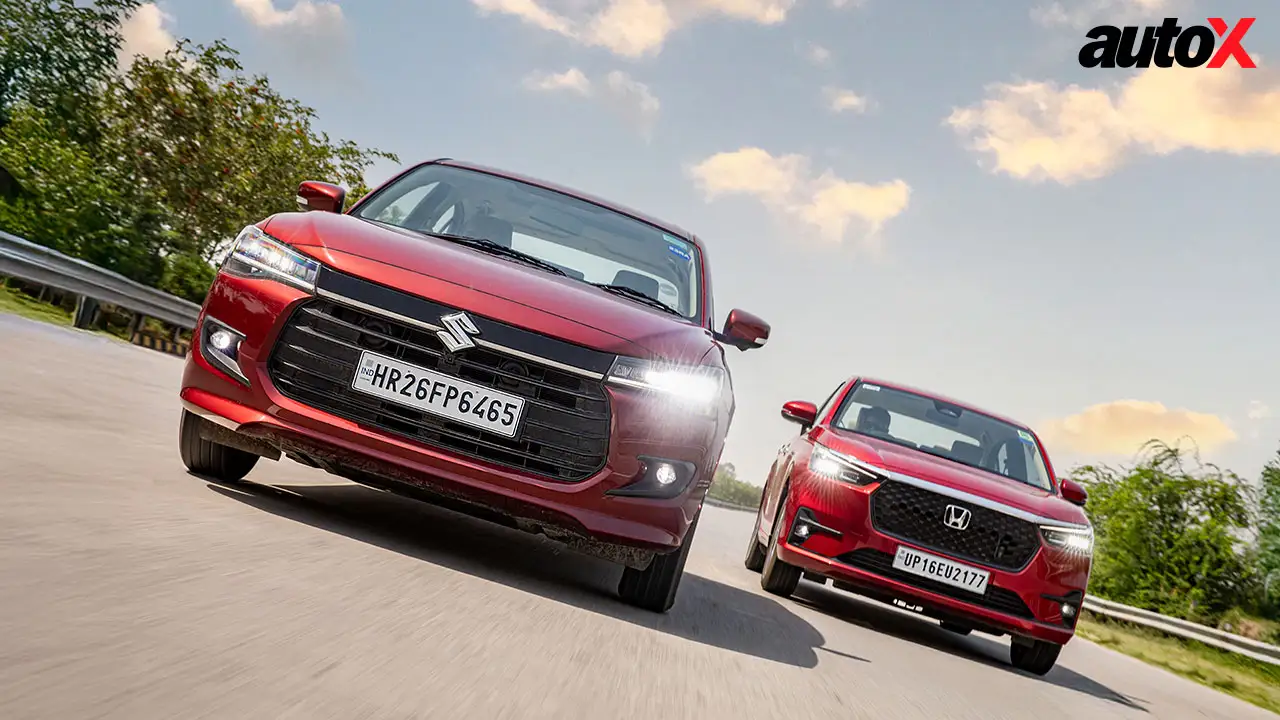
The Maruti Suzuki Dzire is officially India’s most fuel-efficient automatic petrol sedan, offering a certified fuel economy figure of 25.71 km/l. It also comes loaded with features – a sunroof, a 360-degree parking assist camera, wireless charging, an integrated tyre-pressure monitoring system, and more. On paper, it seems to be the perfect urban runabout.
But here’s the twist – it’s not!
In the real world, the Dzire feels out of its depth in the stop-start chaos of city traffic. Its jerky 3-cylinder engine and slow-shifting AMT leave you working harder than you should. Ironically, take it out on the open highway, and the Dzire transforms – planted, efficient, and surprisingly refined at triple-digit speeds. It’s almost like a budget grand tourer in disguise.

And, then, there is the Honda Amaze VX CVT, priced just ₹1 lakh more. It doesn’t come with a sunroof or a 360-degree camera, but what it does offer is a smoother driving experience, better low-speed comfort, and active safety technology, including ADAS. This leads to a compelling conundrum – should you save that one lakh and live with the Dzire’s compromises, or stretch your budget a bit and get a car that’s inherently easier to live with every day?
Let’s dive into this unexpected comparison.
Dzire AMT vs Amaze CVT - City Driving
Let’s begin with what the Dzire aims to be – a compact, efficient city sedan. And on paper, it ticks all the boxes – it’s easy to drive, easy to park, and comes loaded with tech. But fire it up, and that illusion begins to fade.
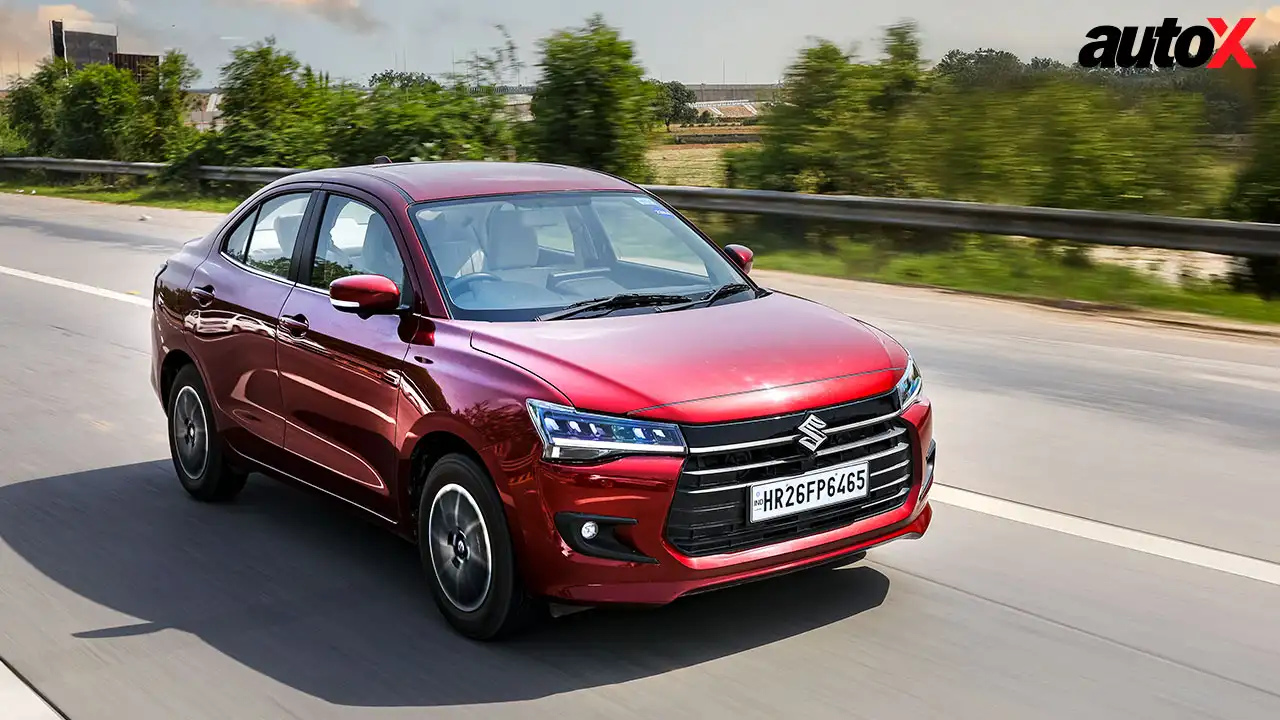
Under the hood, the Dzire features a new 1.2-litre Z-Series petrol engine, which is a three-cylinder unit. And it’s quite apparent. There is gruffness at idle, power delivery feels uneven at low speeds, and the AMT gearbox doesn’t do it favours. In traffic, it tends to hesitate, then lurch forward unpredictably, regardless of how steady your foot is on the throttle. Gear changes are slow and occasionally abrupt, with a noticeable lack of refinement, especially during stop-start crawling. Add in the occasional head-nod during upshifts, and the Dzire becomes a car that demands patience.
The Amaze, on the other hand, is refreshingly smooth. Its four-cylinder i-VTEC engine may not be a powerhouse, but it’s quiet, linear, and pairs beautifully with the CVT. There are no surprises here – no sudden jerks, no awkward pauses – just calm, predictable progress. In the city, where seamlessness matters most, the Amaze feels natural and at home. That said, it can get a bit noisy if you mash the accelerator pedal. Thankfully, CVTs have come a long way, and the rubberband effect is not as pronounced.
Dzire AMT vs Amaze CVT- Highway Driving
Now, as I mentioned earlier, on the highway, the Dzire transforms.
At highway speeds, the AMT’s indecisiveness simply disappears in the background. The ride settles beautifully into a confident stride, and the engine hums along effortlessly. In short, the Dzire feels planted and composed, turning into a genuinely pleasant cruiser. And thanks to its segment-leading fuel economy, it does all that without putting any dents in your wallet. The Dzire returned an average fuel efficiency of 13.7 km/l during our city commutes and a healthy 20+ km/l on the highway. For frequent expressway runs, the Dzire makes a surprisingly compelling case.

The Amaze, on the other hand, is happiest cruising at 80 – 90 km/h. Push it beyond that, and the CVT starts to drone, while the engine feels noticeably more strained – a bit surprising, given that it’s a four-cylinder engine, unlike the Dzire’s three-cylinder unit. The CVT also makes you think twice before overtaking – as the rev climbs, the accompanying engine noise would make anyone reconsider the move. Interestingly, while the Dzire’s AMT doesn’t make as much noise, it’s slower to kick down compared to the Amaze’s CVT.
In terms of comfort and handling, there’s little difference between the Amaze and Dzire. Both are stable, offer similar steering feedback, and easily tackle sudden stretches of broken tarmac at high speeds without breaking stride. But if you often find yourself on open highways, you’d find the Dzire to be more in its element than the Amaze.
So, here’s the strange truth – in their automatic avatars, the Dzire turns out to be the better highway cruiser, while the Amaze definitely is the superior city car.
Dzire AMT vs Amaze CVT - Interior Comparison
The Dzire comes with an impressive list of features – a nine-inch SmartPlay Pro+ touchscreen, wireless Android Auto and Apple CarPlay smartphone pairing, Arkamys-tuned surround-sound audio system, a wireless charger, cruise control, coloured MID, and more. You also get connected car tech via Suzuki Connect, including support for smartwatches and Alexa compatibility.

Yet for all its glitz and glamour, the Dzire overlooks some basic features. The front seats neither feel spacious nor particularly comfortable, the rear bench is tight, and there’s no rear headrest for the middle passenger – a glaring omission. It’s a cabin that looks upscale but doesn’t feel spacious.
Now, the Amaze keeps things simpler but more effective. The dashboard is clean and logically laid out, and the cabin feels airier. The rear seat has more knee room and better under-thigh support. Plus, the seats are better padded – even the middle passenger gets a headrest. Consequently, it all makes long journeys more noticeably comfortable for rear passengers.

The Amaze, however, does miss out on the bling. Its smaller 8.0-inch touchscreen feels like a significant step down, although in terms of functionality, it’s no different. Honda’s lane change / blind-spot camera on the left could have been a great feature. Unfortunately, its low resolution undermines its usefulness, robbing it of the potential to be a standout feature.
Dzire AMT vs Amaze CVT - Safety Features
Here’s where Honda pulls an ace from up its sleeve – ADAS.
The Amaze VX CVT is equipped with Honda Sensing, which includes adaptive cruise control, lane-keep assist, lead car departure notification, road departure mitigation system, and a collision mitigation braking system. These are features you’d normally expect to see in a car positioned a couple of segments higher, and their presence in the Amaze sets a new benchmark for the segment. More importantly, the system is well-calibrated for Indian road conditions – gentle, unintrusive, and genuinely useful, whether navigating city streets or cruising down highways.

The Dzire fights back with features like a tyre pressure monitoring system (TPMS) and a 360-degree parking assist camera – both excellent features. However, the lack of active driver assistance technology puts it at a disadvantage, especially when safety has become a decisive factor for many buyers.
Dzire AMT vs Amaze CVT Review Conclsusion
On paper, the Dzire ZXi+ AMT seems to be a compelling choice. It’s loaded with features, delivers stellar fuel economy, albeit on the highway, and feels more upmarket than ever before. But in the real world, especially within city limits, its jerky drivetrain, cramped rear seat, and inconsistent low-speed behaviour mar its overall appeal. Ironically, it’s on the highway where the Dzire truly comes alive, offering comfort, stability, and unmatched efficiency. If that’s where you often find yourself, the Dzire won’t let you down.

The Amaze, on the other hand, is the better all-rounder. It’s refined, comfortable, and perfectly tailored for daily urban duties. Add in the bonus of ADAS and a smoother CVT, and it shapes up as a more balanced, well-rounded, and logical package, especially for safety-conscious buyers.
So, should you spend that extra ₹1 lakh? If your driving is primarily highway-focused, the Dzire ZXi+ AMT still holds its ground. But if you’re buying a car for navigating city streets, the Amaze VX CVT confidently justifies the premium.
Engine: 1,199cc 3-Cylinder
Transmission: 5-Speed AMT FWD
Power: 80bhp
Torque: 112Nm
Fuel: Petrol
Price: ₹10.19 Lakh Ex showroom
X-Factor: The most popular sedan in India that feels at home on the highway.
|
Pros |
Cons |