Tata Altroz Facelift First Drive Review - Still Got the Juice?
It’s not often you see a new hatchback in 2025, let alone one powered by diesel. But Tata has refreshed the Altroz, and we have driven both the diesel and CNG versions to see if it still delivers.
By Aakash S Paul
Photography By Sunil Chauhan

The hatchback segment in India isn’t what it used to be. These days, all the action is happening in the SUV and even MPV segments (see our cover). So, it’s a rare treat when we get to review a new hatchback. And it’s even more exciting when that hatchback comes with a diesel engine.
I spent a day with both the diesel and CNG versions of the recently launched Tata Altroz facelift. The new model comes with some tweaks while retaining some of the standout qualities of the outgoing version.
So, how much better is the new Altroz, and how does it stack up against rivals in the same price bracket? Time to find out.
Tata Altroz Facelift Exterior Updates
The dimensions of the Altroz remain unchanged, but the styling has received a notable update. There’s a clear emphasis on blacked-out elements, visible on the front end and the newly designed 16-inch alloy wheels. The LED headlamps now sport a sharper, more modern design, enhancing the overall look.
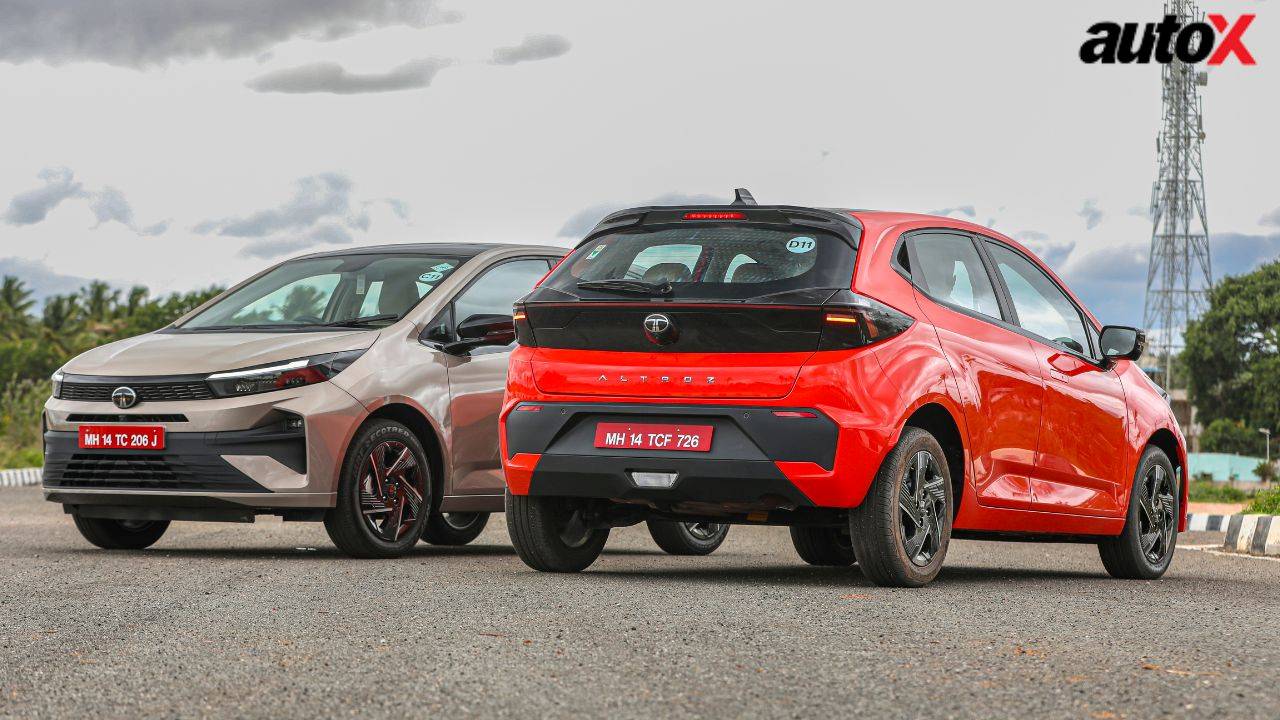
Further adding to the contemporary appeal are the front flush door handles and connected tail lamps. While I wasn’t particularly taken with the design when I first saw the photos, I have to admit it looks significantly better in person. This is yet another attractively styled offering from Tata – something that’s become the norm of late. That said, I’d still consider swapping out the black alloys. They currently give off a bit too much of an EV vibe for my liking.
Tata Altroz Facelift Interior Features & Updates
The dashboard has been redesigned and looks rather impressive. It houses a 10.25-inch touchscreen that was free of any lag during our time with the hatch. This unit supports wireless smartphone connectivity and includes a 65W USB-C port at the front, with another provided for the second row – a thoughtful addition that laptop users will certainly appreciate.

Tata has also introduced their illuminated, two-spoke steering wheel into the mix. The AC controls have been moved to a touch panel, which also houses buttons for switching to CNG mode and for activating the 360-degree camera. It’s great to see Tata offering a surround-view camera – the feed quality is decent – though the obstacle detection system does need some calibration. During our test, even when reversing on a flat, empty tarmac, the system repeatedly flagged non-existent obstacles and triggered warning alerts. An electronic sunroof and a larger ambient light strip further add to the interior appeal.
While you still get fabric seats, they provide excellent support and cushioning, particularly due to the new extensions at the base that offer better under-thigh support. This feature is also present in the rear seats. However, I do feel Tata missed a trick by not including powered & ventilated front seats in this update.

The second-row space is adequate, though knee room may feel just about enough for taller passengers. One surprising omission is the absence of a weight sensor on the rear bench. As a result, the seatbelt warning system requires the rear seat belts to be buckled even when no one is seated at the back – otherwise, the alarm keeps beeping.
Tata Altroz Diesel & CNG Driving Review
The new Altroz is available with a choice between a 1.2-litre petrol and a 1.5-litre diesel engine, both offering the same outputs as before. The petrol variant is also offered with a CNG option, although the more powerful turbo-petrol version is yet to be introduced.

Notably, the Altroz remains the only hatchback to offer a diesel powertrain – a welcome change, especially given how punchy this motor is. It cruises effortlessly at highway speeds; however, at higher revs, engine noise and vibrations do become apparent. Both petrol and diesel engines suffer from a lack of low-end pulling power, which is noticeable in everyday driving.
The petrol engine is now available with a 5-speed AMT, while the CNG and diesel variants are paired with a 5-speed manual gearbox. While the gear shifts are generally easy, the throws are long, and there’s an occasional grinding sound mid-shifts. So, while the engine itself is reasonably competent, there haven’t been any notable improvements in terms of how it behaves.

What does stand out, however, is the ride quality. Tata continues to deliver some of the best suspension setups in the business – the Altroz handles bumps with impressive composure while still offering good grip around faster corners. It may not be an outright driver’s car, but it comes remarkably close.
Tata Altroz Facelift Price & Verdict
The new Altroz remains a well-rounded package – just as it always was. The refreshed styling and updated features make an even stronger case for it in today’s market. Even the introductory starting price of ₹ 6.89 lakh (ex-showroom) is quite competitive.
That said, the higher trims do feel a bit pricey and could have offered a few more features to justify the premium. If you’re looking for a diesel hatchback, the Altroz stands as your default choice. However, if you’re open to petrol or CNG, there are still several worthy contenders in the segment.
Engine: 1,497cc 4-Cylinder
Transmission: 5-Speed MT FWD
Power: 89bhp
Torque: 200Nm
Fuel: Diesel
Price: ₹11.29 Lakh Ex showroom
X-Factor: The only diesel hatchback in the segment and one that is high on comfort.
|
Pros |
Cons |