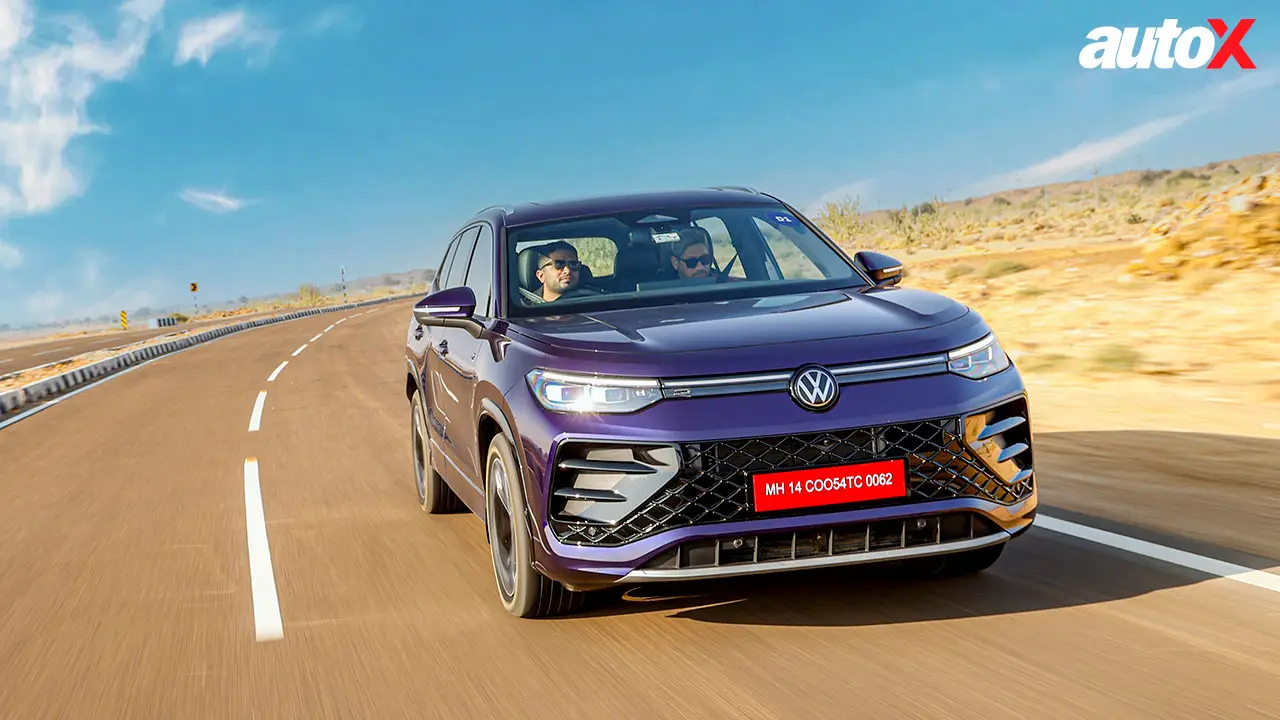
Volkswagen Tayron R-Line Review - The Middle Path
Find the Fortuner too crude? Too discerning to fall for the entry-level luxury car trap? The Volkswagen Tayron R-Line, then, is made for you.
By Shivank Bhatt
Photography By Sunil Chauhan
The upper middle class is a bit like the middle child of the modern world. Too "poor" for business class, yet not ordinary enough to fly economy. Can afford a penthouse, but can’t quite gather the gumption to buy an independent villa. Permanently stuck in the neither-here-nor-there zone.
Car buying isn’t any easier for this lot. This buyer doesn’t want your usual Cretas, Seltos, or XUVs. But splurging a fortune on a full-blown German luxury barge? That feels excessive. And they’re far too savvy to be swayed by entry-level Audi, BMW, or Merc luxury cars – because those often feel like badge-first, product-second propositions.
So, for anyone shopping in the ₹35–60 lakh bracket, the options – across body styles – are surprisingly slim. Strip EVs out of the equation, and Toyota practically has a monopoly. Sedan? Camry. That’s it. MPV? Innova Hycross, unchallenged. SUV? The Fortuner still rules the roost.
Few carmakers have dared to take on Toyota here. But now, the Germans are finally showing signs of resistance. Skoda brought back the Kodiaq in 2025, and Volkswagen has entered the ring with the new Tayron R-Line.
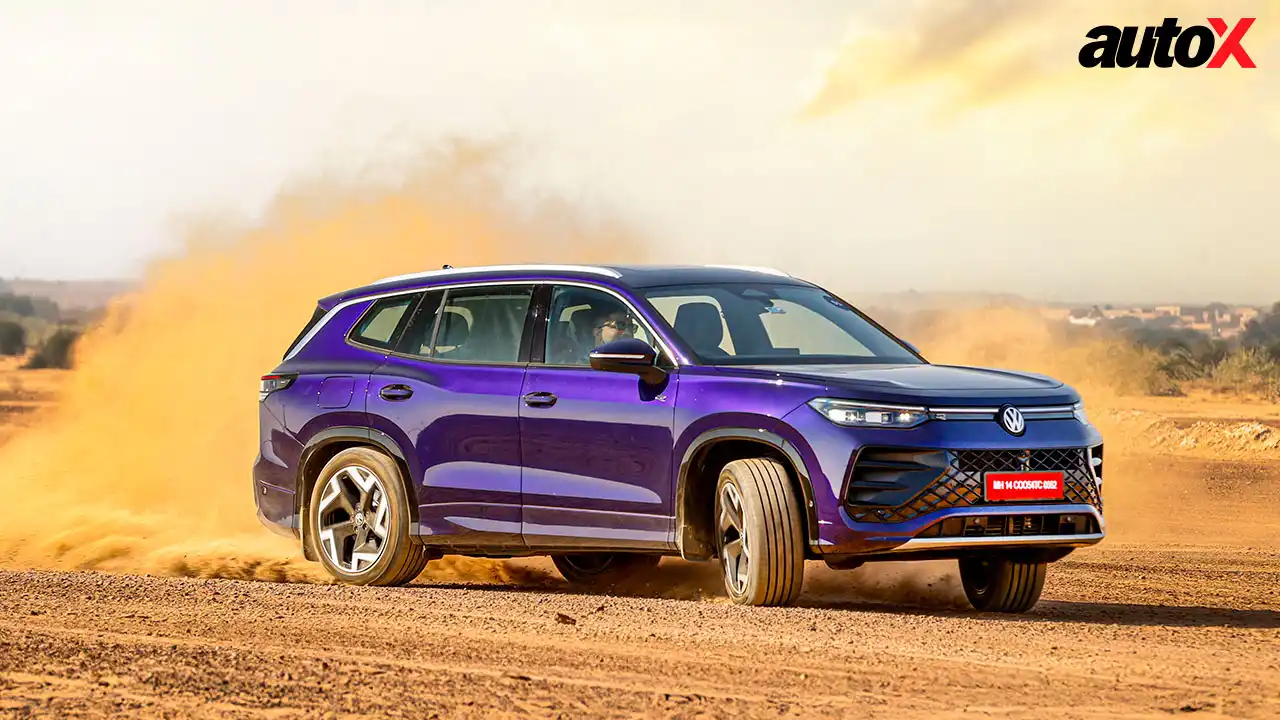
Think of it as a Kodiaq in a VW suit. Or, more accurately, an XL version of the Tiguan R-Line. But this isn’t just badge engineering. VW India is betting big on it. Unlike the CBU-only Tiguan R-Line, the Tayron will be locally assembled. It also packs more features than the Kodiaq. There’s a reason VW is calling it their new flagship, you know…
Volkswagen Tayron R-Line Exterior Design
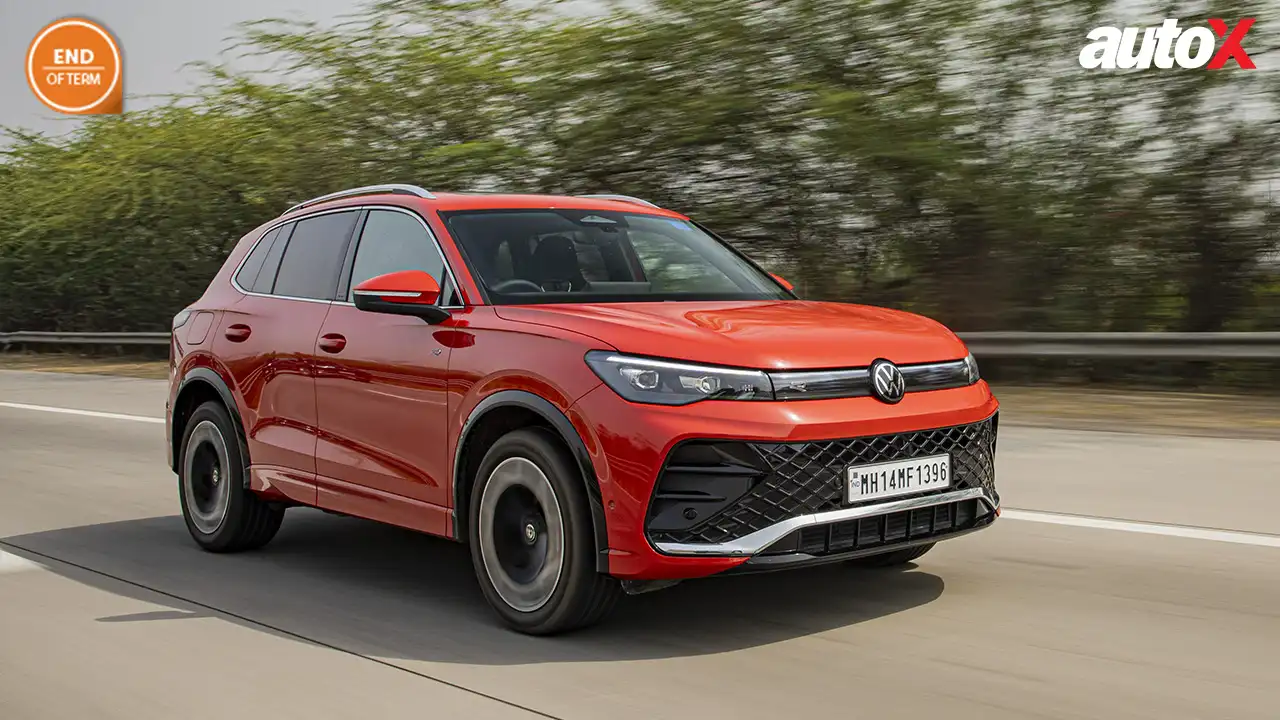
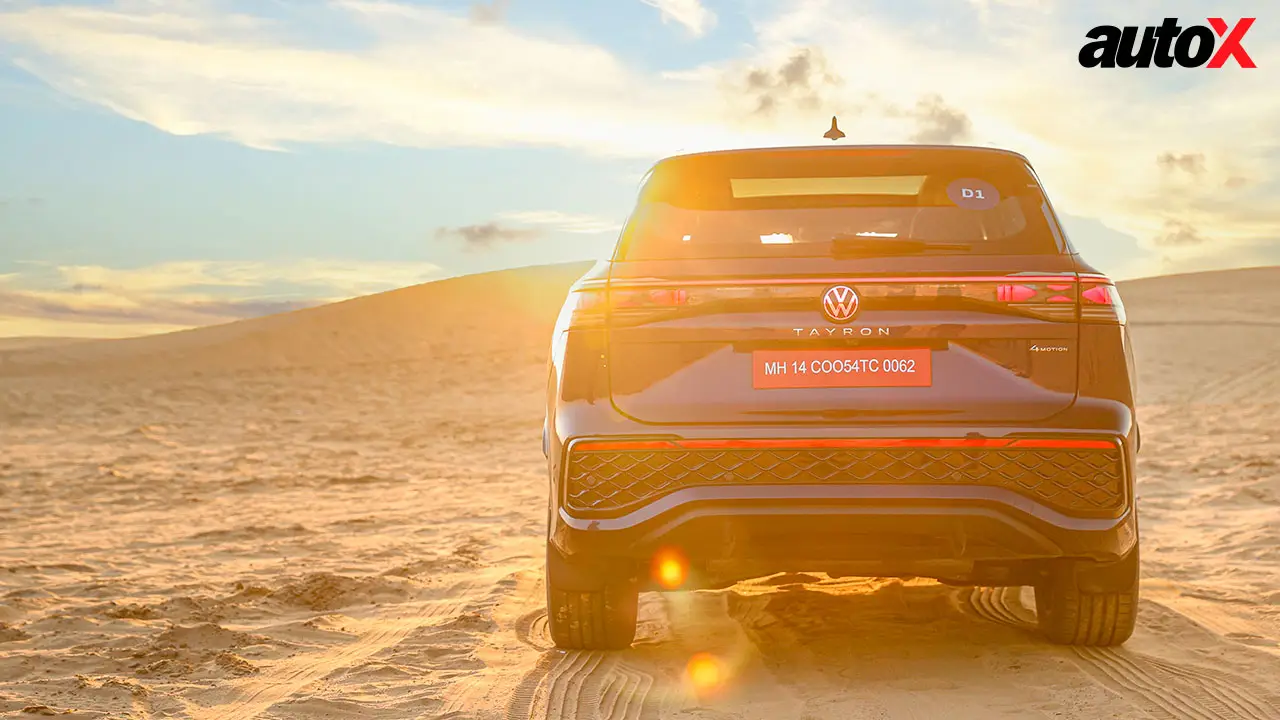
If the Tayron looks familiar, that’s because it is. Its design closely mirrors the Tiguan R-Line – sleek, sporty, and understated. It doesn’t scream for attention, but it has presence. R-Line touches like the bold grille, strong proportions, and 19-inch alloys give it a clean yet commanding stance.
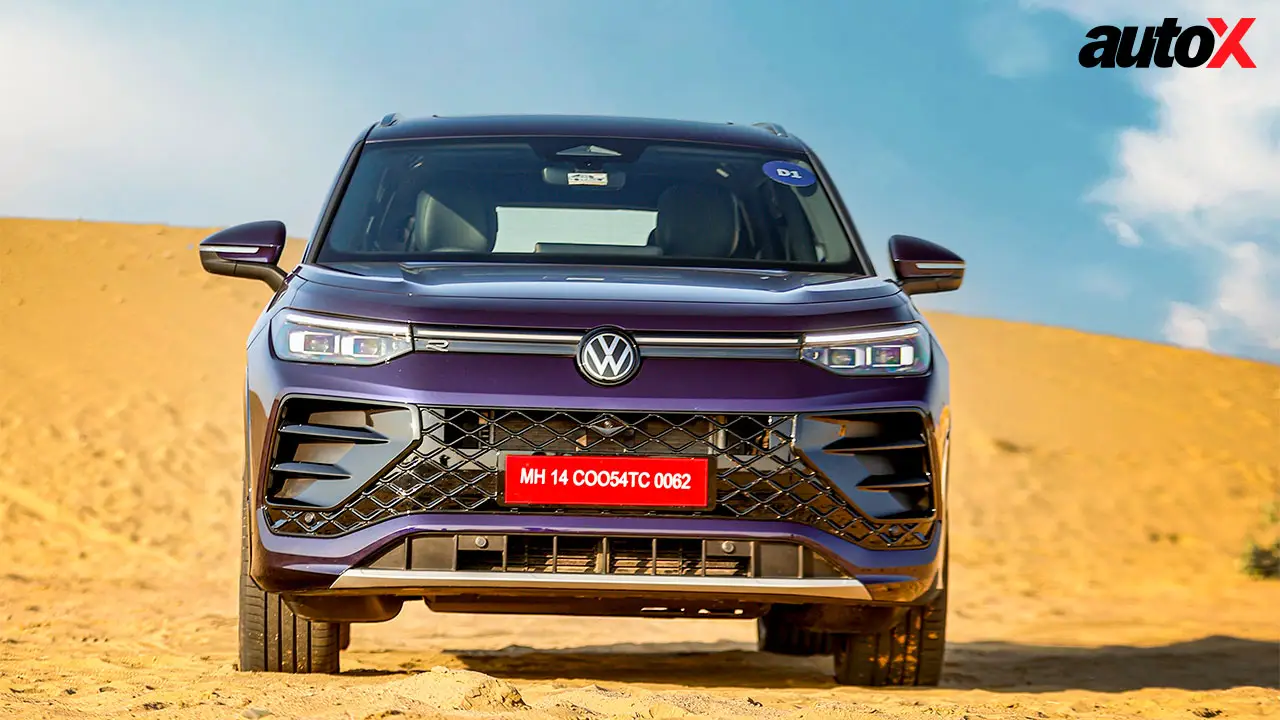
The illuminated VW logo and light bar at the front and rear add some visual drama – arguably, the only slightly flashy bits in an otherwise subtle design. The real difference from the Tiguan lies in the size. Because of the additional row of seats, the wheelbase has stretched to 2,789mm – 109mm longer than the Tiguan.
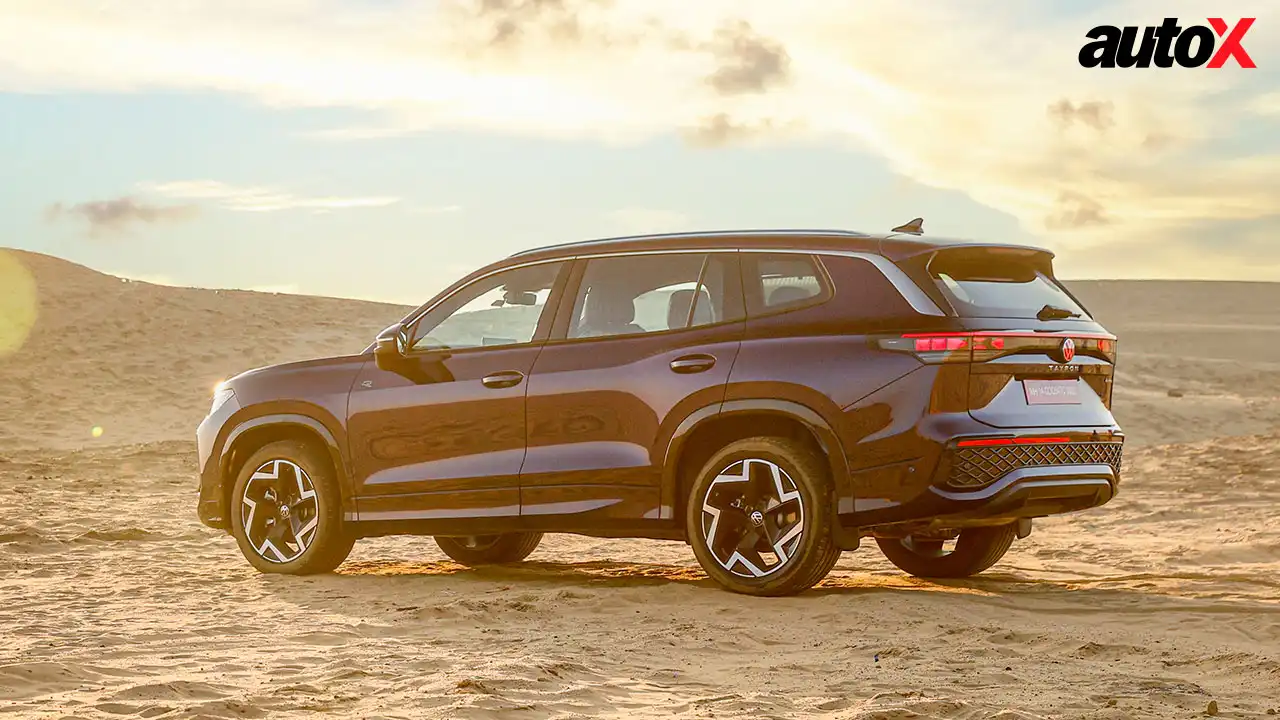
At 4,792mm, the Tayron is a substantial 253mm longer overall. In profile, it looks noticeably bigger, with long overhangs that make it appear more estate-like than SUV-ish.
Volkswagen Tayron R-Line Interior & Features
Inside, it’s classic Volkswagen. Doors shut with a reassuring thud, materials feel solid, and ergonomics are spot-on. The dashboard is dominated by a 15-inch touchscreen infotainment system that’s crisp, responsive, and easy to navigate.
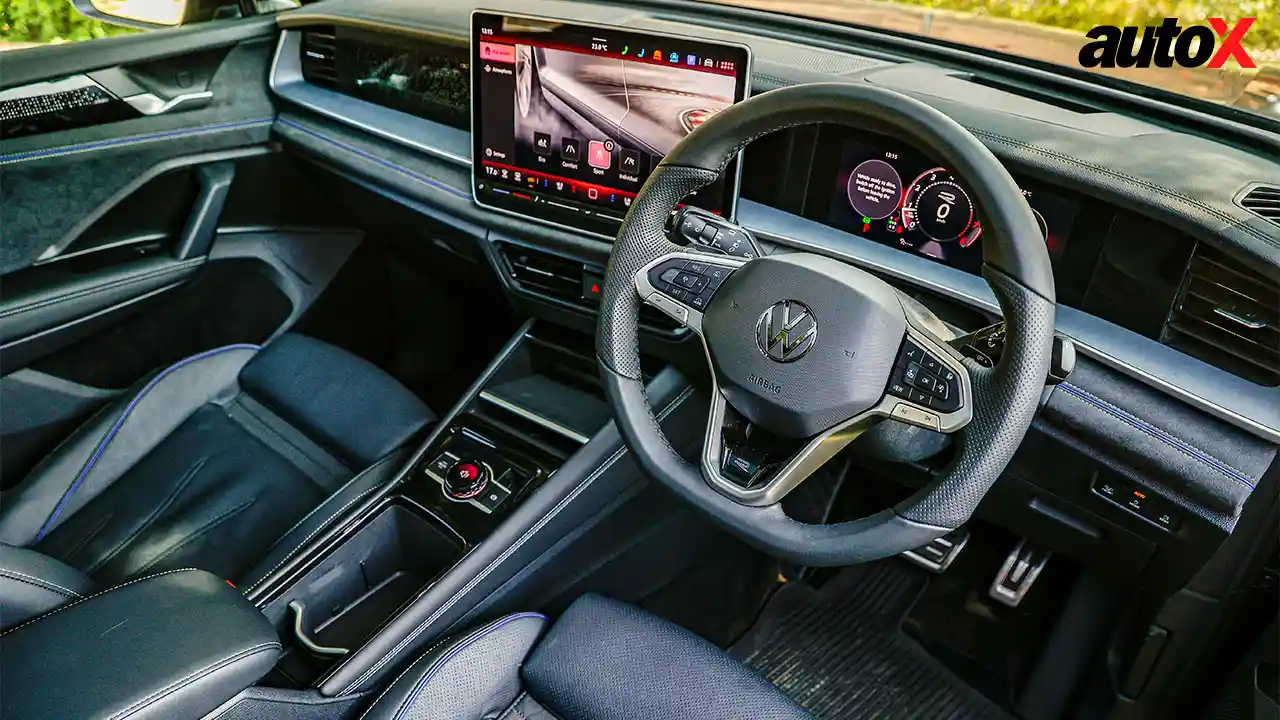
What’s less impressive is the heavy reliance on touch controls for most functions – not the most intuitive setup on the move. The all-black theme feels premium but also makes the cabin feel a bit closed in.
In terms of creature comforts, VW has clearly learned from the Tiguan R-Line’s shortcomings and has loaded the Tayron to the gills.
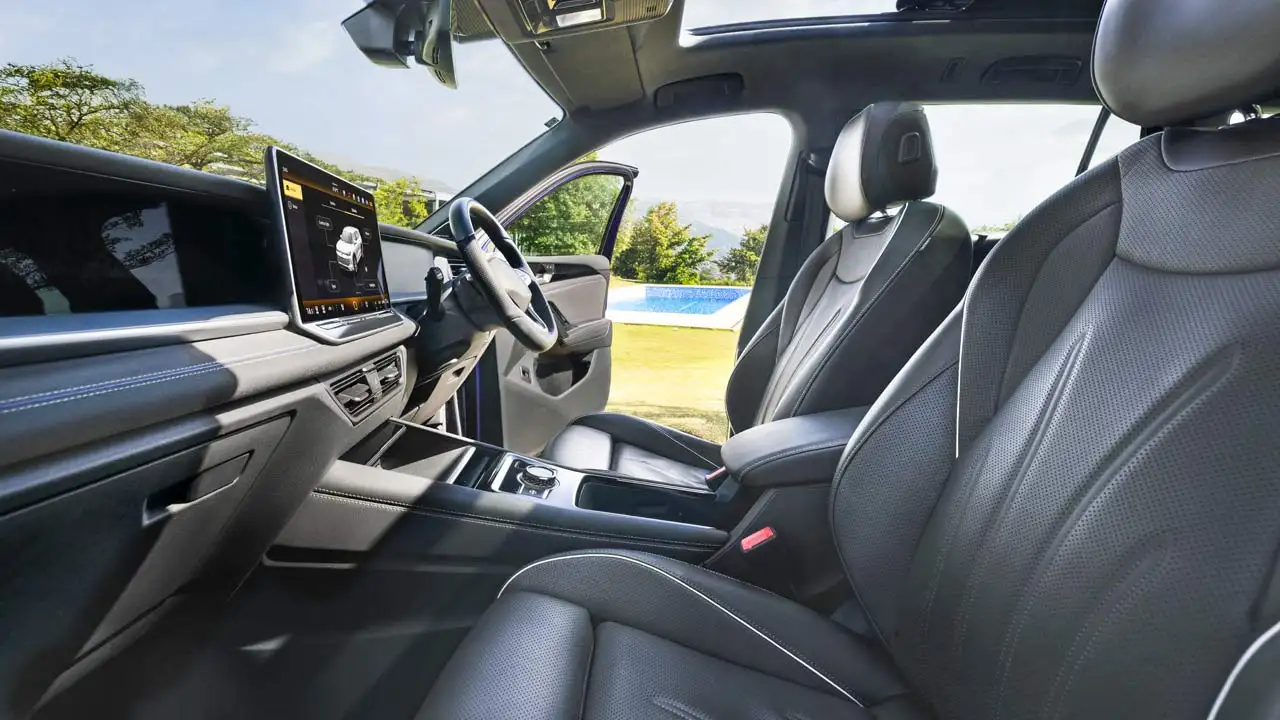
Heated, and ventilated front seats with massage function, heated steering wheel, 12-way electric front seats with memory function for the driver, large panoramic sunroof, Level 2 ADAS, ambient lighting, extendable under-thigh support for front seats, 3-zone climate control, gesture-controlled tailgate, 700W Harman Kardon sound system, and more are now part of the standard kit.
Volkswagen Tayron R-Line Comfort and Practicality
On paper, the Tayron’s headline USP is the third row. In reality, like the old Tiguan AllSpace, this is a 5+2, not a true 7-seater. The third row is tight.
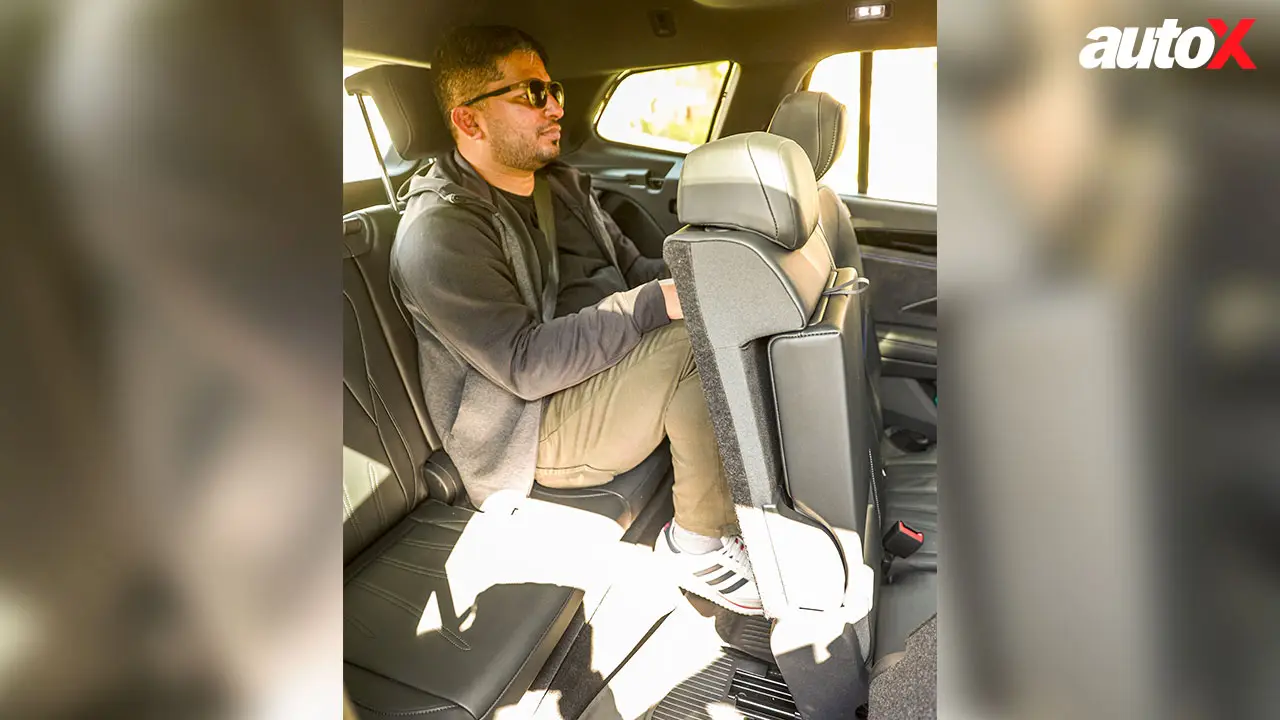
Anyone an inch above 5 ft. will struggle, and the lack of a one-touch tumble function makes accessing the third row hard work. The dark interior doesn’t help either. This set of seats is best reserved for short city runs or kids. The second row, however, is far more accommodating. There’s generous legroom, good under-thigh support, and enough space for adults on long drives.
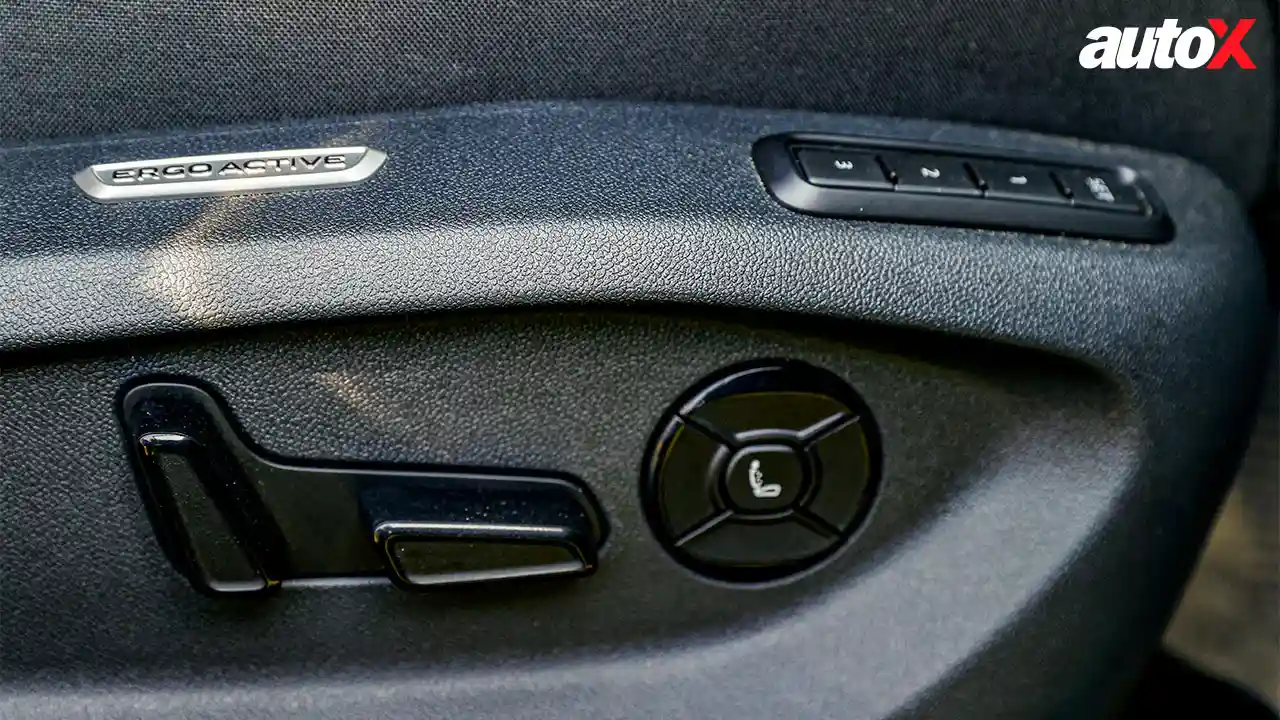
Rear occupants also get the essentials – 3-zone climate control, USB-C ports, and sun-blinds. The tall transmission tunnel will annoy the middle passenger, though.
Volkswagen Tayron R-Line Engine & Performance
Under the hood sits the familiar 2.0-litre turbo-petrol producing 201bhp and 320Nm, paired with a 7-speed DSG and AWD.
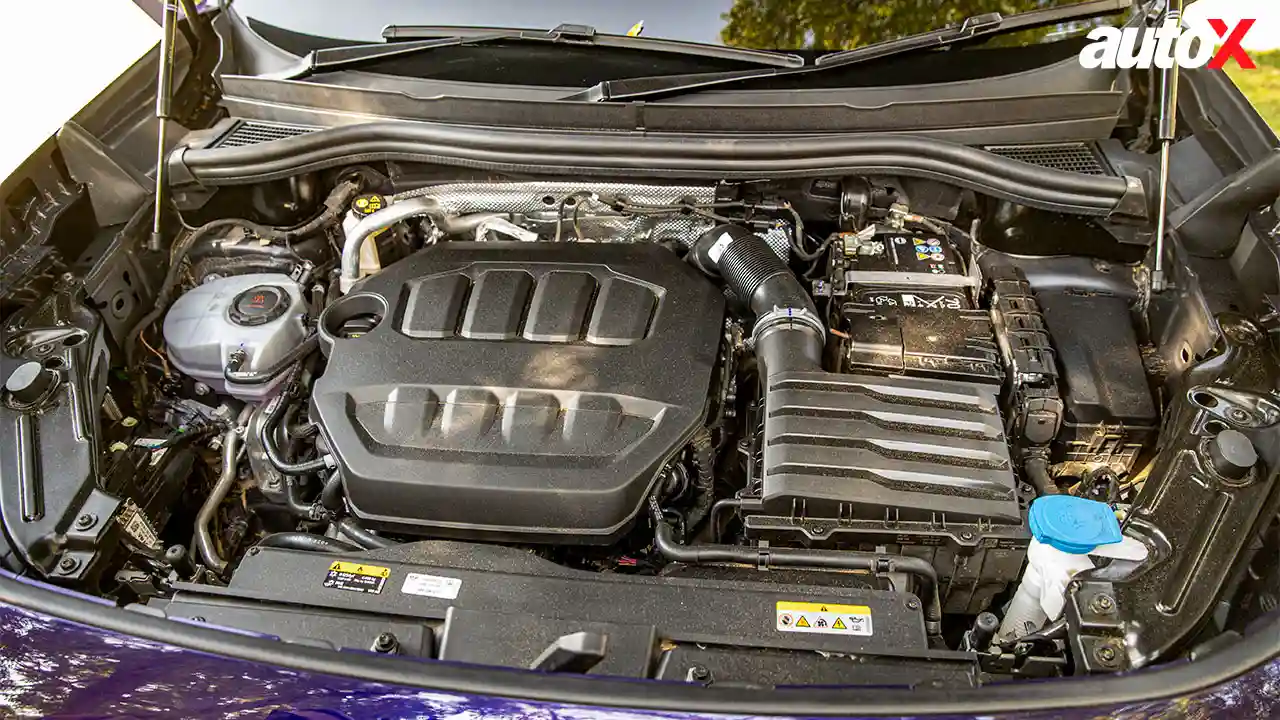
This engine is classic VW – refined, eager, and free-revving. It pulls strongly through the low and mid-range, and when pushed, it races to the redline without strain, accompanied by a raspy induction note. The DSG complements it beautifully with quick, smooth shifts and little gear hunting.
Performance is brisk. 0–100km/h comes up in 7.3 seconds, and if you keep your right foot planted to the floor, it’ll reach a top speed of 224km/h, provided you find a road long enough.
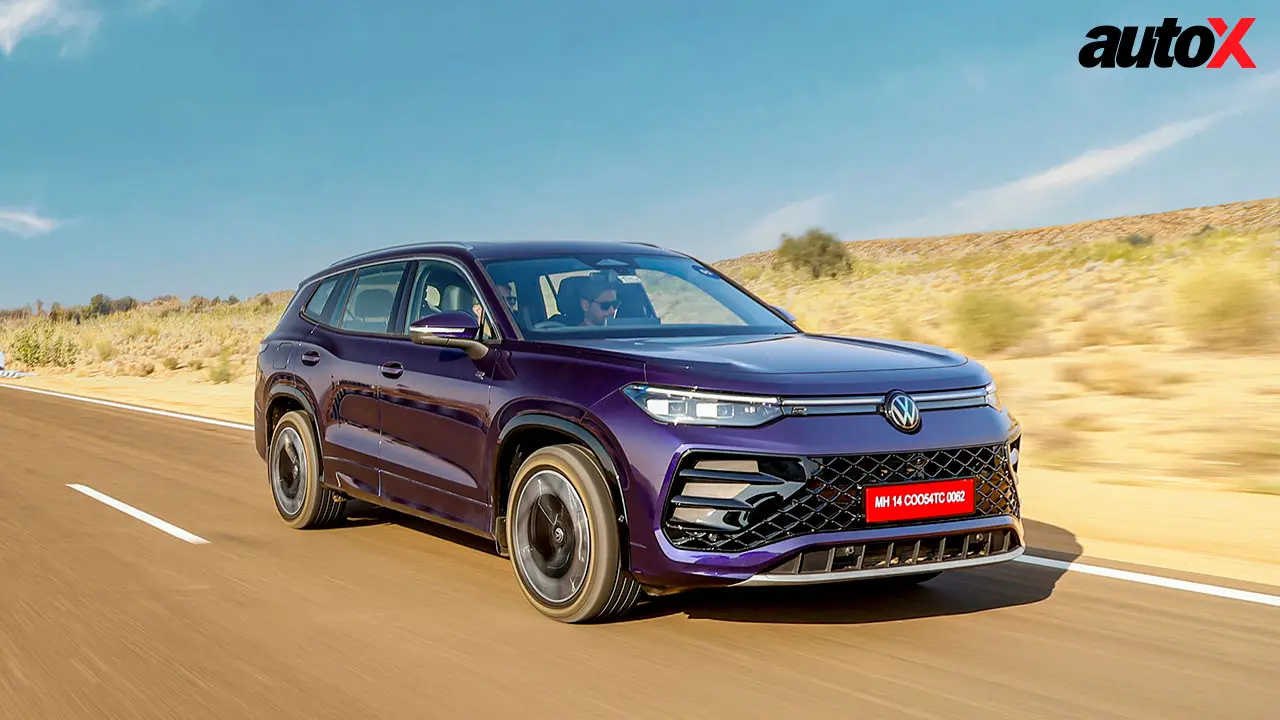
The downside? Fuel efficiency. If you see double-digit km/l figures, treat it as a personal achievement. A diesel in this application is sorely missed.
A big improvement over the Tiguan R-Line is ride quality. The suspension has been retuned for Indian conditions, and it shows. Low-speed ride is far more forgiving, while high-speed composure remains excellent. The Kodiaq still feels a touch more supple, but the Tayron is no longer brittle. The secondary ride can feel slightly choppy over rough patches, though. Where the Tayron really shines is handling.
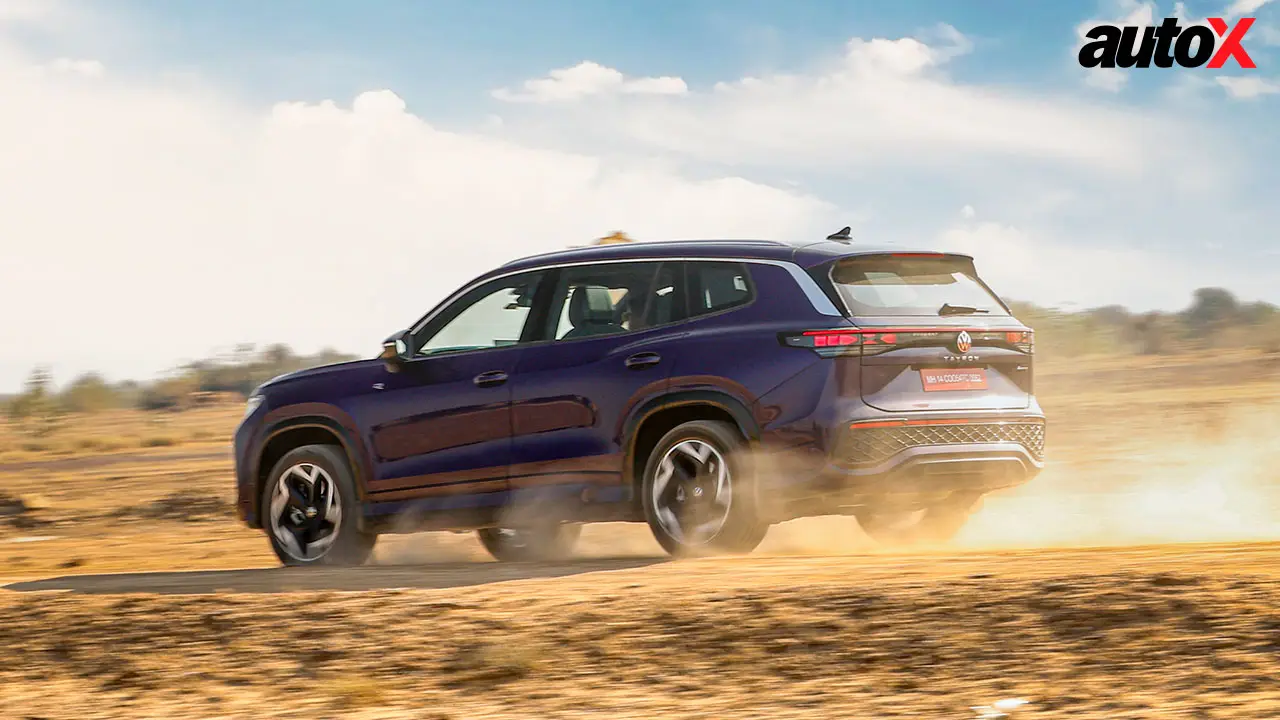
It feels taut, responsive, and remarkably agile for its size. Body control is excellent, grip levels are high, and it shrinks around you when you start driving enthusiastically.
VW has managed to retain the Tiguan R-Line’s dynamic character while adding more space and comfort – quite impressive. That said, DCC or adaptive dampers aren’t being offered in India. Not a dealbreaker per se, but would have been nice to get an extra layer of adjustability.
Volkswagen Tayron R-Line Verdict
Volkswagen hasn’t announced prices yet, but since it’s locally assembled, expect a sticker of just under Rs 50 lakh (ex-showroom). At that price, its main rivals will be the Kodiaq and the Fortuner. Compared to the Kodiaq, the Tayron feels more modern, gets extra features, and is the more engaging SUV to drive. Against the Fortuner, it loses out on brand image, a diesel engine, and Toyota’s bulletproof reputation.
But, on the flip side, it doesn’t drive like a boat or ride like a truck, and doesn’t feel a decade old inside. So, unless you’re planning a future in politics – where a Fortuner is practically a uniform – there’s very little objective reason to pick it over the Tayron. For the upper-middle-class buyer stuck in automotive limbo, the Tayron R-Line might just be the sweet spot.
Engine: 1,984cc 4-Cylinder
Transmission: 7-Speed DCT AWD
Power: 201bhp
Torque: 320Nm
Fuel: Petrol
Price: TBA
X-Factor: Hatchback-like driving dynamics, sedan-like comfort, and SUV-like practicality. The Tayron R-Line has it all!
|
Pros |
Cons |