Volvo EX30 First Drive Review: Style over substance?
Volvo’s most-affordable luxury EV has arrived in style, but has it got the substance to go the distance? We drive it to find out.
By Shivank Bhatt
Photography By Sunil Chauhan

There was a time when electric vehicles had that certain X-factor, but with the recent onslaught of EVs coming from virtually all corners of the world, they have lost some of that charm. The problem is, they all look, feel, and to a great extent, drive the same. Otherworldly appearances, tech-laden cabins, and insane straight line speeds – it’s a common theme with all EVs. Truth be told, it’s becoming more and more difficult to distinguish one EV from another when it comes to their personalities.

So, if a car brand wants to set itself or its EV apart, they have to think out-of-the-box. Most manufacturers are well and truly on that path, including Volvo. Its latest EV, the EX30, is a brand-new product that is made entirely from the ground-up, and it claims to offer a new take on how Volvo or its EVs are perceived. But the question remains – does it have that extra something to stand out from the sea of EVs out there?
Volvo EX30: Design & Styling
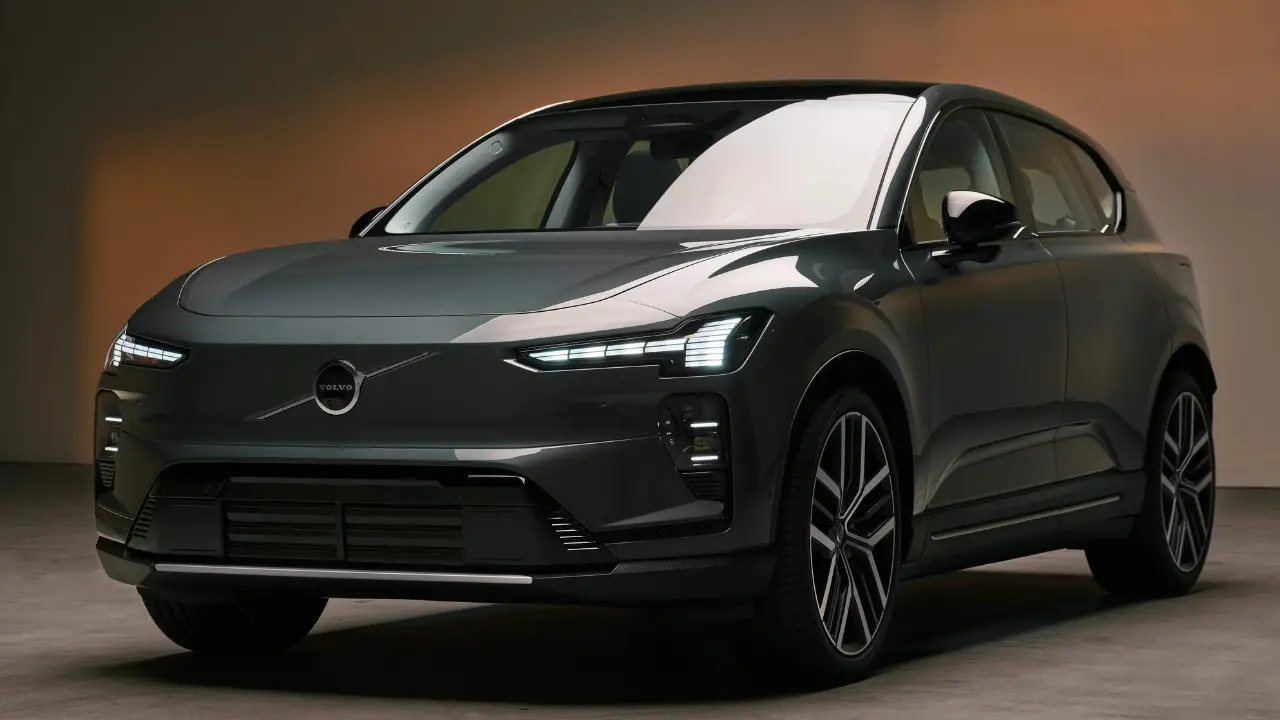
The EX30 is a compact-SUV EV and it’s going to be the most affordable offering by Volvo in the country, as and when its prices are announced. At first glance, it may look more like a hatchback than a compact SUV, but if you come to think of it, that’s not a criticism. Its proportions are tight and athletic, giving it a modern stance that balances tradition with futuristic appeal.

Signature Thor’s Hammer LED headlamps, split tail-lamps, and the clean surfacing are classic Volvo touches. And those 19-inch aero wheels add a sporty edge. The overall design is going to be one of the strongest reasons customers, especially the young crowd, will be drawn to it.
Volvo EX30: Performance & Range
For India, the EX30 comes in a single variant featuring a 69kWh battery pack powering a rear-mounted electric motor. This setup produces 268bhp and 343Nm, enabling a 0–100km/h sprint in just 5.3 seconds and a top speed of 180km/h.

On the road, the EX30 feels quick yet composed. It doesn’t have the neck-snapping acceleration of the twin-motor EX40, but it’s far from boring. The acceleration is brisk, and it doesn’t taper off even when you’re doing triple digit speeds. Refinement levels are excellent, and performance is effortless across all conditions. Volvo claims a 480km range on the WLTP cycle. In the real world, you can expect around 350–380km per charge, which should be more than adequate for daily use.
Volvo EX30: Ride & Handling
What impressed me the most about the EX30 is its ride quality. On rough and uneven roads, the suspension absorbed bumps confidently without unsettling the cabin. The ride is firm, but never uncomfortable, and even big potholes only make themselves felt at low speeds.

Handling is equally commendable. Despite being a heavy EV, the EX30 remains stable and composed through corners. Grip levels are impressive, and while the steering feels somewhat vague and lifeless, it still responds faithfully to inputs. Again, it won’t set your heart racing, but on a daily basis, it will keep you entertained.
Volvo EX30: Interior, Features, & Safety
Inside, the EX30 follows a minimalistic approach, in line with Volvo’s design philosophy. The cabin feels airy and clean, with clever storage solutions and high levels of comfort up front. The electrically adjustable front seats offer excellent support and space. Technology and safety are big highlights.

Level 2 ADAS comes standard, with multiple cameras, radars, and sensors. A 12.3-inch touchscreen powered by Google integrates wireless Apple CarPlay. Premium Harman Kardon audio, digital key, panoramic moonroof, and dual-zone climate control are all included.
Volvo EX30: It's not perfect though…
As good as the EX30 is, it has its share of oddities. Like many modern EVs, physical controls are almost entirely gone. Even basic functions like ORVM adjustments and the speedometer are buried in menus. Thankfully, though, the interface is intuitive.

Among other irritations, there isn’t a physical key fob offered; instead Volvo provides only an NFC card or smartphone app. During our test, we only had the NFC card, which meant we had to swipe it every time to lock and unlock the vehicle – yes, there’s no keyless functionality either!But that’s not where it ends. You also need to put the NFC card at a designated space, next to the wireless charger, to turn the ignition on – all the time! So, essentially, there’s no keyless start/stop either. What’s more, in the name of minimalism, Volvo had made the cabin a little too quirky and impractical. For example, the power window switches have been moved from the doors to the centre console, while the glove box is tucked below the dashboard and can only be accessed from the touchscreen. And, lastly, there’s no driver display. All the information, including the speed, range, etc., is relayed through the touchscreen. You kind of feel that Volvo has gone a little too far…

And, lastly, the rear seat experience – it is this Volvo’s Achilles Heel. The raised floor compromises legroom and knee room, forcing passengers into a knees-up position. For longer journeys, this will be uncomfortable.
Verdict
The biggest strength of the EX30 is going to be its pricing. Expected to fall between ₹35–40 lakh ex-showroom, it will not only be the most affordable Volvo, but also the most affordable luxury car in India. If Volvo can manage an on-road price in the ₹42–45 lakh range, the EX30 will become an extremely tempting proposition.

On the whole, the Volvo EX30 is a stylish, feature-rich, and fun-to-drive luxury EV. It’s perfect for young buyers or couples looking for their first premium electric car. However, if you’re after practicality and family-friendly space, you may want to look elsewhere…
Battery / Motor: 69kWh / Single Motor
Transmission: Single-Speed RWD
Power: 268bhp
Torque: 340Nm
Range: 480km (claimed)
Price: TBA
X-Factor: With its stylish design & quirky interior, the EX30 could well become the go-to luxury EV for first-time buyers.
|
Pros |
Cons |


-1758801388315.webp "2026 Volvo EX90 Upgrades to 800-Volt System for Faster Charging")


