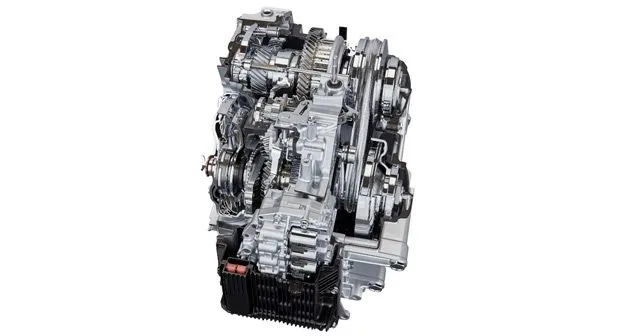
Torque Converter Transmission explained
The torque converter is the most common type of automatic transmission in the world of passenger cars. Find out how it works in the full story below. In torque converter transmissions, the flywheel of a car that transmits the power from the engine to the transmission.
By Abhishek Chaliha

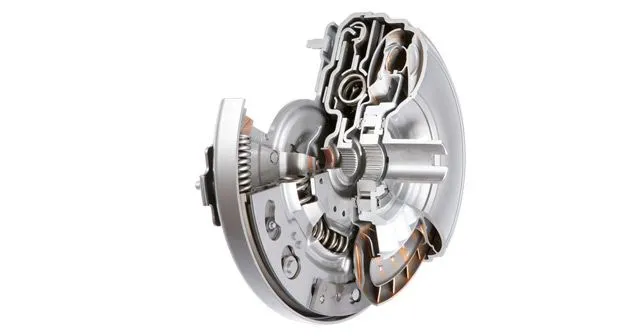
The torque converter is the most common type of automatic transmission in the world of passenger cars. Find out how it works in the full story below.
In torque converter transmissions, the flywheel of a car that transmits the power from the engine to the transmission is connected to the housing of the torque converter that works on the principle of fluid coupling. The side of the torque converter that is connected to the flywheel has an impeller located on the inside of the housing. As the engine’s crankshaft sends rotational power to the flywheel via the input shaft, the input shaft, in turn, rotates the impeller of the torque converter gearbox. The impeller is filled with a fluid and has curved blades that begin to spin. As a result, centrifugal forces cause the fluid to be spun outward from the impeller. The faster the impeller rotates, the higher the centrifugal forces, the faster the fluid spins. The fluid being flung outwards is sent to the opposite side housing of the torque converter where it comes in contact with a turbine. The turbine’s blades are curved in such a way that the fluid causes it to spin in the opposite direction. It’s worth mentioning that the impeller spins at a faster rate than the turbine at initial speeds owing to energy losses due to fluid coupling.
The turbine’s rotational energy forces the fluid to its centre from where it is expelled back towards the impeller. In the centre between the turbine and impeller is a stator. The stator has an aggressive blade design that almost entirely causes the fluid’s flow from the turbine to be reversed as it passes through its fins. The result is a multiplication of torque as the fluid flows back more slowly towards the impeller. A one-way clutch connecting the stator to a shaft going into the transmission of the car ensures that the stator can only rotate in the required direction.
The end result is that this ensures that the fluid being expelled by the stator is now rotating in the direction of the impeller which is being powered by the engine. This allows the cyclical operation of the torque converter to continue.
As the vehicle approaches a certain speed, the turbine speeds up and reaches about 90 per cent of the speed of the impeller. At this point, torque multiplication has ceased. Modern torque converters come with a lockup clutch which at this point locks the turbine to the impeller. This eliminates losses associated in the fluid coupling mechanism, resulting in better fuel efficiency.
However, at slower speeds, energy losses associated with fluid coupling ensure that torque converter automatic transmission cars have lower fuel efficiency than their manual counterparts.
Torque converter gearbox modes
P – Park
R – Reverse
N – Neutral
D – Drive
Older cars that did not come with tiptronic modes for manual shifts had L2 and L1 modes to lock the transmission in 2nd or 1st gear, respectively. This allowed drivers to scale steep inclines with more torque and use engine braking while going downhill.
L2 – Locks the transmission in 2nd gear
L1 – Locks the transmission in 1st gear