Apex Track Day with Ducati Panigale V4 S
Riding a 200+bhp Italian supersport missile at the BIC is a wild rodeo, but the Panigale’s electronics magic gives you the confidence to tame this beast.
By Karan Mathur
Photography By Team autoX

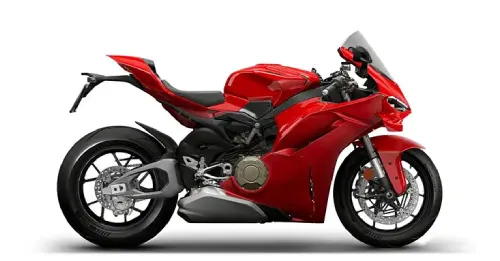
There are fast superbikes, and then there is the Ducati Panigale V4 S. If the BMW S1000RR is a ludicrously fast-firing machine gun, the Panigale is a radar-guided cruise missile. It’s a machine built with a singular, terrifying purpose: to decimate a racetrack. So, when Ducati India and Apex Racing Academy invite you to an open track session at the Buddh International Circuit, you don’t just say yes—you count your lucky stars, panic, have a mid-life crisis, say a quick prayer, and then, say HELL yes!

The BIC’s 1.3-kilometre back straight is a formidable challenge, a stretch of tarmac where superbikes flirt with speeds over 300km/h. Hitting that speed is the easy part; surviving the braking zone into turn 4 is what separates heroes from hospital bills.
Also Read: Ducati Panigale V4 S: Performance Bike of the Year 2025
This is where Apex Racing Academy comes in. They are not just track day hosts; they are professional racing instructors, ex-national champions who teach you the fine art of staying alive. Their system is tiered, from the GP4 group for newcomers to the GP1 for seasoned pros. I was placed in GP2, a fast group with experienced racers all clocking serious 2:05-2:10 lap times. My mission? To keep up. My secret weapon? The Panigale.

The latest Panigale V4 S is a paradox. It has been made friendlier, easier to ride, and even roomier. Yet, it has lost none of the raw, violent power that defines it. If anything, it’s even better. The heart is the 1,103cc Desmosedici Stradale V4 engine, and our test bike, breathing through a full Akrapovič titanium race exhaust, unleashes a staggering 228bhp. But while the old Panigale was a wild beast, this new one is a tamed monster.
Also Read: Ducati Panigale V2 vs Panigale V4
The magic lies in an electronics suite that tends to defy physics. The Ducati Wheelie Control (DWC), Ducati Slide Control (DSC), and Engine Brake Control (EBC) work so seamlessly in the background that the bike allows you to start riding faster, braking later, and throttling-out harder within just a few laps of getting familiar. It’s a digital safety net that gives you the bravery to ride beyond your skill level, and trust that the bike will take care of you.

This confidence is amplified by the hardware. The bike is built around a lighter, stiffer front frame, and that beautiful, hollowed-out double-sided swingarm. The S-model features the Öhlins Smart EC 2.0 electronic suspension, which actively stiffens the front USD forks under braking and firms up the rear shock on acceleration. This active management is what allows you to trail-brake into C1 from 250km/h with confidence-inspiring stability.
Also Read: 2025 Ducati Panigale V4 S Lineup Updated
And then, there are the brakes. The Brembo race-spec calipers are simply on another level. They are absolutely fantastic, with control and feedback like you’ve never experienced before. On the back straight, crossing 300km/h on every lap, I could wait until after the 150-metre board to brake EVERY TIME, and the bike just shed speed with precise control and zero drama.

That is the Panigale’s genius. It’s a bike that made me faster than I am, a 200+bhp monster that feels as agile as a middleweight. But a machine this potent is useless, even dangerous, without the right environment. That is where the genius of Apex Racing Academy comes in. They provided a professional and safe ecosystem to explore the Panigale’s limits. Their expert instructors and well managed open track sessions are what transform a terrifyingly fast motorcycle into a truly transcendent, confidence-inspiring experience. The Panigale V4 S is arguably the greatest superbike on sale today, but it’s organizations like Apex Racing Academy that give us the keys to unlock its potential.
-1768977117521.webp "Ducati Panigale V4 Tricolore Launched at Rs 77 Lakh in India")


