Tata Motors: Beyond Aesthetics, How Auto Designers Fuse Safety and Design in Vehicle Renders
"Along with making sure that their car designs are aesthetically beautiful, designers are increasingly ensuring that their renders are smart and provide the liberty of equipping the production-ready version with the latest safety measures," writes Martin Uhlarik, Design Head at Tata Motors.
By Martin Uhlarik


The art of car designing has changed significantly since the early 20th century when they were merely four wheels fastened to a body with an engine. The time when cars looked like they were designed with a measuring scale has long since passed. Not just supercars, which are evocatively designed, but even modern commuter vehicles have started featuring stunning designs. Along with making sure that their car designs are aesthetically beautiful, designers are increasingly ensuring that their renders are smart and provide the liberty of equipping the production-ready version with the latest safety measures.
Road safety authorities across the globe have mandated several safety measures that new vehicles are expected to come equipped with. That is a challenge auto designers face frequently with ever-changing safety regulations. Hence, they work in order to meet these requirements by employing both active and passive safety measures in their design representations. With the help of cutting-edge futuristic design technologies, auto designers manage to embody these measures into their renders. These efforts lead to the creation of fantastic-looking vehicles that are also equipped with safety features to avert accidents and reduce their effects.
Incorporation of Active Safety Measures
Modern automotive design technology has advanced significantly to the extent where a variety of tools are available to assist designers in creating the safest vehicles possible. Many collision avoidance technologies are available in modern vehicles, including blind-spot recognition, lane departure warning, and forward collision warning. To achieve precise identification and timely warnings, auto designers mimic these systems in their renders using sensor fusion, machine learning, and computer vision techniques.

Electronic stability control (ESC) is a crucial active safety mechanism that helps keep a vehicle stable and under control, particularly during rapid manoeuvres or traction loss. To ensure ESC's optimal operation and responsiveness, auto designers integrate it into their designs using computer simulations and modelling techniques.
Another important safety feature is Anti-lock Braking System (ABS), which considerably aids in minimizing wheel lock-up during emergency braking, allowing drivers to maintain steering control. Through the use of complex algorithms, sensor technologies, and advanced braking systems, auto designers incorporate ABS into their renderings.
Since passengers spend most of their time inside cars, interiors are intentionally designed with a variety of safety features and improvements. The use of straightforward user interfaces by the designers reflects the relationship between the driver and the vehicle's active safety features. The designers also make use of a variety of features like driver aid displays, safety alerts, and feedback mechanisms to make sure that the driver is aware of potential hazards and can make informed judgements in the road-ready vehicle.
Also Watch: Tata Sierra EV is pure, like an Apple product - Martin Uhlarik, Tata Motors
Prioritizing Passive Safety Measures in Car Designing
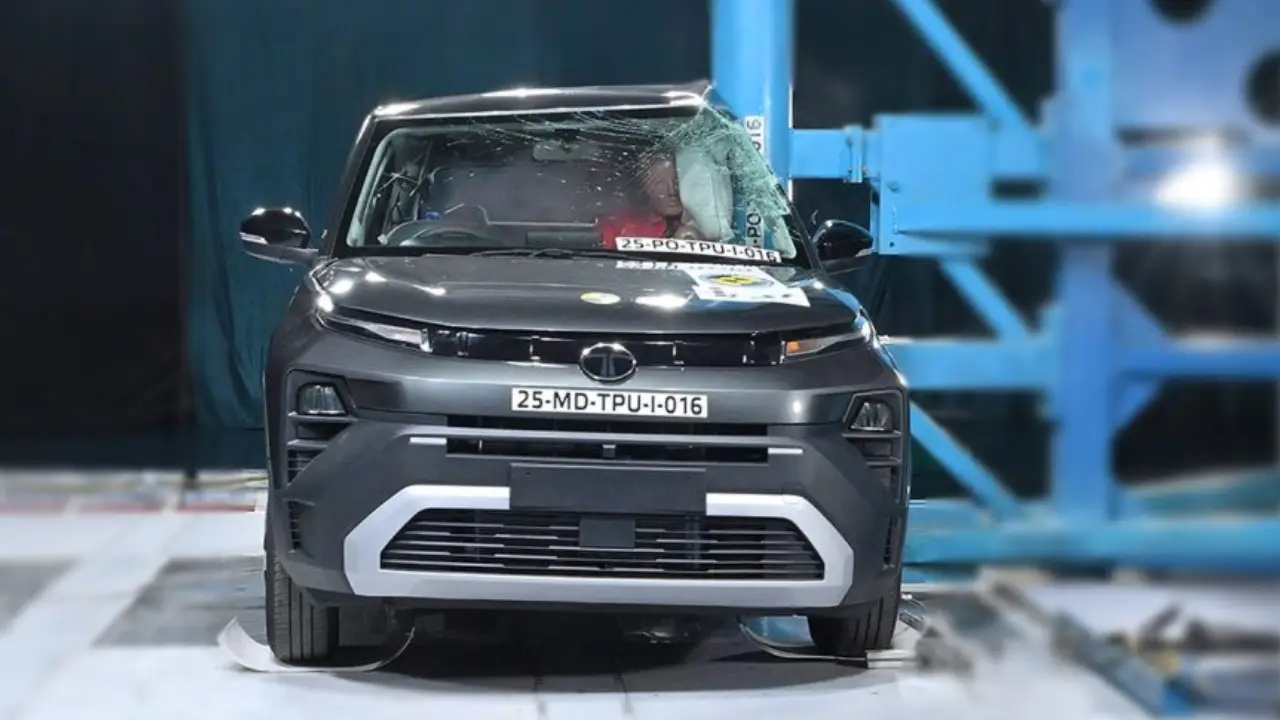
Passive safety measures focus on minimizing injuries to occupants during a collision. Auto designers utilize advanced materials, such as high-strength steel, aluminium alloys, and composites, to enhance the crashworthiness of the vehicle's structure. They employ finite element analysis (FEA) and virtual crash simulations to optimize structural integrity and occupant protection.
Seat belts, airbags, and head restraints are key components of occupant restraint systems. Auto designers consider the placement, deployment characteristics, and compatibility of these systems in the renders. They employ computer-aided design (CAD) and virtual prototyping to ensure proper integration and functionality.
In recent years, auto designers have focused on pedestrian safety by incorporating design elements that mitigate injuries in the event of a collision. They utilize advanced pedestrian impact analysis tools to assess and optimize vehicle front-end designs, incorporating energy-absorbing structures and pedestrian-friendly features.
Also Read: Upcoming Tata Electric SUVs in India: Punch, Harrier and More
The Road Ahead
Customers in India are becoming more safety conscious and are opting for sturdy vehicles that are certified with the coveted 5-star Global NCAP safety rating. Hence, having safety features in cars has transformed from being an option to a necessity. This is further complimented by the regulations set in place by authorities. With the markets maturing and choices evolving, auto designing is becoming more dynamic and futuristic globally. Technology will continue to play a vital role in assessing the trends in the safety space and curating solutions accordingly. As auto designing continues to evolve, this process will continue to prioritize safety, striving to achieve new levels of protection for all road users.
The above article is worded by Mr. Martin Uhlarik, Design Head at Tata Motors, currently heading design across the UK, Italy, and India. He joined Tata Motors in 2016 and has since spearheaded many concept and production programmes including the 45X Concept (now Altroz), the Sierra Concept, Altroz EV, as well as the HBX (now Punch).