Maruti Suzuki Baleno
The Maruti Baleno is a premium hatchback providing a smooth drive and high fuel efficiency. It features a large touchscreen, a head-up display, good boot space, and multiple safety features. It Read More


Maruti Suzuki Baleno Features and Specifications
The Maruti Suzuki Baleno is a 5-seater car with a wheelbase of 2520 and a ground clearance of 170 mm. It comes with manual and automatic transmission options. Different variants include different transmission types and fuel compatibilities.
 Engine1197
 Torque113 Nm @ 4400 rpm
 Mileage22.35
 Power88 bhp @ 6000 rpm
 TransmissionManual
 FuelPetrol
Maruti Suzuki Baleno Latest Updates
Maruti plans to update its well-selling Baleno hatchback. The launch of the Beleno Facelift is likely to happen in April-May 2026.
Maruti Suzuki Baleno topped car sales in India in December 2025 with over 22000 units.
Maruti Suzuki Baleno Price
Maruti Suzuki Baleno is available in 9 variants – the base model is and the top model is
Maruti Suzuki's Baleno was recently updated and launched for its 2022 variant. The new and improved Maruti Suzuki Baleno received significant updates to the exterior, while also getting changes inside. Mechanically, the Baleno received significant engine updates as well. Although the new Baleno looks a lot like its predecessor, it's an all-new update for 2022. Read on for more information on Maruti Suzuki's Baleno 2022.
Baleno Engine & Performance
Maruti Suzuki Baleno Colour Options
Maruti Suzuki Baleno is available in 7 different colors namely Nexa Blue, Splendid Silver, Opulent Red, Grandeur Grey, Arctic White, Luxe Beige, Pearl Midnight Black.
- Nexa Blue
- Splendid Silver
- Opulent Red
- Grandeur Grey
- Arctic White
- Luxe Beige
- Pearl Midnight Black
How is the Baleno?
 Pros
Pros
-
Strong fuel-efficiency - 22–23 km/l
-
Spacious cabin & boot
-
Large infotainment screen, connected-car tech, 6-airbags in some variants, HUD etc.
-
Strong after-sales/service network & resale value
-
Good everyday usability for families/city use
 Cons
Cons
-
Limited engine/variant options
-
Automatic transmission (AMT) not very refined
-
Missing some “premium” features
-
Comfort/rigidity trade-offs and some safety/build concerns
Maruti Suzuki Baleno Expert Reviews

By Shivank Bhatt
2 Mar, 2022
The Maruti Suzuki Baleno is the undisputed king of premium hatchbacks when it comes to volumes. But with the arrival of the 2022 version, has the best-seller also become the best car in the segment? You may or may not be a fan of Maruti Suzuki or the Baleno, but facts are facts. With over one million units sold in just six years – nearly 15,000 units per month! – this premium hatchback is the absolute king of the hill. And in case you don’t already know, the Baleno is also the cash cow of Maruti Suzuki’s NEXA showrooms. Without it, Maruti’s premium chain of outlets would have been nowhere near as popular or successful as it is today. The case I’m trying to make here is that a lot is riding on the Baleno’s shoulders. So, after nearly half a decade of dominating the market, Maruti Suzuki has given its premium hatchback the most comprehensive update since its market launch in 2015. Why, you ask? Well because Maruti wants the Baleno to continue its reign at the top for another five years or more. Sure, the outgoing version was still flying off the shelves, but, then, Maruti Suzuki says that it’s targeting to achieve even higher monthly sales with the ‘new-age’ Baleno. In short, the company wants a bigger share of the premium hatchback pie, for its current market share of 25% seems to be no good for Maruti Suzuki's management. Now, if there’s one thing that we know, it’s that irrespective of how it feels from behind the wheel, the 2022 Baleno will continue to sell like hotcakes. However, if you are curious to know if the updates have made the Baleno an even better proposition than before, our first driving impressions should help. Is it an all-new model? A tricky question to answer. Maruti says that everything on this 2022 model is brand new, which means that it’s the second-generation model of the hatchback. However, when you take a closer look at the spec sheet, everything appears to be more or less the same. The overall dimensions are roughly the same, the wheelbase is identical at 2,520mm, the 1.2-litre K12N dual-jet engine develops the same power output and torque, and so on. On the surface, it does appear to be a heavy makeover of the outgoing version – and that’s the case indeed. The Baleno rides on the same Heartect platform, albeit it’s the fifth generation of the architecture. Similarly, a lot of effort has gone into strengthening the entire platform – the new model weighs around 30 – 40kgs more than earlier – and the suspension has been completely overhauled. The brakes are now bigger too. Similarly, the exterior and interior of the car have been revamped. In fact, Maruti claims that it has invested over ₹ 1,150 crores in this update! So, while it may seem like the same old Baleno with a nose job, there are a lot more changes under the skin. Upping the Ante While the overall silhouette and profile of the Baleno are largely unchanged, it looks remarkably more stylish and handsome now. There are a lot of design updates, and they are all very tastefully done. The front-end is flatter and wider, thanks to its new honeycomb-pattern grille, with a layer of chrome at its base, and a new pair of wraparound headlamps. The headlamps get LED projector lamps and a unique three-element LED Daytime Running Lamp pattern. The bumper is new, and it’s been sort of pushed back. There’s a subtle use of chrome on the front bumper, which also houses new projector LED foglamps. The side profile is unmistakable and the most unchanged. However, the design of the 16-inch alloy wheels is new, and the car has sharper and more prominent shoulder and character lines, as well as a chrome strip that runs at the base of the windows. At the back, you’ll find a new pair of C-shaped LED taillamps, a chrome strip, a new tailgate, and a re-profiled bumper. On the whole, the styling of the new Baleno makes the car look fresh and more premium now. Personally, I find the rear three-quarter design of the new Baleno to be the most attractive – it looks so sleek. Like the exterior, the cabin also gets comprehensive updates, including an all-new triple-layered dashboard layout. The top layer is black, followed by a metallic grey element in the middle, and the lower section is finished in light blue – in direct sunlight, however, it looks quite dark. The blue theme continues on the soft-touch door pads and seats. Surprisingly, even in the top-spec Alpha variants, the seats aren’t leatherette or ventilated. They do, however, offer more side support now. A sliding driver armrest has also been added for added comfort. The biggest update, however, is the new 9-inch Smartplay Pro+ touchscreen infotainment screen, which is brilliant to use. The touch response is crisp, and the interface is quite intuitive. It gets Android Auto and Apple CarPlay connectivity, albeit it’s not wireless. Plus, there is no physical knob or buttons for volume controls. On the upside, the AC vents and controls are new, and the buttons are chunky and easy to use. The flat-bottomed steering wheel is new for Baleno and comes directly from the Swift’s parts bin. On the tech front, the Baleno now comes loaded with some interesting features. The top-end variants get a 360-degree camera (which, surprisingly, is of good quality), a head-up display, auto-dimming IRVM, an Arkamys surround sound system, Alexa voice commands, cruise control, and more. But it still doesn’t get a sunroof. Overall, the cabin of the new Baleno now feels more upmarket and feature-rich. Having said that, the plastic quality in some areas, especially below eye level, is still not the best. As for the build quality, the car does feel a bit sturdier than before, especially its front doors. Same, same but SO different! Since Maruti Suzuki has bid farewell to diesel engines a long time ago, the Baleno continues to be powered by the 1.2-litre four-cylinder K Series engine. And, in this department, we have zero complaints, for this little wonder is a powerhouse. In fact, in our cover story last month, we rated it as the best petrol engine under 20 lakh rupees! As you’d expect, the new dual-jet engine is supremely refined. During cold starts, it does sound a little gruff, but it gets better and smoother as the operating temperature rises. It’s a rev-happy unit and loves to be redlined. The performance is brisk, and it picks up pace in a linear, albeit exciting, manner. It even produces sporty noises. The low-end is still slightly weak – during our drive in Goa, we struggled to keep up the momentum around some uphill corners in 2nd gear – but the mid-range is strong, and it responds really well to part-throttle inputs. At high revs, it does tend to run out of steam, but there’s no sudden loss of power or performance – it rather tapers off slowly. What’s more, you won’t mind working the gearbox because the 5-speed manual transmission has short, precise, and slick throws. Clubbed with a light clutch, the gearbox combo is simply effortless and makes driving this car a real joy. But if you are looking for an automatic, well, the CVT is now gone – instead, you get an AGS or automated manual transmission (AMT). We didn’t get to experience it during the drive, but we will soon get behind the wheel of one and bring you a report. All told, for a car of Baleno’s size, the 1.2-litre engine feels absolutely perfect. More so, because of its mild-hybrid tech, which results in some crazy fuel economy numbers. During our fuel efficiency tests previously, we managed to get nearly 21km/l from this engine in daily driving conditions. So, irrespective of the added weight, you can expect the new Baleno to be just as efficient, if not more. The moment you hold the steering wheel of the new Baleno and get going, you can immediately notice the difference from the previous model. The steering has more heft, and the car feels firm. However, on the move, the ride quality is superb – thanks to a super-stiff chassis and a reworked suspension setup, the Baleno drives and handles maturely. The car stays glued to the tarmac and around corners – there’s a lot of grip, with minimal body roll. The steering is sharper and offers more feel and feedback – it no longer feels like you’re holding a dead fish! In short, the new Baleno is one sweet-handling car. At the same time, it doesn’t make any real compromises in terms of comfort. The suspension soaks up bumps really well, and the Baleno’s ride quality is flat for the most part. At low speeds, you can say it’s a touch too firm compared to that of the old model. But, overall, I really like the new package. Safety Since safety is a hot topic, especially when it comes to Maruti Suzuki cars, we can’t wrap this review without discussing this aspect. According to the company, the new Baleno’s bodyshell has been heavily reinforced with extensive use of high-tensile steel for better crash test ratings. Not just that, the top-end Zeta and Alpha variants now get six airbags, while dual airbags are standard across the range. So, overall, the company has put in the effort to make it safer and sturdier. Whether it’ll be fruitful or not, only time (or GNCAP) will tell, but so far, it seems like a step in the right direction. Verdict Like I said in the beginning, whether you love or loathe the Baleno, it’ll have no bearing on its monthly sales. It’s a kind of product that will still largely sell for its name and not for what it offers as a product against its competition. However, with the arrival of the new Baleno, things have changed. Even if you take its (Maruti) Suzuki badging away, the new Baleno will still be a brilliant all-rounder – one that deserves your attention. As a premium hatchback, it’s got all the bases covered – performance, design, features, fuel economy, reliability, trust, and what not. And if that’s not enough, you simply can’t resist its tempting price tag. Overall, you can safely say that the Baleno has well and truly got the measure of its competition, yet again. And its sales will continue to soar, albeit at a much, much faster rate now. [tabs] [tab title="Maruti Suzuki Baleno "] Engine: 1,197cc / 4-Cylinder / Dual-Jet Transmission: 5-Speed Manual / Front-Wheel Drive Fuel: Petrol Power: 89bhp @ 6,000 rpm Torque: 113Nm @ 4,400 rpm Price: ₹8.99 Lakh (Ex-Showroom) X-Factor: With its premium features, improved dynamics, flawless powertrain, and great pricing, there’s no stopping the new Baleno from ruling the sales chart. Pros • Driving dynamics • Performance • Features Cons • Plastic quality [/tab] [/tabs] Also read, Maruti-Suzuki launches new Baleno for Rs 6.35 lakh

By Abhishek Chaliha
11 Aug, 2017
Just how much faster is the Baleno RS versus its less exotic, and more traditional, cousin? And what about braking and efficiency? We pit these siblings against each other to see exactly what separates one from the other. Ground Reality Think about this, ever since the market opened up in India we’ve seen a steady influx of new vehicles. Following the natural path of evolution, Indian cars today come with pretty much the same level of kit as their international counterparts – with features such as ABS, EBD, airbags, climate control systems, touchscreen infotainment systems, and more. However, when you look under the hood of a petrol car much of it goes back to the early 2000s – when the BS-II norms mandated that all cars had to be sold with fuel injection. And, with the exception of VW’s TSI models and Ford’s EcoBoost, every single mass-market petrol car in India today continues to be sold with indirect fuel injection – just like 15 years ago. So, in an era of ever evolving technology, where’s the evolution? You ask. https://www.youtube.com/watch?v=pXsi41uaR6E Well, the answer to that question lies in the fact that the multi-point fuel injection system for a petrol engine still happens to be the most fuel-efficient system around. And in the Indian market that matters more than anything else. But, is it finally time to cross over to the other side? Maruti Suzuki claims the Baleno RS consumes only a couple of decimal points more than the conventional 1.2 naturally aspirated model. However, those are ARAI standard test figures. And, as the world has found out the hard way, lab results for turbocharged engines are far from the ground reality. So, we decided to verify just how far apart these cars really are. And because we’ve a ‘hot hatch’ here, we decided to measure acceleration and braking too – to see just how much quicker the RS is over its more traditional sibling. Let the battle begin Now, most of us are quite familiar with the K Series engine range. And straight off the bat, I can tell you that both these engines are refined – but the 1.0 in the RS is exceedingly so. It’s so smooth and refined in its nature that you simply don’t believe that it’s actually a three-cylinder motor. But this Baleno 1.2 sounds strangely coarse at initial revs – something that isn’t the case with my long-term 1.2 Ignis. Get past initial revs, race past 3,000rpm, and the inspiring K Series soundtrack comes into play. I must admit that I love the free-revving nature of the 1.2 engine. In fact, it’s more responsive than any other competing 1.2 NA engine currently on the market. Power delivery is linear, and the engine pulls cleanly all the way to 6,000rpm – where it generates 83bhp. And since the limiter doesn’t cut in abruptly, you get the perfect opportunity to grab the next gear. This 1.2 motor is quite eager at the higher reaches of its rev band, where 115Nm of peak torque is delivered at 4,000rpm. In short, this engine would have had it all if it had better low-end response as well as more power at the top end. And this is exactly what the RS has been designed to address, with 150Nm of torque from as low as 1,700rpm – which stays constant all the way to 4,500rpm. However, by virtue of being turbocharged, the Baleno RS does suffer from a little bit of turbo lag under 1,700rpm. It’s something that you can overcome quite easily by keeping the engine on the boil, but after the effortless nature of the 1.2 this does require a bit more work with the gear lever. Once you get going though, there’s simply no looking back – as the 100bhp engine simply surges the car forward. Frankly, the difference in performance is immediate and quite stark. Combine this with the agile nature of the car, and what you have here is a car that is fully worthy of the hot hatch badge. Driving this car on a daily basis reveals just how fast it is in the real world, as you can pretty much dart past everyone else. However, I still wish the low speed response were a little better for stop-and-go traffic. Let’s talk numbers We lined both cars up on a closed road and strapped a V-Box data logger on them to see what’s what. As you can see from the results, the RS is not just faster on paper, but quite a bit faster in the real world as well – especially as the speeds increase. The cars only have a gap of 0.74 seconds in the 0-60km/h run, but as you go up to 100km/h, the gap widens to a significant 2.41 seconds. But the real highlight of the RS comes after you enter triple digit speeds – as indicated by a near 4-second gap in the 0-120 time. Out on the road, the RS will simply annihilate the 1.2 in an out-an-out max speed run. Both cars will do 160km/h in fourth gear, but while the 1.2 maxes out at 170km/h in fifth, the RS can reach 190km/h (indicated) with ease. I just wish it sounded a little bit more inspiring – at full chat, it’s a little too quiet and refined for my liking. Nevertheless, another area where the RS outshines its sibling is in the area of high-speed stability. Where the 1.2’s ride becomes a little choppy at high three-digit speeds, the RS stays absolutely planted. While the RS proves its mettle on the speed front, our braking test revealed that its rear disc setup (versus rear drums in the 1.2) barely reduce stopping distance at all. Now, coming to the final testing parameter – the ever-important efficiency figure. The answer was a predictable one – the 1.2 returned a figure of 12.77km/l over a 100-kilometre test distance, which didn’t include the performance runs. Meanwhile, the RS returned 10.75km/l over the same distance (and under similar driving conditions). Verdict The result is a predictable one. The more powerful RS is the faster car here. But you need to be operating the car at higher speeds to feel the difference and exploit its true potential. To drive around town, the 1.2 is a perfectly capable car, and is even a bit more comfortable with its light controls and linear power delivery. But if you’re looking for performance – in the city or on the highway – then the RS will truly outshine its more traditional sibling. The perfect combination, of course, would be the power of the RS (more power in fact), the free revving nature of the 1.2, and a more sonorous note than either. Now, if only wishes were horses – we’d all be riding! [tabs][tab title="Maruti Suzuki Baleno RS"] Engine: 998cc / 3-Cylinders / 12 Valves / DOHC / Turbocharged / Intercooled Fuel: Petrol Transmission: 5-Speed Manual / Front-Wheel Drive Power: 100bhp @ 5,500rpm Torque: 150Nm @ 1,700-4,500rpm Price: Rs.8.3 lakh (Ex-showroom, Delhi) Kerb weight: 950kgs X-Factor: Fast, good looking and fun to drive.[/tab] [tab title="Maruti Suzuki Baleno 1.2"] Engine: 1,197cc / 4-Cylinders / 16 valves / DOHC Fuel: Petrol Transmission: 5-Speed Manual / Front-Wheel Drive Power: 83bhp @ 6,000rpm Torque: 115Nm @ 4,000rpm Price: Rs.7.6 lakh (Ex-showroom, Delhi) Kerb Weight: 890kgs X-Factor: Agile, linear and will run forever. [/tab][/tabs] Also read- Maruti Suzuki Ignis AMT vs Nissan Micra CVT: Comparison


Maruti Suzuki Baleno Dealers in New Delhi
autoX has a list of 0 authorized Maruti Suzuki Baleno dealers in India. They provide servicing to all the Maruti Suzuki cars including the Baleno. Find here the contact information, full address, and Google map directions of the nearest dealer for your Baleno around you.


Compare Maruti Suzuki Baleno with Similar Cars
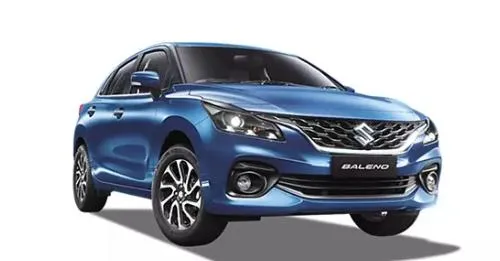
BalenoMaruti Suzuki
Ex-Showroom Price
₹ 5.99 Lakh
onwards
Engine
1197 - 1197 cc
Fuel Type
CNG / Petrol
Transmission
Automatic / Manual
Mileage
30 Kmpl
Power
88 bhp @ 6000 rpm
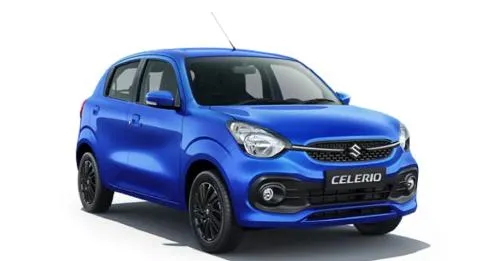
CelerioMaruti Suzuki
Ex-Showroom Price
₹ 4.70 Lakh
onwards
Engine
998 - 998 cc
Fuel Type
CNG / Petrol
Transmission
Automatic / Manual
Mileage
26 Kmpl
Power
66 bhp @ 5500 rpm

Wagon RMaruti Suzuki
Ex-Showroom Price
₹ 4.99 Lakh
onwards
Engine
998 - 1197 cc
Fuel Type
CNG / Petrol
Transmission
Automatic / Manual
Mileage
34 Kmpl
Power
81 bhp @ 6000 rpm
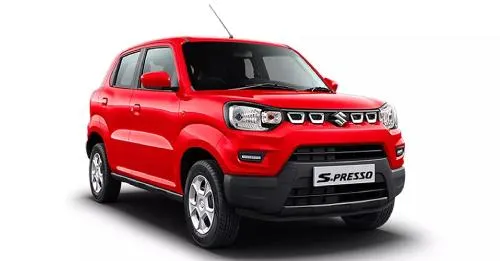
S-PressoMaruti Suzuki
Ex-Showroom Price
₹ 3.50 Lakh
onwards
Engine
998 - 998 cc
Fuel Type
CNG / Petrol
Transmission
AMT / Manual
Mileage
32 Kmpl
Power
66 bhp @ 5500 rpm
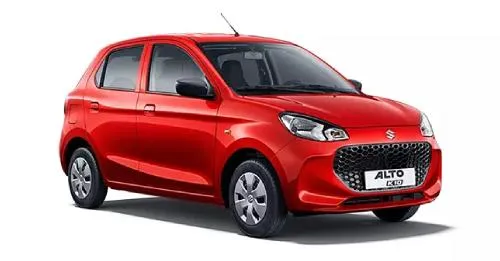
Alto K10Maruti Suzuki
Ex-Showroom Price
₹ 3.70 Lakh
onwards
Engine
998 - 998 cc
Fuel Type
CNG / Petrol
Transmission
Automatic (AMT) / Manual
Mileage
33 Kmpl
Power
66 bhp @ 5500 rpm
Maruti Suzuki Baleno Images

Maruti Suzuki Baleno Questions & Answers
Q: Which Baleno model is best to buy?-
Q: How many kilometers can the Maruti Suzuki Baleno run?+
Q: What are the features of the Maruti Suzuki Baleno?+
Q: How many airbags are in the Maruti Suzuki Baleno?+
Q: What are the safety features of the Maruti Suzuki Baleno?+
Top Maruti Suzuki Cars
Maruti Suzuki Baleno Price in India
| City | Ex-showroom Price |
|---|---|
| Bulandshahr | Rs. 5.99 Lakh onwards |
| Meerut | Rs. 5.99 Lakh onwards |
| Noida | Rs. 5.99 Lakh onwards |
| Ghaziabad | Rs. 5.99 Lakh onwards |
| Greater Noida | Rs. 5.99 Lakh onwards |
| Modinagar | Rs. 5.99 Lakh onwards |
Maruti Suzuki Baleno Brochure
Download the brochure to view detailed specs and features