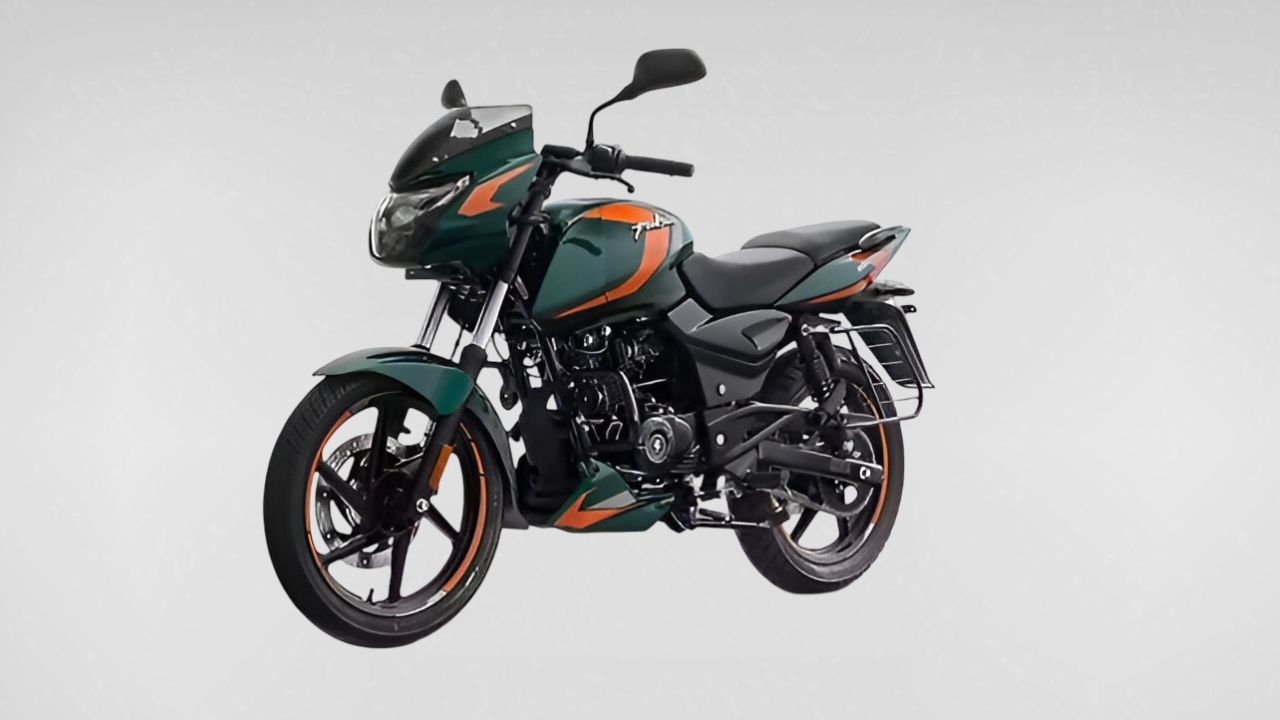
Bajaj Pulsar N150 Discontinued in India? Model Delisted from Website
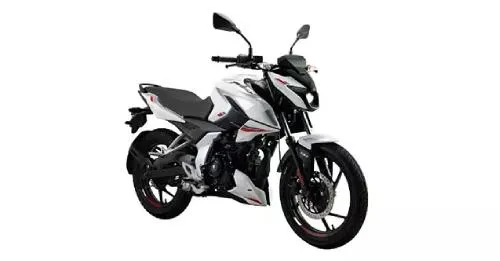
With the N150 no longer part of the range, the Bajaj Pulsar N series is now limited to just three models: N125, N160, and N250.
By Reetika Bhatt


Bajaj appears to have quietly withdrawn the Pulsar N150 from its official website, raising the possibility that the model has been phased out. Launched as a dynamic alternative to the Pulsar 150 and borrowing design cues from the N160, the N150 underwent a minor revision with updated colour schemes and a digital console offering optional Bluetooth connectivity. The bike was offered in two trims, a lower-spec variant without Bluetooth priced at Rs 1.25 lakh, and a feature-rich version at Rs 1.31 lakh (both prices, ex-showroom). Despite its 149.7cc engine producing 14.3bhp and 13.5Nm, the N150 never quite matched the success of its more powerful 160cc sibling. Bajaj has not issued a formal statement regarding its removal, leaving open the question of whether the model is discontinued for good or merely awaiting a future update.
Bajaj Pulsar N150: Key Specs
The now-removed Pulsar N150 came equipped with a 149.6cc single-cylinder engine tuned to deliver 14.5bhp at 8,500rpm and peak torque of 13.5Nm at 6,000rpm, performance figures identical to those of the Pulsar P150. This engine was coupled to a five-speed gearbox handling power delivery.
Also Read: 2025 Bajaj Pulsar NS400Z vs Royal Enfield Guerrilla 450 Spec Comparison: What's Different?
For ride and handling, it relied on 31mm front telescopic forks and dual rear shock absorbers. Braking hardware included a 260mm disc at the front and a 130mm drum setup at the rear. These components were paired with 17-inch alloy wheels fitted with MRF tyres – a 90/90 section up front and a 120/70 at the back.
With the N150 no longer part of the range, the Pulsar N series is now limited to just three models: N125, N160, and N250.
Other developments
Bajaj has recently introduced an updated version of the Pulsar NS400Z in India, now priced at Rs 1.92 lakh (ex-showroom). This refreshed model brings several mechanical and performance enhancements. It retains the familiar 373cc single-cylinder, liquid-cooled engine, but power output has been bumped up to 42.4bhp from the earlier 39.5bhp, while peak torque remains steady at 35Nm. The engine continues to be mated to a six-speed transmission. One of the standout additions is a bi-directional quickshifter, allowing for clutchless upshifts and downshifts.
Also Read: Bajaj Auto Reports 1% YoY Sales Growth in June 2025 with 3.60 Units
Tyre upgrades include a switch from the previous 140-section MRF Revz rear to a wider 150-section Apollo Alpha H1 tyre, promising better grip on both dry and wet surfaces. The front tyre, still a 110/70-R17 size, also transitions to an Apollo Alpha H1 unit. Additionally, braking performance has been improved with the replacement of organic brake pads by more responsive sintered pads.
-1768978468148.webp "2026 Bajaj Pulsar 125 Launched at Rs 89,910; Gets New LED Head Lamps and More")

-1768393796514.webp "New Bajaj Chetak C25 Launched at Rs 91,399; Claims 113 Km Range")