Hyundai Inster Gets 4-star Safety Rating from Euro NCAP: Watch Video
The Hyundai Inster micro e-SUV demonstrated good protection in Euro NCAP crash tests, scoring 70% for adult occupant safety and 81% for child occupant protection.
By Sanorita

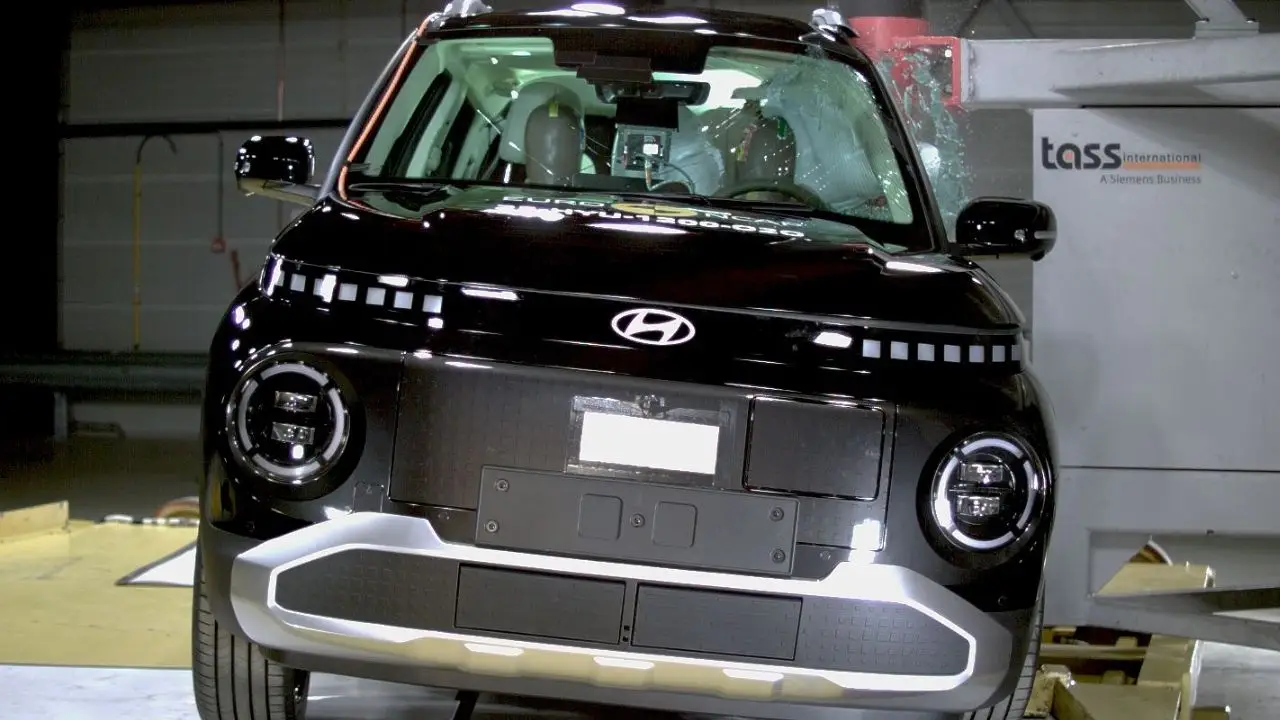
The Hyundai Inster has received a 4-star safety rating in the latest round of Euro NCAP crash tests. The micro e-SUV demonstrated good protection, scoring 70% for adult occupant safety and 81% for child occupant protection. It achieved 70% in the Vulnerable Road Users category and 67% in the Safety Assist assessment. Although Hyundai has yet to confirm, the Inster shows strong potential for India’s highly competitive SUV market. If launched there, it could become a serious contender against models like the Citroen eC3 (Rs 12.90 lakh) and Tata Punch EV (Rs 9.99 lakh).
Hyundai Inster: Euro NCAP Rating Explained
The micro SUV demonstrated mixed results in occupant protection during the frontal offset crash test. While the overall cabin remained intact, the airbag performance for the driver revealed a shortfall, specifically, the head bottomed out the airbag, compromising its cushioning effect and prompting a penalty. Chest protection was rated as only adequate because of the compression measurements on the test dummy. Despite these drawbacks, the car excelled in safeguarding the lower body, with strong protection for the knees and femurs of both front occupants. Hyundai further validated that this level of safety would be consistent across a range of occupant sizes and seating positions.
Test data from the deceleration of the impact trolley and post-test examination of the deformable barrier suggest that the SUV poses a lower risk to other vehicles in a frontal collision.
Also Read: World Car Awards 2025: Hyundai Inster, Casper Named Electric Vehicle of the Year
During the full-width rigid barrier crash test, the Hyundai car offered only marginal chest protection for both the driver and rear passenger, as indicated by compression data from the crash test dummies. In contrast, the vehicle performed notably better in the side barrier impact, where all vital body regions received good or adequate protection. However, the test revealed that the driver’s door became unlatched upon impact, leading to a score deduction. In the more demanding side pole test, rib compression data again pointed to marginal chest protection.
Additionally, the SUV showed weak control over occupant movement across the cabin during far-side impacts, highlighting room for improvement in managing body excursion.
The Inster features technology to reduce injuries between occupants during side impacts, with tests showing strong performance. However, due to the driver’s door opening in the side barrier test, the car couldn’t earn points for far-side protection. Whiplash protection was rated well for front seats, though rear seat performance was only marginal. The Inster also includes an advanced eCall system, post-crash impact prevention, and safety measures to aid occupant escape if the vehicle becomes submerged.
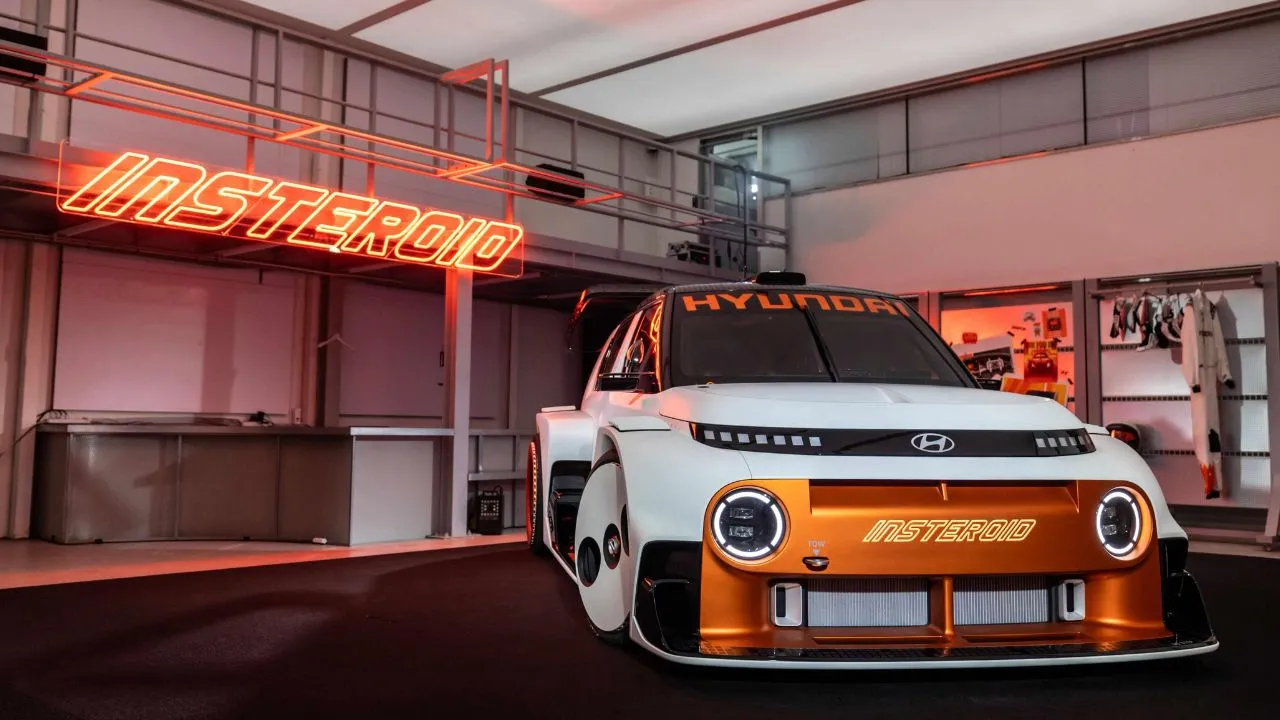
Also Read: Hyundai Inster-inspired Insteroid EV Marks Global Debut in Seoul
In the Child Protection, the SUV showed good to adequate protection during frontal crash tests. However, side impact testing revealed shortcomings, as the 10-year-old dummy's chest experienced forces beyond safe limits, earning a poor rating. The vehicle does offer practical child safety features, including the ability to deactivate the front passenger airbag for rear-facing seats, along with clear in-car alerts about the airbag’s status. Child seats were compatible and easy to install, though the car does not feature a child presence detection system.