Maruti Suzuki e Vitara First Drive Review - Electrifying India
With its first EV, can the country’s largest carmaker accelerate EV adoption in India? We test the new e Vitara to find out.
By Ishan Raghava
Photography By Kapil Vashist
For about a decade or so, the Indian government has been actively promoting the shift from internal combustion to electric power. They’ve tried to encourage – and some might even say force – the market towards mass EV adoption through a range of measures. These include tax exemptions for consumers, incentives for companies establishing new EV manufacturing plants, and regulatory mandates such as requiring commercial vehicles to be fully electric – for instance, three-wheeler EV rickshaws, which are now quite common across the country.
However, the push for this switch in the passenger vehicle segment has met with limited success. According to recent statistics, EV adoption in this segment is around 4%, which is minuscule given that the Indian market now sees about 45 lakh vehicle sales a year.
Now, this could change with the entry of the Maruti Suzuki e Vitara in the Indian market. Manufactured in India, this new EV has the potential to significantly boost overall EV sales in the country. Why? Well, consider the following facts. Maruti Suzuki sells about 20 lakh vehicles annually, making it the undisputed market leader. More importantly, the company’s extensive dealership network – over 4,000 touchpoints, including both Arena and Nexa outlets – gives it far greater reach than any other car manufacturer in the country. And if that’s not enough, Maruti Suzuki is now investing about ₹250 crore in establishing 1 lakh charging points by 2030 to further push EV adoption.

A couple of months ago, we drove the e Vitara in the UK and were left thoroughly impressed by its performance. But now that we’ve driven it here, we can judge how it performs in Indian conditions.
Maruti Suzuki e Vitara Design and Interior Impressions
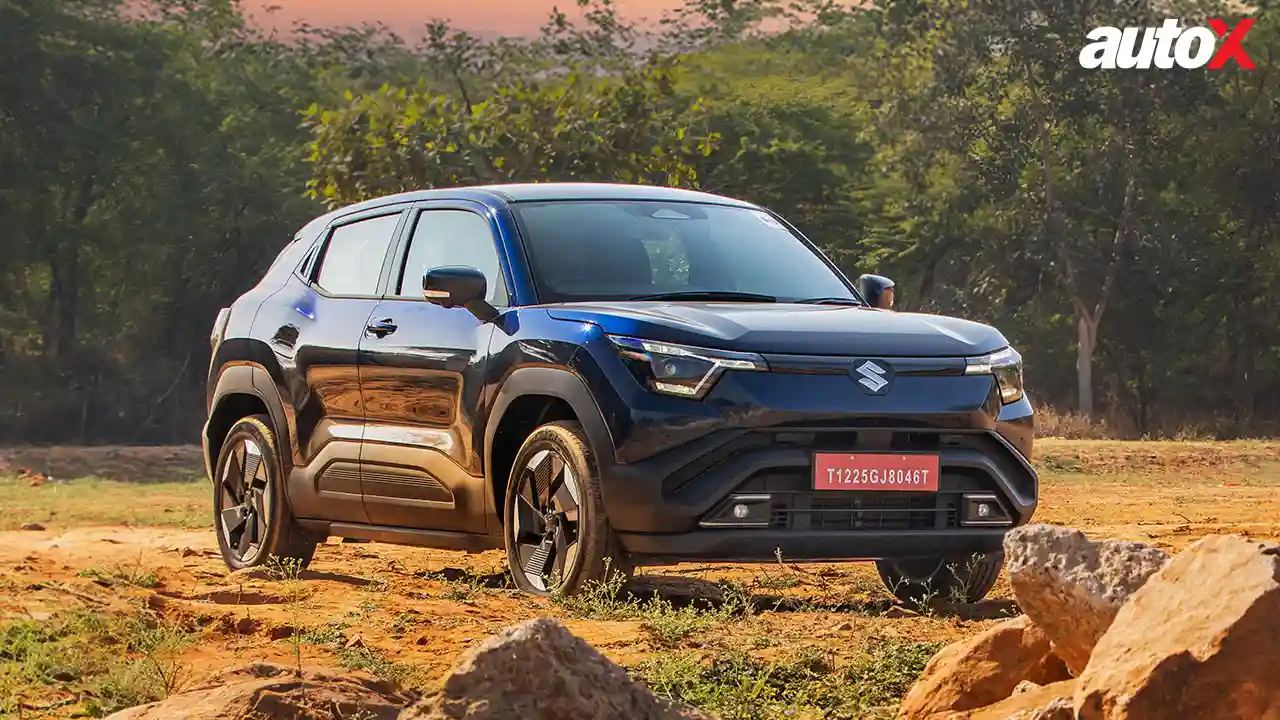
In terms of design, the e Vitara is unlike any other product in Maruti Suzuki’s line-up. While it does share some styling cues with the brand’s overall design language, it still looks unique. The first thing you notice is the SUV’s assertive stance, further accentuated by the squared-off wheel arches and those big 18-inch wheels. The front and rear designs are also quite different, but in a good way – they’re well executed and add to the overall appeal of the EV.
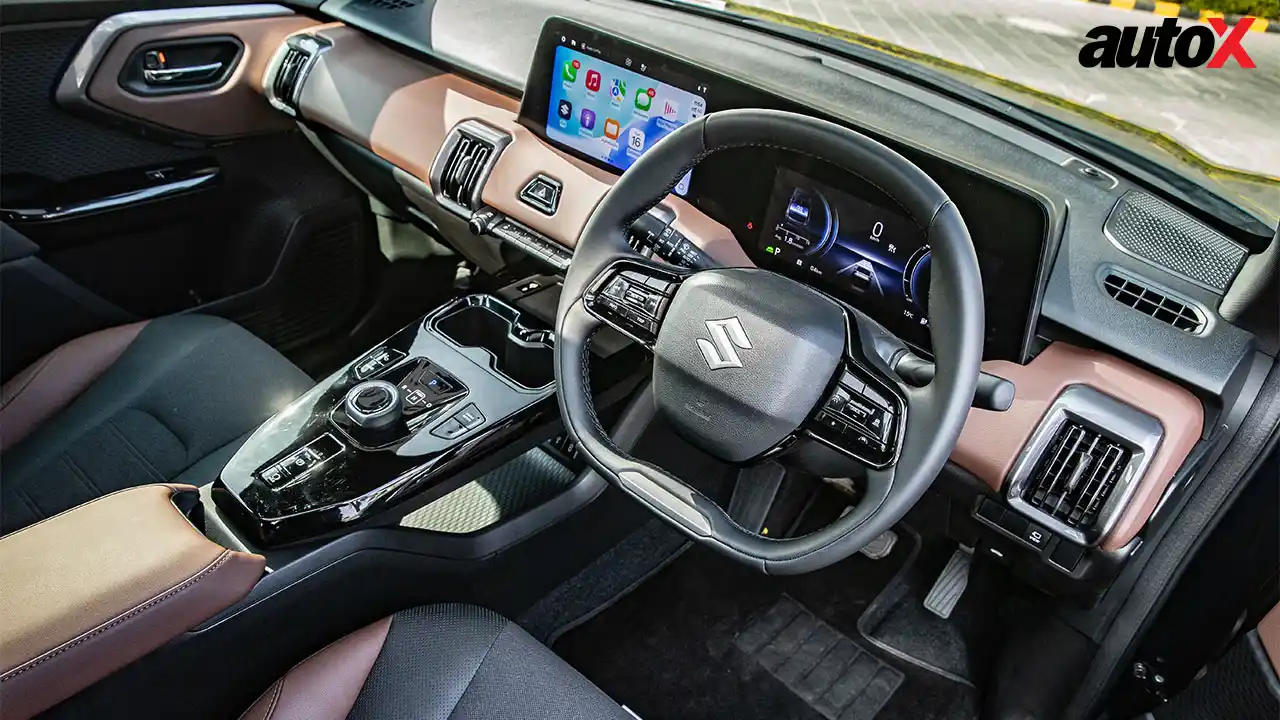
One detail that I particularly noticed was the relatively high shoulder line, which results in a fairly small glasshouse. The interior has a mostly fresh, unique design language, although it’s quite evident that it uses a few components from the existing Maruti Suzuki parts bin. But then, that’s hardly surprising in a world marked by synergies and economies of scale in search of ever-increasing profits. What’s genuinely impressive, however, is the space management – the SUV’s interior feels airy and very spacious, helped in no small part by its pretty large 2,700mm wheelbase.
The front seats are very comfortable, although from the driver’s seat, you do have a sense of sitting a bit too high. Some of the unique elements include the new steering wheel, which looks premium and feels solid to the touch, and the new centre console, featuring a new gearshift knob that both looks and works well.
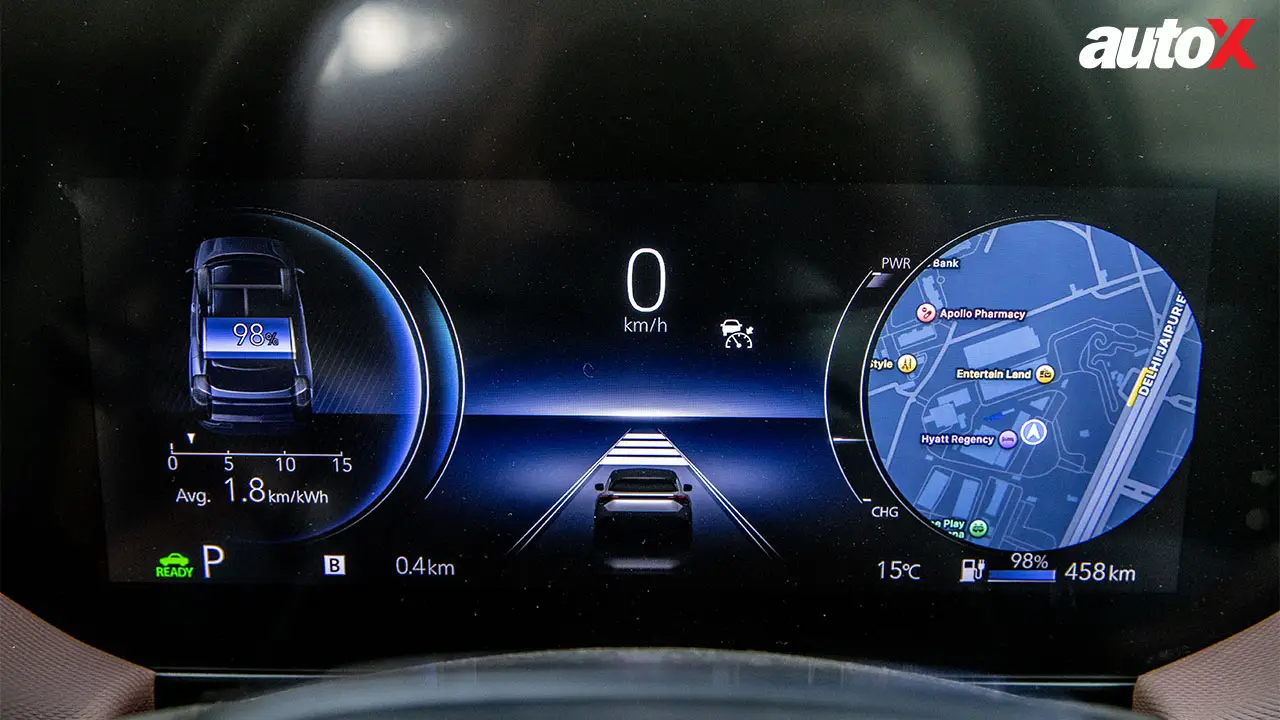
In terms of features, the e Vitara will be the second Maruti Suzuki vehicle to feature Level 2 ADAS, after the Victoris, and seven airbags, including an airbag for the driver’s knees.
Maruti Suzuki e Vitara Range, Battery and Performance
Now, let’s talk about the aspect that matters the most in an EV – range. The e Vitara we drove was equipped with the larger 61kWh battery pack. A smaller 49kWh version will also be offered at launch. Maruti Suzuki claims a range of 543km (ARAI certified) on a single charge with the larger 61kWh battery pack.
With the 61kWh battery pack, the front-mounted motor produces 172bhp and 193Nm of torque, and the e Vitara has a claimed 0–100km/h time of 8.9 seconds. At launch, both battery pack versions will be offered only with a front-wheel-drive setup, though the platform is capable of supporting all-wheel drive as well.
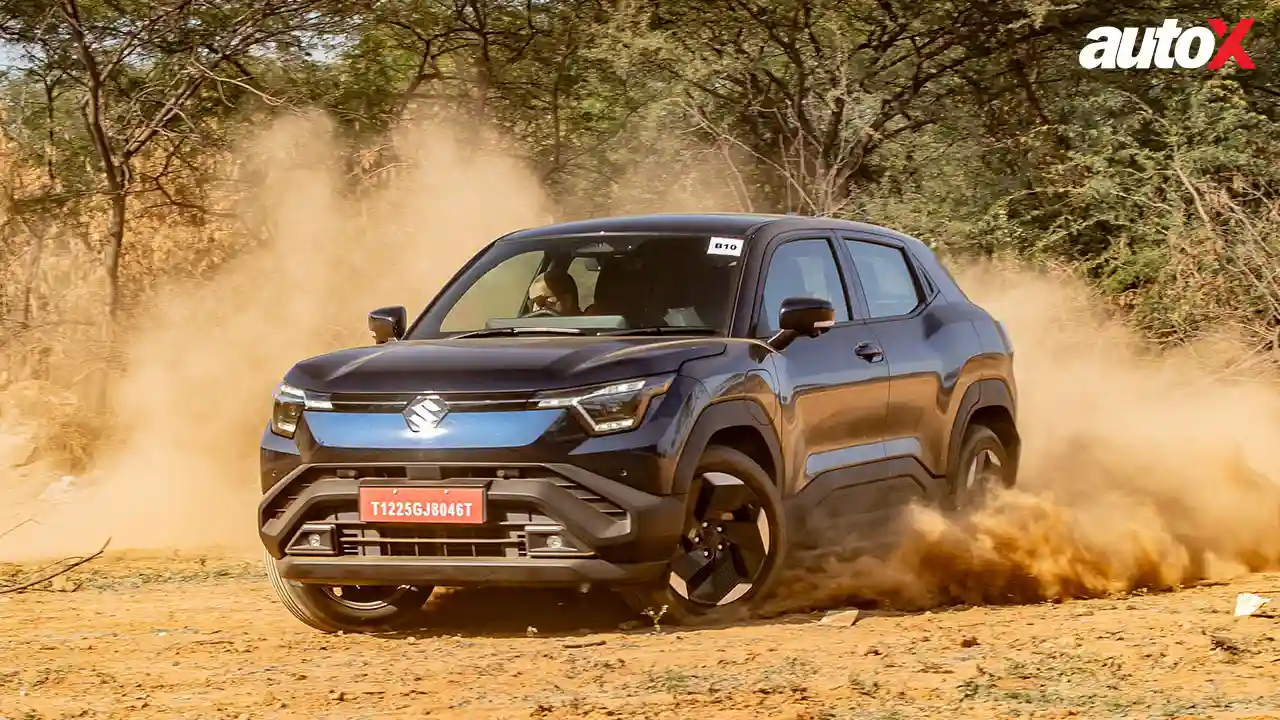
On paper, these numbers may appear modest, especially in an EV landscape obsessed with insane torque and power figures, but our time with the car proved that they are more than sufficient. On the road, the acceleration is more than adequate and linear. If you want a faster throttle response, you can switch to Sport mode, and if you prioritise range, Eco mode is the way to go. You can also vary the regen modes, with the most extreme setting enabling single-pedal driving.
Maruti Suzuki e Vitara Ride Comfort and Real-World Usability
The e Vitara’s ride quality on Indian roads was a particular point of curiosity for us, and I must say that we were once again quite impressed by what we experienced. Sure, you always feel the weight of the car when hitting sharp bumps, but overall, it’s quite controlled and comfortable.
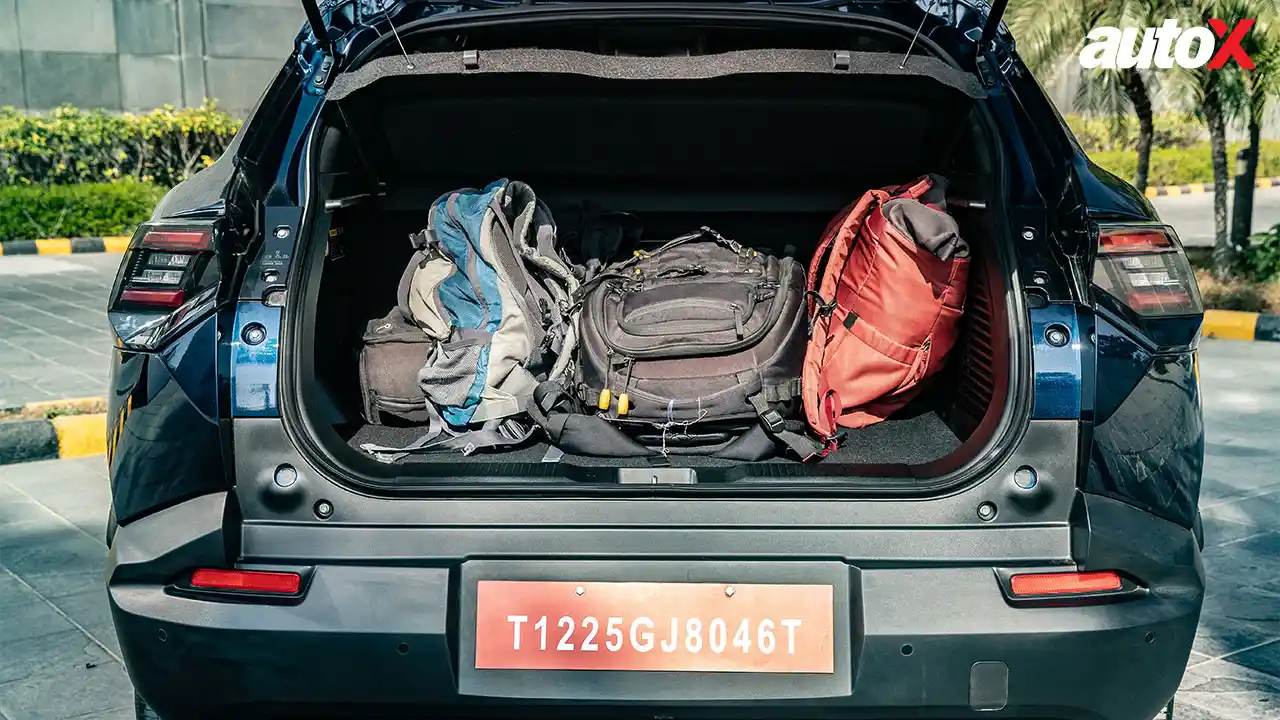
The e Vitara is a tempting package. With the larger 61kWh battery pack, I think a real-world range of about 380km on a single charge is easily achievable, which should be enough for most customers in urban settings with access to charging at home or at the workplace.
Maruti Suzuki’s planned charger network across the country will further ensure that the SUV will be attractive to a broader customer base than any rival EV on sale in the country. That said, the key factor would be the pricing of the e Vitara. The MG Windsor has been India’s best-selling EV in 2025, and I think Maruti Suzuki will price the e Vitara aggressively enough to draw potential Windsor Pro buyers into its own showrooms. However, this is all speculation for now, and we will have to wait until the prices are officially announced.
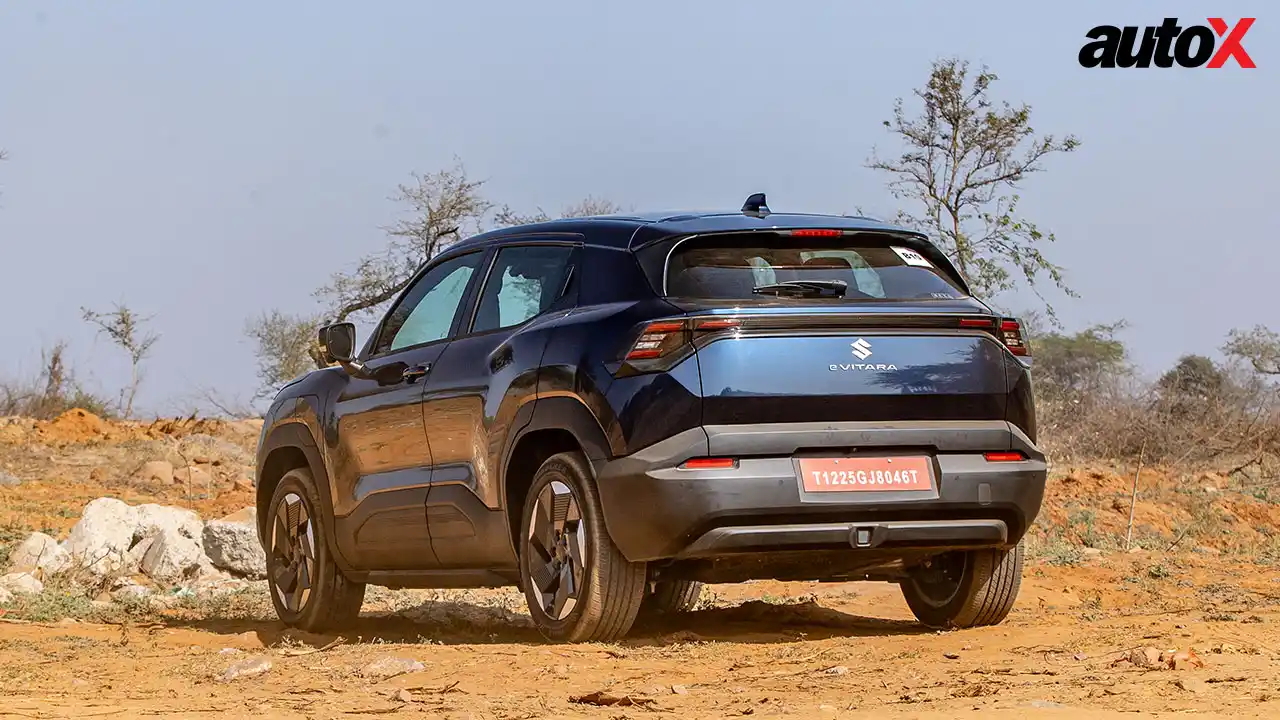
Overall, though, the e Vitara makes a compelling case for itself and clearly has the potential to meaningfully increase EV adoption in the Indian passenger vehicle market.
Engine: Single Motor FWD
Battery: 61kWh
Power: 172bhp
Torque: 193Nm
Range: 543km (ARAI)
Price: TBD
X-Factor: If priced right, this could change India’s EV landscape.
|
Pros |
Cons |


