MG Majestor Review: A Bigger, Bolder Rival to the Toyota Fortuner?
The MG Majestor offers more tech, more space, and greater off-road capability than the Toyota Fortuner. Can it finally challenge the segment leader?
By Kingshuk Dutta
Photography By Team autoX
You know, every now and then, I find myself wondering if SUVs the size of 1bhk apartments really make sense on India’s crowded roads. They’re not efficient, not particularly fun to drive in the conventional sense, tricky to manoeuvre in traffic, and they don’t exactly sip fuel either. But then you spend time with one, and the argument quietly collapses.
The sheer road presence, the acres of space, and that commanding feeling of piloting something substantial over any terrain without hesitation… It’s hard to quantify, harder to ignore. Sure, speed is exciting, but making a proper off-road SUV do what it was born to do can be just as thrilling, if not more. And that’s precisely the promise of the MG Majestor. It also arrives with a clear mission: to rattle the throne of the Toyota ?, an icon, yes, but perhaps one that’s starting to show its age.
MG Majestor vs Toyota Fortuner: Design, Size and Road Presence
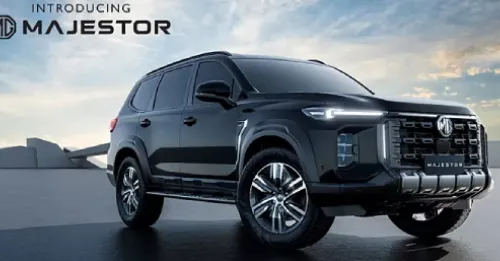
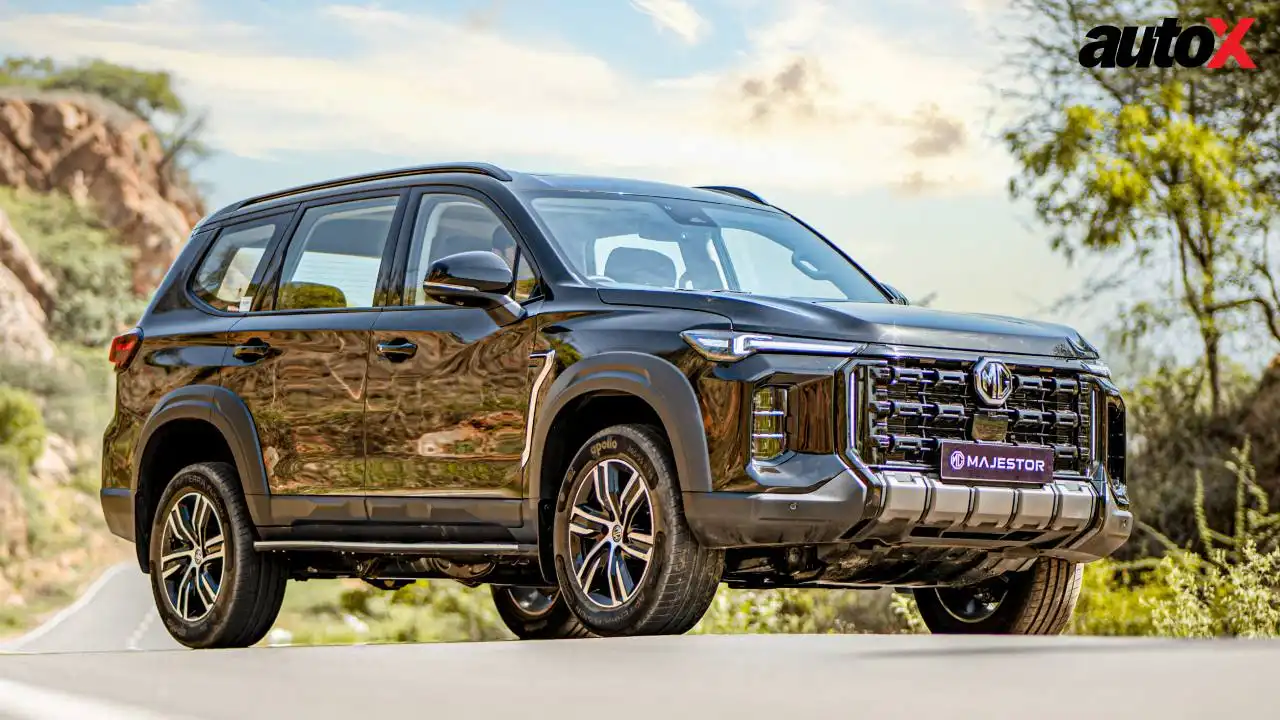
The Majestor is big. Properly big. Bigger than the Fortuner, in fact, and it looks every bit of it.
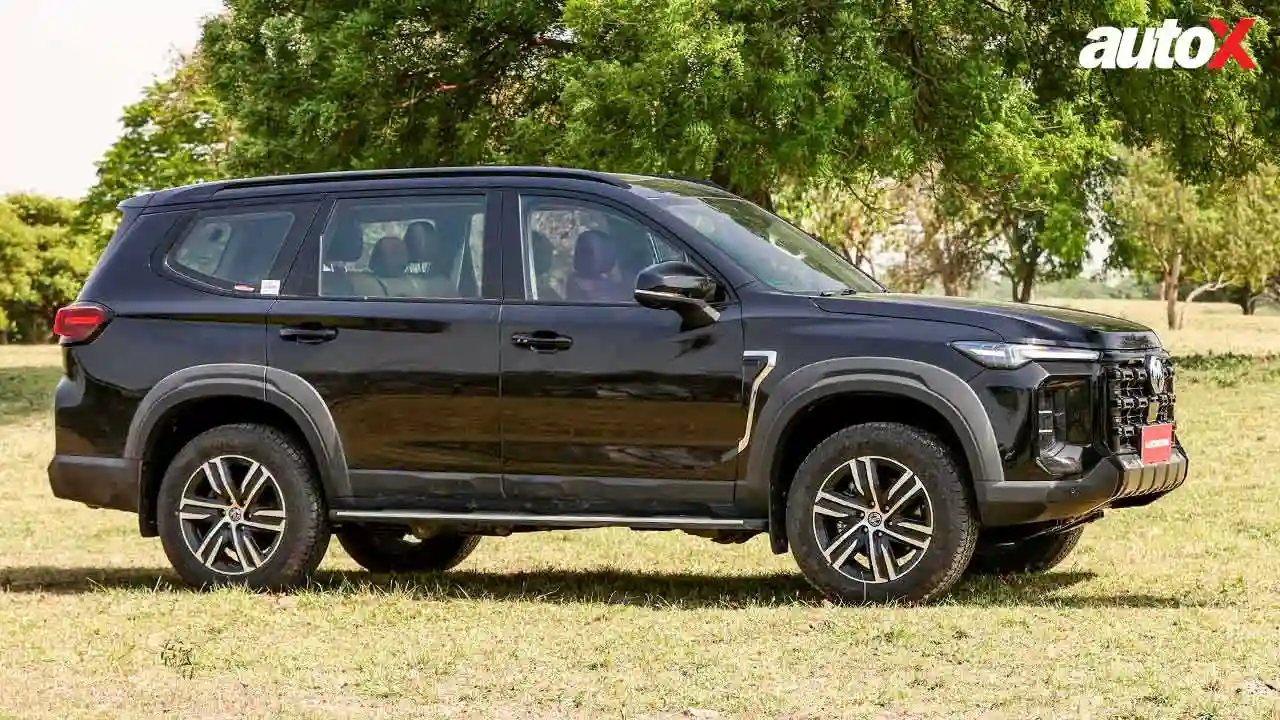
The bold mosaic-pattern grille, chunky LED headlamps, and towering stance give it an unmistakable presence. It’s the kind of SUV that doesn’t just enter a parking lot, it announces itself. Recency bias or not, it arguably looks more imposing than the Toyota. From the side, the alloy wheels may appear slightly undersized, though that’s more nitpick than deal-breaker.
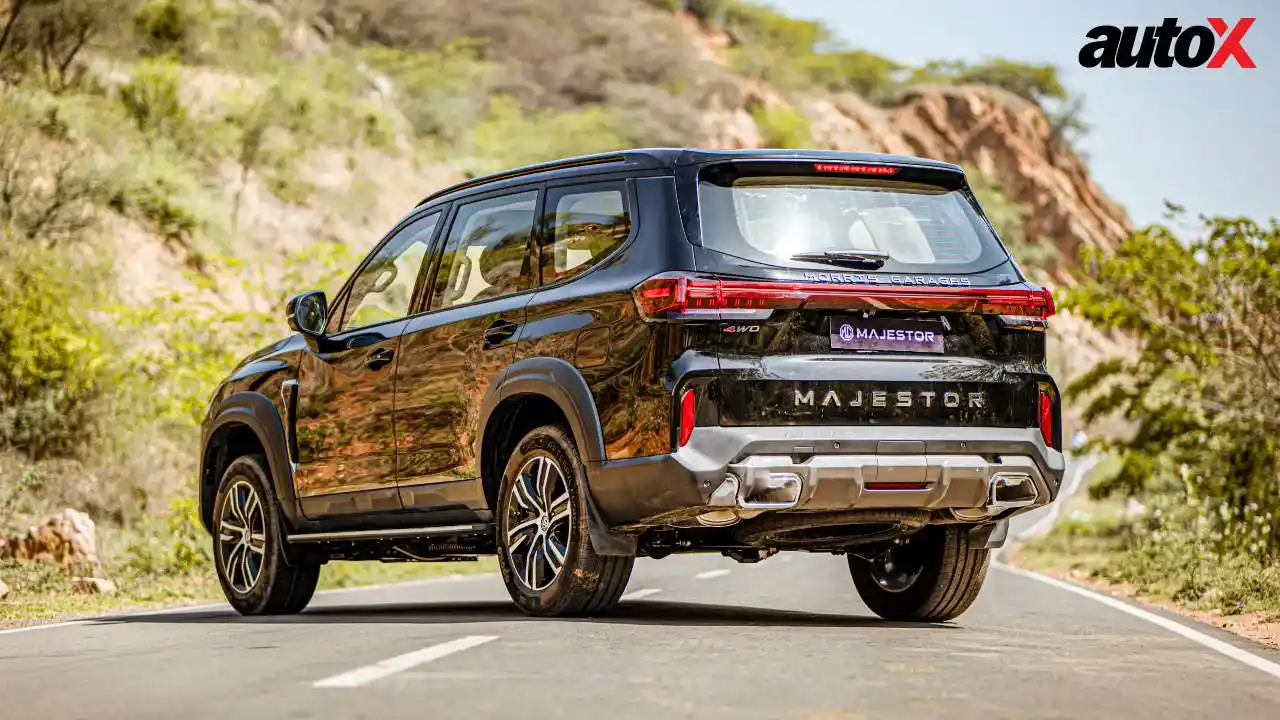
Around the back, the bold ‘Majestor’ lettering and connected taillights lend it a modern, slightly familiar look, one that might remind you of an old Toyota Land Cruiser. Not a bad association to have.
Step inside, and the cabin delivers on the premium promise. Soft-touch materials are generously used, and the layout is clean and intuitive.
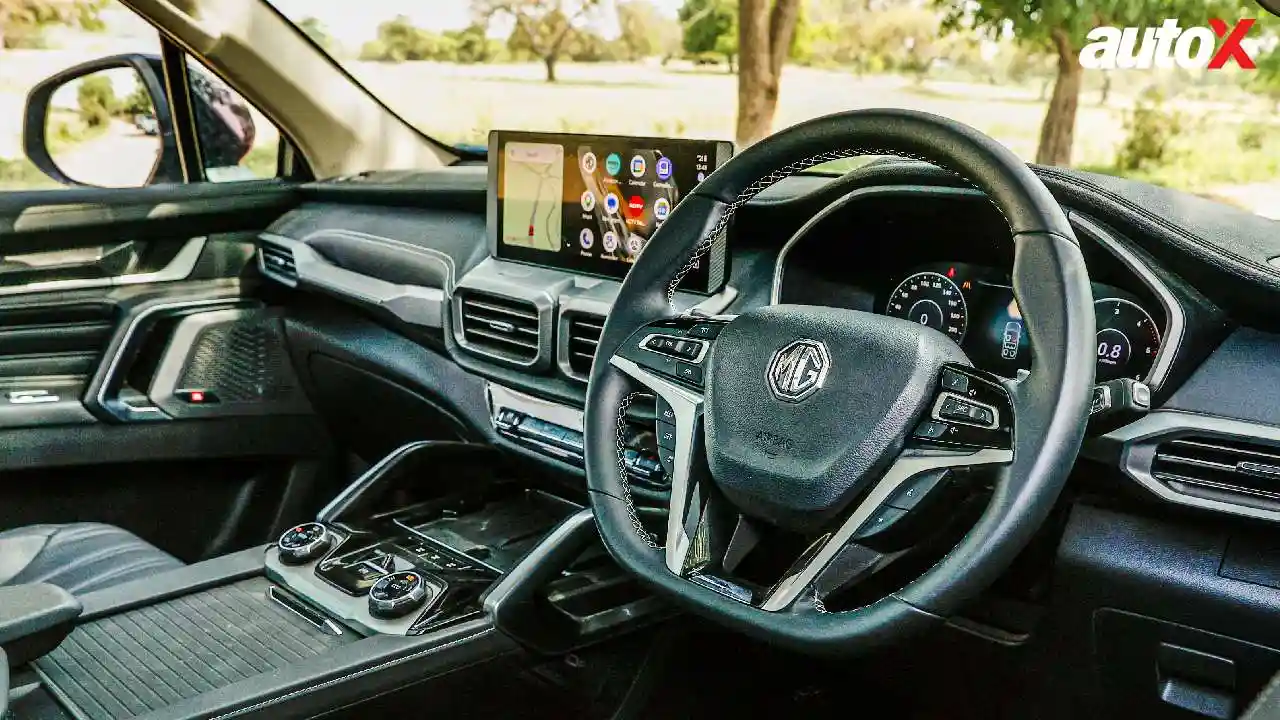
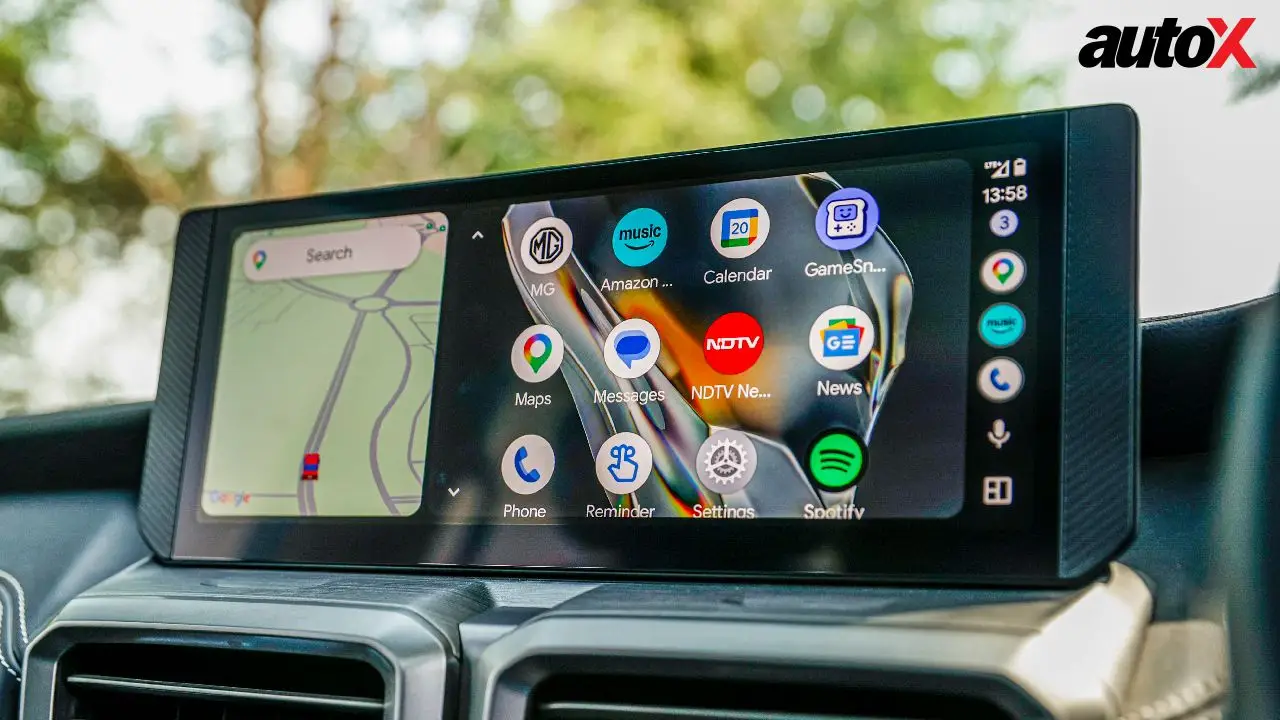
The 12.3-inch infotainment screen looks the part, though it does feel a bit sluggish at times. Space is a strong suit. The second row is genuinely roomy, with enough knee, leg, and headroom even for taller occupants.
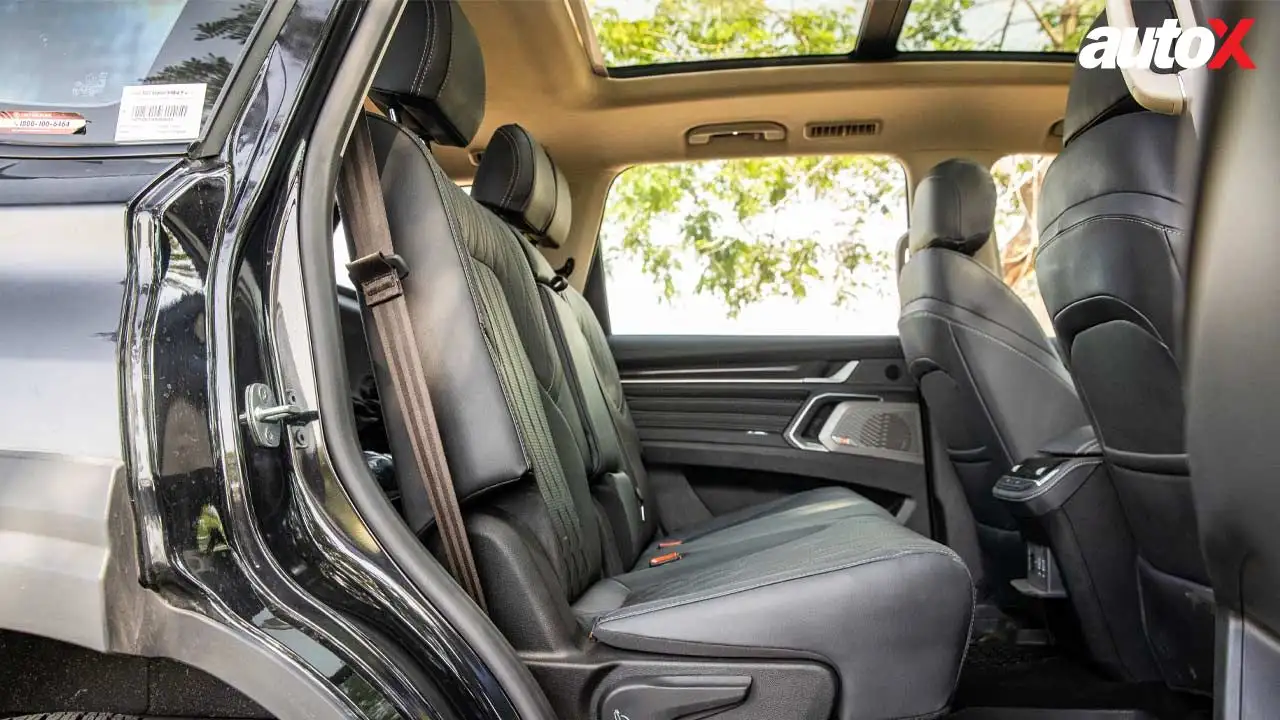
The third row is usable too, though, as expected, you sit knees-up. Adults will manage short trips without complaint, which is about as much as one can ask in this segment. Thoughtful touches like cup holders, AC vents, and charging ports for rear passengers enhance practicality.
MG Majestor Features
This is where the Majestor flexes really hard. Ventilated seats, front-seat massage function, a panoramic sunroof, dual wireless chargers, 64-colour ambient lighting, multiple storage spaces, and Level 2 ADAS… the feature list is long and impressive. It comfortably outguns most rivals here.
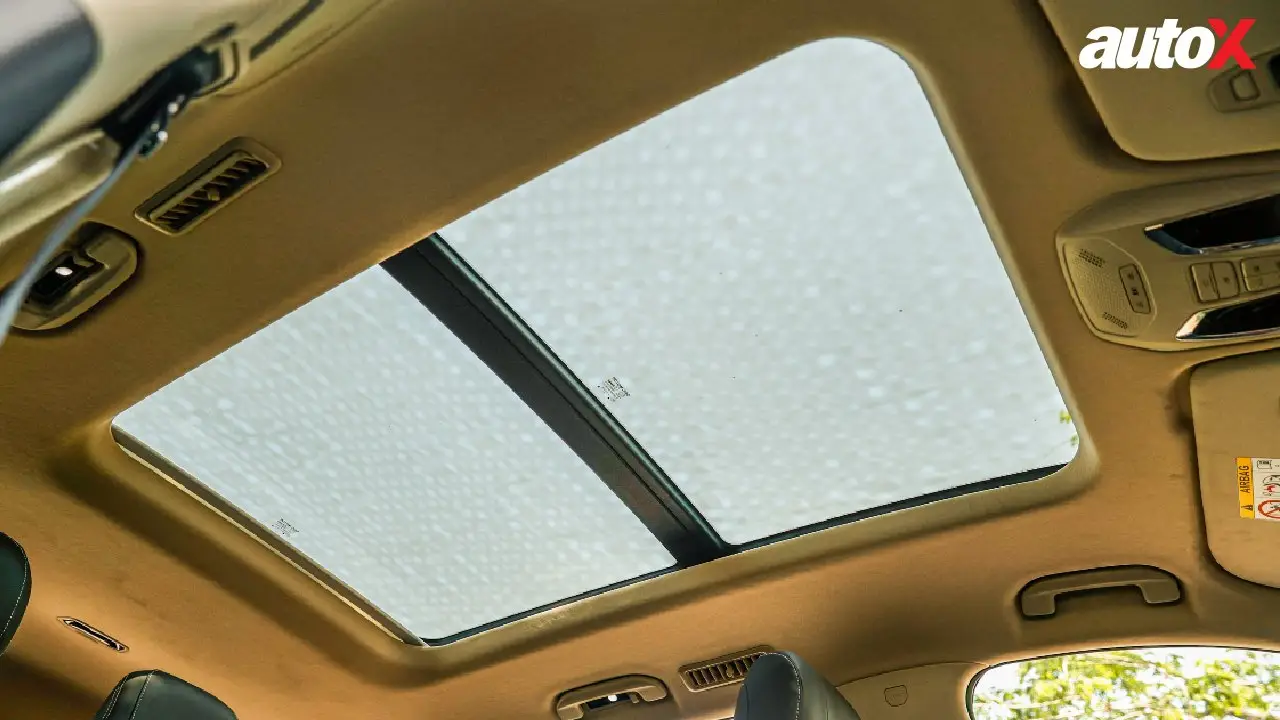
However, not everything is perfect. Critical controls like headlights, seat ventilation, and massage functions are buried within the touchscreen menus, making on-the-fly adjustments unnecessarily fiddly. It’s a classic case of form slightly overshadowing function.
Then there’s the curious omission of sunblinds, something you’d expect even in cars from two segments below. At this price point, that absence stands out more than it should. Optional extras like sunblinds and rear-seat entertainment would have rounded things off nicely.
MG Majestor Engine, Performance and Driving Experience
Under the hood, the Majestor packs a 2.0-litre twin-turbo diesel producing 213bhp and a substantial 478.5Nm of torque, paired with an 8-speed automatic gearbox. On the move, the SUV’s size is always apparent.
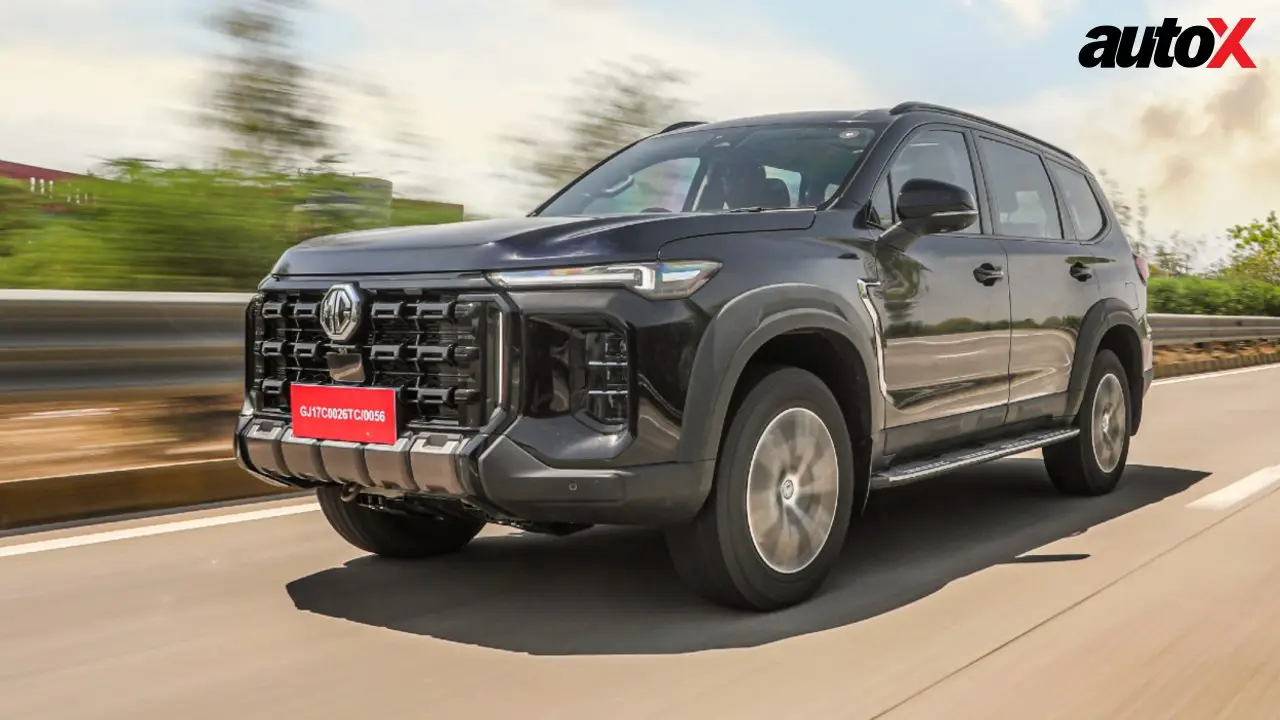
The steering is light at low speeds and weighs up progressively with speed, which is reassuring. However, off the line, performance feels a bit lazy for a twin-turbo setup. The engine really wakes up in the midrange, delivering strong, usable performance. The engine note, though, is more industrial than inspiring. It gets the job done, but won’t have you rolling the windows down for acoustic pleasure.
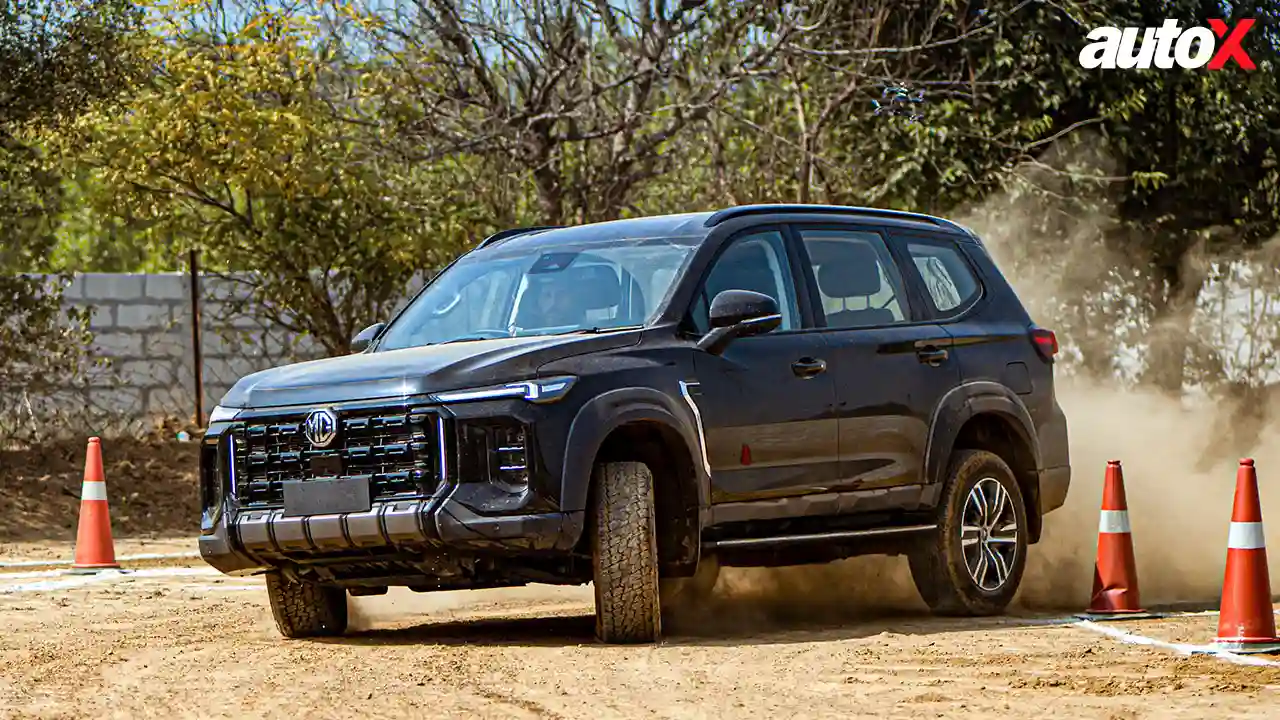
Once up to speed, the Majestor settles into a comfortable highway cruiser. Triple-digit speeds come easily, and overtakes are handled with confidence. Ride quality is generally good. Low-speed undulations are well absorbed, though at higher speeds the suspension makes its presence felt. Handling, unsurprisingly, is not its forte.
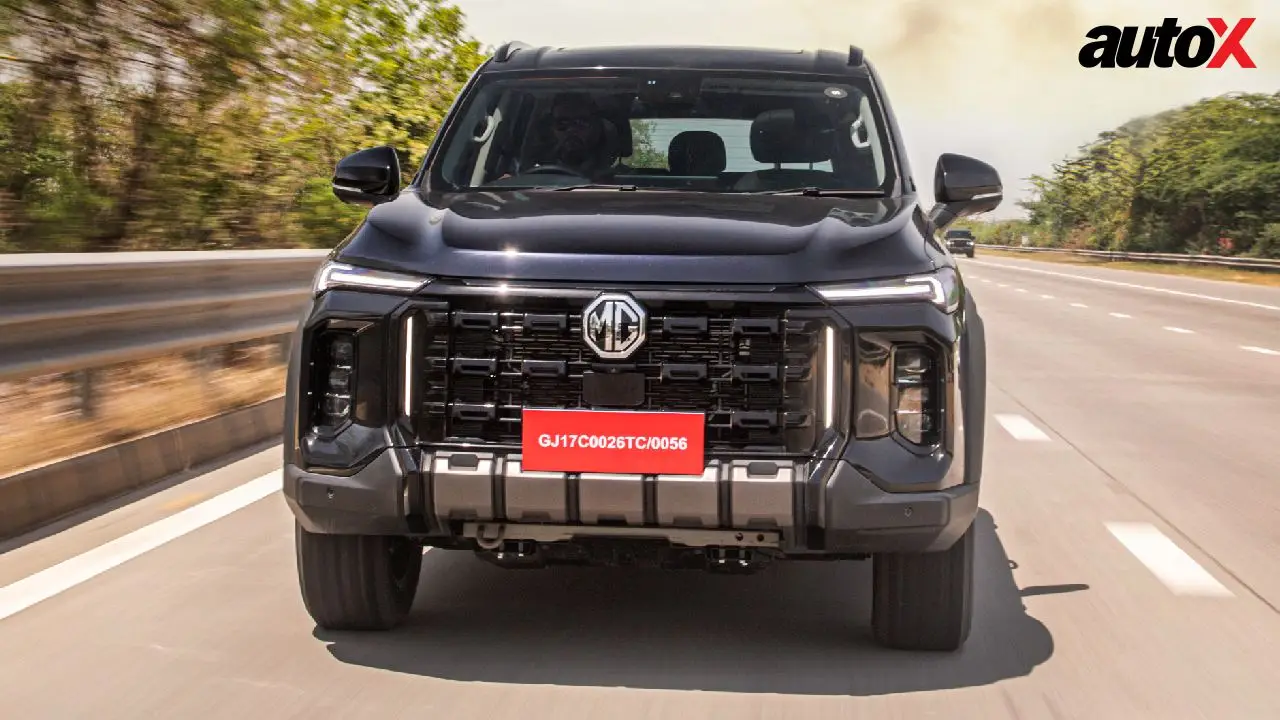
The sheer size and weight mean it takes its time changing direction, with noticeable body roll. But then again, expecting sports-car agility here would be missing the point entirely. Drive modes (Normal, Eco, Sport) and steering settings (Dynamic, Normal, Urban) do make a discernible difference, which is always welcome.
MG Majestor Off-Road Capability and 4x4 System
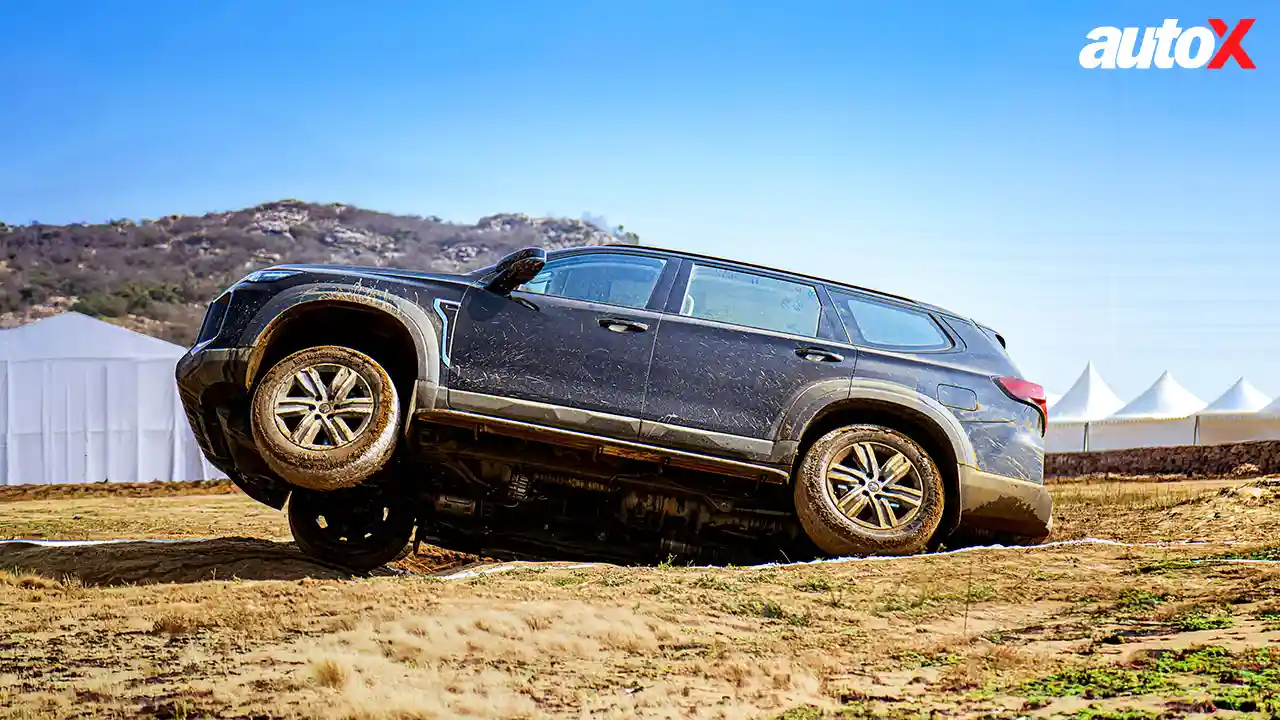
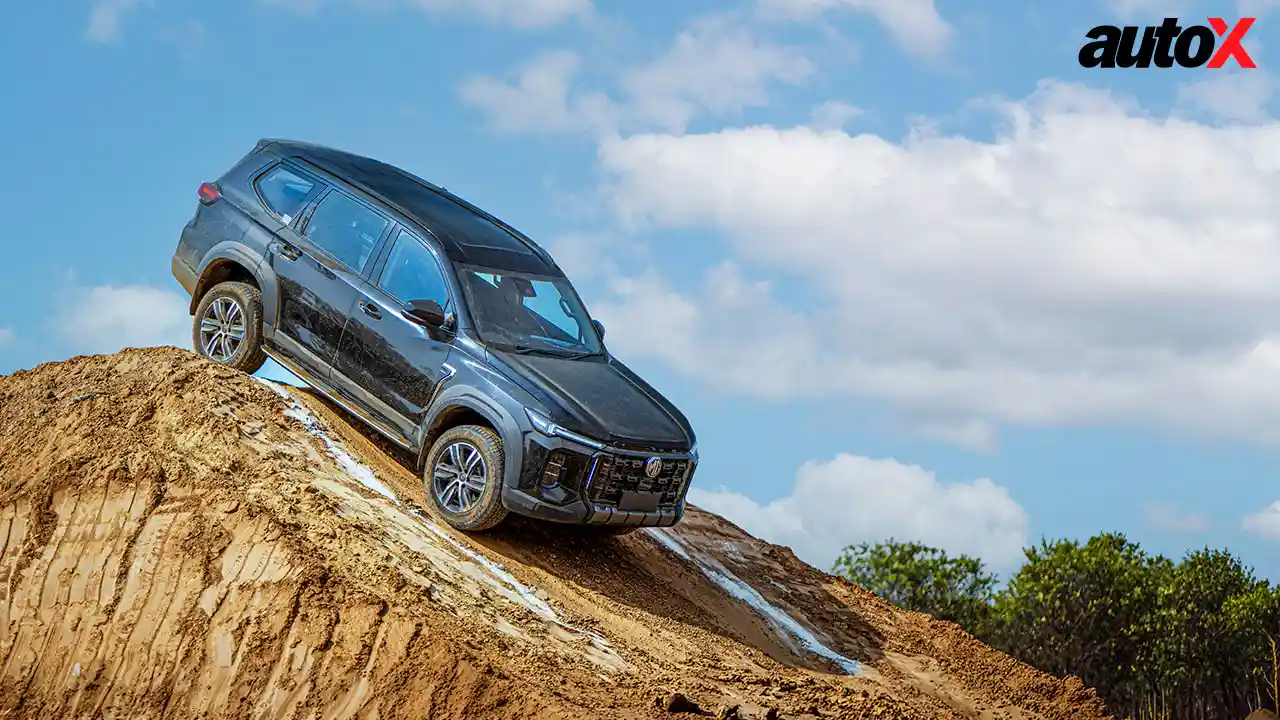
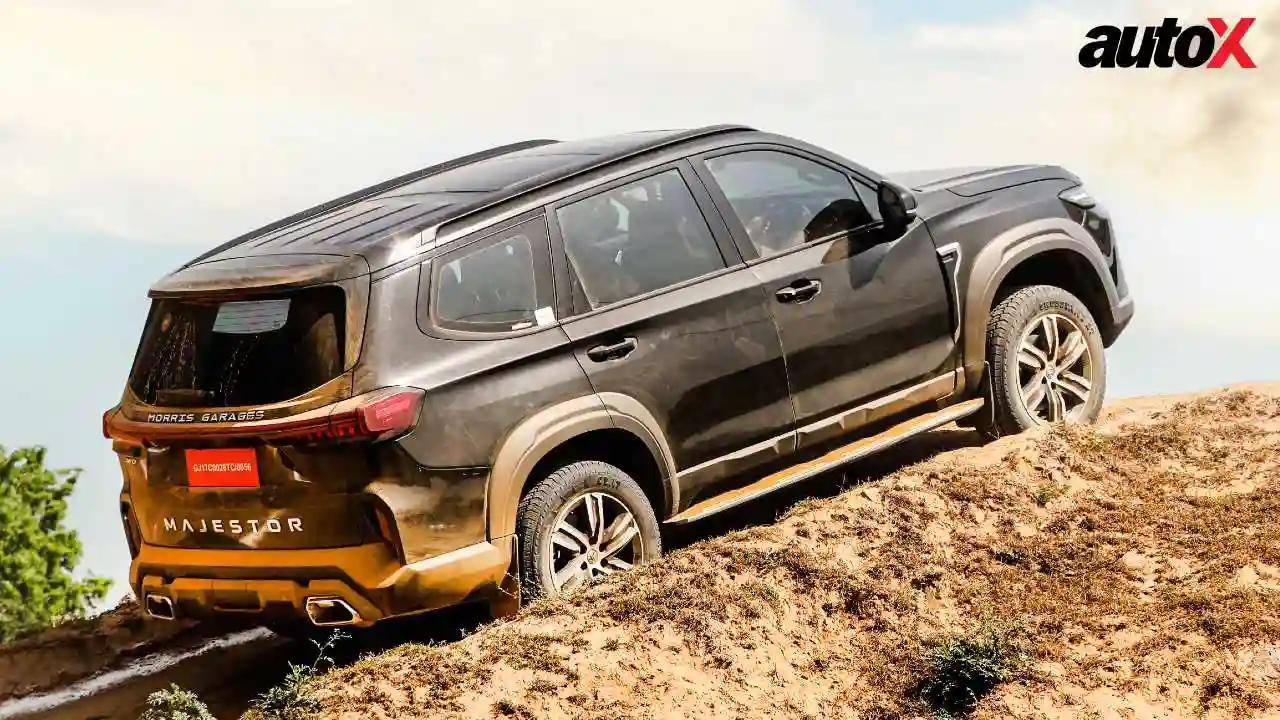
This is where the Majestor genuinely impresses. It comes armed with serious off-road hardware: front, centre, and rear locking differentials, along with 4x4 high and low range. Add to that 10 terrain modes and a Crawl Control Operation (CCO) system, and you’ve got a machine that’s more than just show.
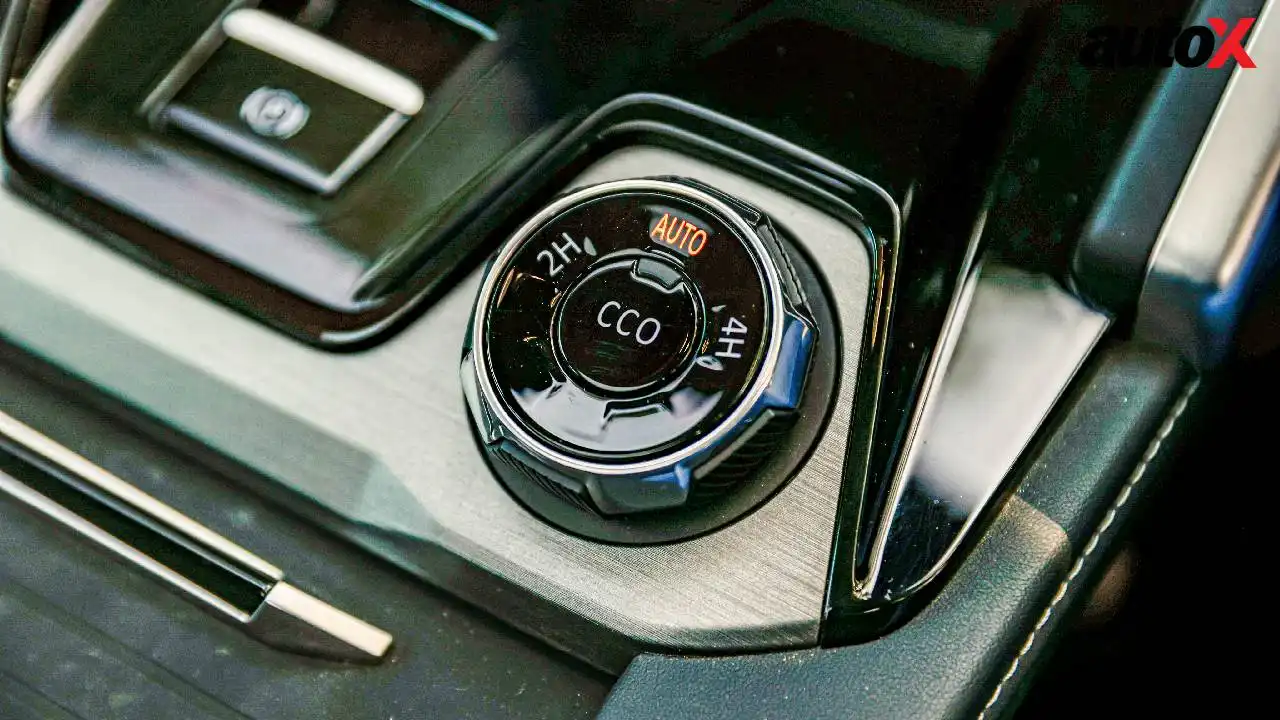
Whether it was climbing steep inclines, tackling rock beds, or dealing with axle-twisting obstacles, the Majestor handled it all with composure. The crawl control system, in particular, takes the stress out of tricky sections by maintaining a steady pace while you focus on steering.
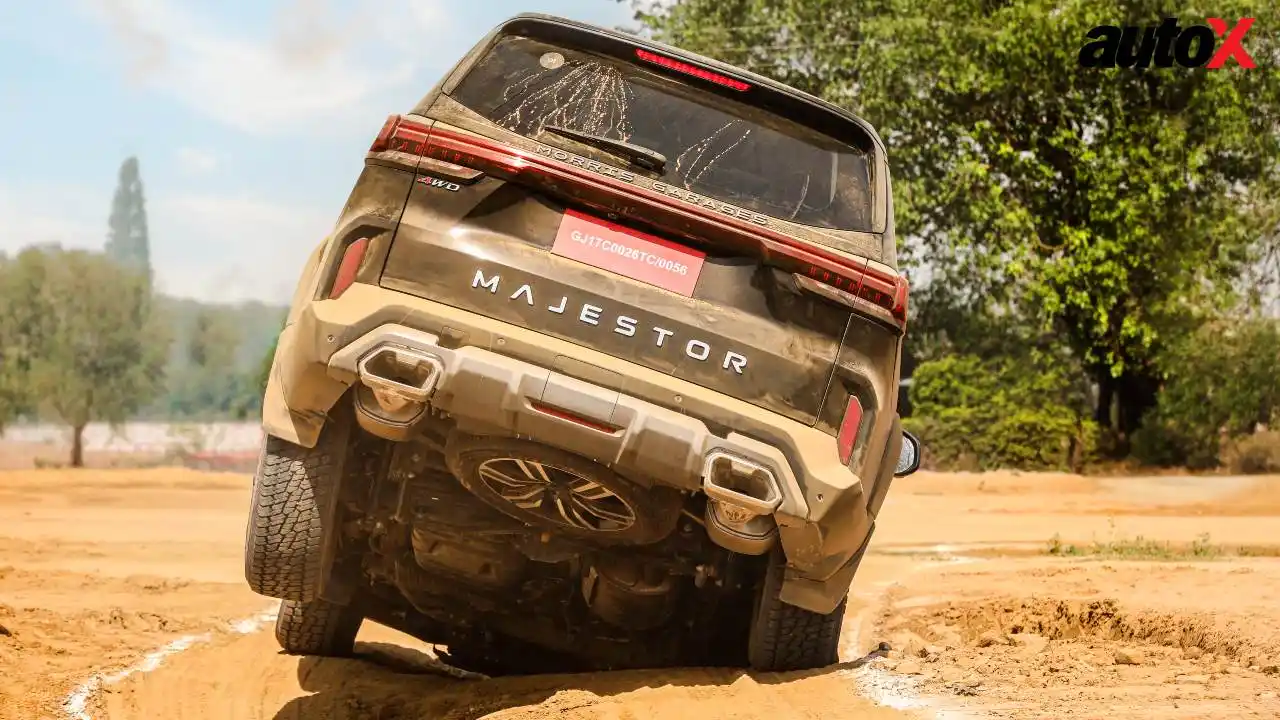
Our off-road course may have been man-made, but the challenges were real enough, and the Majestor rose to them convincingly, showcasing its strong approach and departure angles, as well as its generous ground clearance.
MG Majestor Review Verdict: Can It Beat the Toyota Fortuner?
The MG Majestor ticks the right boxes in design, features, capability, and overall presence. It has the tools to take the fight to the Toyota Fortuner. What it doesn’t yet have is the Fortuner’s legacy, a decade-and-a-half of trust, brand recall, and cult-like following. That’s not something you can engineer overnight. Still, the Fortuner is no longer the freshest face in the room. And the Majestor? It’s loud, confident, and very keen to take centre stage. Is this the beginning of a changing of the guard? Possibly. But that’s a story still unfolding. Stay tuned.
Engine: 1,996 cc, 4-Cylinder
Transmission: 8-speed AT, 4WD
Power: 213bhp
Torque: 478.5Nm
Fuel: Diesel
Expected Price: Rs 45-50 lakh (ex-showroom)
X-Factor: Better than the Fortuner on all counts, except legacy
|
Pros |
Cons |