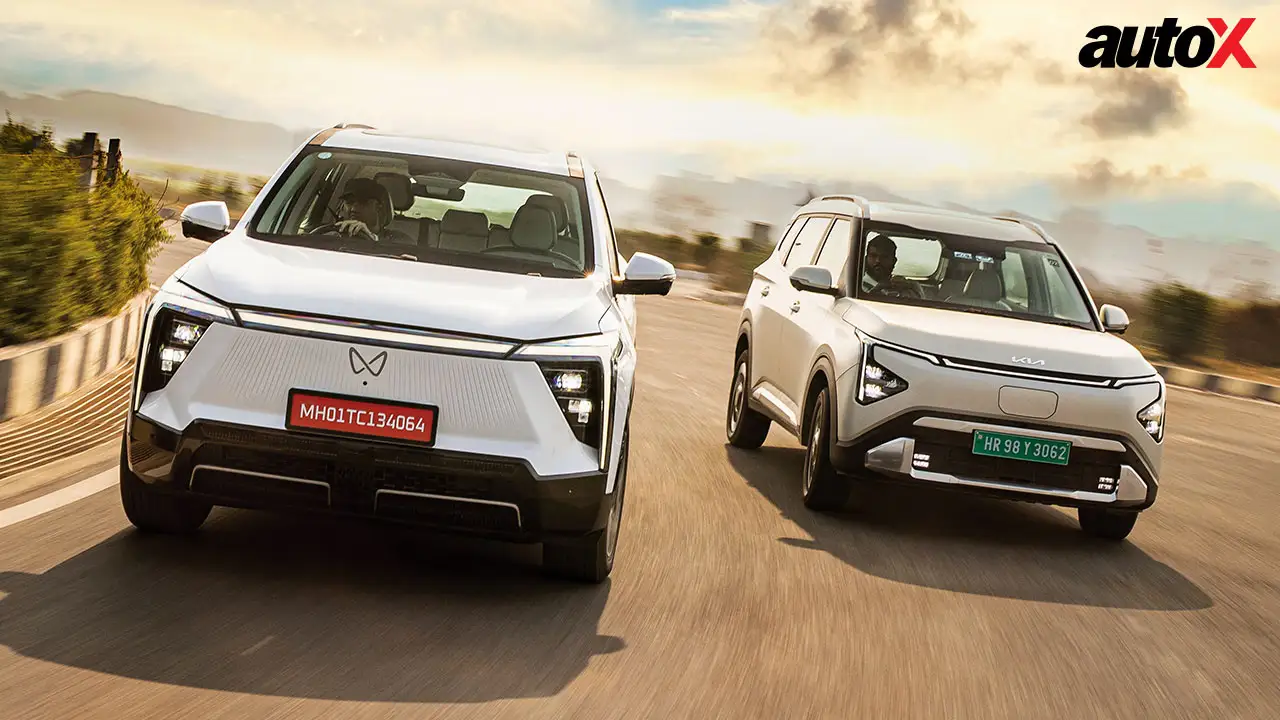
Kia Syros EV
Kia Syros EV Preview
The Kia Syros EV is an electrified version of the uniquely styled ICE Syros, and is expected to be launched in 2026. It should retain the quirky character of its ICE iteration and also bring the EV advantages like instant torque, etc. Below is a breakdown of what is known or expected to be included in this upcoming Kia car.
Kia Syros EV: Powertrain and Transmission
As this is a battery electric vehicle, Kia will replace the internal combustion engine with one or two electric traction motors. The Syros EV is likely to employ a front-mounted motor configuration, mirroring many compact EVs. Based on spy speculation, battery packs of 42kWh and 49kWh with NMC chemistry are expected.
The lower battery option might come with a relatively modest motor, perhaps in the 120-150kW class. The larger pack may support more capable output. This is inferred from how Kia has structured other EVs.
Kia Syros EV: Power and Torque
Exact figures for motor power and torque have not been confirmed yet. However, given the battery size and segment expectations, it would be reasonable to expect outputs comparable to rivals. A maximum power of 161-215bhp and a peak torque of 250–350 Nm can be expected. The 49 kWh version will likely come with stronger performance.
Kia Syros EV: Transmission
As with most modern EVs, the Syros EV is expected to use a single-speed fixed-gear reduction gearbox. No multi-gear transmission is likely. There may be drive modes, perhaps, Eco, Normal, and Sport. Regenerative braking is also likely to help with energy recovery.
Kia Syros EV: Driving Range
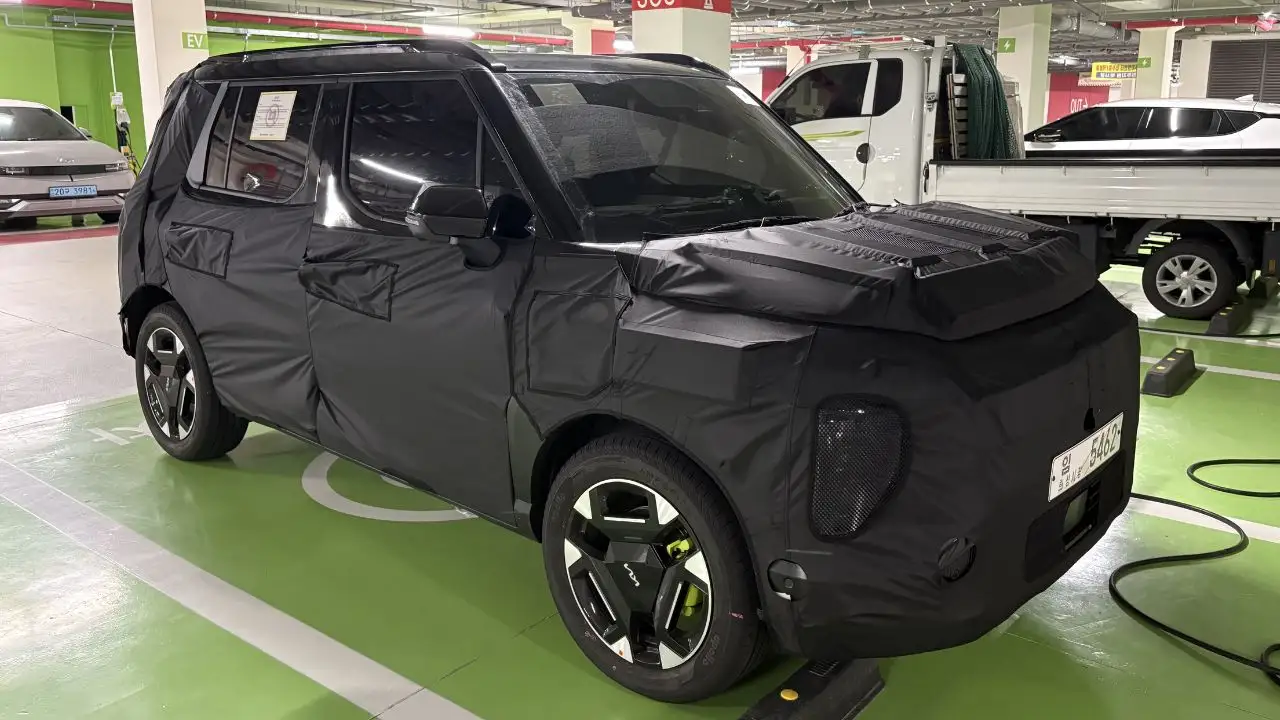
According to spy reports, the Syros EV may deliver a range of 300 km for the lower battery pack. The larger battery pack is slated to deliver up to 355 km. Real-world range may be lower, especially in hot climates and heavy traffic. In terms of charging, DC fast charging capability is expected, as one test mule was photographed plugged into a DC charger.
Kia Syros EV: Handling
The ICE Syros uses conventional suspension, including MacPherson strut up front and a rear torsion beam. Therefore, the EV version is also likely to retain the same basic chassis and suspension architecture, but tweaked for EV weight and dynamics. Furthermore, the Syros EV will likely offer aerodynamic alloy wheels with low rolling resistance tyres. The test mule also showed lime green brake calipers, hinting at a sporty visual accent. On the braking front, the Syros EV is expected to have disc brakes at both front and rear. Regenerative braking shall also be integrated, allowing the motor to act as a generator under deceleration.
Kia Syros EV: Dimensions
As the EV version is based largely on the ICE Syros architecture with modifications, most exterior dimensions are expected to stay close. This shall be a sub-4m SUV with nearly 2550 mm wheelbase and 190mm ground clearance. The EV may see a small increase in height due to battery packaging, but likely to be minimal.
Kia Syros EV: Exterior Design & Elements
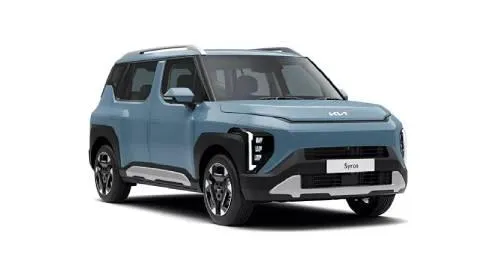
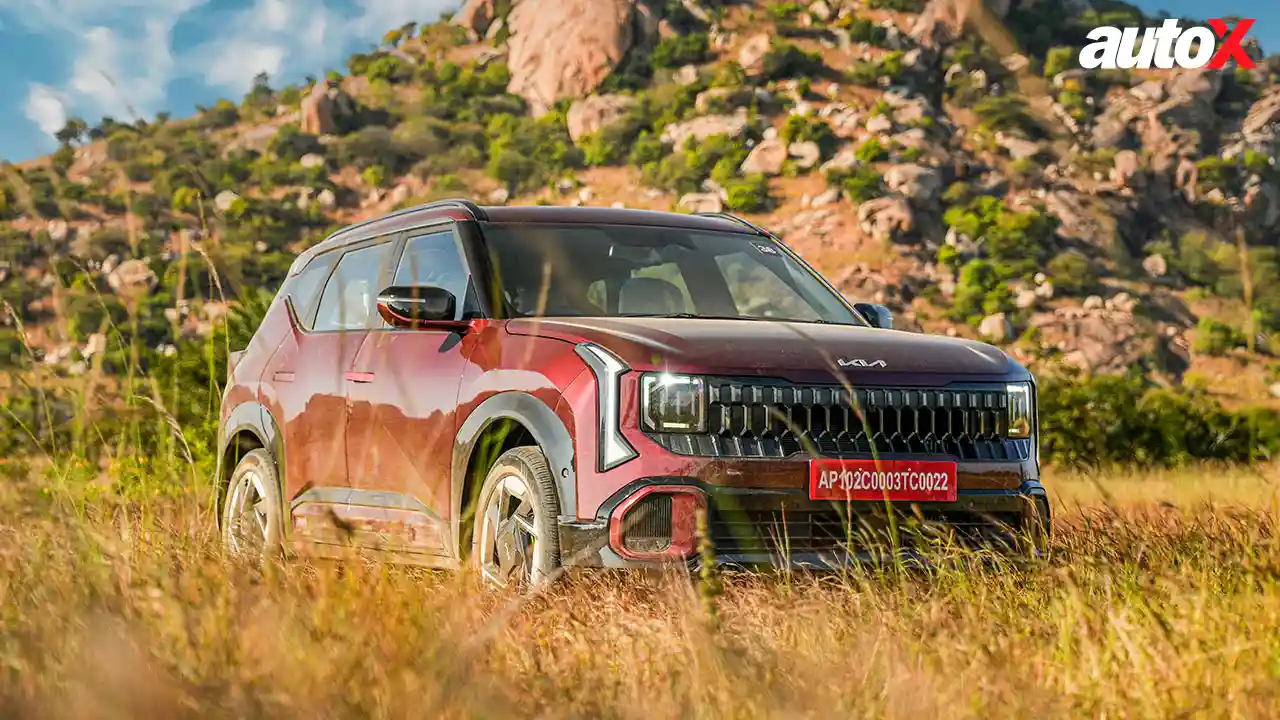
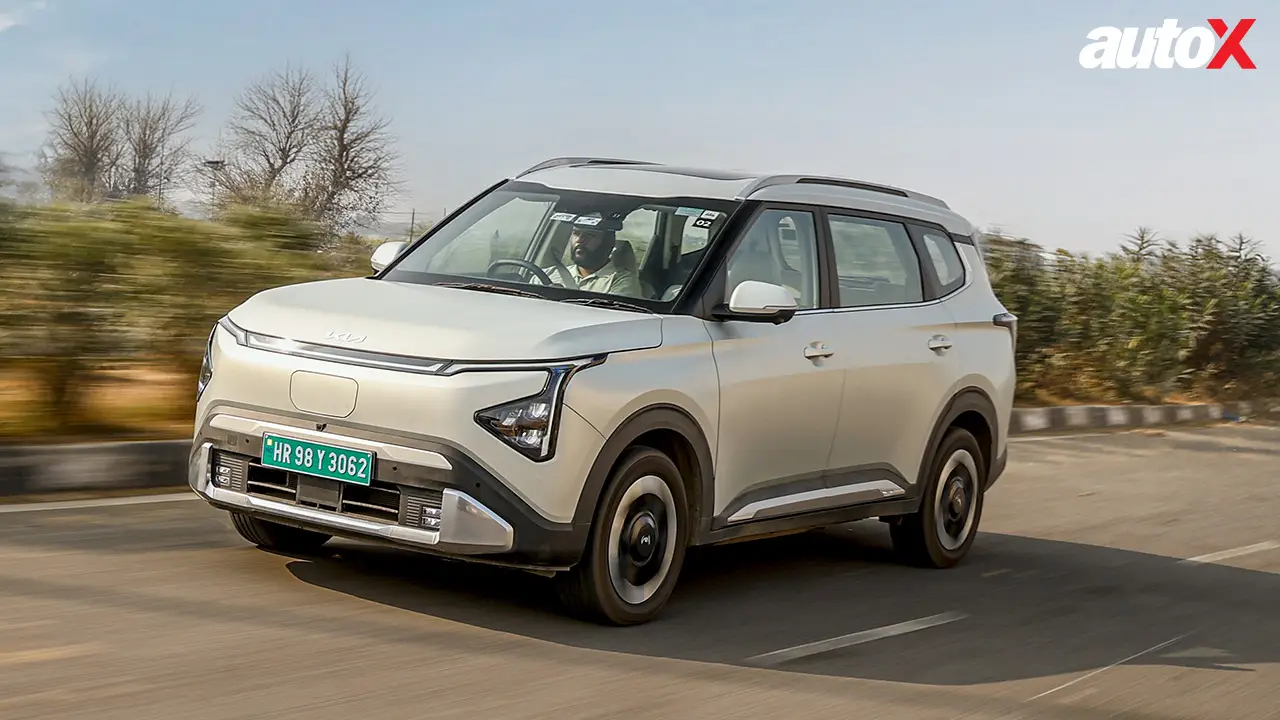
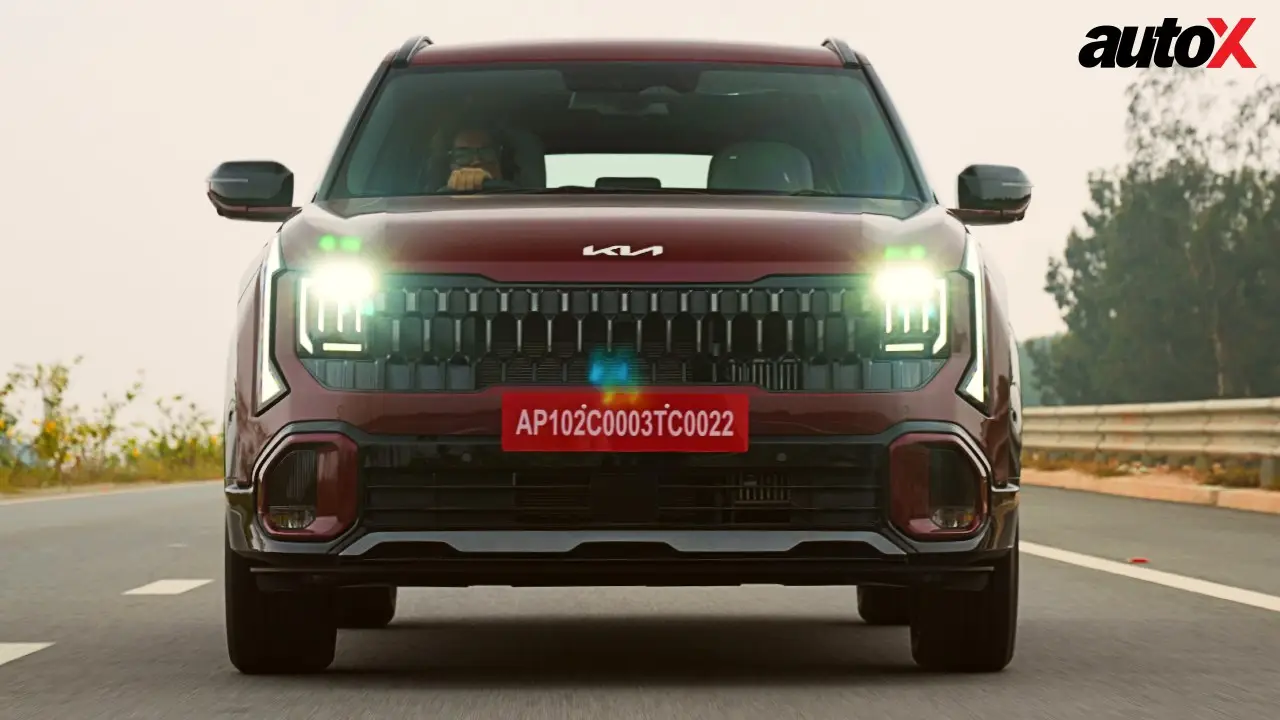
Visually, the Syros EV is expected to closely follow the ICE Syros’s boxy, upright silhouette and quirky styling. Key EV-specific changes likely include:
- A sealed or blanked-off front grille or a minimal grille in place of an open radiator intake.
- Aero-optimized bumpers, side skirts, and possibly active air flaps to aid efficiency.
- Sleeker or aerodynamic alloy wheels.
- A charging port located on the left front fender was seen in spy shots; possibly symmetric ports on both sides.
- Vertical LED DRLs / headlamps on both ends, retaining the upright LED signature from the ICE model.
- Flush-fitting door handles, thick B-pillars, roof rails, and squared wheel arches (all carried over).
- The rear is likely to retain the L-shaped tail lamp design, with some tweaks to the diffuser / lower bumper to accommodate EV styling.
- Lime-green accents (brake calipers/graphics) in sport or higher trims.
Kia Syros EV: Interior Design and Features
The cabin is expected to be broadly similar to the ICE Syros, but with EV-specific software for displays and possibly updated trims/upholstery. It is also envisaged to include:
- Dual 12.3-inch screens, one for infotainment and one for the digital instrument cluster, matching the ICE version’s premium screen setup.
- A 5-inch display for climate control, same as the ICE version in reports.
- Panoramic sunroof
- Ventilated, reclining, and sliding rear seats.
- Ambient lighting, wireless charging pad, multiple USB-C ports, and 12 V socket.
- Premium sound system, keyless entry, push-button start, drive modes, EV-specific UI, regenerative braking settings.
- OTA (over-the-air) software updates for infotainment and EV functions.
Kia Syros EV: Safety Features
The Syros (ICE) is already marketed with a “20 Hi Safety Package” and a 5-star Bharat NCAP safety rating for the ICE model. The EV version is expected to carry the same or enhanced safety suite, including:
- Level 2 ADAS with Adaptive Cruise, Lane Keep Assist, Blind-Spot Monitoring, Forward Collision Warning, Automated Emergency Braking, etc.
- 360-degree surround-view camera / bird’s-eye view camera.
- Multiple airbags (front, side, curtain)
- ABS and EBD.
- Traction control, Hill Hold Assist, perhaps Hill Descent Control
- ISOFIX child-seat anchors
- Tire Pressure Monitoring System (TPMS)
- Electronic parking brake + auto-hold
- Rear parking sensors and reverse camera
- Stiffer body shell/EV structuring for crash safety, aided by the battery pack’s structural role.
- Possibly a battery pack protection system (thermal management, crash cut-off, high-voltage safety)
- Anti-lock Braking System (ABS) with Electronic Brake Force Distribution (EBD).
- An Electronic Stability Control (ESC) system is probable, and hill-start assist/brake hold may be included.
Kia Syros EV: Launch Date and Price
The launch of this EV is expected to happen in the first half of 2026. Further, the Kia Syros EV price is expected to hover around ₹14-20 lakhs.
Please note that the aforementioned information is based on speculations and unofficial sources and, therefore, may not be accurate. We shall update the exact information once the model is launched or when the manufacturer makes some announcements.
Kia Syros EV Questions & Answers
Q: What is the expected price of the Syros EV in India?-
Q: When will the Syros EV be launched in India?+
Explore other Kia cars
Searching for your next Kia car? Explore all the models at one place.
View All Kia CarsKia Syros EV Similar Cars