25 years of Bosch ESP: The 'anti-skid' saviour of the world
Bosch is celebrating 25 years of its electronic stability program or ESP, which was first introduced in a Mercedes-Benz S-Class in 1995. Here's how this 'anti-skid' system has been saving lives and preventing drivers from ending up in a ditch since its inception.
By autoX Editorial

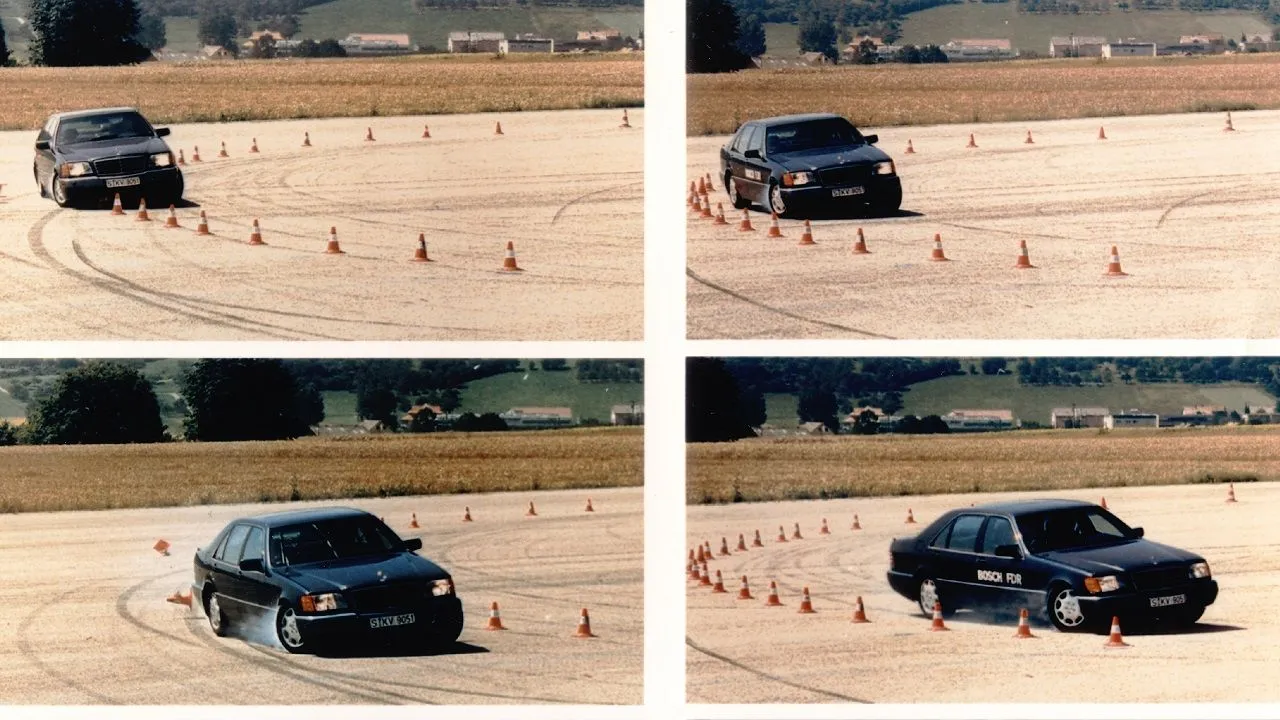
Bosch is celebrating 25 years of its electronic stability program or ESP, which was first introduced in a Mercedes-Benz S-Class in 1995. Here's how this 'anti-skid' system has been saving lives and preventing drivers from ending up in a ditch since its inception.
Electronic Stability Program (ESP) is now a very common jargon in the automotive world. But did you know this technology was first launched in a car way back in 1995? Yes, it was exactly two-and-a-half decades ago when Mercedes-Benz introduced ESP in an S-Class - or S600 Coupe, to be more precise. The development of ESP was a joint effort by Daimler and Bosch in the 1990s, and today it’s undoubtedly one of the most crucial life-saving features in a vehicle. So, given the popularity and significance of ESP, Bosch is celebrating 25 years of its ‘anti-skidding’ technology.
According to Bosch, since the introduction of ESP, over 15,000 lives have been saved in the past 25 years, while the anti-skid system has prevented just under half a million accidents involving personal injury. To many this may seem like a glorified stat, however, if you’ve driven a car with ESP in tricky conditions – wet or icy roads, gravel, dirt, etc – you’ll know that it’s a godsend feature to average drivers - it's life-saver in the true sense of the word. Not only that, even during emergency manoeuvres or while driving too fast around corners, ESP intervenes to help the driver regain car control. If Bosch is to be believed, over 80% of all skidding accidents can be prevented with the help of ESP!
How does ESC work?
Since Bosch is celebrating 25 years of ESP, it’s worth reminding ourselves as to how the system works. But before that let’s quickly take a trip down memory lane. The story behind this goes a long way back to the 1980s. However, at that time, both Bosch and Daimler were working on vehicle stability systems independently. From 1992 until its market launch in 1995, the two firms worked together with a common goal and successfully introduced ESP in road cars, starting with the S-Class.
As for its working principle, ESP works in conjunction with the Anti-lock braking system (ABS) and Traction Control (TC) system, but does ‘considerably’ more. While ABS and TC only work in specific situations, ESC, on the other hand, monitors a vehicle’s movement constantly. As soon as it detects slip, the system intervenes and actively counteracts them. For this, the system uses information about vehicle dynamics via various sensors. The system detects whether the car is heading in the direction where it’s been steered. If it detects any discrepancy between the two factors, it immediately springs into action. The ‘smart sensors’ used by ESP compare steering angle and vehicle trajectory 25 times a second, and if they diverge, the system immediately reduces engine torque and applies brakes on individual wheels, so as to prevent the car from skidding or losing control.
While ESP isn’t a common feature in mass-market cars in India as yet, a lot of mainstream sedans/ SUVs have now started featuring this system, and the technology is expected to trickle down to smaller cars/ hatchbacks in the future. In global markets, many countries have made ESP a mandatory fitment on passenger and commercial vehicles. In fact, if Bosch is to be believed, 82% of all new vehicles around the world are equipped with ESP.
Also read,
Bosch Virtual Visor showcased at CES 2020
In conversation with Geoff Liersch, Global Head of Two-Wheeler and Powersports Business Unit, Bosch