BMW F 900 GS Adventure vs R 1300 GS Comparison - Identity Crisis
One is the spritual successor to a legend, the other is a radical step into the future. But which GS is the right adventure tourer for you?
By Karan Mathur
Photography By Hiyan Chauhan

When you think of adventure motorcycles, one image instantly comes to mind – a BMW GS. For years, the big boxer-twin has reigned as the undisputed king of the class. But now, things have changed. The all-new R 1300 GS has arrived, and it’s sharper, lighter, and distinctly more road-focussed than ever before.
Also Read: BMW R 1300 GS Review: The Big Daddy of ADVs Has a Change of Heart
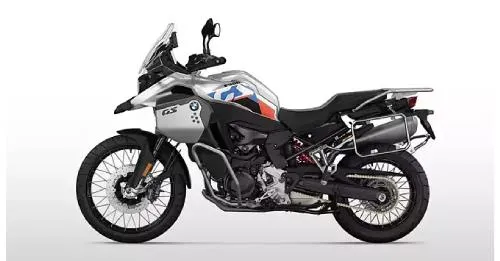
So, the question is – in its pursuit of on-road perfection, has it sacrificed the rugged, go-anywhere spirit that made the GS name legendary? Ironically, the answer might be sitting right next to it. The F 900 GS Adventure, a middleweight by designation, seems to have inherited the very soul of the old R 1250 GS.
But this isn’t a straightforward comparison of which bike is better. It’s an exploration of two philosophies wearing the same iconic badge. And the only way to do it was to take both machines off-road and push them to their limits. And that’s precisely what we did.
Boxer Punch vs. Parallel Prowess
At the heart of these two machines lie two very different personalities. The R 1300 GS comes with an all-new 1300cc ShiftCam boxer engine – a powerhouse producing 145bhp and 149Nm of torque. The best way to describe its power delivery is as a force of nature – a gut-punch of acceleration that demands you keep up. In contrast, the F 900 GS Adventure’s 895cc parallel-twin feels far more playful. With 103bhp and 93Nm on tap, its power delivery is linear and exploitable – even if you stay in the same gear, you feel you can get more out of it.

Also Read: BMW R 1250 GS Pro First Ride Review
While both are deceptively fast on the highway, their personalities diverge in how they gain speed. The 1300 is an effortlessly potent continent-crosser. You can engage top gear and ride it all day. The 900, with its 270-degree crank, feels more engaging and visceral; it’s an engine that begs you to wring its neck and keep it in the power band, especially on open trails. In terms of refinement, it’s a trade-off. The 1300’s boxer is smoother at high RPMs, but you feel its characteristic vibrations at a standstill. The 900, on the other hand, is calmer at idle but sends a few tingles through the mirrors and bars when cruising.
-1760433160336.webp)
And for those who crave a bit of drama, the 900’s stock exhaust note is surprisingly more characterful, with pops and bangs on the overrun that the more clinical 1300, even with its factory Akrapovič option, can’t match.
The Magic Carpet Trade-Off
For years, the big GS was famed for its ‘magic carpet ride.’ In a surprising turn of events, it’s now the F 900 GSA that has inherited this trait.
Also Read: BMW F 850 GS Adventure Review: First Ride
Whether you’re seated or standing on the pegs, the GSA simply glides over rough terrain, its long-travel suspension insulating you from whatever lurks beneath. The R 1300 GS, with its new anti-dive Telelever Evo front and Paralever rear setup, has become a sharper, more clinical machine. It feels stiffer and more connected to the surface – a quality that makes it a phenomenal tarmac tool, but it also means that you feel more imperfections.

Where the 1300 truly shines is in its newfound agility. It tips into corners with an ease that belies its size and is surprisingly adept at manoeuvring through city traffic. The 900 GSA, with its 21-inch front wheel and higher centre of gravity, feels more playful on technical trails but demands more muscle around corners. It’s a classic trade-off – the 1300 offers better precision on the road, while the 900 delivers forgiving, playful composure on the trail.
The Weighting Game
Here’s where the R 1300 GS pulls off its greatest magic trick. With a kerb weight of just 237kgs, it’s 12kgs lighter than the old R 1250 GS and a full 9kgs lighter than the supposedly smaller F 900 GSA, which tips the scale at 246kgs. Combine that with a lower 850mm seat height, and the big GS suddenly becomes shockingly approachable. You sit in the 1300, not on it; it feels compact and far less intimidating to manage at low speeds or in a parking lot.

The F 900 GSA, true to the spirit of the old 1250, is every bit the behemoth. Its 875mm seat height and broad, muscular fuel tank give you a towering, SUV-like perch to look down on the world. For taller riders, this stance is magnificent, but on uneven ground, it can be a handful when you come to a stop.
Both offer a comfortable, upright riding posture, but the R 1300 GS is undeniably the easier and more confidence-inspiring machine for a wider range of riders. A rare twist, then, where the bigger bike feels more manageable than its middleweight sibling.
Wizardry vs. Wisdom
When it comes to technology, the R 1300 GS seems to be in an entirely different ballgame. With features such as radar-based adaptive cruise control, forward collision warning, and a highly sophisticated semi-active suspension system, it’s a rolling showcase of electronic wizardry. But that brilliance comes at the cost of simplicity. Adjusting the windscreen or switching traction control modes often requires a deep dive into its labyrinthine menu system.

The F 900 GSA, on the other hand, embodies a simpler wisdom. Key functions are just a touch away – a dedicated button to disable traction control on the fly, and a manual lever for quick windscreen adjustment. Out on the trail, this accessibility is invaluable; you can tweak settings without ever taking your eyes off the terrain. And for riders who prefer remote, off-beat adventures – far from the nearest service centre – the 900’s straightforward, more accessible electronics offer a greater sense of reassurance.
So, Which GS is Right for You?
In the end, this comparison revealed a fascinating truth: the F 900 GS Adventure has become the spiritual successor to the R 1250 GS. It carries the same rugged build, magic-carpet ride, and commanding presence that defined the big GS for a generation. It’s the playful, off-road-focussed choice for the rider who enjoys when the going gets tough.

The R 1300 GS, on the other hand, has evolved into something altogether new. It’s a supremely capable, deceptively easy-to-ride, and technologically advanced touring machine that excels on the tarmac. This is the bike for the rider who wants to cross continents in a day with unmatched comfort and surprising agility.
BMW hasn’t merely updated its line-up; it has artfully split the GS spirit into two distinct yet brilliant machines, ensuring that regardless of your definition of adventure, there’s a GS with your name on it.

Engine: 1300cc Boxer-Twin
Transmission: 6-Speed
Power: 145bhp
Torque: 149Nm
Fuel: Petrol
Price: ₹22 Lakh (Ex-showroom)
X-Factor: Sophisticated and shockingly agile on-road tourer, combining cutting-edge tech and continent-crossing capability.
|
Pros |
Cons |
-1773854031122.webp "BMW M2 CS Launched in India at Rs 1.66 Crore")