2025 Royal Enfield Hunter 350 Review: Even More Attractive?
Is the new Hunter a meaningful upgrade or just an attempt to tick the update box? We ride the bike to find out how useful these updates are and how they change the value proposition of the Hunter in the current market.
By Aakash S Paul
Photography By Hiyan Chauhan

Let me begin with a confession. I’ve had a soft spot for the Hunter 350 ever since its launch. The idea of a compact and fairly agile neo-retro 350 with minimal electronics always appealed to me. So, when Royal Enfield updated the bike, I was quite happy to see that most of the things that I admired in it remained intact, while some welcome quality-of-life improvements were added, at least on paper. According to the company, these updates are the result of customer feedback. So naturally, I wanted to find out how well these changes hold up in real-world riding conditions.
2025 Royal Enfield Hunter 350: Visual Changes
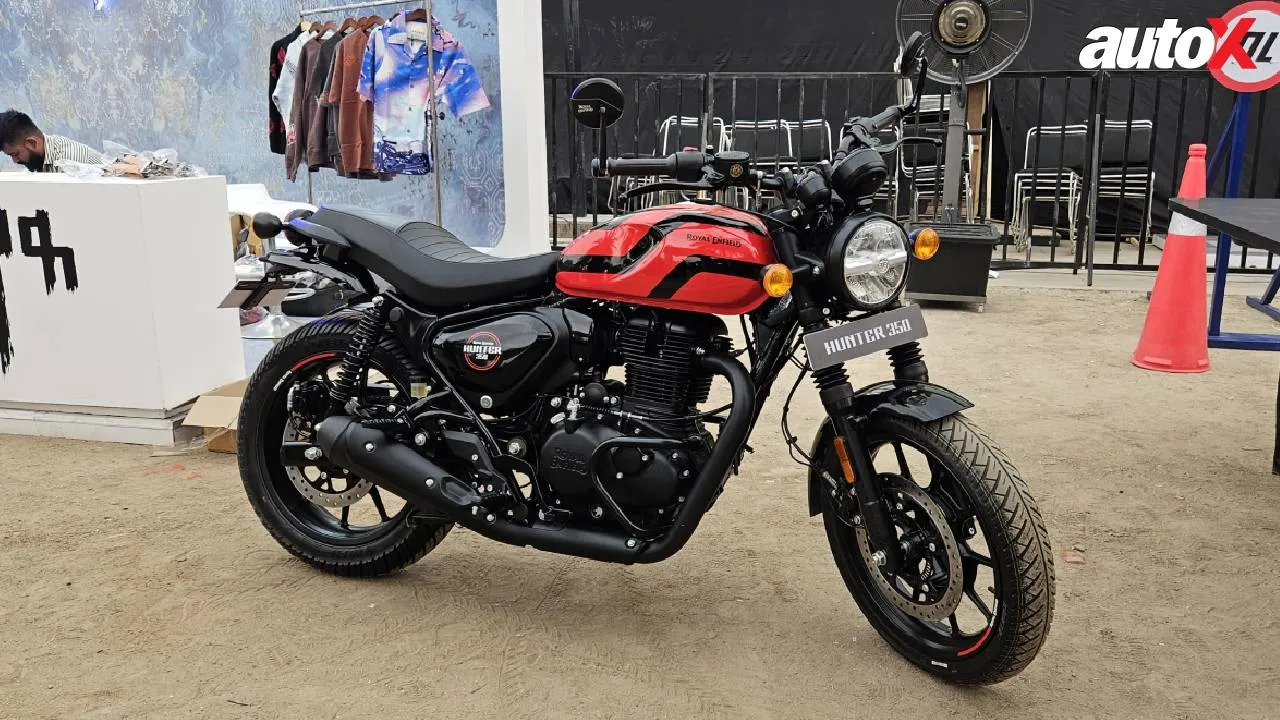
With this update, the Hunter 350 is offered with three new colour options – one of which, the London Red, was the variant that we had on test. The graphics are tastefully done – they are not too flashy but visually appealing. More significantly, the halogen headlamp has been replaced with an LED unit. That said, the base model still comes with the old halogen unit.
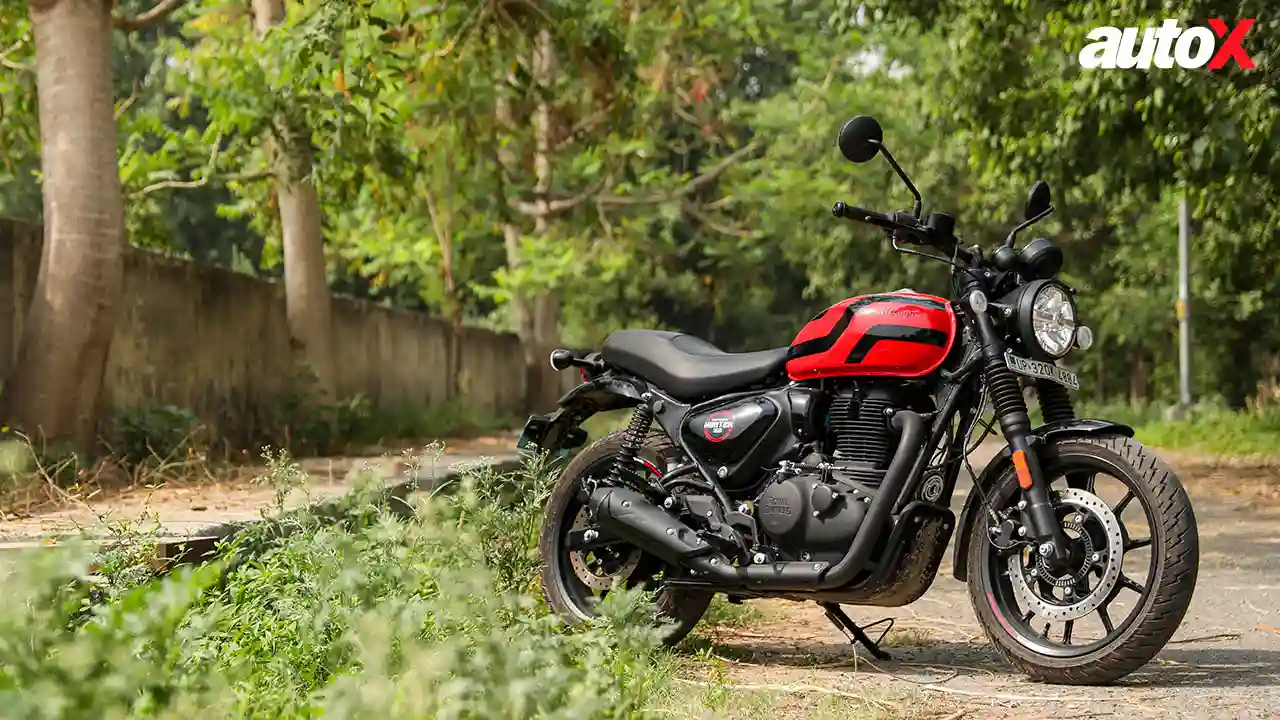
Now, I haven’t been particularly impressed by the LED lights on other RE models, so I kept my expectations in check. Surprisingly, though, the new unit on the Hunter managed to exceed them. The throw is actually quite decent, even on low beam. That said, I do feel that the intensity could’ve been dialled up a bit more. At sane city speeds, it performs well. But when you are relying solely on the headlamp, especially when you have to deal with the glare from oncoming traffic, it becomes clear that even the high beam doesn’t offer much in terms of illumination.
2025 Royal Enfield Hunter 350: Features
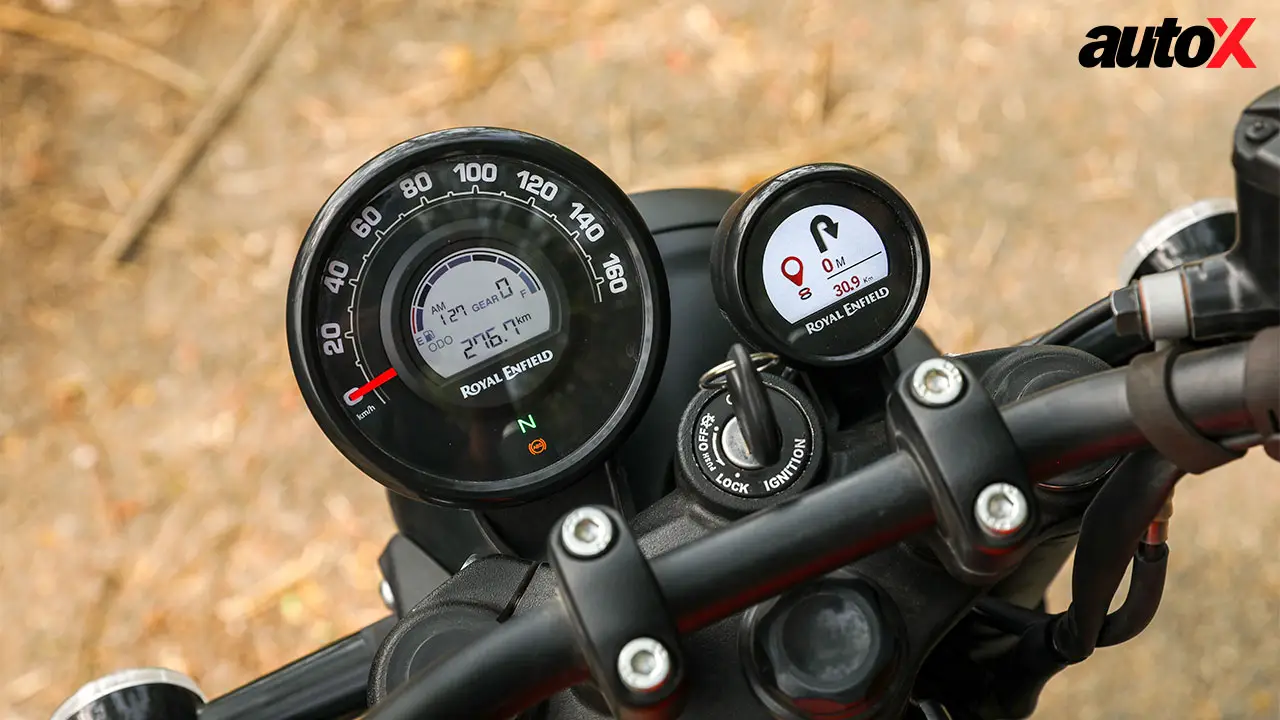
The Hunter 350 now comes with the Tripper navigation pod, which pairs with your smartphone to provide turn-by-turn navigation. The connection process is quick and easy, making it quite user-friendly. Although, I wish that RE had taken this opportunity to add either a real-time mileage display or a distance-to-empty readout.
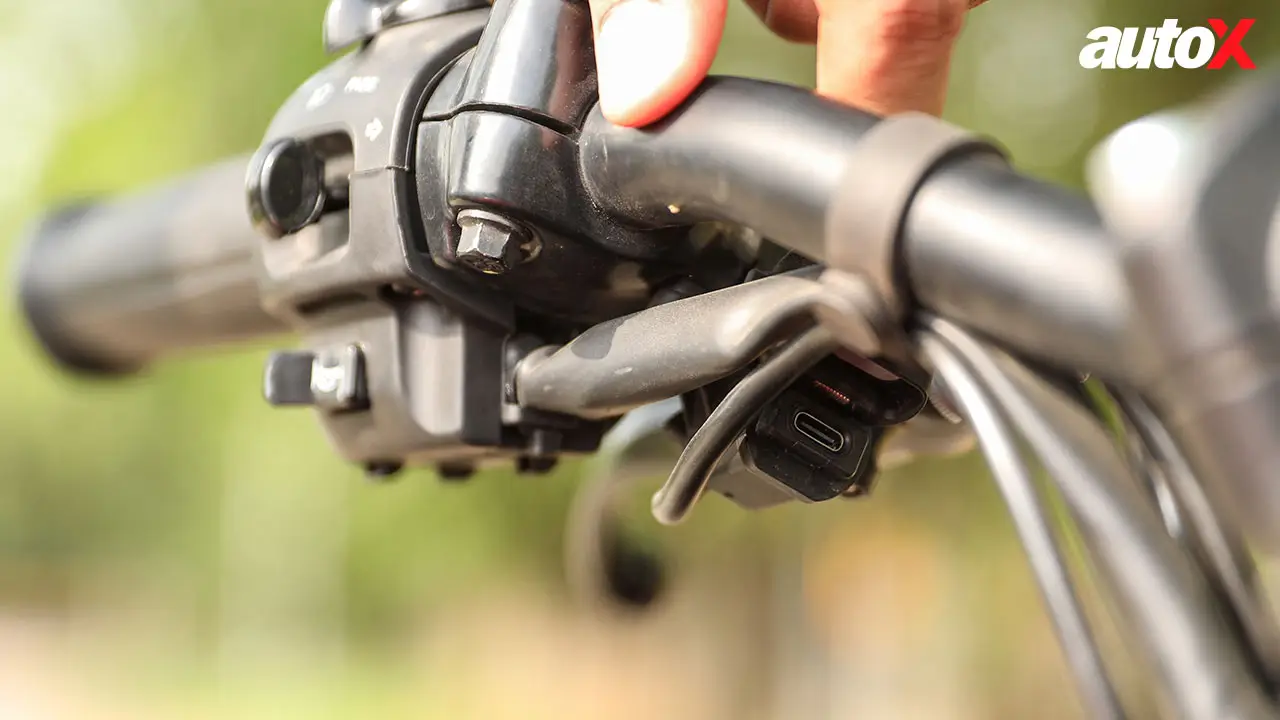
Another new feature is a Type-C fast charging port. It’s definitely a convenient upgrade, although I did find its placement slightly awkward. Still, the 27W fast charging capability is a welcome addition, especially on longer rides when keeping your device charged matters.
But my favourite feature addition is the slip and assist clutch. Now, the clutch pull is so light that you can operate it with just a single finger – a true blessing in bumper-to-bumper traffic, which, let’s face it, is nearly constant in most cities. Not only does it improve everyday usability, but it also makes rev-matching and aggressive downshifting much smoother, without unsettling the bike.
Also Read: Yamaha FZ-S Fi Hybrid Review: New Trick Pony
The engine specs remain unchanged — 20.2bhp and 27Nm of torque from a 349cc single-cylinder air- and oil-cooled engine. The outputs are more than sufficient for both city riding and relaxed cruising. Thanks to the strong mid-range and tall third and fourth gears, you won’t find yourself constantly shifting. What’s more, the engine does not feel stressed and remains composed even at speeds of 80 – 90km/h.
2025 Royal Enfield Hunter 350: Ride Experience
Now, let’s talk about the rear suspension, which has also been changed. The new setup has been tuned for a more compliant ride, and while it’s certainly an improvement over the outgoing model, I wouldn’t call it transformative. You still feel bumps and road imperfections, especially over speed breakers and rough patches.
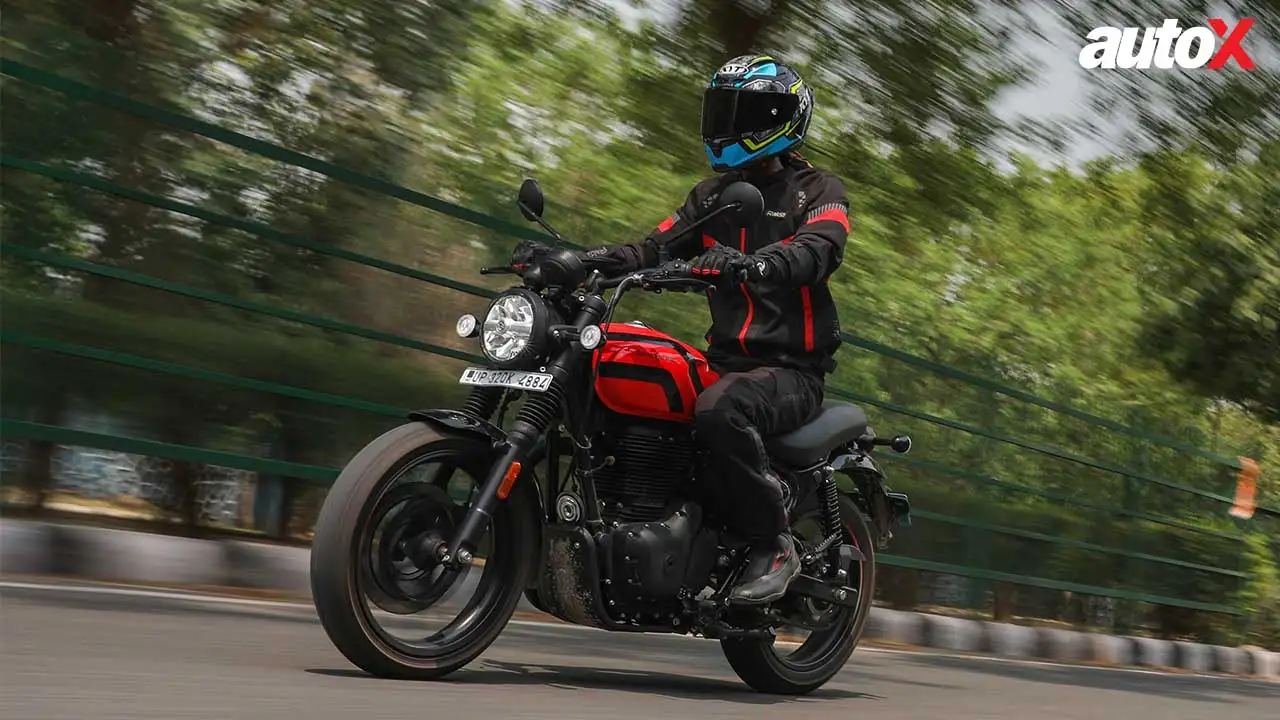
Royal Enfield has also reworked the seat, using new foam to enhance comfort. However, I am not sure if it’s a successful change. The edges of the seat are a bit too firm, and discomfort starts to creep in after about half an hour on the saddle. Another problem is the seat’s contour, which tends to push you towards the front, which is not very comfortable. Even if you try sitting further back where the cushion is wider, you will find yourself sliding forward after a while. So, while there’s been some effort to enhance comfort, the results aren’t game-changing.
That said, the ride does feel a little more settled with a pillion on board – the added weight seems to help the rear suspension work better. Thankfully, despite the changes in the suspension, the bike is still as agile and fun as ever. It remains quick to respond, light on its feet, and an absolute joy in tight U-turns or sudden direction changes – in short, it’s still a very fun bike to ride.
Also Read: BSA Scrambler 650, Bantam 350 Debut Globally – Will They Cruise Into India?
Another welcome change is the increased ground clearance. By rerouting the exhaust, RE has been able to increase it to 160mm. While the previous version didn’t suffer from any major issues in this regard, more ground clearance is always a welcome addition, especially when it comes without increasing the seat height – it’s unchanged at 790mm, making the Hunter quite accessible for a wide range of riders.
2025 Royal Enfield Hunter 350: Price & Verdict
The base price of the Hunter 350 still remains ₹1.50 lakh, which means that it offers great value for money. It’s only when you opt for the mid or top variants that you have to pay a little over ₹7,000 more compared to the outgoing model. In my opinion, the slip and assist clutch alone makes that hike justified. The added features like Tripper navigation and USB charging only sweeten the deal further. My only real complaint is that the rear suspension is still not comfortable enough. That said, if you want a smart and nimble 350cc motorcycle with a great engine, the Hunter is one of the most compelling choices in its class.
Engine: 349cc Single-cylinder
Transmission: 5-Speed
Power: 20.2bhp
Torque: 27Nm
Fuel: Petrol
Price: ₹1.82 Lakh Ex showroom
X-Factor: The fun and petite Hunter is now friendlier to ride while not costing a lot more.
|
Pros |
Cons |


-(17).webp "Royal Enfield Hunter 350 vs TVS Ronin Spec Comparison: What's Different?")


