BMW F 450 GS Review: The Perfect GS for India?
Can the BMW F 450 GS really deliver everything expected from the perfect India-ready GS, or is this just another shiny adventure motorcycle?
By Shivank Bhatt

-1777198502338.webp "BMW F 450 GS (5)")
At long last, the all-new BMW F 450 GS has arrived in India. Albeit, that’s a bit of a misnomer because the F 450 GS is made exclusively in India, for the world. However, the new twin-cylinder baby GS has now gone on sale in the country. And now it’s time to answer the most important question: is this the perfect GS for India? We got a little taster of the GS in and around Goa, so here’s what we think…
BMW F 450 GS Review: Power Packed
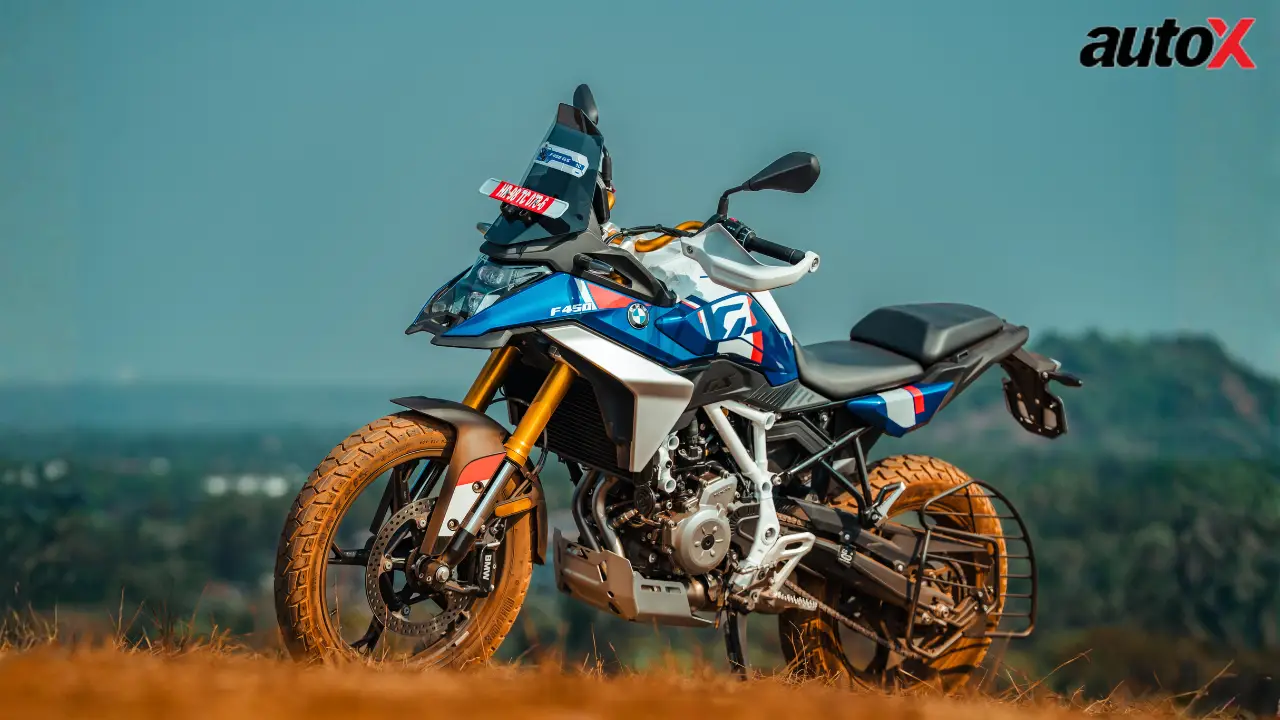
There’s no denying that it looks like a proper GS motorcycle; the dimensions and proportions are absolutely spot on: it looks stunning from all angles. The 450 GS sits on a wheelbase of 1,465 mm, which means it’s around 40mm longer than the GS 310. That said, it’s still a wee-bit shorter than both the Royal Enfield Himalayan & KTM 390 Adventure.
Now, coming to the variants on offer, there are three: Base, Exclusive, and the top-end GS Trophy, the one we tested.
The base version is only available in a Cosmic Black colour scheme. It also doesn’t get a flyscreen, engine guard, or hand guards, so it looks quite basic. However, in terms of equipment, it gets a lot of goodies. You get a 6.5-inch TFT display, along with three riding modes, namely Rain, Road and Enduro.
-1777198470241.webp)
Heated grips are standard as well, and all three variants share the same engine: a 420cc inline-twin producing 47bhp and 43Nm of torque. The engine is paired to a 6-speed gearbox, which comes with a slipper clutch. Suspension duties are handled by a monoshock at the rear, adjustable for rebound, and a 43 mm upside-down fork at the front.
In terms of hardware, it rides on a 19-inch front wheel and a 17-inch rear wheel. Coming to the brakes, it gets a 310mm single disc with a four-piston calliper at the front and a 240mm disc at the back. These are common across all three variants.
Now, moving on to the Exclusive variant, it adds a flyscreen, hand guards, and a plastic engine guard. More importantly, it also gets a quickshifter and an additional Enduro Pro mode. These are essentially the key additions over the base version. However, even the Exclusive is only available in a single Cosmic Black shade.
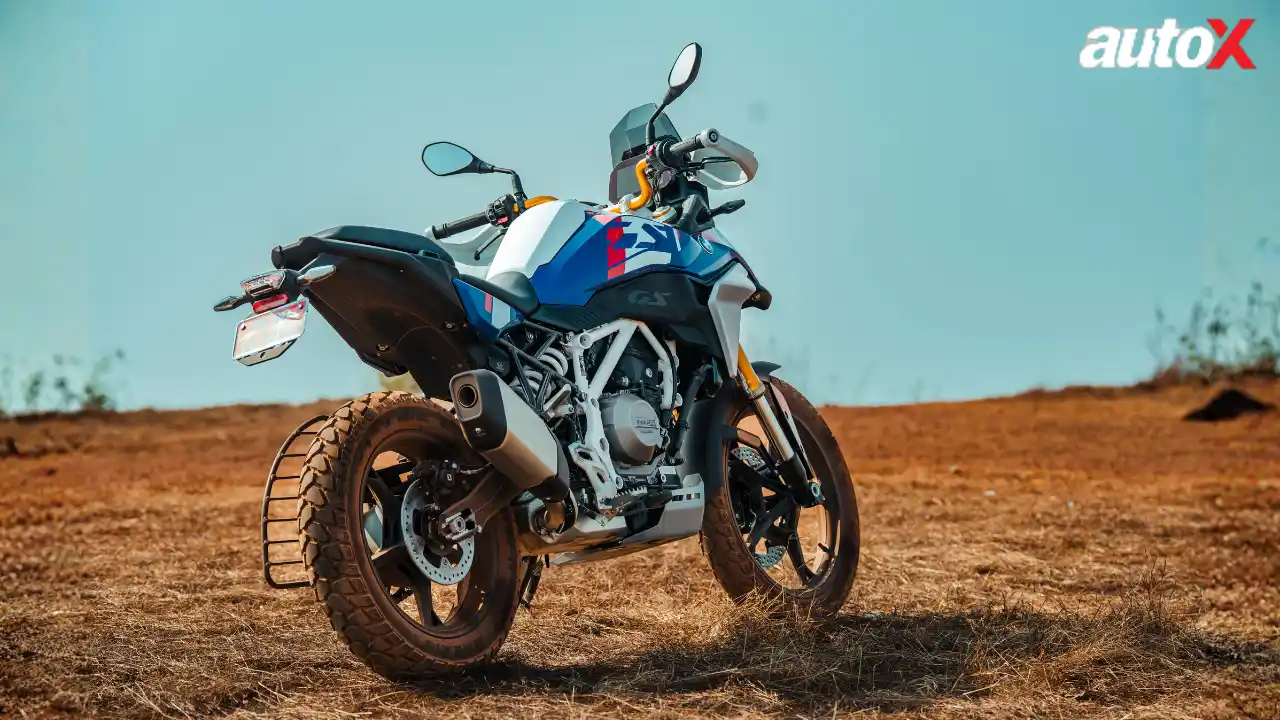
Finally, we come to the GS Trophy version. This one looks the part: it gets the iconic GS Trophy livery with Racing Blue metallic paint, along with matching white accents on the hand guards and chassis. It also gets an aluminium bash plate and a tinted black flyscreen.
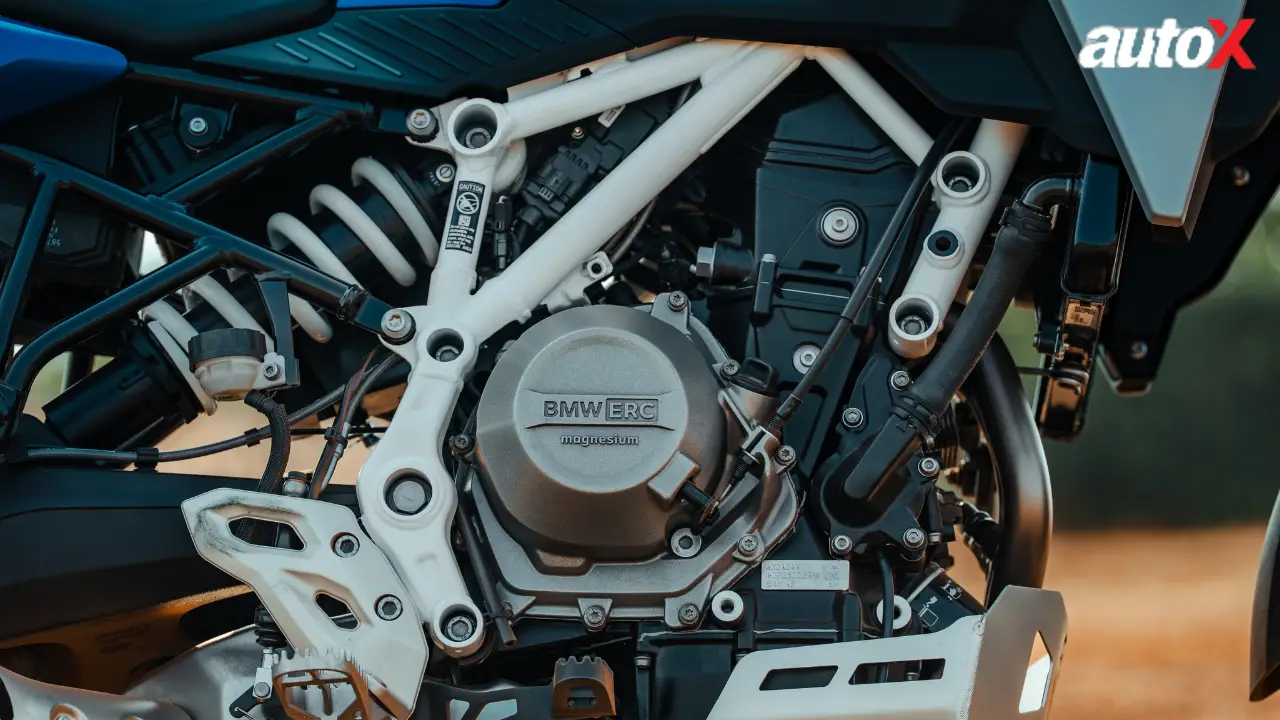
But more importantly, it adds two crucial upgrades over the other variants. First, you get fully adjustable sport suspension, meaning you can adjust both rebound and compression at the front. And second, it gets BMW’s new ERC, or Easy Ride Clutch.
Now, the ERC clutch is essentially a centrifugal clutch that automates the function of a conventional clutch. What that means is, you don’t really have to use the clutch when starting off or coming to a stop. It almost feels like an automatic, although you still have to shift gears manually.
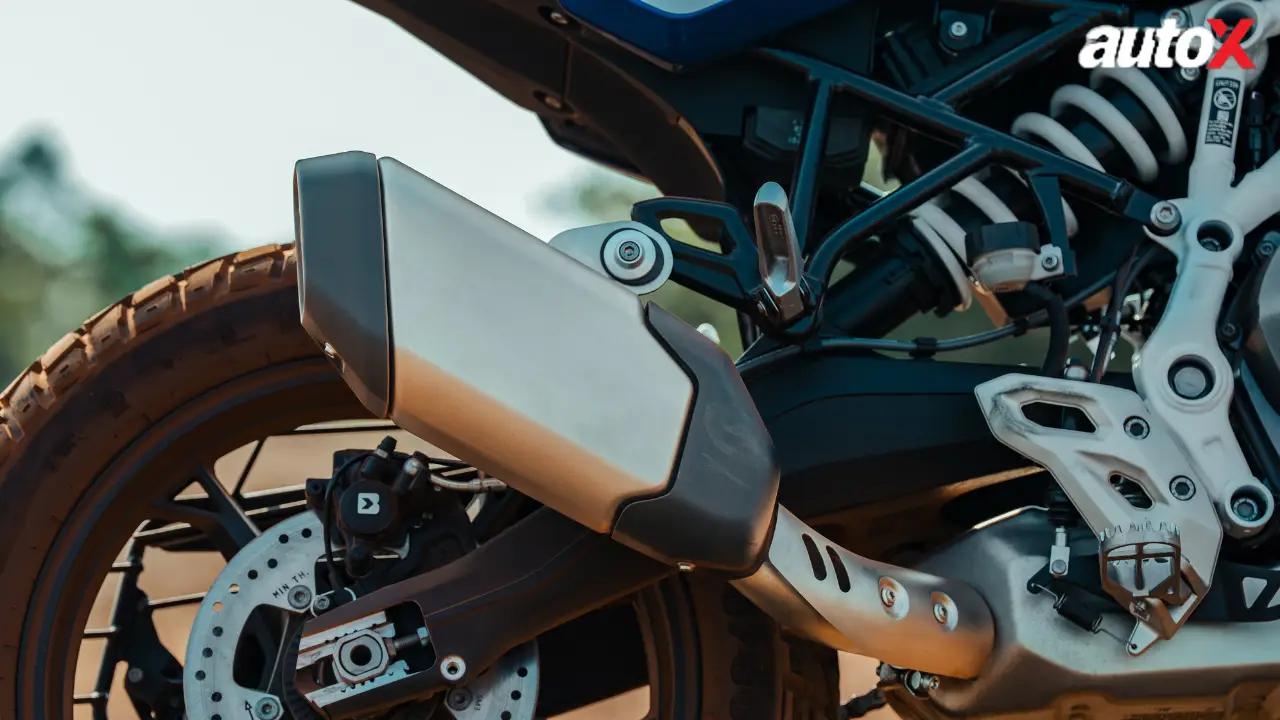
Even from a standstill, all you need to do is slot it into first gear and start rolling. And when you come to a halt, you just need to shift down: the system takes care of the rest. The clutch engages automatically at around 2700 rpm, and below that, it won’t let the bike stall.
In theory, it might sound a bit complicated, but in real-world use, it’s actually quite seamless.
BMW F 450 GS Review: Light is Right
The 420cc motor produces 47bhp and 43Nm of torque. On paper, those are respectable numbers, but the real highlight is how light the motorcycle is. That gives it a very impressive power-to-weight ratio, and you can immediately feel that on the move.
-1777198483905.webp)
The engine has plenty of low-end grunt, which makes it very usable. Interestingly, BMW has gone with a 135-degree crank. Typically, parallel twins use a 180-degree setup, or sometimes a 270-degree crank to mimic a V-twin character. But this 135-degree setup is a bit unconventional.
Why did they do that? The idea was to combine the best of both worlds: to give it the character and sound of a V-twin, while retaining the smoothness of a 180-degree parallel twin. And out on the road, you can actually feel that balance.
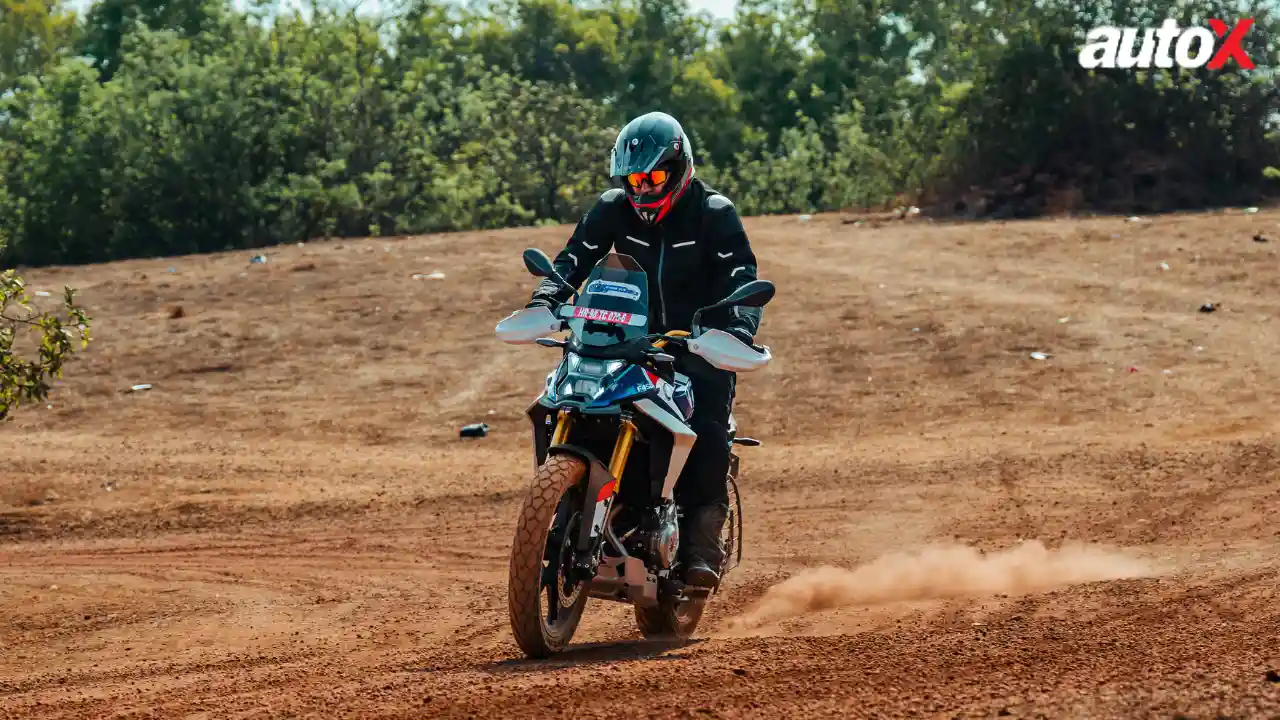
The engine has a nice, throaty note, something you’d expect from a 270-degree twin, but at the same time, it remains very refined. You get a bit of ‘character’ in the sound, but without unwanted vibrations, especially in the lower rev range. Up to about 6,000–7,000 rpm, it feels quite peppy. There’s enough performance on tap, and you don’t really need to work the gearbox too much.
Our ride time was limited, so we only had the bike for about two hours, and most of that was spent riding through Goa’s busy city streets. This meant I didn’t really get the chance to explore its full performance on the highway.
But in the city, it felt absolutely spot on. The ERC (Easy Ride Clutch) works brilliantly here: it almost makes the bike feel like an automatic. You can just slot it into second gear and ride through traffic with ease. There’s enough torque to keep things moving without constantly shifting gears, which makes it really enjoyable.
-1777199129015.webp)
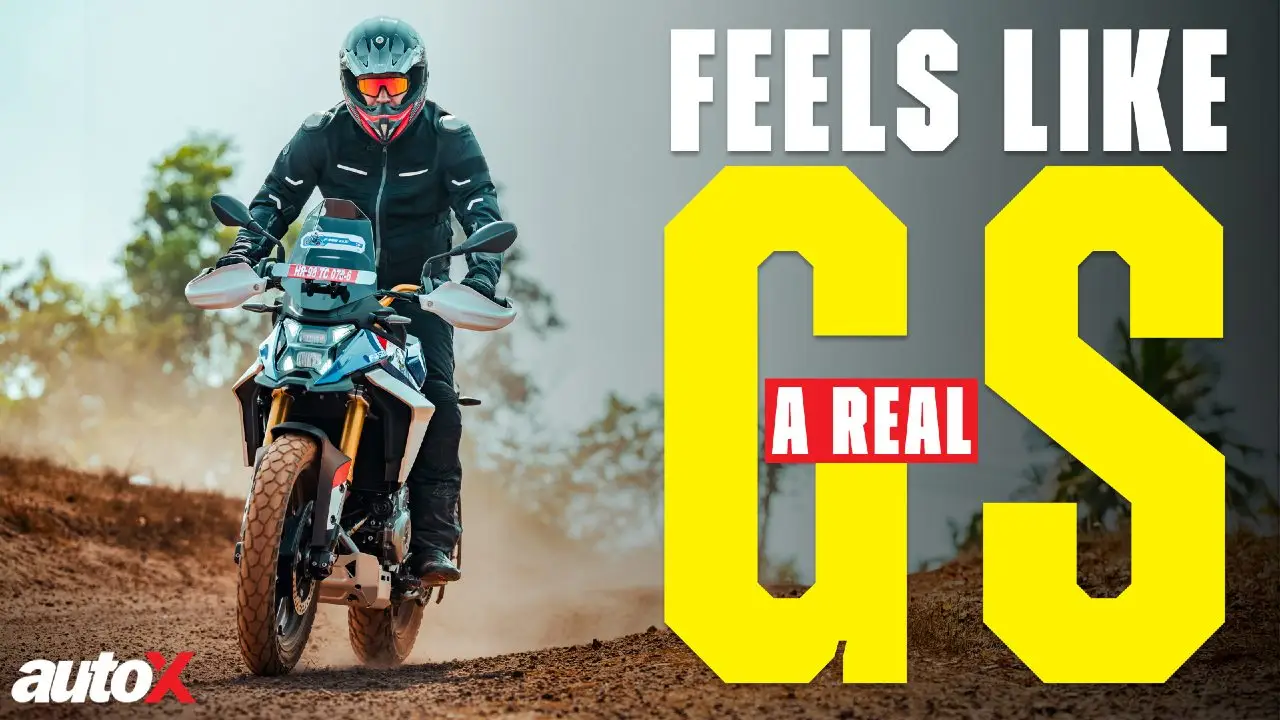
I also managed to spend a bit of time on a trail, and that’s where things got even more interesting. The clutch system really helps at low speeds, especially in tricky sections. And once you pick up the pace, the balance, grip, and braking performance all come together beautifully.
Another highlight of the 450 GS is how easy and accessible it is. And this comes down to its weight. Tipping the scales at just 178kg (wet), the GS is amongst the lightest ADVs in its segment, and this is something that you notice immediately on the go. The standard seat height is 845mm, which is a touch tall for an average-height Indian (5’8), but again, on the move, it won’t bother you much. Plus, BMW is going to offer you low seat (830mm) & Rally seat (865mm) options, albeit they’ll come at an additional price.
-1777198511113.webp)
Overall, whether you’re an intermediate or even a relatively new rider, the kind of confidence this GS inspires is seriously impressive. A lot of that comes down to its light weight and accessible power delivery. It’s never intimidating, but it’s not boring either: if you push it, it will definitely reward you.
BMW F 450 GS Review: Moves like Jagger!
The GS Trophy version gets fully adjustable suspension. While we didn’t get enough time to really fine-tune or experiment with the settings, the default setup felt very well judged. It’s soft enough to absorb bumps and undulations comfortably, but at the same time, it’s firm enough to keep you in control when you’re pushing harder. It feels planted, composed, and very predictable.
-1777198494944.webp)
In typical BMW GS fashion, the balance is spot on. You can ride at very low speeds, manoeuvre easily without putting a foot down, and it just gives you a lot of confidence.
For someone new to off-road riding, this is a great starting point. It encourages you to push a little harder, try new things, and enjoy the experience without feeling overwhelmed.
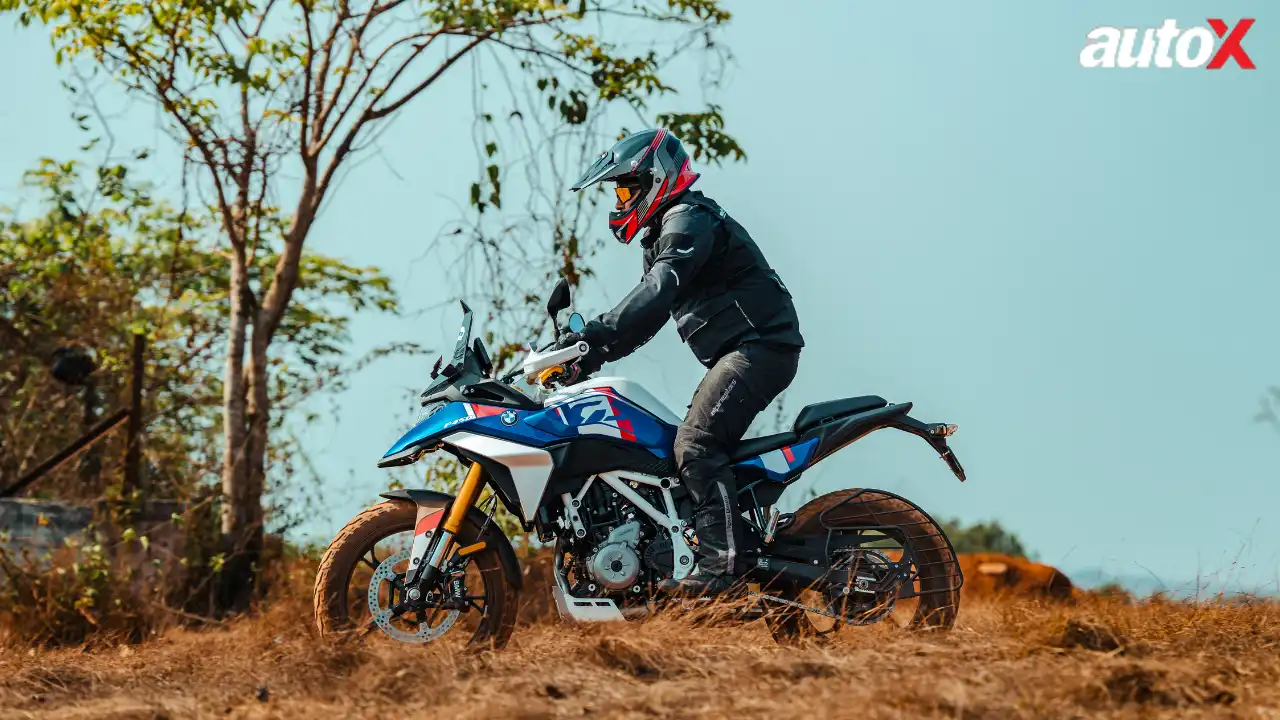
The electronics also play their part really well. You get Enduro Pro mode on the GS Trophy and Exclusive variants. In this mode, the rear ABS is disengaged, and the electronic aids loosen up, allowing you to slide the rear and have a bit more fun, all while still feeling natural and predictable.
To sum it up, this is where the 450 GS really stands out. It genuinely feels like it carries the GS DNA: approachable, capable, and incredibly confidence-inspiring.
BMW F 450 GS Review: Verdict
BMW has launched the F 450 GS starting at Rs 4.70 lakh ex-showroom for the Base variant. The Exclusive variant is priced at Rs 4.90 lakh and the GS Trophy has a sticker price of Rs 5.3 lakh. If you’re wondering where the version with cross-spoke wheels is, well, BMW will be offering spoke wheels as an accessory among other things.
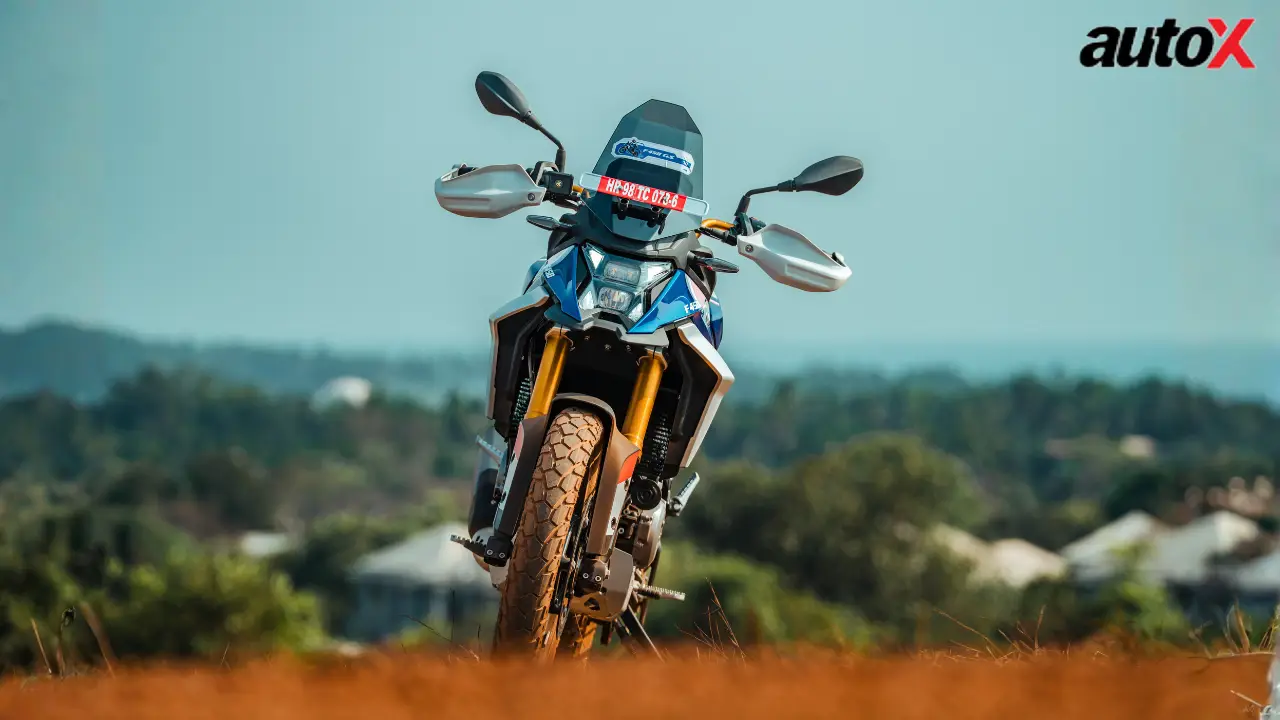
While the company hasn’t revealed the official prices for the accessories, our guess is that spoke wheels will cost around Rs 60,000-80,000. So, you can expect a fully kitted GS for around Rs 6 lakh ex-showroom.
Also Read: BMW F 450 GS Launched in India at Rs 4.70 Lakh
At that price, it may seem a little overpriced, but when you consider everything, including the new GST structure for 350cc and above motorcycles, the prices are spot on. More importantly, the 450 GS truly delivers on its promise of being a GS. Long story short, it’s the perfect GS for India. The only hurdle for BMW is that they won’t be able to build them fast enough!
-1762317924611.webp "BMW F 450 GS Pre-Bookings Open Ahead of India Launch on 23 April")