Mahindra XEV 9e vs Hyundai Creta EV vs Tata Harrier.ev Comparison - Circuit Breaker
How do your humble family e-SUVs fare against each other on the racetrack? A question no one asked, but here we are with the answer nonetheless.
By Shivank Bhatt
Photography By Kapil Vashist

If you want to assess a person’s true character, watch how they behave when they’re angry. And if you want to test a vehicle’s engineering credentials, push it to its absolute limits on the track. Believe it or not, it’s only when you drive a machine at the edge of adhesion that its true capabilities, underlying engineering, and limitations are laid bare. And that’s precisely why we took the three seemingly humble family e-SUVs - the Hyundai Creta EV, Mahindra XEV 9e, and Tata Harrier.EV - for a day out on the track. Not to see if they can scorch the racetrack with blistering lap times, but to explore, or rather expose, their dynamic capabilities.
For this test, we used the shorter 2.1km layout of the BIC, which includes the racetrack’s fast-flowing and technical sections. The job was simple - push these three SUVs to achieve their fastest lap times and see how composed each one feels without falling apart!

Also Read: BMW iX1 vs Volvo C40 Recharge vs Kia EV6 vs Hyundai Ioniq 5
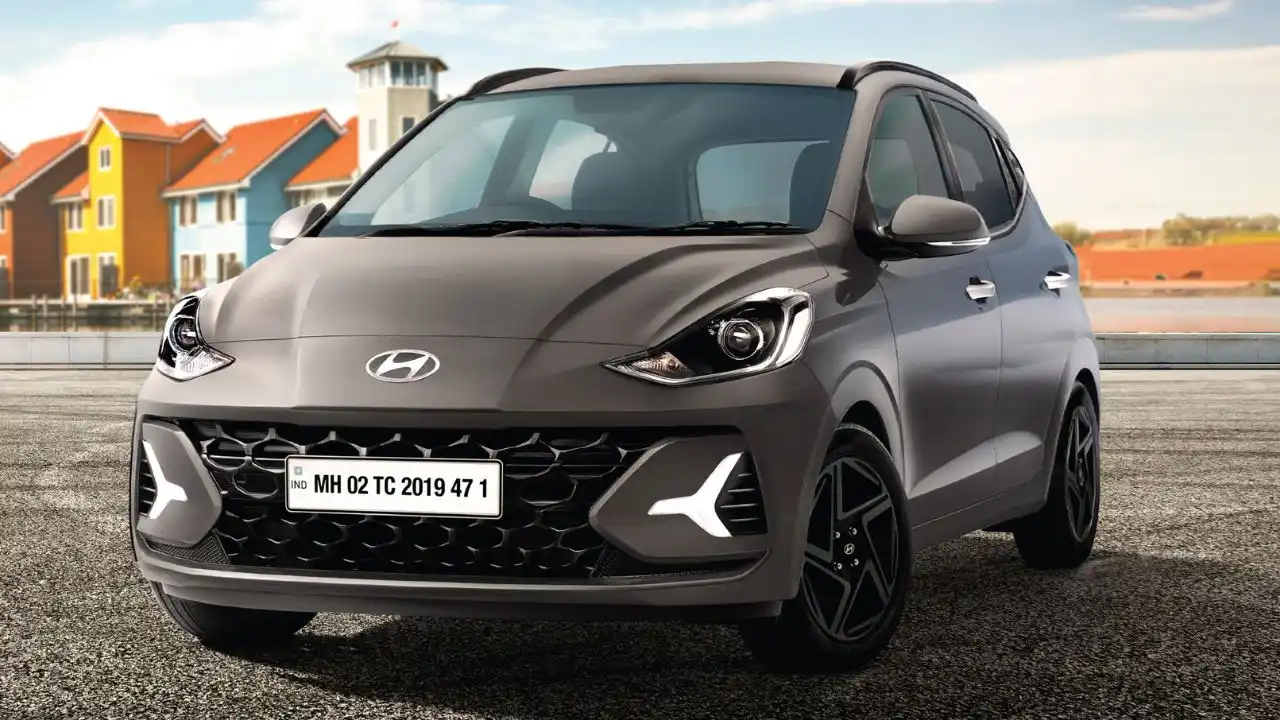
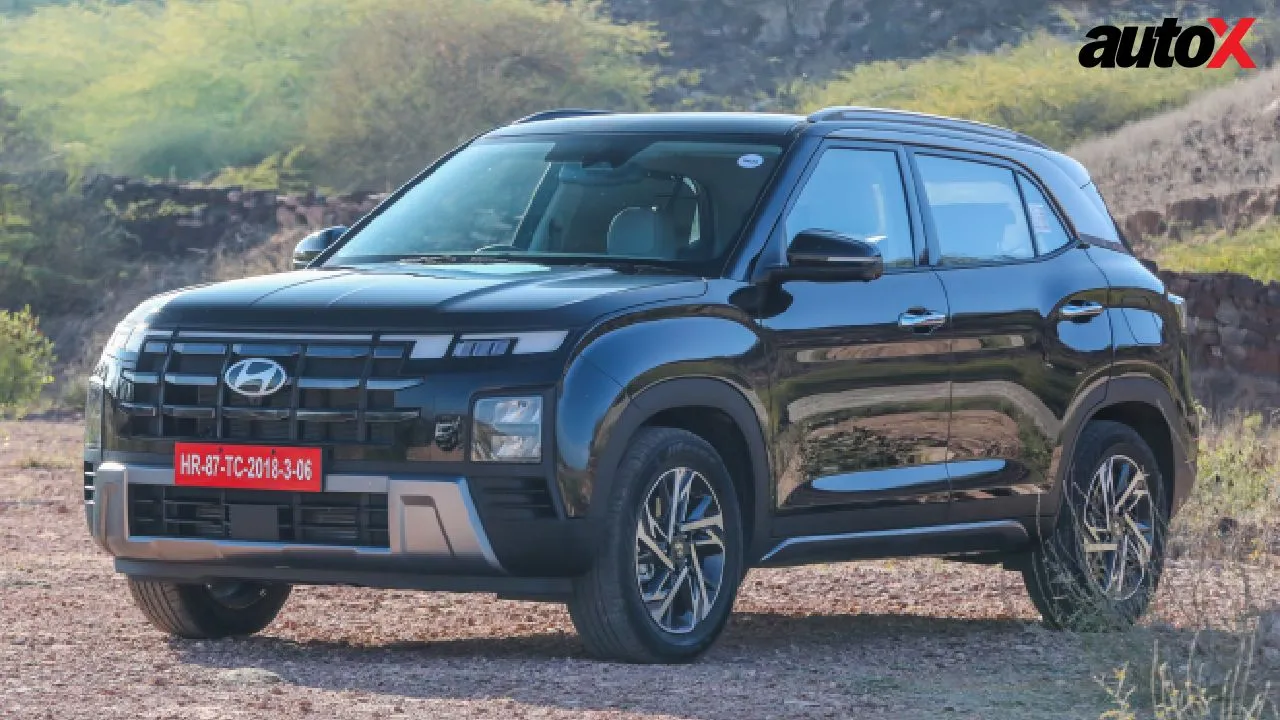
Hyundai Creta EV: The Quiet Evolution
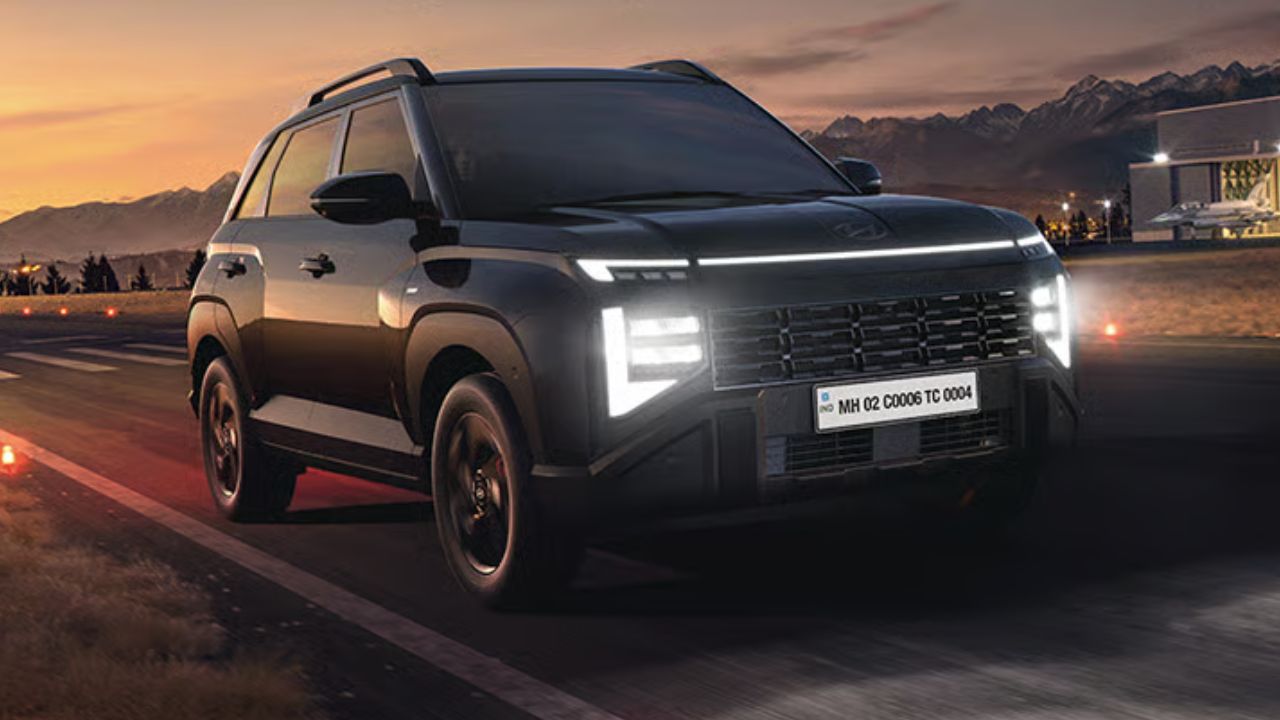
Of the three contenders here, the Creta is by far the most unassuming EV. Instead of wanting to look otherworldly, it sticks to the tried-and-tested formula of the ICE Creta and is all but indistinguishable from its petrol and diesel siblings. Coming to the technical details, the Creta EV isn’t built on a dedicated electric vehicle platform like the Kona or Ioniq 5. It’s basically your regular Creta that has been re-engineered under the skin to house electric architecture. Consequently, its dimensions are identical to those of the ICE version.

The only real difference lies in the weight - the Creta EV is around 250 - 300kgs heavier than the diesel Creta (1,265kgs), thanks to a big battery pack mounted in the floor. But that’s not necessarily a bad thing, for it results in a lower centre of gravity, which offers it an edge on the racetrack.
Despite being the least powerful (169bhp/255Nm) of the bunch, with the slowest 0 - 100km/h time of 7.9 seconds, the Creta EV posted the fastest lap time of the trio here. Surprising? Absolutely, but also true. And it’s all because of Hyundai’s meticulous engineering and how well each component has been integrated into the vehicle.
Also Read: How Has the Hyundai Creta Remained So Popular for Over 10 Years in India?
The Creta EV is available with two battery pack options - 42kWh and 51.4kWh - which power a motor mounted at the front axle. We tested the latter. The power delivery is seamless. It’s not blistering fast, but there’s a linear progression in the way it builds speed. This also means that the electronics don’t have to work overtime every time you plant your right foot on the A-pedal. Of the three EVs here, the Creta puts the power down in the most efficient manner, period!

It’s the same story in the dynamics department. Despite having the least impressive components on its spec sheet - standard dampers, torsion-beam rear axle, and 17-inch wheels - the Creta EV surprisingly offers a well-balanced handling experience. The steering is progressive and feels the most precise and direct of the three during quick direction changes. The body movements are well contained, with minimal body roll, all thanks to its low and heavy build.
Sure, the stock tyres do plead for mercy when pushed to the limit of adhesion, but even then, the grip levels are surprisingly impressive. The electronics are the most refined of the trio, never imposing harshly when you hustle the car around corners. To say that the Creta EV exceeded our expectations on the track wouldn’t be an exaggeration.
Mahindra XEV 9e: Space-age Ballistic
Mahindra’s new-age EV twins - the BE.6 and XEV 9e - have been making waves ever since they entered the Indian market. While both offerings are flying off the shelves, it’s the XEV that’s a more sensible choice for families, thanks to its more practical approach.

First things first, unlike the Creta EV or Harrier.EV, the XEV is a ‘born electric’ SUV, which basically means it’s built on a dedicated EV platform (INGLO) rather than a modified ICE platform. The XEV is easily the sportiest-looking SUV here, thanks to its spaceship-inspired coupe design, full of sharp creases and sleek angles. And it’s not just the outer appearance - it has equally impressive sporty credentials underneath.
At 4,789mm long with a 2,775mm wheelbase, it’s the longest EV here. It gets independent suspension all around, featuring a multi-link rear setup and semi-active dampers. The XEV is available with two battery pack options - 59kWh and 79kWh. We tested the version with the bigger battery pack, with the motor rated at 282bhp and 380Nm. Unlike the Creta EV, the XEV is driven by the rear wheels. Mahindra claims a 0 - 100km/h time of 6.8 seconds. On paper, the XEV seems to have a clear advantage over the Creta EV, and yet, it turned out to be slightly slower. Why?
Well, there isn’t a single reason. First and foremost is weight - at nearly 2,200kgs, the XEV weighs around 700kgs more than the Creta EV. When driving fast, you can feel its extra mass eat up half its firepower. That said, its acceleration is still brisk and seamless, although it doesn’t feel blisteringly quick as you’d expect from an EV with nearly 300 horses under its hood. In a straight line, it’s faster than the Creta EV for sure, but not by a huge margin.
Also Read: Mahindra XUV 9e First Drive Review: Resetting the Goal Posts
Around corners, the XEV’s rear bias and impeccable chassis balance shine through. The handling is taut, and the steering is precise. However, it’s not as wieldy as the Creta. Again, that comes down to its weight and relatively higher centre of gravity. In the XEV, you also feel that its electronics and tyres are fighting harder with the laws of physics to keep the SUV on line. What’s more, the power delivery to the wheels is directly linked to the steering angle - the ESC won’t let the motor unleash its full fury unless the front wheels are pointed straight. So, when you come out of a corner, there’s a bit of waiting before the XEV can slingshot out.

You can take a wider line and use the full width of the track (including kerbs) to cut lap times marginally. And while you’re at it, the BIC’s wide kerbs let you appreciate the supple and absorbent nature of its suspension, which is definitely superior to the Creta’s setup over rough surfaces.
Tata Harrier.EV: The Big EV Bruiser
The Harrier.EV isn’t built completely from the ground up like the XEV 9e, although it’s not derived entirely from an ICE version either, like the Creta EV. Instead, its architecture is a bit of a hybrid, featuring the top shell of the ICE Harrier paired with a completely new floor design to house the electric running gear. In terms of length and wheelbase, it’s slightly smaller than the XEV, but it’s substantially wider and taller. And like the Mahindra, it runs independent suspension all around, with frequency-dependent damping (FDD) to keep things composed.

Now, if you compare the three contenders purely based on their spec sheets, the Harrier.EV comes out on top without a shadow of a doubt. It’s not just the most powerful EV of the bunch, but it also features an AWD setup. But does it dominate the other two when the rubber hits the track?
Let’s look at the actual numbers. The Harrier.EV on test here is the top-of-the-line QWD (quad wheel drive) version, featuring a 75kWh battery pack. It has two motors - an induction unit at the front rated at 156bhp and a PMS motor at the rear rated at 235bhp. The combined system output stands at 309bhp, with a peak torque of 504Nm. Tata claims it can clock 0 - 100km/h in 6.3 seconds, which is believable given the figures.
In terms of outright performance and acceleration, the Harrier feels the most urgent. And since it’s the tallest and heaviest EV of the bunch - the QWD variant tips the scales at over 2,300kgs - it’s subjected to higher g-forces, or at least that’s how it feels. Thanks to its AWD system, it’s got superb traction and launches off the line in the most sure-footed manner.

However, life gets troubling for the Harrier.EV the moment you hit a corner, especially at racetrack speeds. Like the Mahindra, this Tata is a heavy bruiser, and given its high centre of gravity and weight, pushing it to the limits immediately turns into a wrestling match with the laws of motion. Around the fast and flowing corners of the short loop of the BIC, the Harrier.EV struggled to put its power down neatly. It tends to understeer as soon as you step on the A-pedal mid-corner, while the electronics frantically try to shuffle power between all four wheels.
Part of the blame also lay with the tyres of our test car, as they weren’t in good nick. However, given the mass and the stupendous acceleration forces these tyres have to deal with, it’s hardly surprising.
The Harrier.EV’s electronics, too, feel the most intrusive, cutting power abruptly and making it difficult to get into a rhythm when doing back-to-back laps. Again, more than anything, it’s a direct fight with physics. The Harrier.EV has to deal with so much weight and inertia that it’s impossible to get a clean and tidy lap time. What also doesn’t help is its rather vague steering - it doesn’t feel as consistent or progressive as the Creta’s or the XEV’s.
Although in comparison to the XEV, the electronics are a little more lenient and don’t sap the power completely at the slightest steering angle. When it comes to shedding speed, the Harrier.EV’s all-disc braking setup offers immense retardation force, although a slightly more progressive pedal feel would have been better.
All in all, all these inconsistencies resulted in the Harrier.EV posting the slowest lap time, despite being the most potent contender on paper.

Also Read: Tata Harrier.ev First Drive Review - Homegrown Wattage
Creta EV vs XEV 9e vs Harrier.ev Verdict - Balance Beats Power
As mentioned in the beginning, this test was purely meant to assess the dynamic capabilities of these three family SUVs, which means it’s not a usual comprehensive comparison where we talk about aspects like practicality, comfort, space, driving range, value-for-money, and so on. However, if there’s one thing this track test proved, it’s that spec sheets don’t always paint the actual picture. You see, the Creta EV may not have the biggest numbers or the most exotic hardware, but it feels the most cohesive and confidence-inspiring when pushed to the limit. On the other hand, the Mahindra XEV 9e impresses with its dedicated new-age EV platform, but its sheer mass and overly cautious electronics rob it of some of the thrill it promises. The Harrier.EV, meanwhile, is the most powerful and ambitious of the three, yet it’s let down by its weight and intrusive electronics.

In the end, this track test proves that while outright numbers may get you the bragging rights, what truly sets a benchmark is the right balance and execution.
Also Read: Grand Vitara Hybrid vs Seltos Diesel vs Taigun Petrol vs ZS EV
Engine: Single Motor FWD
Battery: 51.4kWh
Power: 169bhp
Torque: 255Nm
Range: 510km (MIDC)
Price: ₹24.7 Lakh Ex showroom
X-Factor: The Creta EV is more than the sum of its parts.
|
Pros |
Cons |